Tag: Boston Symphony Orchestra

  • Karl Muck and Anti-German Hysteria in WWI

    Karl Muck and Anti-German Hysteria in WWI

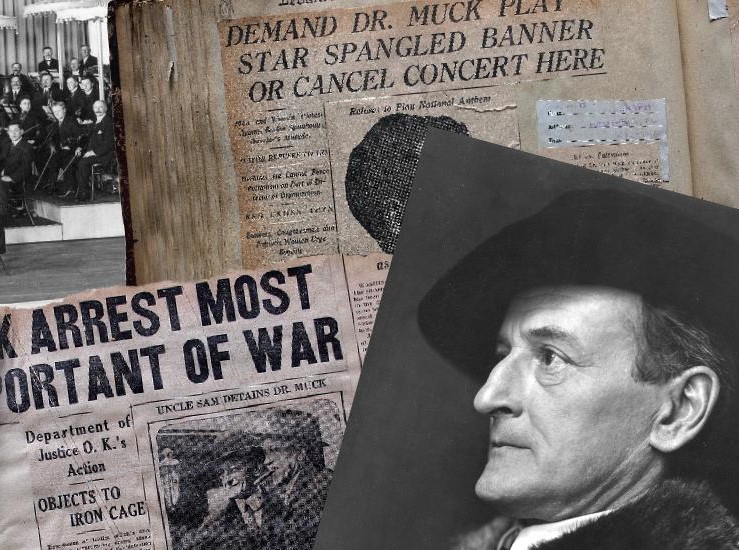
    In the last few months, any illusions that we’ve progressed as a nation and as a people have evaporated. Take the case of Karl Muck, who was arrested as an enemy alien on this date, all the way back in 1918.

    Muck served as music director of the Boston Symphony Orchestra during the first two decades of the 20th century. He, more than any other, was responsible for establishing the orchestra as a world-class ensemble.

    By happenstance, the conductor was born in Darmstadt, but his family had lived in Switzerland since 1867. Muck himself held Swiss citizenship since 1880. Nevertheless, during World War I, he was hounded by jingoistic factions of Boston society, a press that fomented anti-German sentiment, and overzealous federal agents who weren’t about to let him off the hook (despite the fact that he had earlier been cleared of any wrongdoing by the FBI).

    Tensions mounted after Muck allegedly refused to conduct the “Star-Spangled Banner” at the request of some women’s associations before a concert. The truth is, the request had never been communicated to the conductor by BSO founder Henry Lee Higginson, who personally declined a last-minute change in the program. When Muck found out about it, he was mortified and made sure to include the anthem on subsequent concerts.

    Unfortunately, the damage had already been done. Muck was arrested without a warrant and ended his American years in an internment camp in Georgia, set up for those suspected of being dangerous alien enemies of the United States. 29 other Boston musicians were also targeted, fired and imprisoned, because of their German or Austrian origins. Muck and his associates were among the lucky ones. In some areas of the country, suspects were actually lynched in the streets.

    Muck’s house and bank account were seized by the U.S. government. In 1928, nine years after his delayed release and deportation, he received a partial return of his assets.

    Ironically, before any of his troubles, Muck had actually offered to resign his post after war had been declared, concerned about the BSO’s image and his personal safety, given the rise of anti-German sentiment. It was Higginson who allayed his fears.

    Later, in 1933, Muck would face another political test. As chief conductor of the Hamburg Philharmonic since 1922, he actually did resign, in 1933, having become increasingly uncomfortable with Nazi ideology.

    Despite his treatment in the U.S., Muck looked back on his years in Boston as among the happiest and most fruitful of his career. Obviously, he meant from an artistic standpoint.

    Needless to say, his experiences here are eerily resonant in a way they would not have been only a few months ago. We should be looking back with wisdom, and a touch of revulsion, on a less-enlightened time when legal rights and due process were suspended in order to preserve an illusion of national security. As is all too often the case, the true enemies of the people were those who pushed “The Star-Spangled Banner” at the expense of facts and basic human decency.
  • Koussevitzky Champion of American Music

    Koussevitzky Champion of American Music

    Friday was the 150th anniversary of Serge Koussevitzky’s birth, but I had just finished recording one of my radio shows, and I couldn’t muster the energy and focus to post about it. Even a photo with a link to one of his recordings would have been something, albeit inadequate in proportion to his significance as one of the great champions of modern music and, more specifically, American music.

    It’s been calculated that, between 1924 and 1944, Koussevitzky presented 162 American works, 66 of which were world premieres. On his Concerts Koussevitzky, conducted in Paris in the 1920s, he also introduced Ravel’s enduring orchestration of Mussorgsky’s “Pictures at an Exhibition” and Honegger’s “Pacific 231.” As music director of the Boston Symphony Orchestra, he gave first performances of Bartók’s Concerto for Orchestra and Copland’s “Appalachian Spring” suite.

    “Kouss” was in on the ground floor at Tanglewood. He mentored Leonard Bernstein and others. When his wife, Nadia, died, he set up the Koussevitzky Music Foundation in her memory, to support and promote living composers. Early Foundation commissions yielded Britten’s “Peter Grimes” and Messiaen’s “Turangalîla-Symphonie.”

    Kouss began his career as a double-bassist and blossomed into one of the most important conductors of the 20th century. I was remiss in not acknowledging him on his birthday anniversary. Mea culpa, and happy 150, Serge Koussevitzky!


    First recording of “Pictures at an Exhibition”

    Broadcast premiere of Bartók’s Concerto for Orchestra (with the original wet-noodle ending, soon to be revised by the composer)

    Live performance of Sibelius’ Symphony No. 7

    Roy Harris’ Symphony No. 3

    Tchaikovsky’s Symphony No. 5

    Rehearsing the BSO in Rimsky-Korsakov’s “Scheherazade”

    Filmed performance of Randall Thompson’s “The Last Words of David”

    Playing the slow movement of his Double-Bass Concerto, with piano

    10-minute documentary, “The Story of Tanglewood” (1949)


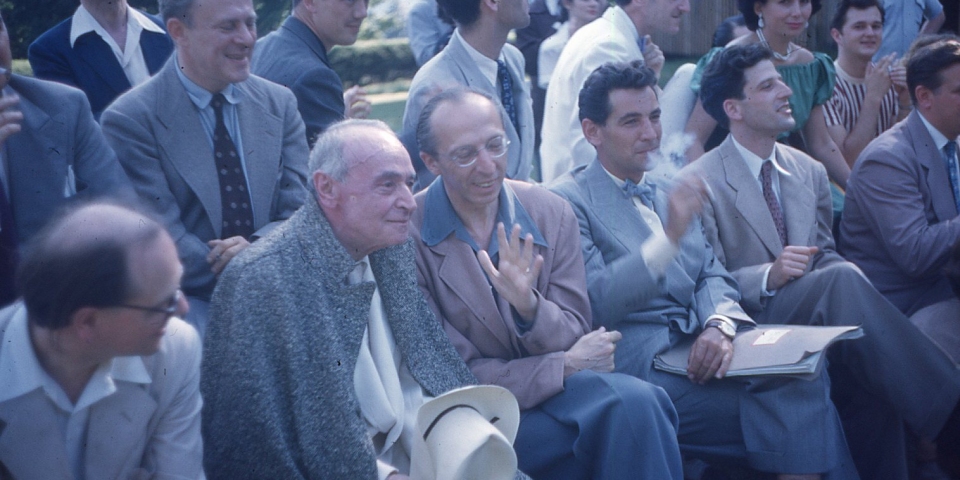
    Serge Koussevitzky, holding hat, with (left to right) Olivier Messiaen, Aaron Copland, Leonard Bernstein (lighting up), and Lukas Foss at Tanglewood in 1949 (photo by Ruth Orkin)

  • Seiji Ozawa: A Life in Music

    Seiji Ozawa: A Life in Music

    In his prime, Seiji Ozawa was like a breath of counterculture fresh air, assuming the podium in mop top, turtleneck, and love beads. Later, perhaps, he overextended himself, raising a family in Japan while putting the Boston Symphony Orchestra through its paces.

    But routine performances cannot take away from a lifetime of achievements.

    Ozawa was the first and most prominent Japanese conductor to wow the West with his mastery of the European classics.

    As a young man, his talent and tenacity carried him to France (he arrived on a cargo ship, with a scooter and a guitar), where he attracted the attention of then-BSO music director Charles Munch. Munch invited him to study at the Berkshire Music Center at Tanglewood, the orchestra’s summer home. Ozawa then studied with Herbert von Karajan in Berlin and was taken under the wing of Leonard Bernstein, who appointed him assistant conductor of the New York Philharmonic in 1961.

    Ozawa’s breakout post was with the Toronto Symphony Orchestra, where he was installed, on Bernstein’s recommendation, in 1965. He served as music director of the San Francisco Symphony from 1970 to 1976.

    For decades – 29 years, in fact, beginning in 1973 – he was Boston’s music director and enjoyed many successes, both on the orchestra’s home turf and elsewhere. However, the consensus among players, critics, and audiences is that he stayed too long.

    During his time in Boston, he remained active on the other side of the globe. He became honorary music director of the Japan Philharmonic (now the New Japan Philharmonic). He also helped found the Saito Kinen Orchestra, named for cellist and conductor Hideo Saito, a principal mentor during Ozawa’s youth.

    Other posts included an early appointment as artistic director of the Ravinia Festival, summer home of the Chicago Symphony Orchestra, co-artistic director (with Gunther Schuller) of the Berkshire Music Center, and much later, artistic director of JapanNYC.

    Ozawa left Boston for the Vienna State Opera, where he served until 2010. Alas, the spirit was willing, but the flesh was weak. Health issues predominated for the rest of his life. He was diagnosed with esophageal cancer in 2010. More recently, he was hospitalized with heart valve disease. His convalescence was complicated by sciatica. It was painful to see such an energetic presence diminished in his later years.

    In some respects, he remains underrated. His legacy was marred, no doubt, by his extended tenure in Boston, which lent him high visibility, even as he ruffled feathers and outstayed his welcome. Back in Japan, he received scorn from older players for being too Westernized.

    But he excelled especially in contemporary music (including that of his compatriot Toru Takemitsu), the Russian classics, and in opulent orchestral showpieces. He could be extraordinarily adept at managing the large forces required of monumental works such as Benjamin Britten’s “War Requiem,” Arthur Honegger’s “Jeanne d’Arc au bûcher,” and Arnold Schoenberg’s “Gurrelieder.” He led the world premiere of Olivier Messiaen’s “Saint François d’Assise” at the Paris Opera and concert performances of Richard Strauss’ “Elektra” in Boston.

    Ozawa died at his home in Tokyo on Tuesday. The cause of death was reported as heart failure. He was 88 years old. R.I.P.


    Ozawa conducts gorgeous Gabriel Fauré

    Mendelssohn’s “A Midsummer Night’s Dream” incidental music, with Judi Dench

    Introduced by Bernstein on one of his “Young People’s Concerts”

    In 1963, as a contestant on “What’s My Line?” – on the same episode with Woody Allen and Peter, Paul and Mary

    Conducting the Muppets (with Placido Flamingo)

    At Bernstein’s 70th birthday

    I was just listening to this yesterday, for John Williams’ birthday – “Tributes! For Seiji”

    Takemitsu, with violinist Anne-Sophie Mutter

    Ozawa as I’ll always remember him, with the love beads, in a live performance of Arnold Schoenberg’s late Romantic masterpiece, “Gurrelieder”


    PHOTO: Ozawa rehearsing the BSO with Jessye Norman in Frankfurt in 1988

  • Karl Muck Patriotism Gone Wrong in Boston

    Karl Muck Patriotism Gone Wrong in Boston

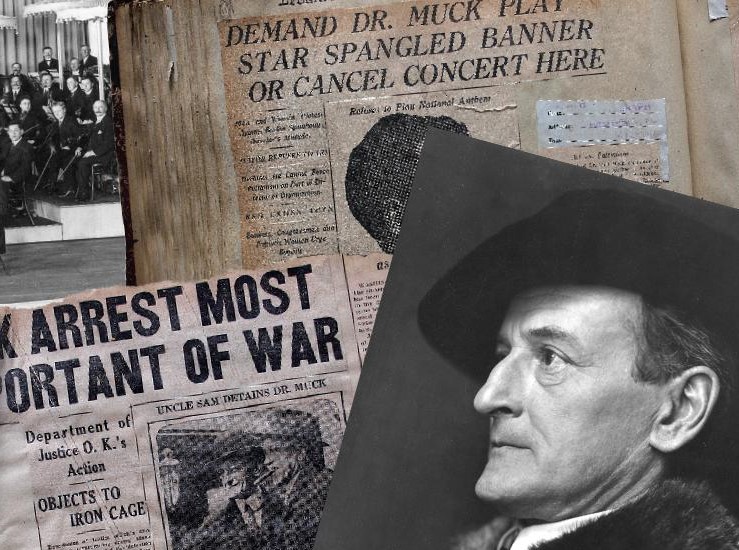
    Here’s a fascinating article about exacting conductor Karl Muck, which I posted in the comments section as an afterthought to one of my posts yesterday, about Muck’s Bayreuth recording of selections from Wagner’s “Parsifal.”

    Muck served as music director of the Boston Symphony Orchestra during the first two decades of the 20th century. He, more than any other, was responsible for establishing the orchestra as a world-class ensemble.

    By happenstance, Muck was born in Darmstadt, but his family lived in Switzerland since 1867. Muck himself held Swiss citizenship since 1880. Nonetheless, he was hounded by jingoistic factions of Boston society, a press that fomented anti-German sentiment, and overzealous federal agents who weren’t about to let him off the hook (despite the fact that he had earlier been cleared of any wrongdoing by the FBI).

    Muck ended his American years in an internment camp in Georgia, set up for those suspected of being dangerous alien enemies to the United States. Other Boston musicians were fired because of their German or Austrian origins. Muck was one of the lucky ones. In some areas of the country, suspects were actually being lynched in the streets.

    Muck’s house and bank account were seized by the U.S. government. In 1928, nine years after his delayed release and deportation, he received a partial return of his assets.

    The article is a sobering look at a time when legal rights and due process were suspended in order to preserve an illusion of national security. As is all too often the case, the true enemies of the people were those who pushed “The Star-Spangled Banner” at the expense of facts and basic human decency.
    https://www3.bostonglobe.com/magazine/2017/11/02/the-muck-affair/QczxAVe0i2EJZpLPGEKR9H/story.html?arc404=true

  • Karl Muck Parsifal Bells

    Karl Muck Parsifal Bells

    Karl Muck was the target of anti-German sentiment during his time as music director of the Boston Symphony Orchestra, which, unfortunately, happened to coincide with the First World War. Be that as it may, he was held in the highest regard by fellow musicians and thought by many to be one of Wagner’s finest interpreters.

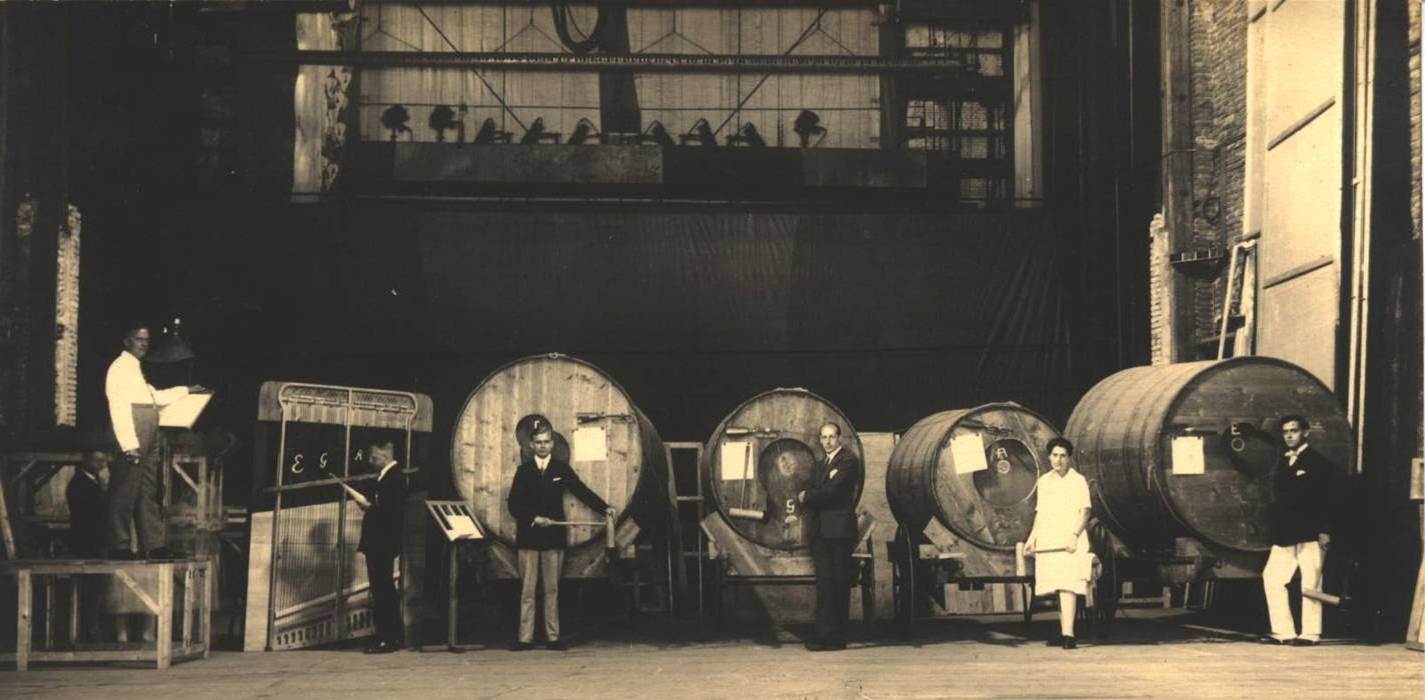
    Here’s a fascinating 1927 recording of the Transformation Music and Grail Scene from Act III of “Parsifal,” made at the Festspielhaus in Bayreuth. The recording employs the original bells designed by Wagner, which would be melted down by the Nazis for ammunition during World War II. So this is a rare opportunity to experience “Parsifal” as Wagner actually knew it. (The bells begin at 5:57.)

    Muck had been associated with the Bayreuth Festival since 1892. He became its principal conductor in 1903. Between 1901 and 1930, he conducted “Parsifal” at Bayreuth 14 times.


    PHOTO: Metal canisters used to produce Bayreuth bell sounds from the 1880s to about 1929.

    https://www.monsalvat.no/parsifal-bells.htm

Tag Cloud

Aaron Copland (92) Beethoven (95) Composer (114) Film Music (120) Film Score (143) Film Scores (255) Halloween (94) John Williams (185) KWAX (229) Leonard Bernstein (100) Marlboro Music Festival (125) Movie Music (135) Opera (198) Philadelphia Orchestra (88) Picture Perfect (174) Princeton Symphony Orchestra (106) Radio (87) Ralph Vaughan Williams (85) Ross Amico (244) Roy's Tie-Dye Sci-Fi Corner (290) The Classical Network (101) The Lost Chord (268) Vaughan Williams (103) WPRB (396) WWFM (881)

DON’T MISS A BEAT

Receive a weekly digest every Sunday at noon by signing up here


RECENT POSTS