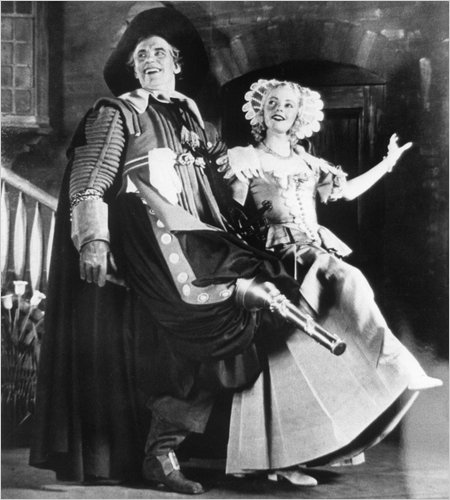
Here we are again, the last of September. I finally, finally got to see Walter Huston in “Dodsworth” (1936), and of course it won’t be long now before I’ll be watching him as Mr. Scratch in “The Devil and Daniel Webster” (1941).
At the link, he sings Kurt Weill’s “September Song,” from the stage musical “Knickerbocker Holiday” (1938). The song, with lyrics by Maxwell Anderson, went on to become a popular standard, covered by many artists. But I have a soft spot for Huston, even though his character is basically the villain.
Apparently Burgess Meredith was originally set to play the romantic lead, but he left after it became clear that Huston, whose part kept expanding and evolving into more of a loveable rogue, was going to steal the show.
At all costs, avoid the film version, with Nelson Eddy and Charles Coburn in the Huston role. It drops most of the songs and replaces them with others not by Weill & Anderson!
The days grow short when you reach September…
Tag: Broadway
-
September Song
-
Tim Curry: From Frank N. Furter to Mozart (With a Digression on Frank Langella’s Dracula)
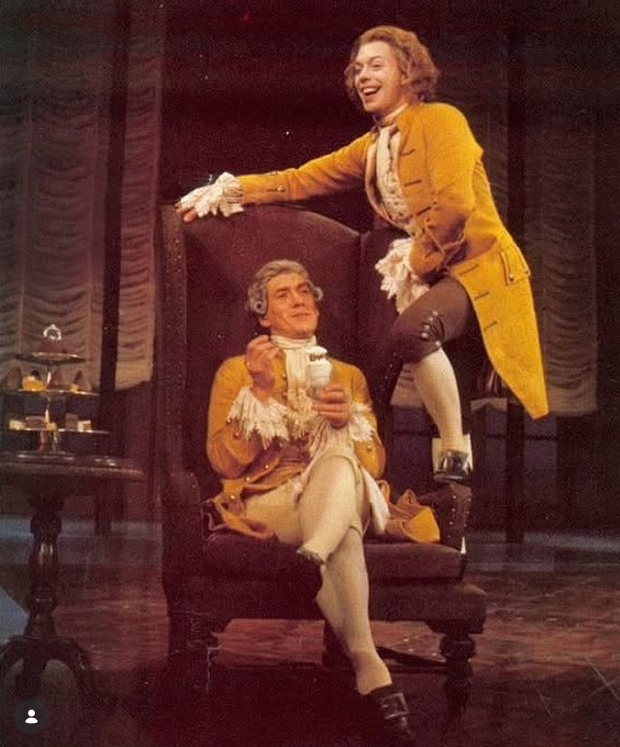
And now Tim Curry is gone. He’ll always be remembered for his audacious turn as Frank-N-Furter, but here he is as Mozart, with Ian McKellen as Salieri, in “Amadeus.” This production of Peter Shaffer’s play opened on Broadway in December 1980, its U.S. debut, also featuring Jane Seymour as Constanze. “Amadeus” was first presented in London in 1979, with Paul Scofield as Salieri and Simon Callow as Mozart. Curry’s death was announced yesterday. He was 80 years old.
There are a few Broadway shows I missed that I would have loved to have seen. In 1980, I was still basically a kid, and if my parents didn’t take me to see something, I didn’t see it. Thankfully, we did go to a few shows a year, mostly musicals, though my parents went to more (which I don’t begrudge them!). Given my burgeoning interest in classical music (I made them listen to a cassette of the “Eroica” Symphony on a drive in to the city), I don’t know why we didn’t see “Amadeus.”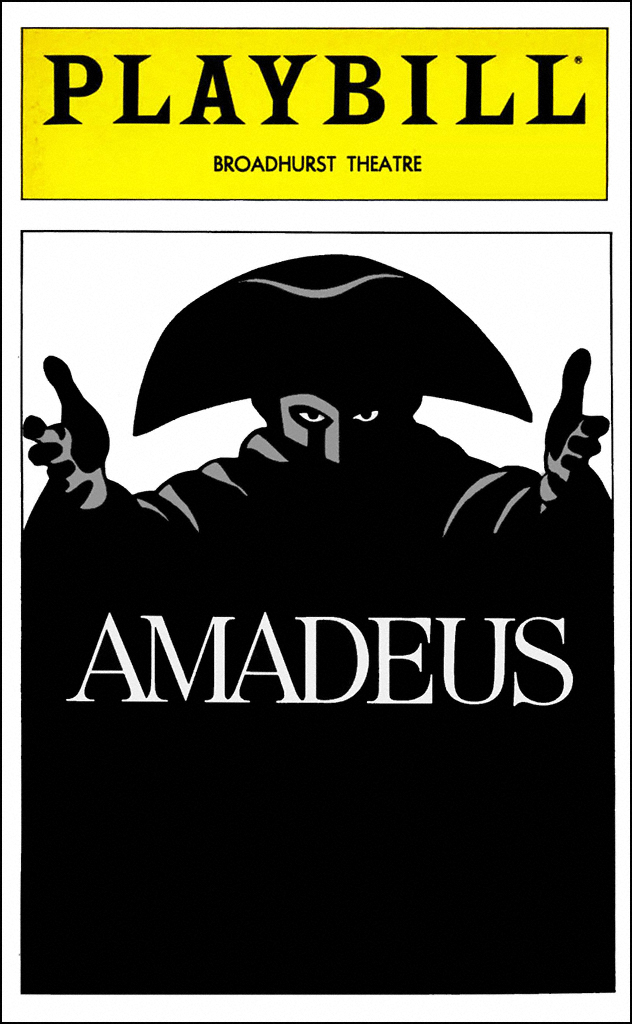
Another show I would have gone crazy for was the Edward Gorey production of “Dracula,” with Frank Langella (who also played Salieri on Broadway, opposite Dennis Boutsikaris as Mozart). Before I was bitten by the classical music bug, I was crazy for the Universal horror pictures. My parents did see this one. I don’t know why I wasn’t invited. I can’t complain, though. I saw a lot. I just should have seen these two!
From what I understand, there is an audio-visual recording of the McKellen-Curry “Amadeus” archived at the New York Public Library of the Performing Arts, but it is accessible only for research purposes. I don’t know if “Dracula” was documented.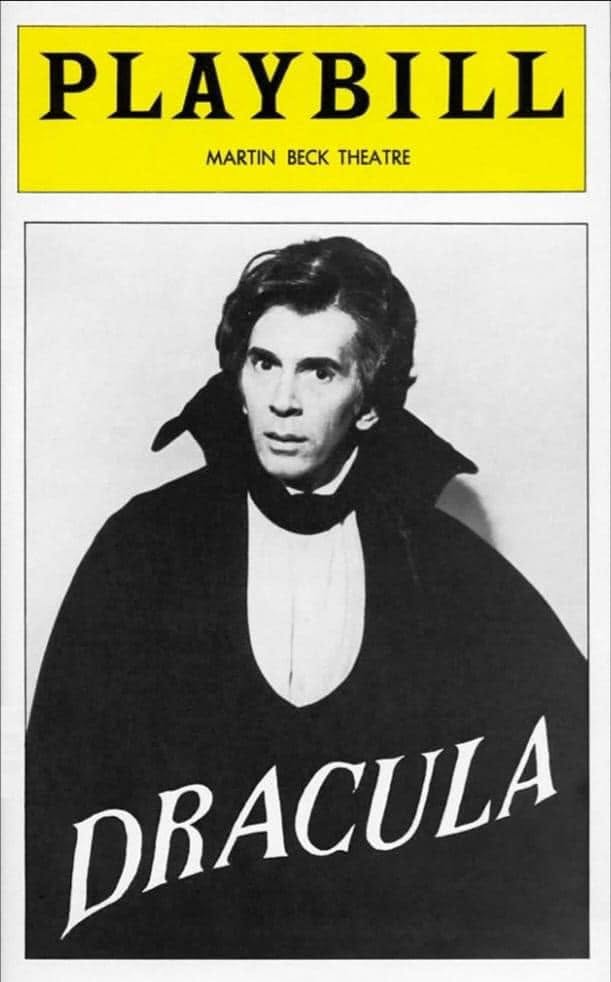
I was beyond excited when I saw the trailer for Langella’s film version (with music by John Williams!), but by all accounts, the Broadway show was the one to see. The film was viewed as a disappointment (and, Langella aside, it is), but on Broadway it was a sensation, with Tony Awards for Gorey’s costume designs and for “Most Innovative Production of a Revival.”
Bela Lugosi appeared in the original Broadway production in 1927, 50 years earlier. Of course, Lugosi went on to star in the classic 1931 film and was typecast as a horror actor for the rest of his life.
You’ll find images of the “Amadeus” Playbill at the link:
https://playbill.com/production/amadeus-broadhurst-theatre-vault-0000002018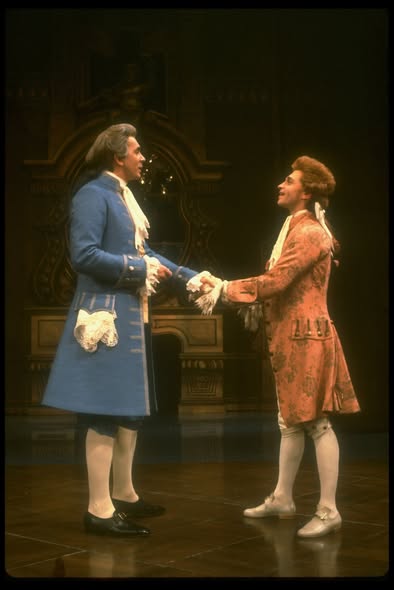
Langella and Boutsikaris in “Amadeus”
-
Broadway Musicals Celebrate July 4th
With the Fourth of July still six days away, I was trying to come up with a way to honor some aspect of the country’s rich musical heritage – it is, after all, the last weekend before the holiday – but I didn’t want to start clobbering everybody with Sousa marches just yet.
I found my solution on Broadway: both of my specialty shows today are connected in some way or another to classic American musical theater.
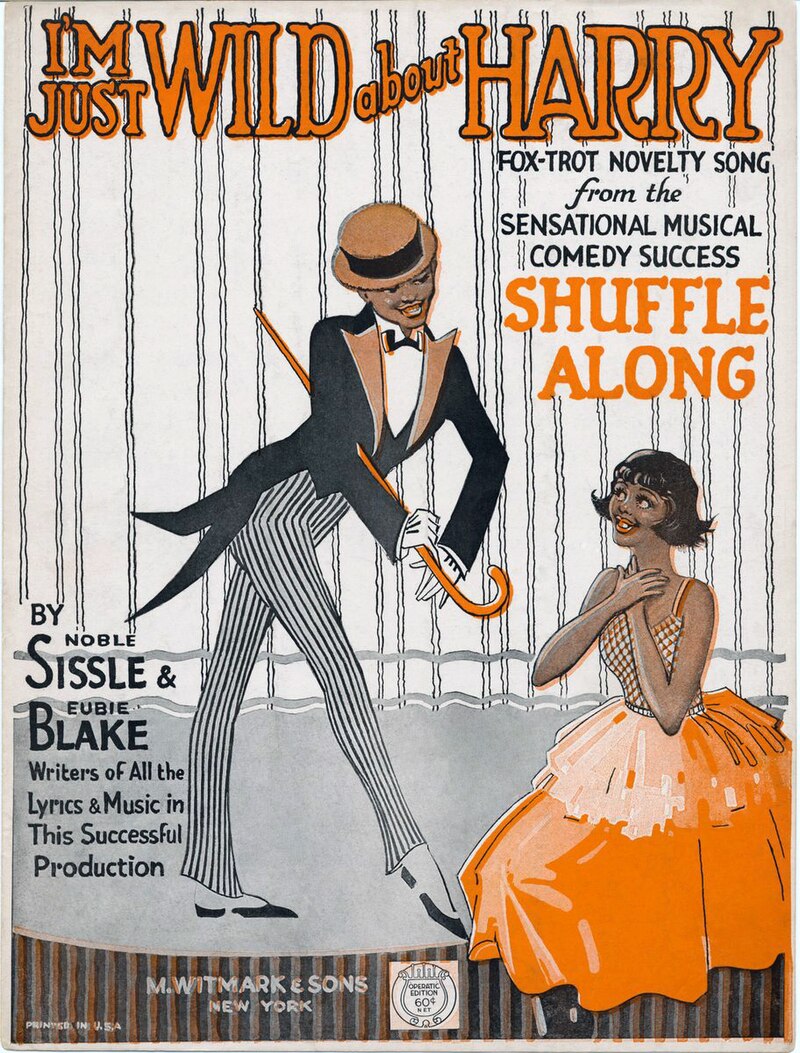
The playlist on “Sweetness and Light,” the light music show, is constructed on works that were actually staged on the Great White Way, including Eubie Blake & Noble Sissle’s “Shuffle Along” (the 1921 all-Black musical that spawned the breakout hit “I’m Just Wild about Harry”), Leonard Bernstein’s “On the Town” (the ballet music, before it was distilled into the familiar “Three Dance Episodes,” with a 24-year-old Bernstein conducting), George Gershwin’s “Porgy and Bess” (conceived by the composer as an opera, but produced on Broadway several times over the decades before finally being elevated to the pantheon), and Richard Rodgers & Lorenz Hart’s “On Your Toes” (the climactic “Slaughter on Tenth Avenue” sequence, which we’ll enjoy on Rodgers’ birthday).
We’ll get your toes tapping, for the most part, but also include a grand piano fantasy on themes from “Porgy” by Earl Wild.
It’s showtime, this Saturday morning at 11:00 EDT/8:00 PDT.
Then later, on “The Lost Chord,” a program that revives unusual and neglected repertoire, we’ll come at the same source from a different perspective, as we’ll hear concert works by composers of notable Broadway hits.
Vladimir Dukelsky was born in what is now Belarus, but when he settled in the United States, his friend, George Gershwin suggested a name change. Thereafter, he was known as Vernon Duke. As Duke, he composed such standards as “April in Paris” and “Autumn in New York,” and he had a hit show in “Cabin in the Sky.”
As Dukelsky, he had works championed by Serge Koussevitzky and choreographed by Léonide Massine and George Balanchine. We’ll hear a Piano Concerto he composed at the age of 19 at the request of Arthur Rubinstein.
Meredith Willson is best-known for his Broadway smashes “The Music Man” and “The Unsinkable Molly Brown,” but he emerged from the classical music world, as a flutist who played with John Philip Sousa and the New York Philharmonic. We’ll hear Willson’s Symphony No. 2, subtitled “The Missions of California.”
I hope you’ll join me in giving my regards to Broadway with “Broadway Lights” on “Sweetness and Light” (at 11:00 a.m. EDT/8:00 a.m. PDT), and “Broad Talents from Broadway” on “The Lost Chord” (at 7:00 p.m. EDT/4:00 p.m. PDT), both of them on KWAX, the radio station of the University of Oregon!
Stream them, wherever you are, at the link:
IMAGES: “Shuffle Along” sheet music and (top to bottom) Sissle & Blake, Rodgers & Hart, and Meredith & Rini Willson
-
Papp’s Pirates on Broadway A Fan’s Look Back
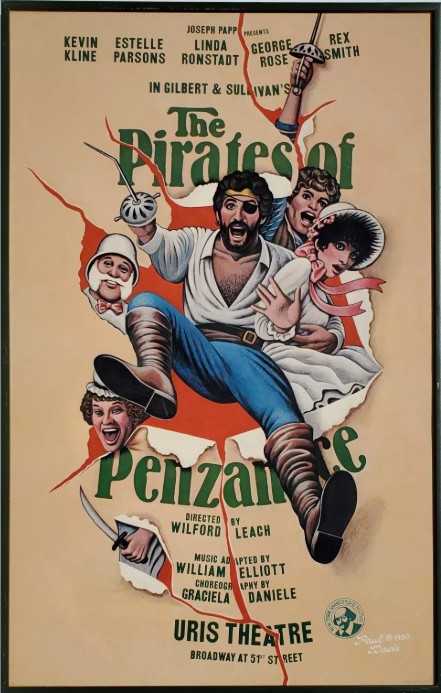
I caught Joseph Papp’s hip, self-aware revival of “The Pirates of Penzance” when it moved to Broadway in the 1980s. In common with his Broadway Shakespeare revivals, Papp’s “Pirates” had its origins elsewhere (for Shakespeare it was the open-air Delacorte Theater in Central Park; for “Pirates” it was the Public Theater’s headquarters in the former Astor Library on Lafayette Street in Lower Manhattan). While rapturously received, the ‘80s “Pirates,” was certainly not for Gilbert & Sullivan purists – the reduction of Sullivan’s orchestration is a horror, and the voices were not exactly D’Oyly Carte – but my, was it a lot of fun!
By the time I was able to see it, Kevin Kline, Angela Lansbury, and Linda Ronstadt were off making the movie – which, I’m sorry to say, turned out stagy, corny, and disappointing. (What worked in the theater did not transfer well to film.) However, George Rose, as the very model of a modern Major General, and Tony Azito, as the Sergeant of Police, somehow continued their Broadway run, even as they too appeared in the movie.
How amazing Azito was in this show. It’s regrettable that the editing choices for the video linked below allow only glimpses of his incredible dexterity. (Azito did all his own choreography.) The police are reimagined somewhat in the style of the Keystone Kops. Azito himself is a human rubber band, who can replicate and even surpass the most improbable contortions of the great physical comedians of yore. (He does a wonderful Groucho dance.) Sadly, Azito died of AIDS in 1995. He was so talented. Justifiably, he was nominated for a Tony for his performance (as was Rose, who didn’t end well either, murdered in Haiti only a few years later, in 1988). I was very fortunate also to be able to catch Azito in “Amphigorey,” a musical revue based on the macabre comic creations of Edward Gorey, during a tryout run at Philadelphia’s Plays and Players Theater in the 1992.
Papp’s “Pirates” moved to Broadway in 1981 and ran for 787 performances. It was recognized with a Tony Award for Best Revival and the Drama Desk Award for Outstanding Musical.
By the time I caught it, James Belushi had slipped on the seven-league boots of the Pirate King. You wouldn’t think he would be on a level with Kline, who transformed the character into a post-Errol Flynn matinee idol, with puffy shirt and plunging neckline, as apt to tumble off the stage as swing on a rope. Delightfully, Belushi was every bit as nimble as his famous brother, doing flips off trampolines and carousing most energetically.
You can watch the Kline incarnation, captured prior to its Broadway transfer, here:
By coincidence, I see “Pirates” is back in Midtown, now at the Todd Haimes Theater on West 42nd Street, as “Pirates! A Penzance Musical,” with David Hyde Pierce as the Major General. From what I understand, the new production takes a quasi-meta approach, with the historical Gilbert & Sullivan passing through New Orleans, where a local production of their comic operetta is being staged. I have my doubts about “this jazzy-bluesy vision of the crowd-pleasing classic, in an outrageously clever romp sizzling with Caribbean rhythms and French Quarter flair.” But who knows, it might also be fun. Not sure I’ll be stumbling over myself to see it, but I’d go if somebody offered me a cheap ticket.
-
Chita Rivera A Broadway Legend Remembered
Chita Rivera was a force to be reckoned with. A dancer of remarkable stamina and electric stage presence, Rivera clawed her way back to the top after having her leg crushed in an automobile accident. She’s said to have danced as well in her 70s as she did as a younger woman (albeit without the flying splits and backflips).
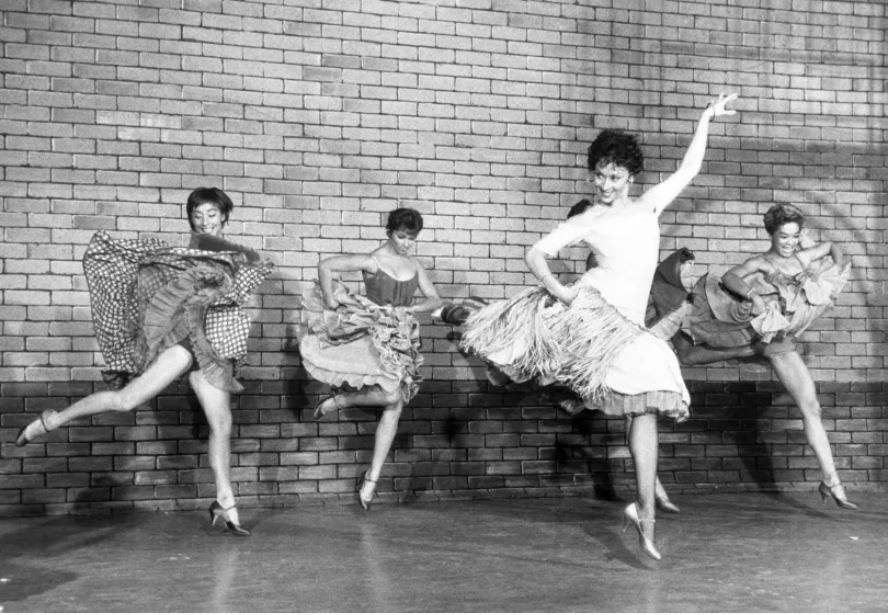
Sadly, Chita was cheated whenever her Broadway triumphs were translated to the big screen. However, the recasting of “West Side Story” opened the door for Rita Moreno.
Stephen Sondheim’s lyrics for the showstopper, “America,” caused some controversy from the start, due to of its ironic barbs about life in Puerto Rico, but Leonard Bernstein’s dynamic take on the huapango and Moreno’s energy sold the number (with the lyrics tweaked over the years).
Rivera was the recipient of two Tony Awards (she was nominated for ten), two Drama Desk Awards, and a Drama League Award. She was the first Latina and Latino American to receive a Kennedy Center Honor, in 2002, and the Presidential Medal of Freedom, in 2009. She was awarded a Tony for Lifetime Achievement in 2018.
Besides “West Side Story,” she also created roles in “Bye Bye Birdie,” “Chicago,” and “Kiss of the Spider Woman.
Rivera was 91 years-old. R.I.P.
Tag Cloud
Aaron Copland (94) Beethoven (95) Composer (114) Film Music (150) Film Score (143) Film Scores (255) Halloween (102) John Williams (198) KWAX (233) Leonard Bernstein (105) Marlboro Music Festival (125) Movie Music (165) Mozart (91) Opera (215) Philadelphia Orchestra (90) Picture Perfect (174) Princeton Symphony Orchestra (110) Radio (90) Ross Amico (244) Roy's Tie-Dye Sci-Fi Corner (290) The Classical Network (101) The Lost Chord (269) Vaughan Williams (107) WPRB (397) WWFM (881)