Tag: Carnegie Hall

  • Botstein, Dodging Bullets, Conducts Berlioz Edition of Weber’s “Der Freischütz”

    Botstein, Dodging Bullets, Conducts Berlioz Edition of Weber’s “Der Freischütz”

    One of the times I saw John Williams in concert, he conducted some selections from his then recently-composed score to the Disney “Star Wars” revival, “The Force Awakens.” In between numbers, he remarked to the audience that he would continue to write music for the next installment, “The Last Jedi.” When the applause subsided, he followed it up with a quip, something along the lines of he really didn’t want to do it; but he really didn’t want anybody ELSE to do it either.

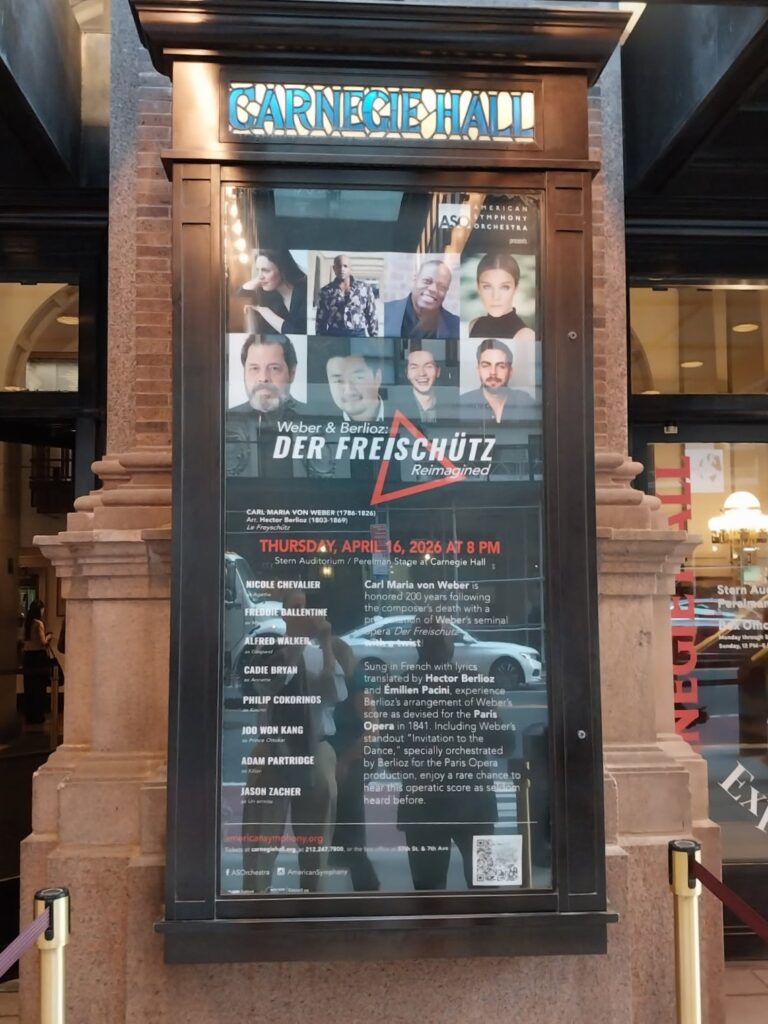
    I remembered that on Thursday night when I was at Carnegie Hall to hear a concert performance of Hector Berlioz’s edition of Carl Maria von Weber’s “Der Freischütz.”

    Weber’s magnum opus, which took Europe by storm following its premiere in 1821, ignited a bold, new, Romantic era of lurid sensation in the opera house. German opera, in particular, would never be the same. The scenario and music reveled in an idealized past of roistering huntsmen and folk-like melodies, but also pushed into the darker territories of dread, emotional turmoil, and pacts with the Devil. The work traveled well, to New York, Rio de Janeiro, Cape Town, Sydney – everywhere it seems except Paris.

    Despite its near-universal appeal, “Freischütz” was dismissed by effete Parisians as being unsuited to their traditions. The Paris Opera forbade spoken dialogue, and the audience would have been scandalized had there not been a ballet in one of the later acts (a traditional diversion for aristocratic gentlemen who preferred to linger over supper, before settling into their boxes to ogle their mistresses among the dancers). As late as 1861, there were shouts of disdain when Wagner gave a big eff you to the French by placing his ballet at the beginning of “Tannhäuser.” When the second performance was disrupted by literal dog whistles, Wagner cancelled the rest of the run. If “Freischütz” were ever going to play Paris, it would require a major touch-up. And the Opera planned to do just that.

    Actually, it had been attempted once before at a rival house, the Théâtre de l’Odéon, in 1824, when Henri Castil-Blaze exercised a heavy hand in editing Weber’s original, cutting, reordering material, and even adapting vocal lines for a production retitled “Robin des Bois” – the French name for “Robin Hood,” even though the opera has nothing at all to do with the English folk hero.

    Berlioz was wild for “Freischütz,” to the extent that he lauded it in his memoirs and elsewhere as among his favorite operas. Unsurprisingly, he came to regard the Castil-Blaze version as an “insulting travesty, hacked and mutilated,” although enough of Weber’s magic remained, apparently, that he was compelled to attend several performances. Previously his operatic paragons had been the high-minded works of Christoph Willibald Gluck and Gaspare Spontini. Weber’s fantastic drama would have a profound influence on Berlioz’s subsequent development.
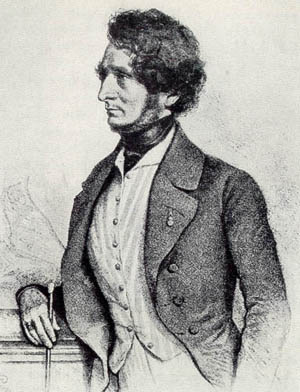
    Berlioz in 1845

    When Berlioz was approached by the Paris Opera to create his own edition of “Freischütz” (as “Le Freyschutz”) in 1841, he was not enthusiastic. Like Williams, who really didn’t want to do the next “Star Wars” movie, he feared what somebody else – somebody with less talent, less refinement, and less investment in the source material – might do with it. So Berlioz determined to commit to the project and worked hard to honor Weber’s legacy and actually make it good. And quite frankly, his version of the opera comes off better than anyone could ever hope.

    The title always sounds awkward in English. It’s often translated as “The Free-Shooter.” And the construction of the piece is about as clunky as the title would have you to expect. The work is not through-sung in the manner of a traditional opera, but rather it is a singspiel – you know, like Mozart’s “The Magic Flute” – with the arias, ensembles, and choruses linked by spoken dialogue. This has often posed a problem in recordings, as often it requires a major suspension of disbelief on a listener’s part to accept the actors who are assigned the spoken parts as analogous to the characters portrayed by singers of the roles. Also, for anyone who is not fluent in German, the spoken passages can very quickly wear out their welcome.

    So perhaps it is unsurprising – although it was a delightful surprise to me – that I actually found myself enjoying Berlioz’s edition more than Weber’s original. From a musical standpoint, it just goes down a whole lot easier, since Berlioz takes all those tiresome spoken lines and lends them musical interest by tastefully scoring them as recitative. “Der Freischütz” gains, therefore, from an unbroken musical flow. This might be considered blasphemous in some circles – no doubt German speakers will find more sustained interest in Weber’s original design – and for sure, there is a kind of bizarre alchemy that takes place if you allow yourself to think about the hybrid analytically. The sung French subtly changes the character of piece. The sound of the vocal lines is softened, and the text flows more mellifluously than it does when spiked with the harder, more intrusive consonants of German. And without drawing attention from Weber’s arias, Berlioz sustains and even enhances the atmosphere and dramatic momentum through his subtle artistry.

    In terms of the performance itself, listening to the execution of the overture on Thursday, I was reminded of Sir Thomas Beecham’s “two golden rules for an orchestra: start together and finish together. The public doesn’t give a damn what goes on in between.” It would have helped had the musicians been able to play with more commitment and intensity, to get the evening off to a good start. The horn passages were not particularly impressive, which was worrisome for an opera with plenty of exposed horn-playing, since after all it is brimming with huntsmen.

    Happily, whatever sense of foreboding instilled by the playing in the overture was dispelled immediately, as the horns were on point for the rest of the night. Furthermore, the performance ended strongly, with Leon Botstein and his musicians, especially the always superb Bard Festival Chorale (prepared by James Bagwell), tapped unsuspected reserves for the work’s Mozartian finale, which played like Sarastro’s grandest apotheosis ever. I didn’t see anything like it coming. So yes, it sent me out of the hall feeling uplifted and happy.

    The team of vocal soloists assembled for the evening included some familiar faces, from both American Symphony Orchestra and Bard Festival concerts. (Botstein directs both.) While I had my personal preferences, in terms of timbre, intensity, and projection, each had their individual strengths. The singers were mostly well-matched, but I found tenor Freddie Ballentine, in the lead role of Max, at his strongest in moments like his Act II trio, in which he blended sensitively his female costars.

    On a purely charismatic level, soprano Cadie Bryan – who sang Milada in last year’s production of Smetana’s “Dalibor” at Bard and here filled the supporting role of Annette – upstaged soprano Nicole Chevalier as her anguished cousin Agathe, whose character, let’s face it, is a real Debbie Downer. This despite the fact that Chevalier sang her arias beautifully.

    I’ve seen bass-baritone Alfred Walker a number of times, and he’s always very good – he had a meaty role as Saint-Saëns’ Henri VIII at Bard and also sang the King in “Dalibor” – but here, as Max’s duplicitous rival, he’s given less to do, especially since the opera in this performance was not staged. Essentially, the singers stood, sang, and emoted at their music stands.

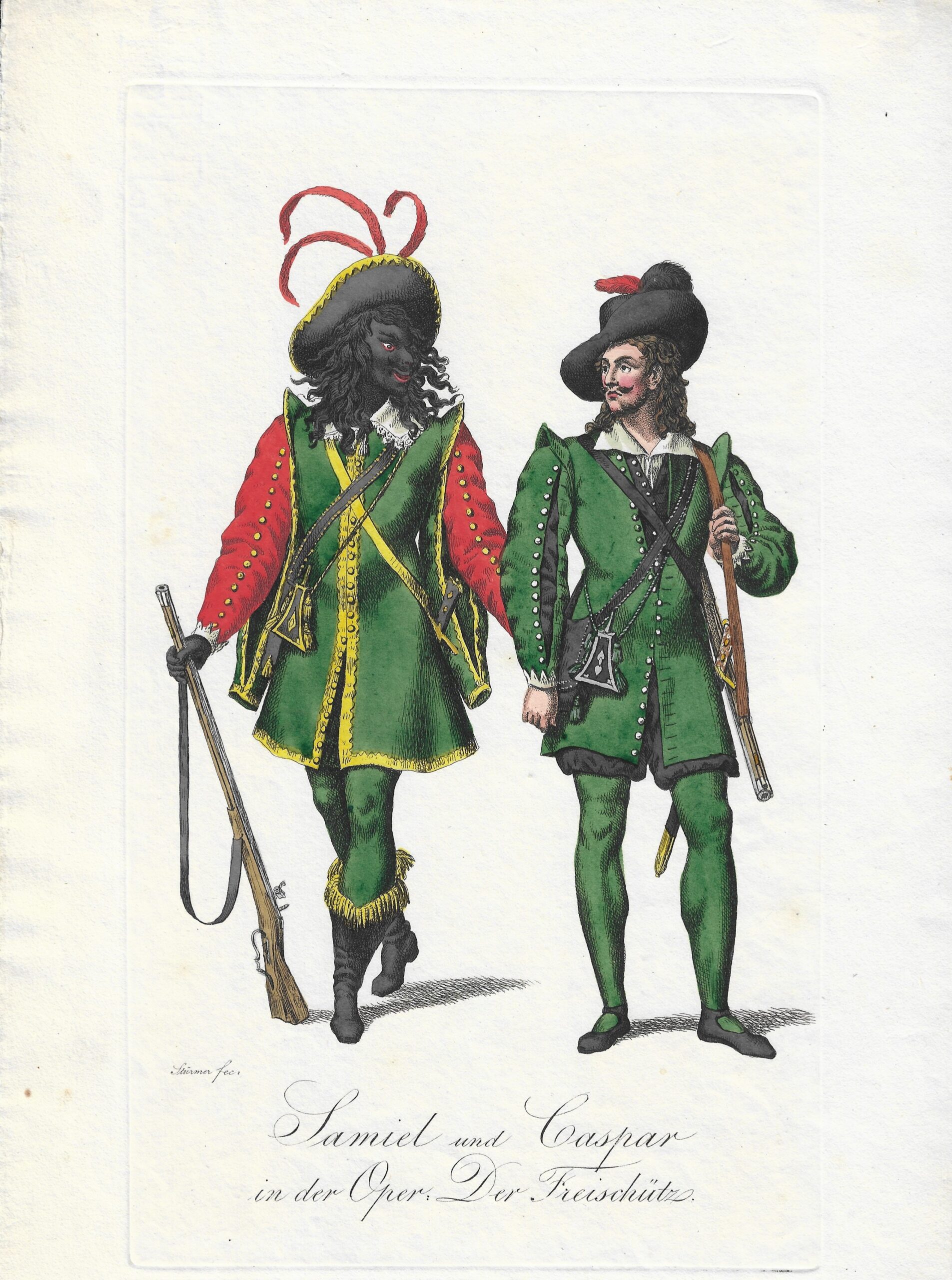
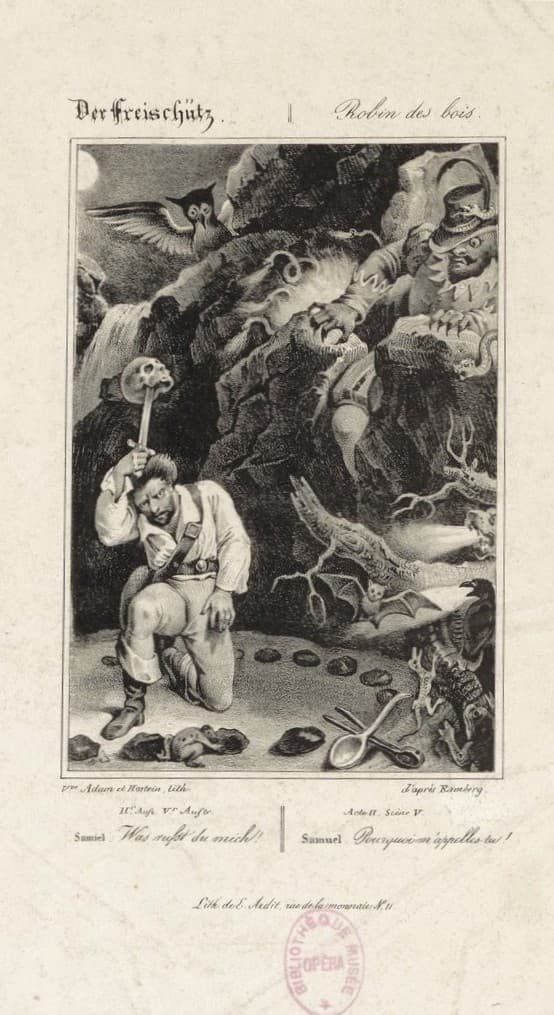
    Naturally, where any concert performance of “Freischütz” suffers the most is in the celebrated Wolf’s Glen sequence, with its creepy midnight rendezvous to barter souls for magic bullets. There should be specters, thunder and lightning, owls roosting in withered tress, and an all-important human skull. Thursday night’s audience pieced out these imperfections with their thoughts, while one of the choristers (unidentified in the program, alas) offered diabolical interjections from the balcony as Satanic Samiel, the Black Huntsman.

    Among the supporting singers, baritone Adam Partridge as Kilian, a good-natured peasant who outshoots Max in the contest of the opera’s first act, had a great voice and a commanding presence, and bass Philip Cokorinos, a familiar presence, here as Kuono, head gamekeeper and Agathe’s father, sang his part with satisfying resonance.

    The whole plot hinges on Max winning a shooting contest so that he can attain job security (as worthy successor to Kuono) and Agathe’s hand in marriage. His poor luck at the start leaves him open to the temptations of Gaspar, who himself has sold his soul to Samiel, the Dark Huntsman, for some magic bullets. Gaspar hopes to delay his hour of reckoning by luring Max to damnation and Agathe along with him.

    While bass-baritone Jason Zacher, who towered physically over the rest of the cast as the Hermit, really didn’t have all that much to do – he only really gets to sing at the end – this deus ex machina character always amuses me in his earnestness. What I would pay to hear him break character and cry, “Wait! I was going to make espresso!”

    For the ballet music, Berlioz orchestrated Weber’s piano piece “Invitation to the Dance” – which, in its new guise, became a breakout hit, even if, technically, it seems as out-of-place as the Viennese waltz interlude Erich Wolfgang Korngold employs during the rustic banquet in “The Adventures of Robin Hood.” A universal truth: for as long as Berlioz’s arrangement has been around, and for as frequently as it’s been played, people still applaud before the quiet cello denouement.

    The opera’s performance, taken as a whole, was a satisfying one, and as always, Botstein and his players should be proud to have shared yet another unusual, not insignificant, indeed revelatory work with such a large audience. (The concert was well attended.)
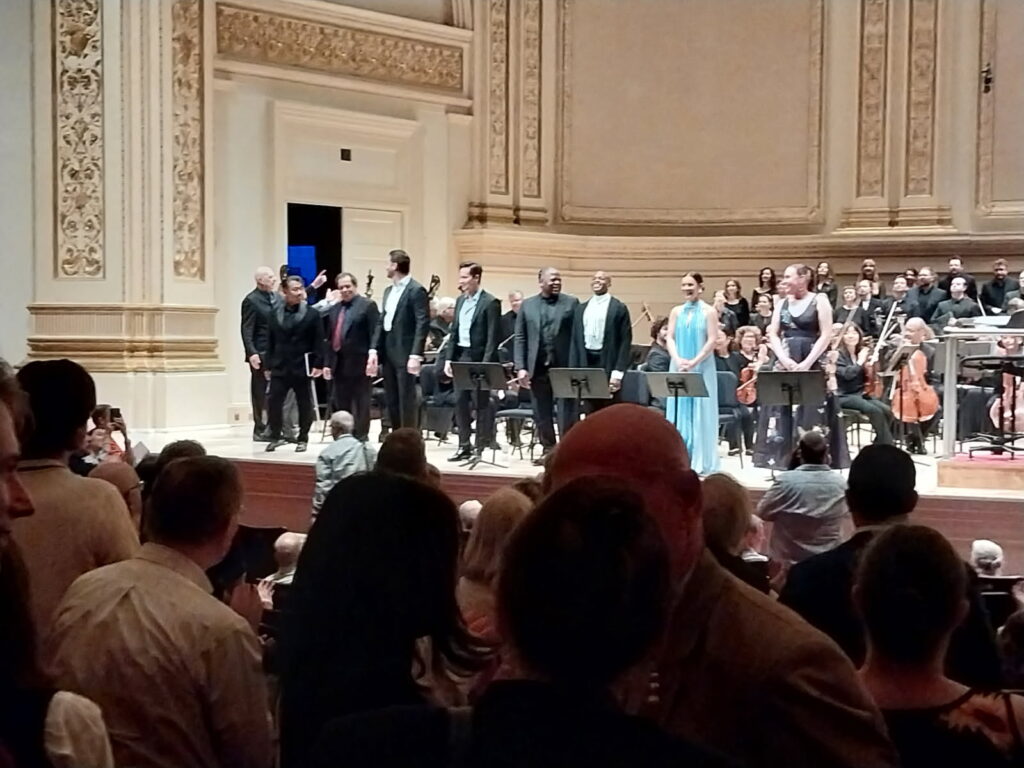

    As is often the case, Botstein, who has been music director of the American Symphony Orchestra for 34 years, delivered a pre-concert talk an hour before the performance. As president of Bard College for over half a century, he has long been a master in the art of public speaking. He imparts his information articulately and with impressive fluency, and an off-handedness that belies the care and lucidity of his thought. Key to his success as a communicator, I think, is that he always somehow manages to keep the intellectual balancing act both conversational and engaging. He also has a wry sense of humor, and he’s not afraid to use it.

    When he returned to the stage for the performance itself, the audience received him warmly. There were no boos or catcalls or demonstrations – no indication at all of the emotional turbulence that has roiled Bard campus since his name has been linked with that of Jeffrey Epstein.

    In a nutshell, Botstein, as college president and its most prominent fundraiser, did everything he could to court Epstein, after the latter’s unsolicited donation of $75,000 to the institution. Although Botstein himself has not been accused of any criminal activity, his allegedly having turned a blind eye to Epstein’s six-years-earlier conviction for soliciting prostitution from a minor has blown up at Bard since the release of the Epstein files, with outraged activists calling for him to step down. Botstein, who is pushing 80, but remains in good physical and mental health, has talked about retirement, with the possibility of him staying on to teach and conduct Bard’s graduate ensemble, The Orchestra Now. An independent investigation is ongoing.

    Botstein is scheduled to conduct a staged production of Richard Strauss’ “Die ägyptische Helena,” or “The Egyptian Helen,” at the school’s annual arts festival, Bard SummerScape, July 24-August 2. Presumably, he will then return to preside over this year’s Bard Music Festival, “Mozart and His World,” August 7-16, although the marketing so far has been very quiet regarding his hopeful participation.

    Botstein, of course, makes a specialty of resurrecting unusual and neglected repertoire. Mozart is unusually down-the-middle for him, but Bard is celebrated for its curve balls. We’ll see what they do with it.

    Incredibly, Thursday was the first time the Berlioz edition of “Der Freischütz” had ever been presented in the United States. There were no projected supertitles during the performance. Rather, the America Symphony Orchestra did it the old-fashioned way, with the complete French-English libretto included as an insert in the program booklet. I found it surprising, although it is certainly an incentive for me to hang onto mine. (It tickles me to see Wolf’s Glen, the haunted ravine where all the supernatural business goes down, translated as Gorge du Loup.) I am astonished to find there has been only one recording of the Berlioz edition. From what I gather, it is worth having for the curiosity value, even if the performance itself isn’t on a level with any of the primary recommendations of the standard German version.

    For as welcome a discovery as it was – and I would attend a performance of it again in a heartbeat – the sung dialogue and added ballet music made for a long evening, with three acts of roughly 50 minutes each and one intermission. With stopped traffic at the Lincoln Tunnel, I finally decided to take a chance and zip down to the Holland Tunnel, which turned out to be a big mistake. Even though by then it was after midnight, I don’t know how many lanes were funneling in from how many different directions, but once inside the tunnel there was construction, and everything was down to a single lane. It was nearly 2:00 by the time I arrived home in Princeton. More than once, my glacial escape from New York made me wish for one of Samiel’s magic bullets.

    But I will always have the memory of the night’s performance, capped by that rousing ending, with singers and instrumentalists joined in a grand finale that would have done Sir Thomas Beecham proud. It’s the kind of experience that makes attending a live musical event, under whatever circumstances, worthwhile.
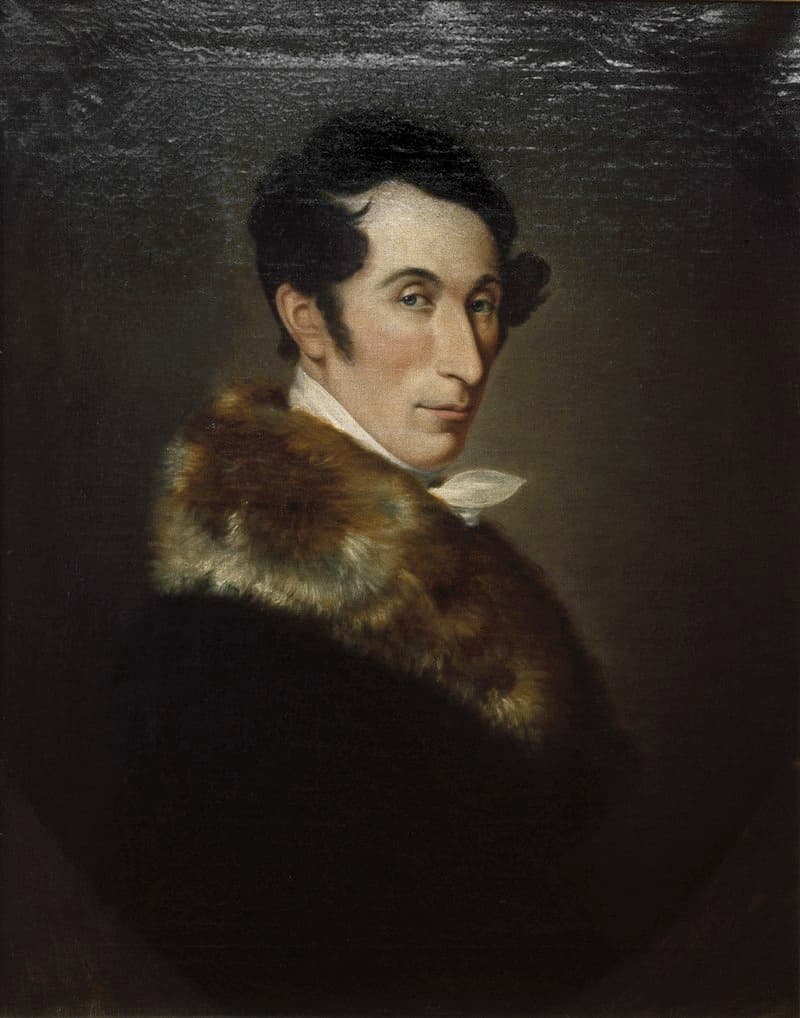
    Weber in 1825

    ——-

    “The Egyptian Helen” at Bard SummerScape, July 24-August 2

    https://fishercenter.bard.edu/series/the-egyptian-helen/

    “Mozart and His World” at the Bard Music Festival, August 7-16

    https://fishercenter.bard.edu/what…/bard-music-festival/

  • Ives at 150 TŌN Conducts a Mixed Bag

    Ives at 150 TŌN Conducts a Mixed Bag

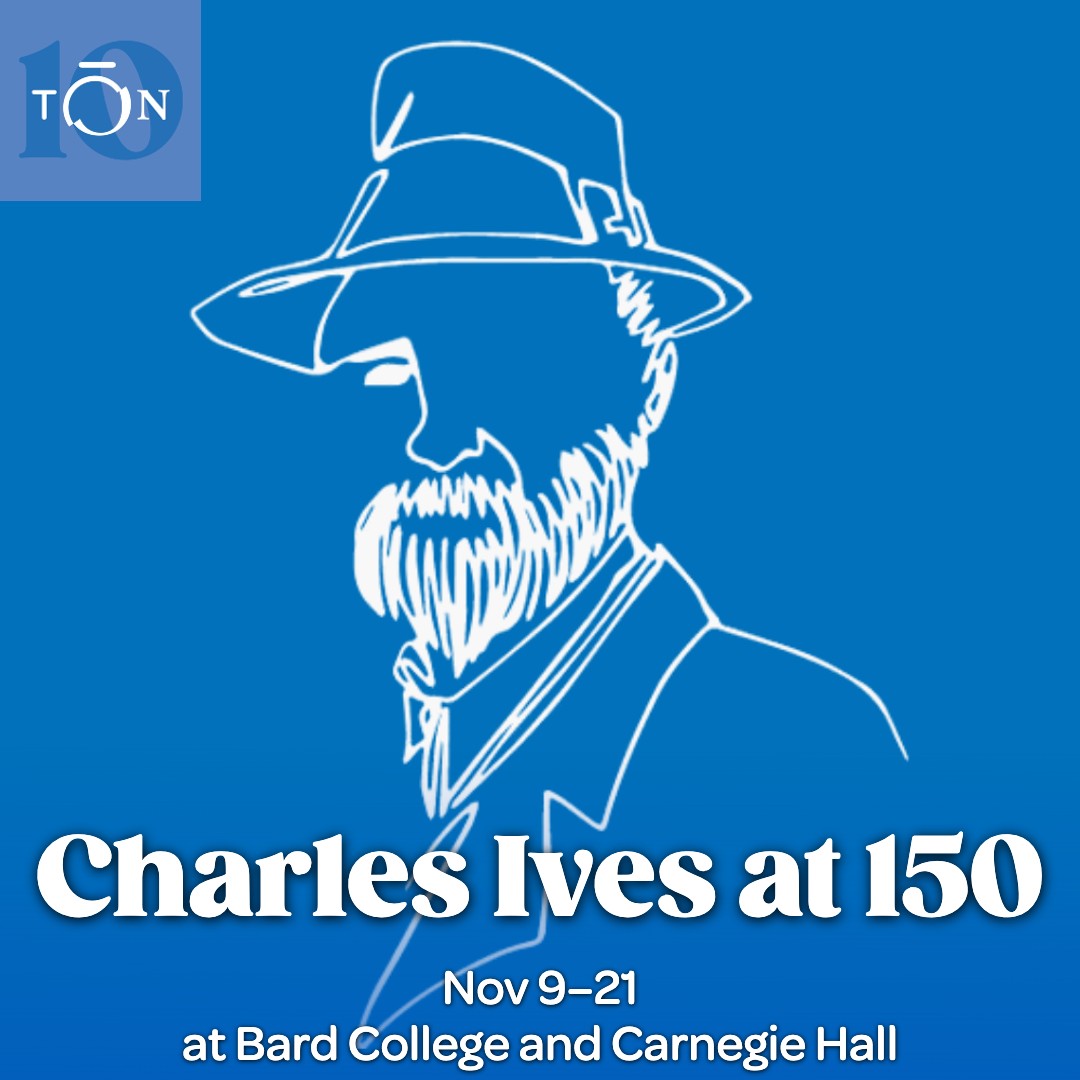
    It was a damp trek to Carnegie Hall last night for an all-Ives concert with The Orchestra Now (TŌN). But I would have traveled through driving snows to attend it. As you may be aware at this point, this year marks the 150th anniversary of Ives’ birth (on October 20th). Ives was not only one of America’s most venerated and wholly unique composers, he was also a pioneer in the field of life insurance. Thankfully, no one was injured in the performance of last night’s music.

    Ives’ day job allowed him the freedom to experiment wildly in his more ambitious compositions. The first half of program was devoted to wave after wave of controlled chaos – layers of sound, clashing harmonies, confused rhythms, and disorienting spatial effects – with of course plenty of recognizable hymn tunes, parlor songs, and patriotic marches tossed into the mix.

    “The Fourth of July” is evocative of “a boy’s Fourth” in Danbury, Connecticut, in the decades following the Civil War. (In Ives’ commentary he fondly recollects fingers blown off, widespread drunkenness, and a fire at the town hall.) “Central Park in the Dark” juxtaposes the pursuits of man, represented by musical glimmers overheard in the middle distance (including the ragtime hit “Hello, Ma Baby,” still recognized by those of us who grew up with Merrie Melodies’ Michigan J. Frog), against a transcendental backdrop of strings, representing the eternal and ineffable. The Orchestral Set No. 2 concludes with the composer’s impressions of an episode he experienced in New York on the day the Lusitania was sunk (torpedoed by a German U-boat), killing over a thousand people. The news inspired a mass of commuters from all walks of life to spontaneously join in the singing of “The Sweet By-and-By.”

    These were all masterfully rendered by The Orchestra Now, actually a Bard College graduate program, with the performers advertised as products of the world’s top conservatories. They were conducted by the orchestra’s founder and music director, Leon Botstein, who is also Bard’s president. Botstein is a brilliant and versatile thinker and always an engaging, entertaining, and often provocative speaker. He has great ideas. But there are occasions when his questing intellect seems to get in the way of the more animal enjoyments: a deeper delve into the heart of the music and a visceral commitment to its sweep and passion. The performances of the three pieces I mention above left nothing to be desired. They were cacophonous, by turns hilarious and awe-inspiring, and in the end sublime.

    However, on the concert’s second half, when he came to conduct Ives’ Symphony No. 2, a work so rich in romance and nostalgia – as a breathtaking distillation of all the music, classical, sacred, and vernacular, that made Ives the unique composer he was – interpretively, I felt Botstein came up rather short. The orchestra played well, all the notes were in place, but much of the work was underarticulated. In a word, it lacked panache, and as a result, its character suffered.

    This is frankly surprising, in that the concert was presented in a similar manner to those that make up the superlative Bard Music Festival (presented every August at Bard, with the emphasis on a different composer and his or her world). In this case, Ives authority J. Peter Burkholder (eminent Ives scholar and president of the Charles Ives Society) provided pre- and inter-performance commentary, and baritone William Sharp sang a number of the songs and hymns assimilated into Ives’ compositions (with Daniel Berman, another Ives authority, at the keyboard). Burkholder would make a point, Sharp would sing, and then Botstein would cue the orchestra to play a corresponding passage, prior to the performance of the complete piece. (Also before the symphony, Sharp, in fine voice all evening, provided an unexpected bonus in an old favorite from Ives’ 117 songs, “The Circus Band.”)

    So our ears were attuned; but then, during the actual performance, when it came to those parts of the symphony we were told to listen for, the details were frequently just glossed over. (The brisk tempo of the opening Andante moderato did not bode well.) As a result, the work came across as mostly indistinguishable from the competent but hardly outstanding symphonies of the composers of the Second New England School, from which, on an academic level (Ives studied with a long-suffering Horatio Parker at Yale), Ives sprang, rather than one of our truly great American symphonies. It lacked poetry and it lacked resonance. (Interestingly, on this rainy night, it appeared that Botstein never removed his galoshes. It became an inadvertent metaphor for his practical, even earthbound, approach to musicmaking, at least on this particular occasion.)

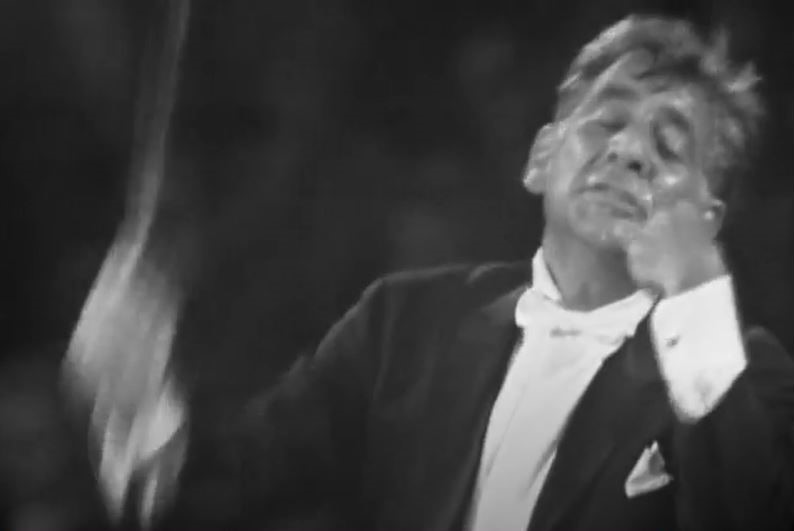
    Granted, I cut my teeth on Leonard Bernstein’s early recording of the symphony, on Columbia Records, and Lenny often went out of his way to make a piece of music his own, often to the extent of making little alterations to suit his sense of drama and wringing everything out of it and then some. Undoubtedly this colors my perception. It’s fairly common for anyone who loves a piece of music to hold the first performance of it he or she ever heard on a pedestal, especially if it’s a recording made familiar through countless repetitions. But I have heard my share of recorded performances of Ives’ 2nd, and this was not one of the great ones. (At least it was not janglingly wrongheaded, like Bernard Herrmann’s.)

    I am thankful to Botstein for the outstanding program and for so much else that he does so very well. I hasten to add, this was the first time, in 40 years of concertgoing, that I heard ANY of these pieces played live. So that’s a big win. It was a concert with much to recommend and a very special evening. But a genuinely transcendent performance of the symphony would have sent me out of the hall oblivious to the raindrops and walking on air.


    PHOTOS: Concert poster; Classic Ross Amico, doing his best Andy Capp impression; and a pre-concert conversation with, left to right, baritone William Sharp, pianist Daniel Berman, Ives scholar J. Peter Burkholder, and conductor Leon Botstein. Thanks to Paul Moon for the latter two photos!

  • Finally Hearing Ives’ Symphony No. 2 Live

    Finally Hearing Ives’ Symphony No. 2 Live

    In the comments under my post of October 20 – Charles Ives’ 150th birthday anniversary – I was made to realize that in my 40 years of concertgoing I have never heard an Ives symphony live. How can this possibly be? It’s not like I wasn’t living in a good place, with the Philadelphia Orchestra and the New York Philharmonic at my disposal. But I missed the Ormandy days in Philly (his associate, William Smith, conducted Ives’ 2nd in 1983, the year before I moved there) and the cost and time investment to get to New York, with a pain-in-the-ass train transfer in Trenton, meant that trips in to “the City” were rare. (Bernstein programmed and recorded Ives’ 2nd at Avery Fisher Hall in 1988.)

    So imagine my excitement when my friend, H. Paul Moon – the filmmaker with whom I’ve been working on a documentary about the cellist Leonard Rose – contacted me to let me know that Leon Botstein and The Orchestra Now (TŌN) would be bringing Ives’ 2nd as part of an all-Ives concert to be performed at Carnegie Hall tonight. His email began, “Small thing here, nothing special, and there’s always another time, but…”

    My response was through-the-roof excitement.

    It so happens, I did notice that TŌN was scheduled to perform the same program at Bard College last weekend – the college is also the base of the Bard Music Festival I so adore (next summer the focus will be on the Czech composer Bohuslav Martinu and his world) – but getting there on a good day is a three-hour drive, and I would have gone on a Sunday afternoon, which would have meant automatic end-of-weekend traffic on my return. So I was on the fence about it – they do so many good concerts up there (of course, many of them are livestreamed, but it’s not the same as being in the hall, at the Fisher Center at Bard) – but when I learned they would be bringing the show to Carnegie, I didn’t even have to think about it. I didn’t even look at my schedule. If I had anything else planned, I would change it. I’m in!

    And what a program! “The Fourth of July.” “Central Park in the Dark.” The Orchestral Set No. 2. And THE SYMPHONY NO. 2!!! Pardon me for shouting, but this is quite simply not only one of my favorite American symphonies; it’s one of my favorite symphonies by anyone, anywhere, for all time.

    Everyone knows Ives the iconoclast, the experimentalist, the cranky Yankee who smashed harmonies and rhythms together like a recalcitrant toddler with its toys in a playpen. But the Symphony No. 2 is different. It distills all of Ives’ musical experiences into one beguiling work that’s like a snapshot of a faded America, with its hymn tunes, parlor songs, and patriotic marches, recollected through a nostalgic, but no less vital for it, glow.

    It also serves as a portrait of the artist as a young man, assimilating works by Bach, Beethoven, Brahms, Wagner, Dvořák, Bruckner, and others. So if you were ever curious to hear Beethoven’s 5th Symphony and Wagner’s “Tristan und Isolde” rub shoulders with “America the Beautiful,” “Camptown Races,” “Turkey in the Stray” and “Columbia, the Gem of the Ocean,” then this is the symphony for you. Truly, the more you know about music, the more you’ll be able to get out of it.

    All that aside, the music is simply gorgeous, transporting, and exciting – of its time, and perhaps even now (though a lot of the allusions will likely be lost on many), quintessentially American. For me, this is a perfect Thanksgiving concert.

    Before each piece, baritone William Sharp will sing some of the songs Ives references. There will be a pre-concert talk at 6:00, with the performance beginning at 7:00.

    Of course, any time I’ve got a ticket to Carnegie Hall, it rains. I’d say there’s a good 90 percent chance of that happening, always. Well over a month, probably six or seven weeks, without rain in New Jersey, and now there’s rain in the forecast for today and tomorrow. Next time there’s a drought, just buy me a ticket to Carnegie Hall.

    I’ll try to add a picture of the poster tonight.

    For more information about the concert, look here:

    https://www.carnegiehall.org/Calendar/2024/11/21/The-Orchestra-Now-0700PM

    Leonard Bernstein introduces Ives’ Symphony No. 2

  • Bernstein Conducts Sibelius Birthday Tribute

    Bernstein Conducts Sibelius Birthday Tribute

    On his birthday anniversary, here’s Leonard Bernstein in 1966 to conduct probably my favorite symphony, the Symphony No. 5 by Jean Sibelius. I once heard him lead this glorious music at Carnegie Hall, around the time he made his Deutsche Grammophon recording with the Vienna Philharmonic. I’m happy to say, I never got over it. By 1987, Bernstein learned to really savor the nobility of the climactic “swan theme.”

    Later, I nearly heard him conduct the Sibelius 1st in Philadelphia, with the student orchestra of the Curtis Institute of Music, but it was toward the end of his life, and sadly he had to cancel due to illness.

    I’ve lost track of the Carnegie program, but I’m sure I’ve got it somewhere. Here’s a record of what else was on the concert.

    https://www.carnegiehall.org/about/history/performance-history-search?q=&dex=prod_PHS&page=2&event=7794&cmp=Jean%20Sibelius_&pf=Leonard%20Bernstein_

    Needless to say, the performance linked above, with the London Symphony Orchestra, is excellent.


    BONUS: Glimpse into a Bernstein masterclass on the Sibelius 5th:

  • Stokowski: Genius or Madman?

    Stokowski: Genius or Madman?

    It takes a thief to catch a thief, and it takes a madman to interview Leopold Stokowski. Here is Leopold, the craziest dinner guest since Andre Gregory in “My Dinner with Andre,” being interviewed by the pianist-eccentric Glenn Gould. Gould was famously summed-up by conductor George Szell as “That nut’s a genius!” Stokowski himself was always an artist who thrived at the intersection of genius and charlatan. That said, even at his whackiest, Stokowski reminds us that a broken clock is still right twice a day. When he’s at his best, I don’t care if we’re talking about clocks or sausage, the rest is merely casing.

    Beethoven is not really the first composer I think of when I think about Stokowski. Stokey was often most in his element when sculpting music with more overtly coloristic effects. But here he and Gould collaborate on Beethoven’s “Emperor” Concerto in 1966. Unsurprisingly, for those familiar with the concerto, it’s an ear-opener, with Stokey doing his best to will the orchestra to grandeur, while Gould plays whatever the hell he feels like.

    Video of 85 year-old Stokowski rehearsing Beethoven’s “Leonore Overture No. 3”

    From the same sessions, rehearsing Barber’s “Adagio for Strings”

    Some of my favorite Stokowski footage is in the movie “Carnegie Hall” (1947), in which he conducts a movement from Tchaikovsky’s 5th Symphony. Just when you think his hair can’t get any bigger, he overachieves. The director, Edgar G. Ulmer, cut his teeth in German Expressionist cinema, and it shows. In America, he directed “The Black Cat,” with Boris Karloff and Bela Lugosi, and the film noir “Detour.”

    The wild hair, the dove-like hands, the faux middle-European accent (he was the son of an English-born cabinet-maker of Polish heritage), Stokowski knew how to work a crowd. He also knew his way around a score. Despite his protestations in the Beethoven rehearsal footage at the link above, Stokey was not averse to looking past whatever could be gleaned of a composer’s intentions, if it meant realizing his own glorious visions.

    He could be controversial, to be sure, and he was not difficult to parody. But he was also magnetic and, at his best, a true magician. In common with Oscar Wilde, Stokey knew there is only one thing in life worse than being talked about, and that is not being talked about.

    Happy birthday, Leopold Stokowski!


    Shaking hands with Mickey Mouse in “Fantasia” (1940)

    Parodied in “Long-Haired Hair” (1949)

    Introduced by Burns & Allen in “The Big Broadcast of 1937”

    Introduced in a snood around the 3:30 mark in “Hollywood Steps Out” (1941)

    With Deanna Durbin in “One Hundred Men and a Girl” (1937)

    With Marian Anderson and Princeton’s Westminster Choir

    Conducting Debussy at 90

Tag Cloud

Aaron Copland (92) Beethoven (95) Composer (114) Film Music (120) Film Score (143) Film Scores (255) Halloween (94) John Williams (185) KWAX (229) Leonard Bernstein (100) Marlboro Music Festival (125) Movie Music (135) Opera (198) Philadelphia Orchestra (88) Picture Perfect (174) Princeton Symphony Orchestra (106) Radio (87) Ralph Vaughan Williams (85) Ross Amico (244) Roy's Tie-Dye Sci-Fi Corner (290) The Classical Network (101) The Lost Chord (268) Vaughan Williams (103) WPRB (396) WWFM (881)

DON’T MISS A BEAT

Receive a weekly digest every Sunday at noon by signing up here


RECENT POSTS