Quite a concert weekend for Classic Ross Amico – perhaps for you too, if you live in Central Jersey – and we won’t even have to drive to New York or Philadelphia!
Yesterday, I posted about George Antheil’s cacophonous masterpiece of the Machine Age, “Ballet Mécanique,” which will be performed in Trenton, with members of the New Jersey Capital Philharmonic Orchestra, Plenty Pepper Steel Band, and Trenton Circus Squad. The concert – nay, event – will be held at Trenton Machine Shop on Saturday at 7:30 p.m.
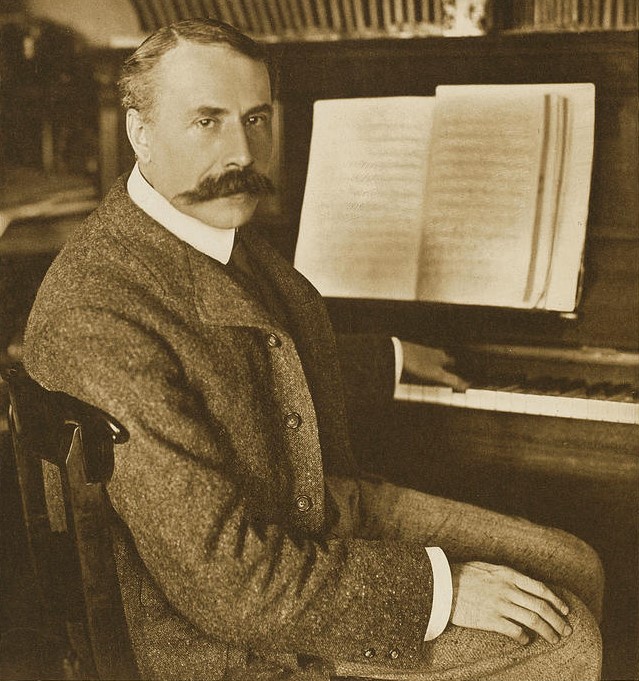
As if the Capital Phil’s industrial vaudeville weren’t enough, the Princeton University Glee Club will also join the Princeton University Orchestra for two performances of Edward Elgar’s monumental “The Dream of Gerontius.” Alongside the “Enigma Variations,” this is the work that cemented Elgar as the foremost English composer of his generation. It’s not something you will encounter live on this side of the pond every day. Dream along with two performances, at Princeton University’s Richardson Auditorium in Alexander Hall, Friday & Saturday at 7:30 p.m.
A link to info for the Friday concert (Saturday is identical):
The Jewish festival of Purim begins at sunset. Which means tomorrow morning I will hit the road in search of Central Jersey’s tastiest hamantaschen.
Hamantaschen, in case you don’t know, are triangular, filled-pocket pastries associated with Haman, the villain of the Purim story as related in the Book of Esther – “tash” meaning “pocket” or “pouch” in Yiddish. In Hebrew, they’re sometimes referred to as “Haman’s ears.” And what an appetizing image that is, especially when biting into the fruity center!
The cookie is often filled with apricot, raspberry, poppy seed, or my personal favorite, prune – which may sound a little geriatric, but trust me, with a good cup of coffee, it infuses one with a ridiculous sense of well-being.
The best hamantaschen I ever had were from Rindelaub’s Bakery, then located right across the street from one of my many Philadelphia apartments, on South 18th Street, just a few doors north of Rittenhouse Square. That was decades ago, when I was in my 20s. A prune-centered hamantasch and a large cup of coffee consumed in the square on a sunny afternoon was a recipe for pure bliss. Alas, once a Philadelphia institution, Rindelaub’s is no more.
Or is it? I see, doing a Google search, there’s an article about it that ran in the Philadelphia Inquirer in 2008, but it’s paywalled. If someone subscribes, please let me know to what far-flung suburb the bakery has retreated.
In the name of all that’s holy, avoid hamantaschen from the local grocery store. They’re generally pretty terrible – hard jelly in a tasteless cookie that will turn to powder as soon as you bite into it. But if you can find them at an actual bakery, give them a shot.
In the Trenton-Princeton area, I have had mixed success trying to recapture Rindelaub’s perfection of flavor and ratio of pastry to filling. Again, if someone knows of a great Jewish bakery in the area, let me know.
Ever hear of the whole megillah? Or Magilla Gorilla? In Hebrew, the Megillah is one of five books read on special Jewish feast days. On Purim, it’s Megillat Esther, the reading punctuated with boos and the grinding of groggers at each mention of Haman.
The best-known musical response to Purim is still probably George Frideric Handel’s “Esther,” from 1732. Handel’s first English oratorio recounts the events of the Biblical book, by way of an Old Testament drama by Jean Racine. The Hebrew Esther becomes Queen of Persia and thwarts the machinations of the king’s jealous vizier, which would have resulted in the extermination of her people.
In 1954, Jan Meyerowitz composed his “Symphony: Midrash Esther.” Meyerowitz’s family experienced an analogous threat in Germany in the 1930s, but their solution was the opposite of Esther’s. Rather than reveal their Jewishness, they chose to conceal it, converting to Christianity shortly before Meyerowitz’s birth. So carefully kept was the secret that the composer himself didn’t learn of his true heritage until the age of 18.
Meyerowitz studied in Berlin, then in Rome with Ottorino Respighi and Alfredo Casella. He emigrated to the United States in 1946, where he found employment at Tanglewood, then Brooklyn College and the City College of New York. The symphony was first performed in 1957, by the New York Philharmonic under the direction of Dimitri Mitropoulos.
You can listen to it here, on tracks 5 to 8
As a bonus, track 1 is “Queen Esther’s Prayer” from “Four Biblical Tableaux” by Aaron Avshalomov, from 1928, .
Cristiano Giuseppe Lidarti’s “Ester” is believed to be the first work in oratorio form to be set to a Hebrew libretto (by Rabbi Jacob Saraval). Composed in 1774, it was rediscovered only in 1997!
Finally, here’s Eugen d’Albert’s overture after Franz Grillparzer’s “Esther.” D’Albert was a mighty pianist, who studied with Franz Liszt. He composed no less than 21 operas. He was married six times. He met his match in Teresa Carreño, “The Valkyrie of the Piano,” herself married four times. What a Ragnarok their union must have been!
I only recently came across another piece of music inspired by Esther, somewhere in my CD collection, and it’s making me crazy, because now I can’t remember what it is! It was something from the late 19th or early 20th centuries. I’ll add it here should I remember it.
Remember tomorrow to pour a cup of coffee and taste deeply of Haman’s ear for Purim!
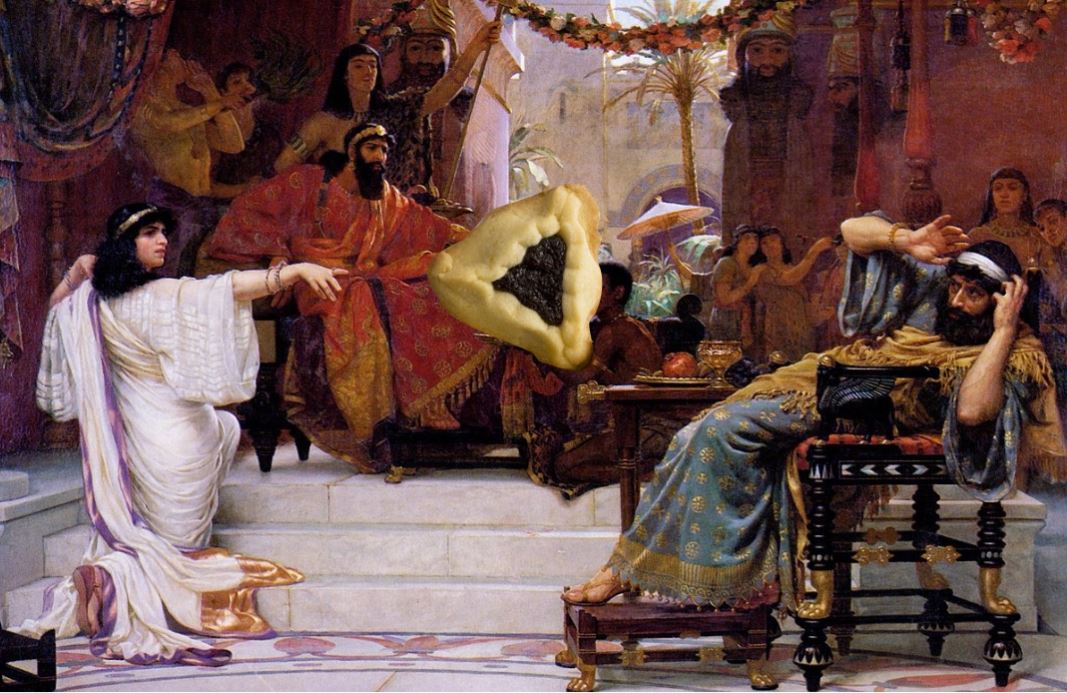
IMAGE: “Esther Denouncing Haman to King Ahasuerus” (1888) by Ernest Norman, with hamantasch added by me
Happy Fasnacht Day! That happy day when I’d blow in after school, an oblivious cyclone, to find the air heavy with the scent of freshly-made doughnuts. I never knew when it would happen or understood the significance. All I knew is that I’d rush in one afternoon and my grandmother would be serving up heaven from an electric fryer.
Why fasnacht? When I asked, my grandmother had no answer. Or if she did, she didn’t bother to explain. She’d had to deal with so many “whys” from me. But go ahead and look it up on the internet.
A fasnacht – which we pronounced “fosh-knot” (you’ll also see it spelled fastnacht, faschnaut, or faschnacht) – is a fried doughnut made on Shrove Tuesday – or Fat Tuesday, if you prefer – the last day before Lent. Traditionally, the making of doughnuts was a way to clear out all the tasties a good Christian is not supposed to eat again until Easter. Be that as it may, one could use a good fast after so much fried lard!
Now THOSE were doughnuts. The closest I’ve been able to find out in the real world are Italian zeppoli. Not quite the same, but they share a similar, unhealthy, fried, powdered-sugary goodness. However, zeppoli, like fasnachts, can vary. A light and puffy zeppola would bear little resemblance to my grandmother’s fasnachts, which were always cakey.
I miss those doughnuts. My grandmother was an undistinguished cook, but boy could she make fasnachts.
During covid-19, it’s unlikely that I will be hitting the road today, in search of the ideal fasnacht. In any case, I think the safest bet in this area (Central Jersey) would be the farmers’ markets, which are generally only open on the weekends.
I would be appalled by some “authentic” Pennsylvania Dutch fasnachts, which look too soft and are served with butter and maple syrup. I need an austere fistful of stodgy dough that I can enjoy with a cup of coffee.
Music for fasnachts (announcing it on the radio requires a nimble mouth and nerves of steel): Robert Schumann’s “Faschingsschwank auf Wien” (“Carnival Jest from Vienna”):
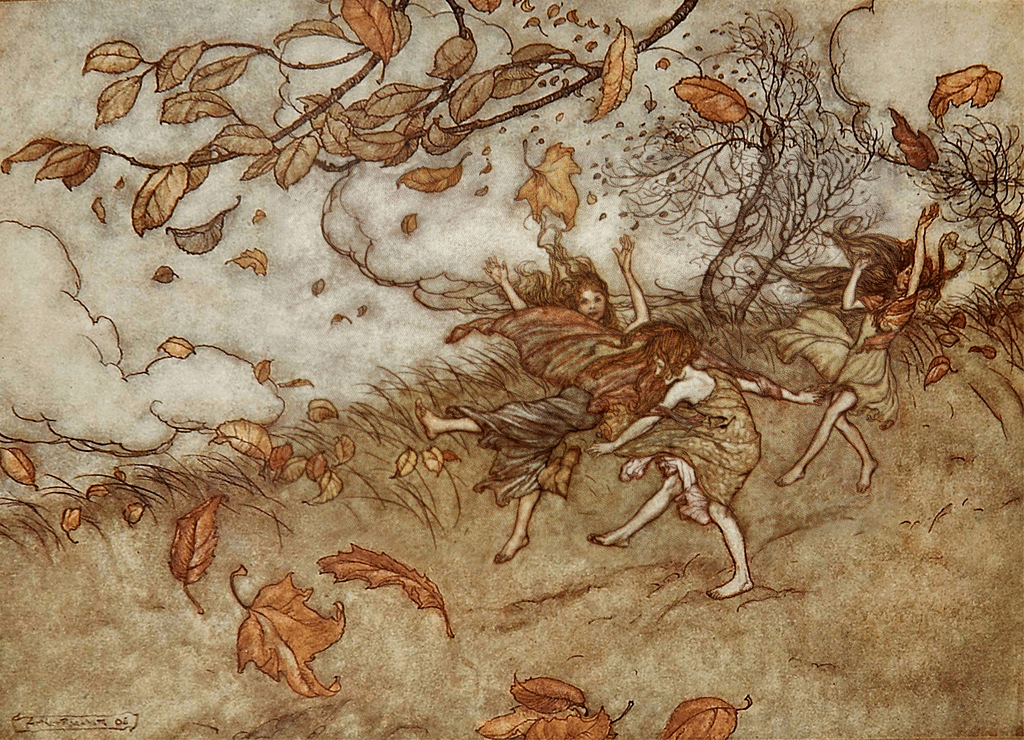
In recent years, I’ve noticed that autumn doesn’t really arrive at full force in Central Jersey until right around the turn of November. True to form, Saturday was a gloriously moody day, a kaleidoscope of sunshine and clouds that set off the luminous foliage to its best advantage.
Of course, it was also probably the windiest day of the season. There was a price to pay for the mesmerizing whirl of fallen leaves, in that now a lot of the trees stand in varying degrees of undress. Also, may I just say, the clean-up crews are a little to vigilant with their leaf-blowers – which I think should be banned, in any case – so that all too often the lawns and streets are left as barren presentiments of bleak winter. I want to crunch through shriveled leaves, dammit, and collect the damp ones that still cling to life and color.
Be that as it may, now that we’ve more or less put away the Hallowe’en decorations for another year, it’s time to fully embrace the season in music, so expect a fair amount of autumnal color to dress up my playlists over the coming week.
Alongside the usual birthday celebrations, I’ll be itching for a leaf battle, between 4 and 7 p.m. EST, on WWFM – The Classical Network and wwfm.org.