In January, I posted a link to an inspiring new piece of television music by John Williams. “Of Grit and Glory” was composed for ESPN’s College Football Playoff National Championship broadcast. It’s use in the introductory montage was undeniably effective, but for those who longed to be able to hear it without the distraction of talking heads and roaring crowds, I am happy to report that someone has posted a video of the work’s world premiere concert performance with the Chicago Symphony Orchestra and the composer conducting. This is especially good news, as ESPN has taken down the original video.
The performance may lack some of the pizzazz of that of the pick-up band that recorded it for ESPN, but that’s the difference between a live concert with a lot of music and limited rehearsal time and an intensive, well-miked recording session, in which the focus is on getting a four-minute piece just right.
Here’s the complete Chicago program, with photos from the concert. For a Williams fan, it looks especially alluring, with a chance to hear some new works and some old favorites, and one or two rarities along the way.
Hopefully the theme will appear on a commercial release in the near future. In the meantime, better save the audio quick, before the video disappears!
Along with “Helena’s Theme” for the forthcoming Indiana Jones movie, it’s nice to have confirmation that the old wizard still has a few tricks up his sleeve.
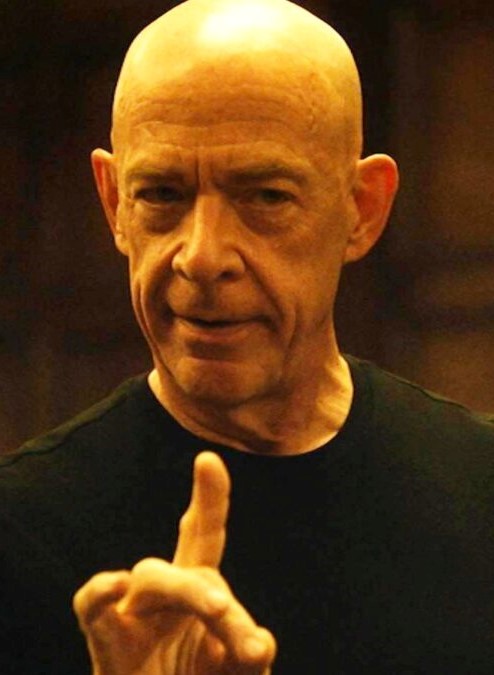
J.K. Simmons earned an Oscar for his portrayal of ruthless bandmaster Terence Fletcher in Damien Chazelle’s breakout film. It’s no secret that Chazelle modeled Simmons’ sociopath on his real-life band instructor at Princeton High School.
Classical music has had more than its share of Terence Fletchers, but few burned as ferociously as Fritz Reiner. From a musician’s standpoint, Reiner was one of the most dreaded conductors, in an era when tyrants of the podium still very much roamed the earth. With a glower that could make Bela Lugosi quake – and sporting quite the similar hairline – Reiner was forged in Hungary at the twilight of the Austro-Hungarian Empire. Hungary at the time had quite the reputation for churning out great conductors. George Szell, Eugene Ormandy, Antal Doráti, Ferenc Fricsay, Sir Georg Solti, and István Kertész all achieved considerable international success.
Among Reiner’s own teachers was Béla Bartók, with whom he studied piano. Reiner would later repay the favor with what many consider to be the benchmark recording of Bartók’s “Concerto for Orchestra.” He also worked closely with Richard Strauss in Dresden, and his recordings of Strauss’ works are equally revered. All in all, the Chicago Symphony under Fritz Reiner was a surefire choice to give the ol’ hi-fi a good workout in the early days of stereo.
In 1928, Reiner became a naturalized American citizen. He began to teach conducting at the Curtis Institute of Music in Philadelphia, where among his pupils was Leonard Bernstein. His first American post was as principal conductor of the Cincinnati Symphony. He took over the Pittsburgh Symphony for a decade, beginning in 1938. Then he spent several years at the Met. But it was as music director of the Chicago Symphony that he attained legendary status.
For a master interpreter of some of the largest and most challenging works in the repertoire, his baton technique was notable for its precision and economy. Much of what he achieved, unfortunately, was through the brutality he exuded in rehearsals. Reiner emerged from an Old World steeped in aristocratic privilege. At the top of their profession, conductors then were regarded as gods-on-earth. When drive and ego were bolstered by absolute power, working conditions could become downright perilous. Before strong musicians’ unions, conductors exercised the authority to fire anyone on a whim. So when musicians played for Reiner, they played as if their lives depended on it – or at the very least their livelihoods.
Did it make for better musicmaking? You can’t argue with the excellence of Reiner’s Chicago Symphony.
It took nearly 90 years for her to become an overnight success.
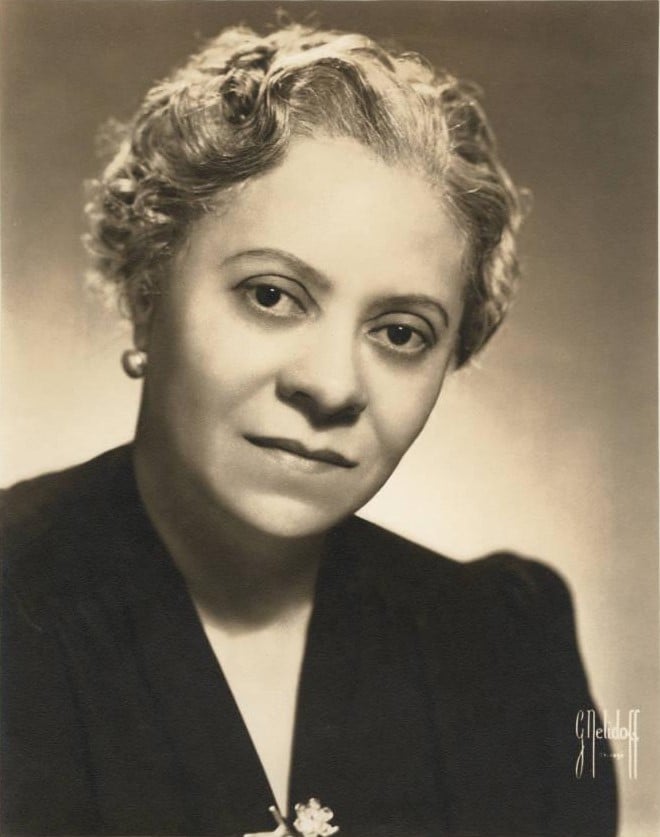
Florence Price was the first African American woman to have a symphony performed by a major orchestra. Her Symphony No. 1 was played by the Chicago Symphony, conducted by Frederick Stock, in 1933.
But it’s only fairly recently, after decades of comparative neglect, that her music has finally begun to gain traction. Now she’s being played everywhere.
Is her sudden popularity a result of social or political trends? Who cares? When the music is this beautiful, everyone wins.
The Chicago Symphony plays Price in 2021 – the Andante Moderato for string orchestra, after a Quartet in G major:
Legendary hornist Dale Clevenger has died. Clevenger played for the American Symphony Orchestra (under Leopold Stokowski) and the Kansas City Philharmonic (where he was principal), before finding a permanent roost with the Chicago Symphony Orchestra. He served as principal there from 1966 to 2013. Music directors and principal conductors during that time included Jean Martinon, Sir Georg Solti, Daniel Barenboim, Bernard Haitink (who died in October), and Riccardo Muti.
Clevenger shared a Grammy Award with his colleagues in the brass sections of the Chicago Symphony and Philadelphia and Cleveland Orchestras, for their now-classic 1968 collaboration “The Antiphonal Music of Gabrieli.”
In 2003, he gave the world premiere of John Williams’ Horn Concerto. He was also acclaimed for his performances of Mozart and Richard Strauss.
Clevenger died yesterday in Italy. He was 81 years old.
In Strauss’ “Till Eulenspiegel”
From Mahler’s Fifth Symphony
Playing Haydn
Benjamin Britten’s “Serenade for Tenor, Horn and Strings”
December 5th is when Krampus, the Christmas demon, descends from his Alpine lair to flog fearful girls and boys. And December 19th is the birthday of Fritz Reiner.
From a musician’s standpoint, Reiner was one of the most dreaded conductors, in an era when tyrants of the podium still very much roamed the earth. With a glower that could make Bela Lugosi quake – and sporting quite the similar hairline – Reiner was forged in Hungary at the twilight of the Austro-Hungarian Empire. Hungary at the time had quite the reputation for churning out great conductors. George Szell, Eugene Ormandy, Antal Doráti, Ferenc Fricsay, Sir Georg Solti, and István Kertész all achieved considerable international success.
Among Reiner’s own teachers was Béla Bartók, with whom he studied piano. Reiner would later repay the favor with what many consider to be the benchmark recording of Bartók’s “Concerto for Orchestra.” He also worked closely with Richard Strauss in Dresden, and his recordings of Strauss’ works are equally revered. All in all, the Chicago Symphony under Fritz Reiner was a surefire choice to give the ol’ hi-fi a good workout in the early days of stereo.
In 1928, Reiner became a naturalized American citizen. He began to teach conducting at the Curtis Institute of Music in Philadelphia, where among his pupils was Leonard Bernstein. His first American post was as principal conductor of the Cincinnati Symphony. He took over the Pittsburgh Symphony for a decade, beginning in 1938. Then he spent several years at the Met. But it was as music director of the Chicago Symphony that he attained legendary status.
For a master interpreter of some of the largest and most challenging works in the repertoire, his baton technique was notable for its precision and economy. Much of what he achieved, unfortunately, was through the brutality he exuded in rehearsals. Reiner emerged from an Old World steeped in aristocratic privilege. At the top of their profession, conductors then were regarded as gods-on-earth. When drive and ego were bolstered by absolute power, working conditions could become downright perilous. Before strong musicians’ unions, conductors exercised the authority to fire anyone on a whim. So when musicians played for Reiner, they played as if their lives depended on it – or at the very least their livelihoods.
Did it make for better musicmaking? You can’t argue with the excellence of Reiner’s Chicago Symphony.
Read this account of the day Reiner finally gave his “perfect concert.”