This has been a bad month for Wagnerians.
It was New Zealand bass-baritone Donald McIntyre’s original ambition to become a professional rugby player. Instead, he became one of the leading Wagner singers of his generation. For over two decades, he ruled the waves as the Flying Dutchman. He also sang Wotan, the king of the gods, in Patrice Chéreau’s landmark production of the “Ring,” conducted by Pierre Boulez, for the Bayreuth centennial in 1976. McIntrye died in Germany on November 13 at the age of 91.
Two days earlier, we lost Oklahoma-born, Texas-raised heldentenor Gary Lakes. In common with McIntyre, Lakes’ early ambition had been to pursue a sport (in his case, American football). He was a defensive tackle in high school, but his life’s course changed after he cracked a vertebra.
Lakes sang Siegmund opposite Jessye Norman’s Sieglinde in the Otto Schenk production of “Die Walküre,” conducted by James Levine at New York’s Metropolitan Opera. This was widely-seen on PBS in June 1990. (The Chéreau-McIntrye “Ring” had been broadcast on PBS in 1983.) Among Lakes’ other Wagnerian roles were Siegfried, Tristan, and Parsifal. He died in Pittsburgh on November 11 at the age of 75.
In this noteworthy photo, taken for the Chicago Symphony Orchestra’s 100th season, your eyes will travel right to Lakes. He dominates the assemblage of top-flight conductors and performers who gathered for the orchestra’s gala opening concert on October 6, 1990.
In the front row, we’ve got, left to right, Isaac Stern, Mstislav Rostropovich, Susanne Mentzer, and Murray Perahia; in the middle, Music Director Designate Daniel Barenboim, Lady Valerie Solti, Music Director Sir Georg Solti, Leonard Slatkin, and Yo-Yo Ma; and in the back, to the left of hulking Gary Lakes, Associate Conductor Kenneth Jean, András Schiff, and Lorin Maazel; and to his right Sylvia McNair and Samuel Ramey.
It says something that even among these giants, Lakes, at 6’ 4”, towers.
Tag: Chicago Symphony Orchestra
-

Mountainous Lakes
-
Loved or Feared Conductors: Fiedler vs. Reiner
Is it better to be feared than loved?
I note that ‘tis the season not only to be jolly, but for births of great conductors who reached full flower during the hi-fi era.
Arthur Fielder’s birthday anniversary was on December 17. For 49 years, Fiedler (1894-1979) was music director of the Boston Pops. He was not the Pops’ first music director – the group was founded in 1885 as an offshoot of the Boston Symphony Orchestra (which Fiedler joined as a violinist in 1915) – but he was certainly its best-known and arguably most-beloved.
Fiedler built the Pops into one of the best known and bestselling orchestras in the United States. He made his first recordings with the group in 1935. With the rise of PBS, he became a regular presence in American living rooms on “Evening at Pops” telecasts, beginning in 1970.
Allegedly, the Fiedler-Pops partnership yielded more recordings than any other conductor-orchestra combo in the world, with album, single, tape, and cassette sales exceeding $50 million.
Because of his phenomenal success as a light classics and crossover conductor, Fiedler’s talent in the more respected classical music repertoire was often overlooked. There’s a lot that he never conducted or that was never recorded, but in Liszt, Rimsky-Korsakov, and even Darius Milhaud, he was never less than first-rate. And as an accompanist to soloists like Earl Wild, he oversaw a number of popular (Gershwin) and cult (Paderewski) classics.
I myself once underrated him, but my long experience in radio set me straight. Once you filter out the kitsch, you’ll find the man made some truly marvelous recordings. On the evidence of these, in a certain kind of music, he could stand toe-to-toe with any conductor in the world. I remember just randomly airing his recording of the “Nutcracker” suite one morning and being struck by how satisfying it was on every level.
As for the splashy arrangements of showtunes and movie themes, and the amusing album covers (Fiedler surrounded by leotard or taffeta-wearing babes, or the one on which he dons Travolta’s iconic white disco suit for a program featuring arrangements of Bee Gees hits), the man knew how give the public what it wanted. How much he believed in the kitsch and how much was canny showmanship, I have no idea. I believe he laughed all the way to the bank, but if so, he did it wholly without contempt for his audience.
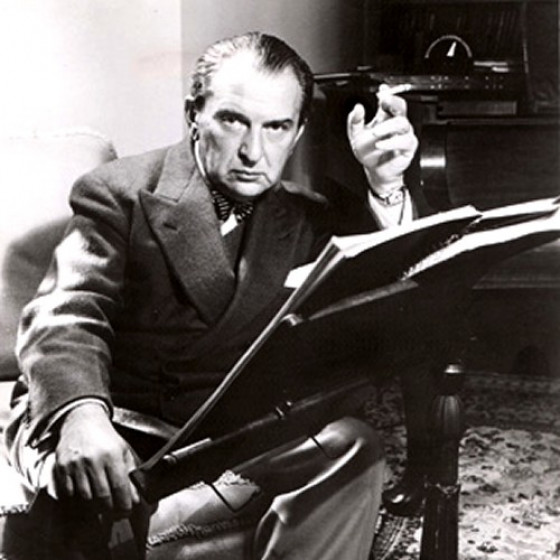
Fritz Reiner (1888-1963), on the other hand, is the last person I would ever imagine on the dance floor. Reiner, born on December 19, was one of the most dreaded conductors, from a musician’s standpoint, in an era when tyrants of the podium still very much roamed the earth. With a glower that could make Karloff quake (though he resembled more Bela Lugosi), Reiner was forged in Hungary at the twilight of the Austro-Hungarian Empire. Hungary at the time had quite the reputation for churning out great conductors. George Szell, Eugene Ormandy, Antal Doráti, Ferenc Fricsay, Sir Georg Solti, and István Kertész all achieved considerable international success.
Among Reiner’s own teachers was Béla Bartók, with whom he studied piano. Reiner would later repay the favor with what many consider to be the benchmark recording of Bartók’s “Concerto for Orchestra.” He also worked closely with Richard Strauss in Dresden, and his recordings of Strauss’ works are equally revered. All in all, the Chicago Symphony under Fritz Reiner was a surefire choice to give the ol’ hi-fi a good workout in the early days of stereo.
In 1928, Reiner became a naturalized American citizen. He began to teach conducting at the Curtis Institute of Music in Philadelphia, where among his pupils was Leonard Bernstein. His first American post was as principal conductor of the Cincinnati Symphony. He took over the Pittsburgh Symphony for a decade, beginning in 1938. Then he spent several years at the Met. But it was as music director of the Chicago Symphony that he attained legendary status.
For a master interpreter of some of the largest and most challenging works in the repertoire, his baton technique was notable for its precision and economy. Much of what he achieved, unfortunately, was through the brutality he exuded in rehearsals. Reiner emerged from an Old World steeped in aristocratic privilege. At the top of their profession, conductors then were regarded as gods-on-earth. When drive and ego were bolstered by absolute power, working conditions could become downright perilous. Before strong musicians’ unions, conductors exercised the authority to fire anyone on a whim. So when musicians played for Reiner, they played as if their lives depended on it – or at the very least their livelihoods.
Did it make for better musicmaking? You can’t argue with the excellence of Reiner’s Chicago Symphony. Unless, of course, you look to Fiedler and the Boston Pops.
Reiner conducts Beethoven
Big band Bach
Benchmark Bartók
Strauss’ “Salome”
And, to keep it seasonal, “Waltz of the Flowers” from “The Nutcracker”
https://www.youtube.com/watch?v=mgaS9CZ7KsQ
Fiedler’s benchmark Gershwin with Earl Wild
Conducting Liszt’s “Mazeppa”
Rimsky-Korsakov’s “Le coq d’or” (“The Golden Cockerel”)
Paderewski Piano Concerto with Wild and the London Symphony Orchestra
https://www.youtube.com/watch?v=O-ZLIXCSZ70
Perhaps one of Fiedler’s least-known recordings: Paul Hindemith’s “Der Schwanendreher,” with the composer as viola soloist
Handel’s organ concertos with Carl Weinrich
Fielder conducts “Waltz of the Flowers”
-
Frank Kaderabek Obituary Philadelphia Orchestra
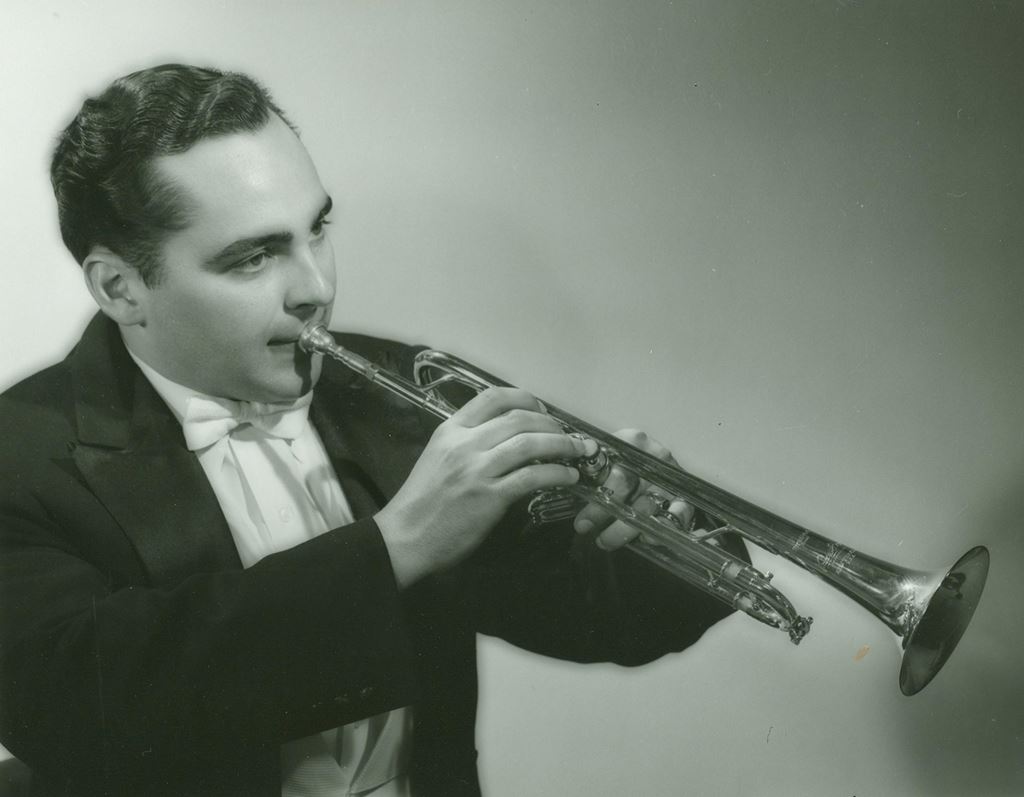
I’m a little late to the table for this one, but I just learned that Frank Kaderabek has died. For me, Kaderabek was a familiar presence from his twenty years as principal trumpet of the Philadelphia Orchestra. But it turns out it was but the crown on an estimable career as an orchestra musician. No doubt he was burnished in the raging fiery furnace of Fritz Reiner’s Chicago Symphony, with its legendary brass section, but he also held positions with the Dallas and Detroit Symphony Orchestras. This may be old news to some, but it’s all new to me. All I know is that Kaderabek was one of the Philly all-stars who played under Ormandy and who made my weekly sojourns to the Academy of Music in the 1980s and ‘90s so rewarding.
Kaderabek died on December 28 at the age of 94. His recordings will live on.
A very informative and satisfying obituary at the link. It really gives a sense of a life well lived.
https://www.legacy.com/us/obituaries/inquirer/name/frank-john-kaderabek-obituary?id=53976009
In Scriabin’s “The Poem of Ecstasy”
Opening Mahler’s Symphony No. 5
And Mussorgsky’s “Pictures at an Exhibition”
I may be wrong about this, and please correct me if I am, but I believe he’s playing shoulder-to-shoulder here with some legendary brass players of Reiner’s Chicago Symphony – under guest conductor Paul Hindemith!
R.I.P.
-

Fritz Reiner: Genius and Grinch
You’re a mean one, Mr. Reiner.
Classical music has had its share of Grinches, but few were as cactus-cuddly as Fritz Reiner. From a musician’s standpoint, Reiner was one of the most dreaded conductors, in an era when tyrants of the podium still very much roamed the earth. With a glower that could make Karloff quake (though he resembled more Bela Lugosi), Reiner was forged in Hungary at the twilight of the Austro-Hungarian Empire. Hungary at the time had quite the reputation for churning out great conductors. George Szell, Eugene Ormandy, Antal Doráti, Ferenc Fricsay, Sir Georg Solti, and István Kertész all achieved considerable international success.
Among Reiner’s own teachers was Béla Bartók, with whom he studied piano. Reiner would later repay the favor with what many consider to be the benchmark recording of Bartók’s “Concerto for Orchestra.” He also worked closely with Richard Strauss in Dresden, and his recordings of Strauss’ works are equally revered. All in all, the Chicago Symphony under Fritz Reiner was a surefire choice to give the ol’ hi-fi a good workout in the early days of stereo.
In 1928, Reiner became a naturalized American citizen. He began to teach conducting at the Curtis Institute of Music in Philadelphia, where among his pupils was Leonard Bernstein. His first American post was as principal conductor of the Cincinnati Symphony. He took over the Pittsburgh Symphony for a decade, beginning in 1938. Then he spent several years at the Met. But it was as music director of the Chicago Symphony that he attained legendary status.
For a master interpreter of some of the largest and most challenging works in the repertoire, his baton technique was notable for its precision and economy. Much of what he achieved, unfortunately, was through the brutality he exuded in rehearsals. Reiner emerged from an Old World steeped in aristocratic privilege. At the top of their profession, conductors then were regarded as gods-on-earth. When drive and ego were bolstered by absolute power, working conditions could become downright perilous. Before strong musicians’ unions, conductors exercised the authority to fire anyone on a whim. So when musicians played for Reiner, they played as if their lives depended on it – or at the very least their livelihoods.
Did it make for better musicmaking? You can’t argue with the excellence of Reiner’s Chicago Symphony.
Fritz Reiner: A Marriage of Talent and Terror
His heart grew three times that day: Fritz Reiner’s perfect concert
He found the strength of ten Reiners, plus two. I guess even autocrats have their cuddly moments. Happy birthday, Fritz Reiner.
Reiner conducts Beethoven
Big band Bach
Benchmark Bartók
Strauss’ “Salome”
And, to keep it seasonal, “Waltz of the Flowers” from “The Nutcracker”
-

Chicago Symphony in Princeton Stripped Down
The Chicago Symphony, stripped down in Princeton!
https://drgeraldstein.wordpress.com/2023/09/10/solti-and-the-orchestra-with-nothing-to-hide/
It’s not for nothing that Solti’s musicians nicknamed him the Screaming Skull. I was alerted to this story this morning on Norman Lebrecht’s blog, Slipped Disc.
Even more fearsome was CSO music director Fritz Reiner. And yet even Reiner had his soft side. Here’s a very different account of the CSO on tour:
To understand what a bastard Reiner could be, again with a Princeton connection (admittedly, supplied by me), read this:
Be sure to follow the link to “Fritz Reiner: A Marriage of Talent and Terror” at the bottom of the post!
Tag Cloud
Aaron Copland (94) Beethoven (95) Composer (114) Film Music (150) Film Score (143) Film Scores (255) Halloween (102) John Williams (198) KWAX (233) Leonard Bernstein (105) Marlboro Music Festival (125) Movie Music (165) Mozart (91) Opera (215) Philadelphia Orchestra (90) Picture Perfect (174) Princeton Symphony Orchestra (110) Radio (90) Ross Amico (244) Roy's Tie-Dye Sci-Fi Corner (290) The Classical Network (101) The Lost Chord (269) Vaughan Williams (107) WPRB (397) WWFM (881)