Tag: Curtis Institute

  • Philadelphia Art Alliance Fire Historic Loss

    Philadelphia Art Alliance Fire Historic Loss

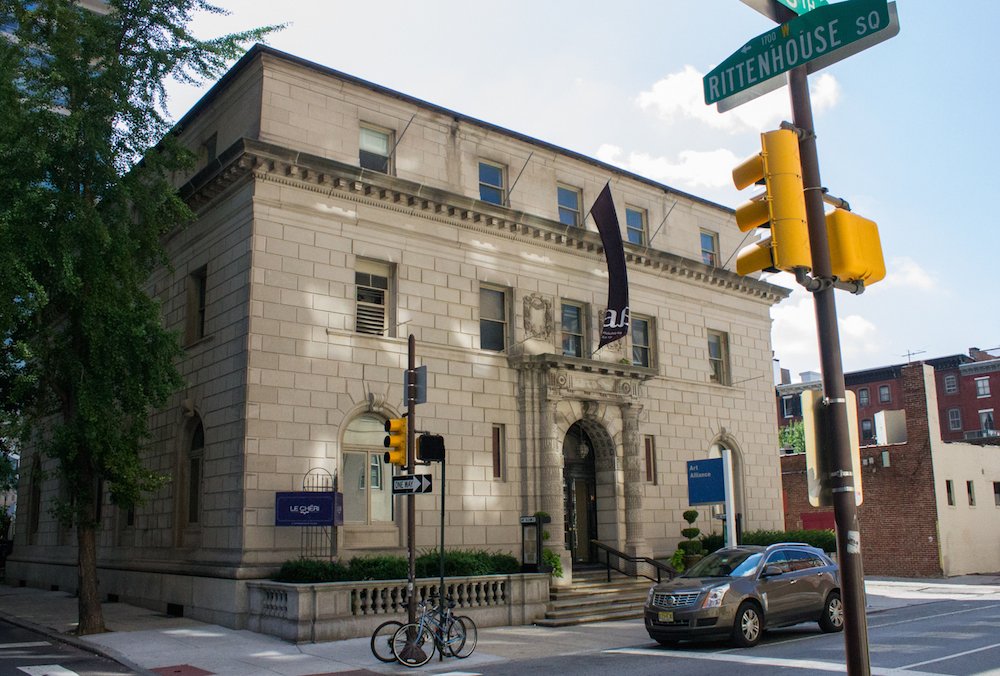
    When I saw the headlines about fire damaging “building owned by Curtis Institute,” my heart sank. The Curtis Institute of Music is such a lovely building. But it was actually historic Wetherill Mansion, located behind Curtis, at 251 South 18th Street, that burned. Not to the ground mind you, but looking rather the worse for wear. The building, formerly owned by the now-defunct University of the Arts, was purchased by Curtis last year. Not that its destruction is not an enormous loss. The longtime home of the Philadelphia Art Alliance, situated on the southeast corner of Rittenhouse Square, was designed by architect Frank Miles Day in 1906.

    For over a century, the Alliance was committed to showcasing local art, craft, and design, while also hosting works by world-renowned artists and architects, such as Mary Cassatt, Le Corbusier, M.C. Escher, Antonio Gaudi, Walter Gropius, George Nakashima, Horace Pippin, Man Ray, and Andrew Wyeth. Among those who performed or read there were Alvin Ailey, W.H. Auden, Leonard Bernstein, John Cage, E.E. Cummings, Merce Cunningham, Buckminster Fuller, Martha Graham, and Dorothy Parker.

    I lived within walking distance of the Alliance for over 30 years, sometimes only within a block or two. When I owned my bookshop at 259 South 17th Street (next to the Medical Tower), I strolled past every day on my morning and evening dog walks to Rittenhouse Square. It was a lovely little block then, before a high rise was erected on 17th Street – admittedly, on the site of a squalid little parking lot, but at least it was open space. You didn’t feel boxed-in, and I could still see the sky from my desk. I believe its construction also resulted in the demolition of the charming old Rittenhouse Medical Bookstore, with its upstairs leaded-glass windows, and with which I had a friendly professional relationship. Next to that was the residence of piano pedagogue Eleanor Sokoloff. Leopold Stokowski once kept an apartment a few doors down, but I believe that too had already been demolished. Across the street was the top-floor residence of a double bassist with whom I used to drink beers on the roof until late at night. She now holds a principal position with a symphony orchestra out west. Come to think of it, I also used to drink with a cellist who lived upstairs from my shop, a Curtis and later Juilliard student, who spent at least as much time on the golf course as he did in class. It was a nice little set-up for me. My irritable dog, a stray recovered from Rittenhouse Square in a thunderstorm, used to amuse herself by standing in the open window, with her front paws in the shop flower box, six feet or so from street level, causing passersby to cry out in surprise and drop their sodas when they were startled by her sharp, sudden barks.

    The Philadelphia Art Alliance was established in 1915 by philanthropist Christine Wetherill Stevenson, heiress of the Pittsburgh Paint Company. Property was purchased to house the enterprise at 1823-25 Walnut Street (with 1827 Walnut added later), but in 1926 the PAA was moved to the Stevenson family home on Rittenhouse Square.

    Stokowski’s wife, the pianist Olga Samaroff, once served on the PAA’s music committee. In 1958, Curtis Institute founder Mary Louise (Curtis) Bok Zimbalist was awarded a PAA Medal of Achievement for “advancement of or outstanding achievement in the arts.”

    The building is on the National Register of Historic Places. I used to lunch there sometimes with the late flutist and bon vivant Robert Stallman.

    The fire broke out early on the morning on July 4, resulting in “significant damage.” Aerial shots of the building reveal a badly compromised roof. Surely there is extensive damage inside, the result of the fire itself, efforts to extinguish it, and whatever materials may have been released by the heat. The cause has yet to be revealed, but I speak from personal experience when I say that Philadelphia is a big fireworks town.

    The craftsmanship and building materials were products of a bygone age. The building can be restored, perhaps, but it’s doubtful that that sense of permanence, instilled by so many institutions of the era, will ever be recaptured.
  • Samuel Barber’s Life and Musical Legacy

    Samuel Barber’s Life and Musical Legacy

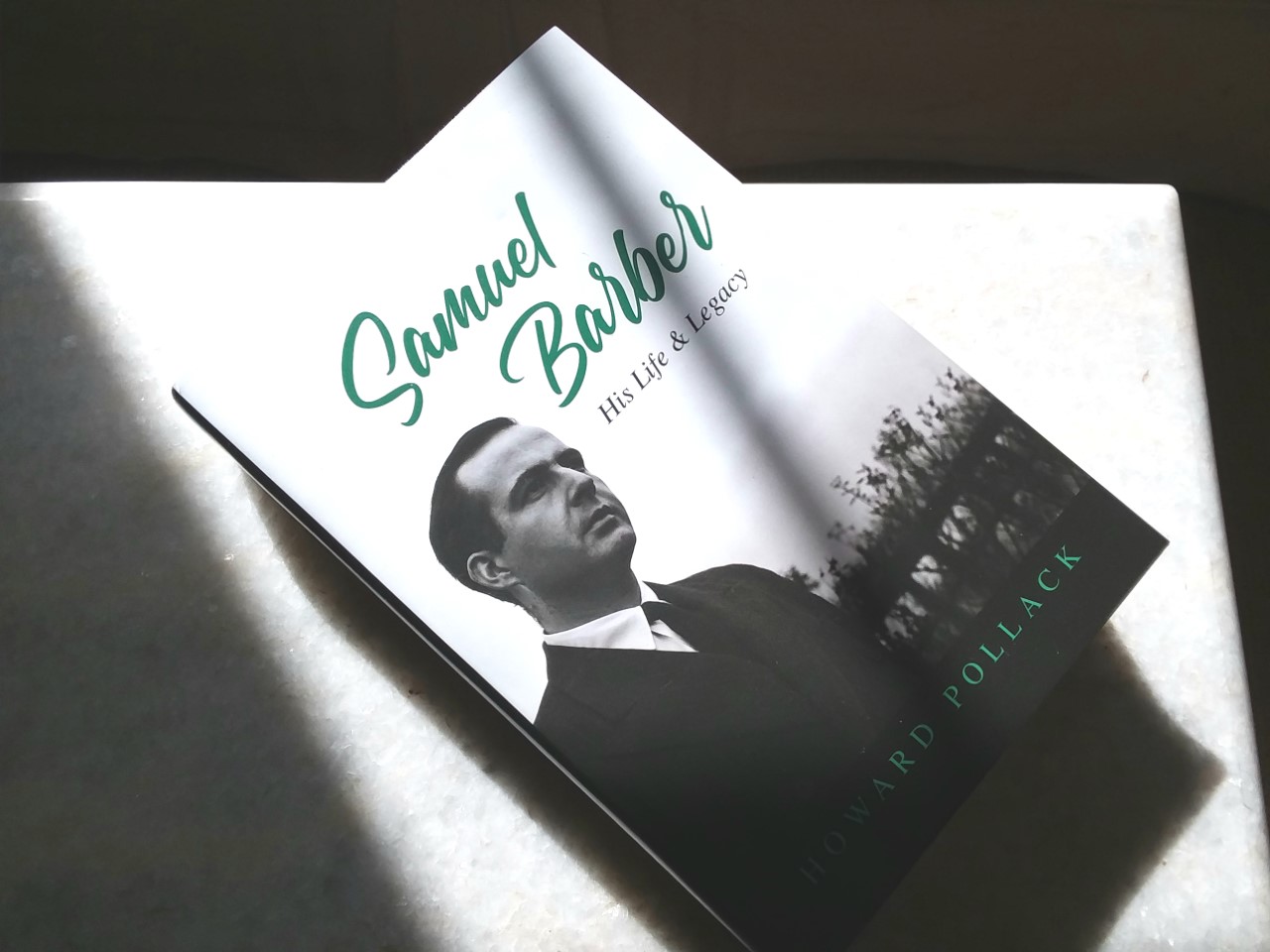
    One of the pleasures of reading Howard Pollack’s latest biography, “Samuel Barber: His Life and Legacy,” is being reminded of just how many interesting musicians Barber encountered. As a lover of film music, I’ve long been aware of Alex North’s birthplace of Chester, PA, not far south of Philadelphia, but I never really thought about the fact that he and Barber were exact contemporaries and indeed classmates at West Chester High School.

    Later, Barber knew Nino Rota from the Curtis Institute (but disliked his music) and Bernard Herrmann, who invited him to guest conduct the CBS Orchestra for his radio series “Invitation to Music.”

    Fascinatingly, Barber sang one of his breakout masterpieces, “Dover Beach,” for Ralph Vaughan Williams, during the latter’s visit to Bryn Mawr to deliver a series of lectures in 1932. The text, by Victorian poet Matthew Arnold – a honeymoon poem written shortly after his marriage to Frances Lucy Wightman – is pervaded by melancholy: in an uncertain world, love is the only source of comfort and peace.

    “He seemed delighted,” Barber recollected of Vaughan Williams’ reaction. “He congratulated me and said, ‘I tried several times to set ‘Dover Beach,’ but you really GOT it!’”

    Traveling on a scholarship to Vienna in 1934, he met George Antheil, Trenton’s “Bad Boy of Music,” whose “Ballet Mécanique” had caused a riot in Paris in 1926. The two talked music and shared scores. Barber liked what he saw and heard, and Antheil, ten years older, was “surprisingly enthusiastic” about the young man’s work. Barber found Antheil likeable and sincere and wrote to his family that the two had “parted, the best of friends.”

    Barber would earn further admiration internationally, with works performed in Europe and the Soviet Union. The idea of Yevgeny Mravinsky conducting Barber is as tantalizing as Gustav Mahler’s interest in performing Charles Ives.

    As someone born in small-town Pennsylvania, and later having lived in Philadelphia for over three decades, I was also very interested to learn about some of the early works Barber composed for his hometown of West Chester and for Longwood Gardens. Barber knew the Du Ponts and performed on the organ there. Of course, he studied at Philadelphia’s Curtis Institute of Music, on Rittenhouse Square, and had many works performed by the Philadelphia Orchestra.

    The book follows the pattern of Pollack’s Copland biography, interleaving biographical detail with chapters in which the music is treated in greater depth. I hasten to add that the writing is not overloaded with technical jargon, so that it always remains fully accessible – and interesting – to the general reader. Of course, it helps if music is your passion. At the same time, there are abundant notes in the book’s appendices for anyone who would like to dig deeper.

    Most happily, the book accomplishes what any undertaking of this sort should do, and that’s inspire the reader to revisit Barber’s music. I don’t own a smartphone, so I’m not one of those people who is always riveted to an electronic device in public. I generally have some reading material or my thoughts to keep me company. However, last week I found myself in a situation where I was stuck someplace with nothing to do, and kept myself entertained by trying to remember the musical details of as many of Samuel Barber’s pieces as possible. It’s astonishing, the amount of information we’re able to call up from our brains!

    The composer adored Brahms at a time when such an enthusiasm might have seemed regressive to more limited souls. His close relationships with Gian Carlo Menotti, his teachers, his advocates, and his patrons, ensured he often had one foot in Europe.

    He was seldom as overtly “American-sounding” as Copland or Bernstein or Roy Harris or William Schuman. His music is imbued with more Old-World elegance, perhaps, than was common among his peers. If anything, it makes it seem all the sturdier, and all the more enduring.

    Howard Pollack’s “Samuel Barber: His Life and Legacy,” published by University of Illinois Press, is out today, available online or through your local bookstore. For more information, follow the link.

    https://www.press.uillinois.edu/books/?id=c044908&fbclid=IwAR0FtgkjO_EeSqjbfWEJB-0Wlh7eSldgHy1PqBSG200sXh_SdOBrSP5ntbQ


    “To Longwood Gardens”

    “Fresh from West Chester”: II. Let’s Sit It Out, I’d Rather Watch

    “Dover Beach,” with Barber and the Curtis String Quartet

    The Brahmsian “School for Scandal Overture”

  • Aaron Rosand Violin Virtuoso Dies at 92

    Aaron Rosand Violin Virtuoso Dies at 92

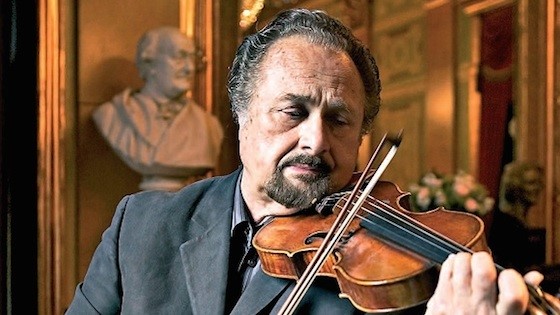
    “I never let setbacks put me down for long,” said Aaron Rosand. “I bounce back, and I fight back, and my inner confidence takes over. I know what I have to offer, and I am going to do it to the end of my days.”

    The inspirational violinist died on Tuesday.

    Rosand studied at the Curtis Institute with Efrem Zimbalist and later taught there, from 1981 until his retirement only months ago. Rosand also taught at the Mannes School of Music.

    He recorded prolifically and had a fine career, but it could have been even better. Late in life, he went on record to confirm rumors that he had been undercut repeatedly by a jealous and powerful rival.

    At one point, Rosand had 75 concertos in his active repertoire. He claimed never to have forgotten a note. He singled out the Walton and Korngold concertos as two of his favorites. He was particularly proud of his recordings of Beethoven’s complete works for violin and his early recording of Sarasate showpieces.

    A great teacher and a great musician, he disliked exercise, but loved scotch, ice cream, and classic movies. Rosand was 92 years-old.


    Rosand plays Sarasate:

    https://www.youtube.com/watch?v=cyx4yFtyHU8

    Rosand the teacher:

    The secret of his success. Still sounding great at 80.

Tag Cloud

Aaron Copland (92) Beethoven (95) Composer (114) Film Music (119) Film Score (143) Film Scores (255) Halloween (94) John Williams (185) KWAX (229) Leonard Bernstein (99) Marlboro Music Festival (125) Movie Music (134) Opera (198) Philadelphia Orchestra (86) Picture Perfect (174) Princeton Symphony Orchestra (106) Radio (87) Ralph Vaughan Williams (85) Ross Amico (244) Roy's Tie-Dye Sci-Fi Corner (290) The Classical Network (101) The Lost Chord (268) Vaughan Williams (102) WPRB (396) WWFM (881)

DON’T MISS A BEAT

Receive a weekly digest every Sunday at noon by signing up here


RECENT POSTS