Tag: Danish composer

  • Leif Kayser Danish Composer Centenary

    Leif Kayser Danish Composer Centenary

    Composer, organist, pianist, conductor, priest, husband, teacher – Leif Kayser was certainly a multifaceted individual.

    Born in Copenhagen on this date in 1919, Kayer began his studies at the Royal Danish Academy of Music in 1936. In Stockholm, he studied composition with Hilding Rosenberg and conducting with Tor Mann. In 1941, he made his debut as a pianist, in Copenhagen, and as a conductor, in Gothenburg.

    As a composer, he emerged as one of Denmark’s most promising young symphonists. However, following theological studies in Rome, Kayser was ordained in 1949. He largely abandoned concert music – but you can’t keep a good composer down.

    Over time, he began to write for the organ and gradually he produced another symphony. He served as pastor and organist of St. Ansgar Roman Catholic Cathedral until 1964. Then he left the Church to marry and to teach at his alma mater, the Royal Danish Academy of Music.

    Kayser died in 2001. He is still regarded as one of the leading organ composers of Denmark.

    We’ll remember Leif Kayser, on the 100th anniversary of his birth, with a performance of his Symphony No. 2. It will serve as the spire atop a cathedral in sound, as we also observe the birthdays today of Antonín Vranický (1761-1820), Anton Eberl (1765-1807), and Carlos Chávez (1899-1978).

    That will be me in the cowl, enacting the ol’ switcheroo with David Osenberg, from 4 to 7 p.m. EDT, on WWFM – The Classical Network and wwfm.org.


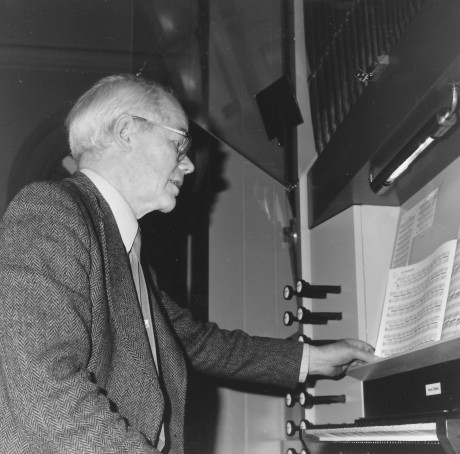
    PHOTO: Kayser pulls out all the stops for his centenary
  • Rued Langgaard Eccentric Genius Rediscovered

    Rued Langgaard Eccentric Genius Rediscovered

    Even by composer standards, Rued Langgaard (1893-1952) was a little bit of a strange bird. Despite a promising start – born to musical parents, a precocious childhood, meetings with major conductors, and a symphony performed by the Berlin Philharmonic – his personal and creative eccentricities worked against him.

    Langgaard followed his personal muse deep into the realm of late Romanticism at a time when most of the musical world was exploring modernist territory. Though he was given a state grant at 30, he failed to secure a permanent job until the age of 46, as an organist at the cathedral in Ribe, the oldest town in Denmark – which somehow seems appropriate for this most anachronistic of Danish outsiders.

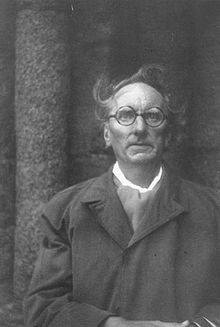
    An eccentric, shabby figure with wild hair, Laangaard died in Ribe 13 years later, in 1952, just shy of his 59th birthday, still largely unrecognized as a composer.

    His reputation would not begin to gain traction for another 16 years. In all, he composed over 400 works, including 16 symphonies – which bear evocative titles such as “Yon Hall of Thunder” and “Deluge of the Sun” – and an opera, “Antikrist.”

    It was in 1968 that no less a personage than György Ligeti found himself on a jury alongside Danish composer Per Nørgård. In this capacity, he examined a large number of new scores by Scandinavian composers. Unbeknownst to his fellow jurors, Nørgård had slipped in the score of Langgaard’s “Music of the Spheres.” Ligeti became captivated by what he found. When the ruse was revealed, he exclaimed, with a twinkle in his eye, “Gentlemen, I have just discovered that I am a Langgaard epigone!”

    Langgaard had anticipated some of the technical aspects – tone clusters, layers, and so forth – which would appear in Ligeti’s avant garde experiments of the 1960s, in works such as “Atmosphères.”

    Hear “Music of the Spheres,” alongside Langgaard’s String Quartet No. 3, this week on “The Lost Chord.” That’s “Rued Awakenings,” this Sunday night at 10:00 EDT, on WWFM – The Classical Network and wwm.org.

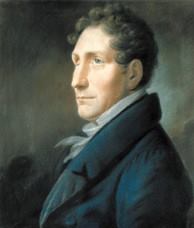
  • Kuhlau’s Life From Misfortune to Music

    Kuhlau’s Life From Misfortune to Music

    Into every life a little rain must fall. Tell that to Friedrich Kuhlau, the German-born Danish composer.

    At the age of seven, Kuhlau lost an eye when he slipped on the ice and fell on a bottle. In 1810, he fled to Copenhagen to avoid conscription into Napoleon’s army. There, he struggled to gain acceptance in Danish musical life. It was a bumpy ride, marked by modest success and spectacular failure.

    Then, only a few years after he scored his greatest hit in 1828 with incidental music to the play “Elverhøj” (“The Elf’s Hill”), his house caught fire. He was forced to spend most of the night out in the freezing cold, a result of which he developed a chest ailment that drove him to his death in 1832.

    Happily, his ill-fortune is nowhere in evidence in his flute quintets. We’ll hear one of them this afternoon, on the anniversary of Kuhlau’s birth, alongside works of William Boyce, Arvo Pärt and more, between 4 and 7 p.m. EDT, on WWFM The Classical Network and wwfm.org.


    Friedrich Kuhlau – he’s not winking.

  • Carl Nielsen A Labor Day Composer

    Carl Nielsen A Labor Day Composer

    Carl Nielsen understood the value of hard work. He grew up, one of twelve children, in a musical family of very limited means. By the time he was accepted into the Royal Danish Academy of Music in Copenhagen, he had already been performing and composing for many years. Like “The Ugly Duckling” of his compatriot Hans Christian Andersen, he emerged from humble origins to become a cherished thing of beauty, embraced as his country’s national composer.

    Nielsen described the finale of his Symphony No. 3 as “a hymn to work and the healthy activity of living.” Enjoy it tomorrow morning, as we anticipate the Labor Day weekend with musical salutes to labor and the worker.

    Be there with your lunch pail and dungarees, from 6 to 11 EDT, on WPRB 103.3 FM. We’re always working hard for your enjoyment, on Classic Ross Amico.


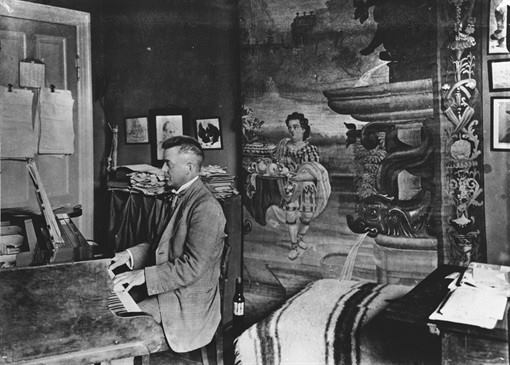
    PHOTO: Nielsen breaking a sweat in his workroom, where he completed his Symphony No. 3 in 1911

  • Rued Langgaard Eccentric Genius Rediscovered

    Rued Langgaard Eccentric Genius Rediscovered

    Even by composer standards, Rued Langgaard (1893-1952) was a little bit of a strange bird. Despite a promising start – born to musical parents, a precocious childhood, meetings with major conductors, and a symphony performed by the Berlin Philharmonic – his personal and creative eccentricities worked against him.

    Langgaard followed his personal muse deep into the realm of late Romanticism at a time when most of the musical world was exploring modernist territory. Though he was given a state grant at 30, he failed to secure a permanent job until the age of 46, as an organist at the cathedral in Ribe, the oldest town in Denmark – which somehow seems appropriate for this most anachronistic of Danish outsiders.

    An eccentric , shabby figure with wild hair, Laangaard died in Ribe 13 years later, in 1952, just shy of his 59th birthday, still largely unrecognized as a composer.

    His reputation would not begin to gain traction for another 16 years. In all, he composed over 400 works, including 16 symphonies – which bear evocative titles such as “Yon Hall of Thunder” and “Deluge of the Sun” – and an opera, “Antikrist.”

    Be sure to listen in, in the 9:00 hour this morning, to enjoy Langgaard’s Symphony No. 4, subtitled “Fall of the Leaf.” It’s all music about autumn this morning until 11:00 ET, at WPRB 103.3 FM and online at wprb.com.

Tag Cloud

Aaron Copland (93) Beethoven (95) Composer (114) Film Music (126) Film Score (143) Film Scores (255) Halloween (94) John Williams (189) KWAX (229) Leonard Bernstein (101) Marlboro Music Festival (125) Movie Music (141) Mozart (87) Opera (203) Philadelphia Orchestra (89) Picture Perfect (174) Princeton Symphony Orchestra (107) Radio (87) Ross Amico (244) Roy's Tie-Dye Sci-Fi Corner (290) The Classical Network (101) The Lost Chord (268) Vaughan Williams (103) WPRB (396) WWFM (881)

DON’T MISS A BEAT

Receive a weekly digest every Sunday at noon by signing up here


RECENT POSTS