Tag: Danish composers

  • Dacapo Records Rediscovering Danish Classics

    Dacapo Records Rediscovering Danish Classics

    Dacapo Records, the self-described “Danish National label,” was founded in 1989 to promote the classical music of Denmark. Danish music composed over a period of a thousand years forms the core of the Dacapo discography. This week on “The Lost Chord,” I hope you’ll “Dane” to join me for representative works by Emil Reesen and Asger Hamerik.

    Reesen made his mark in ballet, opera, and film score. He was also a concert pianist, who studied with Siegfried Langgaard, a pupil of Franz Liszt. In 1927, he was appointed conductor of the Danish Radio Symphony Orchestra. In 1931, he also began work as a ballet conductor at the Royal Danish Theatre. Later in life, he conducted the Vienna Symphony and made recordings with the Berlin Philharmonic.

    Reesen is probably best-known for his operetta “Farinelli.” We’ll hear his 1928 “Variations on a Theme by Franz Schubert” (only a few days after Schubert’s birthday anniversary on January 31st).

    Asger Hamerik studied at home with J.P.E. Hartmann and Niels Wilhelm Gade, in Berlin with Hans von Bulow, and in Paris with Hector Berlioz. Berlioz would remain a lasting influence, as would Dukas and Franck.

    Hamerik went on to serve as director of the Peabody Institute in Baltimore for over a quarter century (1871-98). Many of his large-scale orchestral works were first performed by the Peabody orchestra.

    He returned to Denmark in 1900. In his lifetime, he was considered the best-known Danish composer after Gade. (Things changed in a hurry with the rise of Carl Nielsen.)

    We’ll hear his final symphony, the Symphony No. 7 – the “Choral” Symphony – from 1897, a work that drew comparisons to the works of Mahler for its sheer size. Its first performance in Baltimore employed hundreds of musicians.

    I hope you’ll join me, as Danish music makes its mark this week, on “Denmarketing” – recordings from the Dacapo Records catalogue – on “The Lost Chord,” now in syndication on KWAX, the radio station of the University of Oregon!


    Remember, KWAX is on the West Coast, so there’s a three-hour difference for those of you listening in the East. Here are the respective air-times for all three of my recorded shows (with East Coast conversions in parentheses):

    PICTURE PERFECT, the movie music show – Friday on KWAX at 5:00 PM PACIFIC TIME (8:00 PM EST)

    SWEETNESS AND LIGHT, the light music program – ALL NEW! – Saturday on KWAX at 8:00 AM PACIFIC TIME (11:00 AM EST)

    THE LOST CHORD, unusual and neglected rep – Saturday on KWAX at 4:00 PM PACIFIC TIME (7:00 PM EST)

    Stream all three, at the times indicated, by following the link!

    https://kwax.uoregon.edu/


    BONUS: Emil Reesen conducts the “Dance of the Cockerels” from Nielsen’s “Maskarade”

  • Danish Classical Music From Dacapo Records

    Danish Classical Music From Dacapo Records

    Dacapo Records, the self-described “Danish National label,” was founded in 1989 to promote the classical music of Denmark. Danish music composed over a period of a thousand years forms the core of the Dacapo discography. This Sunday night on “The Lost Chord,” I hope you’ll “Dane” to join me for representative works by Emil Reesen and Asger Hamerik.

    Reesen made his mark in ballet, opera, and film score. He was also a concert pianist, who studied with Siegfried Langgaard, a pupil of Franz Liszt. In 1927, he was appointed conductor of the Danish Radio Symphony Orchestra. In 1931, he also began work as a ballet conductor at the Royal Danish Theatre. Later in life, he conducted the Vienna Symphony and made recordings with the Berlin Philharmonic.

    Reesen is probably best-known for his operetta “Farinelli.” We’ll hear his “Variations on a Theme by Franz Schubert” (on the eve of Schubert’s birthday), from 1928.

    Asger Hamerik studied at home with J.P.E. Hartmann and Niels Wilhelm Gade, in Berlin with Hans von Bulow, and in Paris with Hector Berlioz. Berlioz would remain a lasting influence, as would Dukas and Franck.

    Hamerik went on to serve as director of the Peabody Institute in Baltimore for over a quarter century (1871-98). Many of his large-scale orchestral works were first performed by the Peabody orchestra.

    He returned to Denmark in 1900. In his lifetime, he was considered the best-known Danish composer after Gade. (Things changed in a hurry with the rise of Carl Nielsen.)

    We’ll hear his final symphony, the Symphony No. 7 – the “Choral” Symphony – from 1897, a work that drew comparisons to the works of Mahler for its sheer size. Its first performance in Baltimore employed hundreds of musicians.

    I hope you’ll join me, as Danish music makes its mark this week, on “Denmarketing” – recordings from the Dacapo Records catalogue – this Sunday night at 10:00 EST, on WWFM – The Classical Network and wwfm.org.


    BONUS: Emil Reesen conducts the “Dance of the Cockerels” from Nielsen’s “Maskarade”
  • Danish Light: Kuhlau, Nielsen & Marlboro

    Danish Light: Kuhlau, Nielsen & Marlboro

    As we approach the shortest day, it’s all the more important to keep looking on the bright side.

    Just ask German-Danish composer Friedrich Kuhlau. At the age of seven, Kuhlau lost an eye when he slipped on the ice and fell on a bottle. In 1810, he fled to Copenhagen to avoid conscription into Napoleon’s army. There, he struggled to gain acceptance into Danish musical life. It was a bumpy ride, marked by modest success and spectacular failure.

    Then, only a few years after he scored his greatest hit, in 1828, with incidental music to the play “Elverhøj” (“The Elf’s Hill”), his house caught fire. He was forced to spend most of the night out in the freezing cold, as a result of which he developed a chest ailment that drove him to an untimely death at the age of 46.

    Happily, his ill-fortune is nowhere in evidence in his flute quintets. We’ll hear one of them on this week’s “Music from Marlboro.” The Flute Quintet in D major, Op. 51, No. 1, will be performed by flutist Julia Bogorad, violinist Ralph Evans, violists Ira Weller and Samuel Rhodes, and cellist Marcy Rosen, at the 1979 Marlboro Music Festival.

    Like “The Ugly Duckling” of his compatriot, Hans Christian Andersen, Carl Nielsen emerged from humble beginnings to blossom into Denmark’s national composer. Internationally, Nielsen has flitted in and out of the seemingly inescapable shadow of Finnish master Jean Sibelius. Both men were born in 1865. In fact, Nielsen was six months older. But it is an unfair comparison, not so much apples and oranges; more like kipper and pickled herring.

    The very fact that Nielsen is not referred to reductively as “The Sibelius of Denmark” is attributable to an unusually strong individual voice. His music is modern, yet traditional; Scandinavian, yet Germanic. Most important, it is full of personality, freshness and vitality.

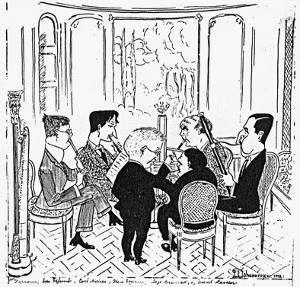
    Nielsen’s Wind Quintet of 1922 reflects the composer’s optimism and good humor. These he retained despite great personal, professional, and global turmoil. Each part of the quintet was tailored to the personality of the individual performer for which it was written (members of the Copenhagen Wind Quintet). There is also something of the outdoors about the piece. Nielsen was always fascinated by nature, and there are ample suggestions of bird song woven into the texture of the work’s pastoral neoclassicism.

    We’ll enjoy a recording made at Marlboro in 1971, with flutist Paula Robison, oboist Joseph Turner, clarinetist Larry Combs, bassoonist William Winstead, and hornist Robin Graham.

    Lighten up with an hour of Danish quintets, on the next “Music from Marlboro,” this Wednesday evening at 6:00 EST, on WWFM – The Classical Network and wwfm.org.

    Marlboro School of Music and Festival: Official Page


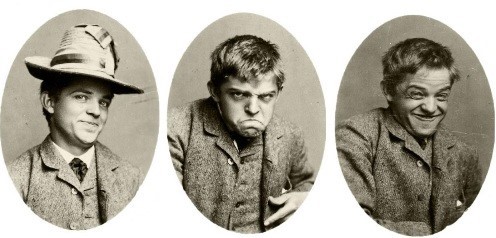
    PHOTOS: Tak for kaffe, with cheese Danish: the young Carl Nielsen

  • Danish Quintets Kuhlau and Nielsen

    Danish Quintets Kuhlau and Nielsen

    Into every life a little rain must fall. Tell that to Friedrich Kuhlau, the German-born Danish composer.

    At the age of seven, Kuhlau lost an eye when he slipped on the ice and fell on a bottle. In 1810, he fled to Copenhagen to avoid conscription into Napoleon’s army. There, he struggled to gain acceptance in Danish musical life. It was a bumpy ride, marked by modest success and spectacular failure.

    Then, only a few years after he scored his greatest hit in 1828 with incidental music to the play “Elverhøj” (“The Elf’s Hill”), his house caught fire. He was forced to spend most of the night out in the freezing cold, as a result of which he developed a chest ailment that drove him to an untimely death at the age of 46.

    Happily, his ill-fortune is nowhere in evidence in his flute quintets. We’ll hear one of them on this week’s “Music from Marlboro.” The Flute Quintet in D major, Op. 51, No. 1, will be performed by flutist Julia Bogorad, violinist Ralph Evans, violists Ira Weller and Samuel Rhodes, and cellist Marcy Rosen, at the 1979 Marlboro Music Festival.

    Then the winds will multiply for music by Denmark’s most famous composer, Carl Nielsen.

    Like “The Ugly Duckling” of his compatriot, Hans Christian Andersen, Nielsen emerged from humble beginnings to blossom into Denmark’s national composer. Internationally, Nielsen has flitted in and out of the seemingly inescapable shadow of Finnish master Jean Sibelius. Both men were born in 1865. In fact, Nielsen was six months older. But it is an unfair comparison, not so much apples and oranges; more like kipper and pickled herring.

    The very fact that Nielsen is not referred to reductively as “The Sibelius of Denmark” is attributable to an unusually strong individual voice. His music is modern, yet traditional; Scandinavian, yet Germanic. Most important, it is full of personality, freshness and vitality.

    Nielsen’s Wind Quintet of 1922 reflects the composer’s optimism and good humor. Each part was tailored to the personality of the individual performer for which it was written (members of the Copenhagen Wind Quintet). There is also something of the outdoors about the piece. Nielsen was always fascinated by nature, and there are ample suggestions of bird song woven into the texture of the work’s pastoral neoclassicism.

    We’ll enjoy a recording made at Marlboro in 1971, with flutist Paula Robison, oboist Joseph Turner, clarinetist Larry Combs, bassoonist William Winstead, and hornist Robin Graham.

    I hope you’ll “deign” to join me for an hour of Danish quintets, on the next “Music from Marlboro,” this Wednesday evening at 6:00 EDT, on WWFM – The Classical Network and wwfm.org.

    Marlboro School of Music and Festival: Official Page


    IMAGE: Period cartoon of the first performance of Nielsen’s Wind Quintet

Tag Cloud

Aaron Copland (92) Beethoven (95) Composer (114) Film Music (119) Film Score (143) Film Scores (255) Halloween (94) John Williams (185) KWAX (229) Leonard Bernstein (99) Marlboro Music Festival (125) Movie Music (134) Opera (198) Philadelphia Orchestra (86) Picture Perfect (174) Princeton Symphony Orchestra (106) Radio (87) Ralph Vaughan Williams (85) Ross Amico (244) Roy's Tie-Dye Sci-Fi Corner (290) The Classical Network (101) The Lost Chord (268) Vaughan Williams (102) WPRB (396) WWFM (881)

DON’T MISS A BEAT

Receive a weekly digest every Sunday at noon by signing up here


RECENT POSTS