Tag: Dinu Lipatti

  • Nadia Boulanger Influential Teacher

    Nadia Boulanger Influential Teacher

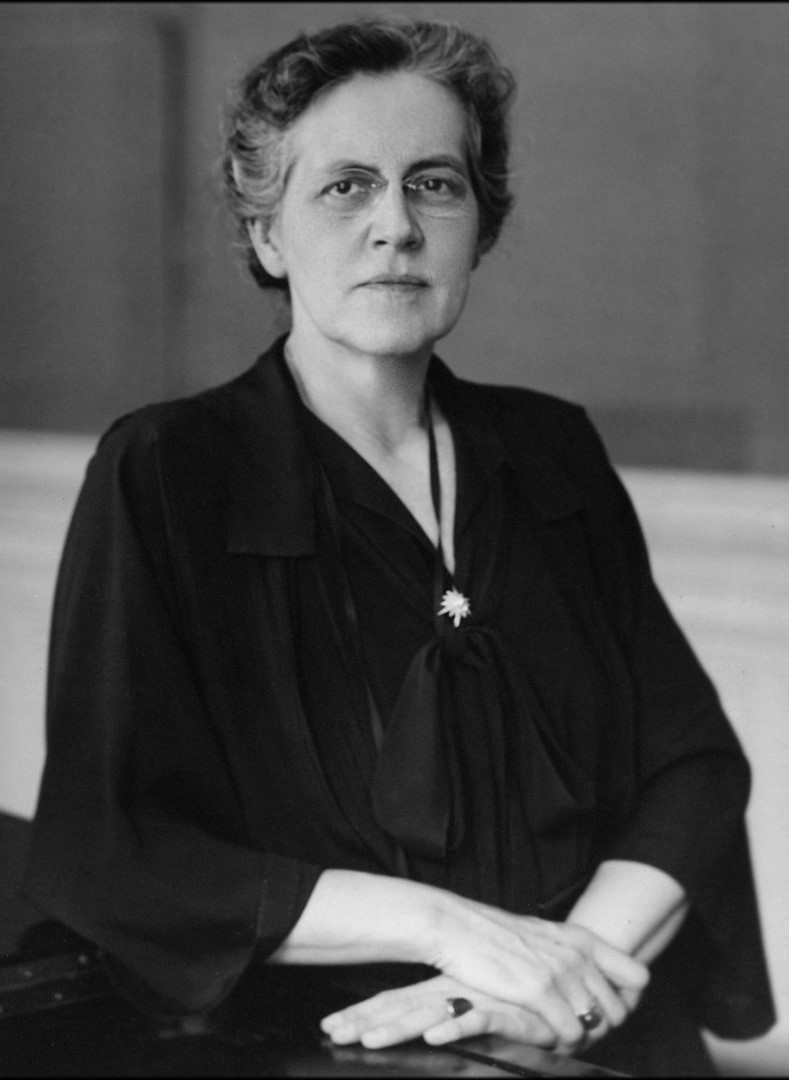
    Nadia Boulanger (1887-1979) has been described as the most influential teacher since Socrates.

    Her students included everyone from Dinu Lipatti to Igor Markevitch, from Aaron Copland to Elliott Carter, from Astor Piazzolla to Philip Glass, from Michel Legrand to Quincy Jones, from Leonard Bernstein to “What Makes It Great?” creator Rob Kapilow.

    Her influence on American music, in particular, has been incalculable. Hopefuls flocked to her American Conservatory at Fontainebleau, where she accepted applicants from all backgrounds, provided they were determined to learn. It was Virgil Thomson who quipped, “She was a one-woman graduate school, so powerful and permeating that legend credits every United States town with two things: a five and dime and a Boulanger pupil.” The five and dimes may have faded, but not so the legacy of the “Boulangerie.”

    Beneath those grey hairs and pince-nez lurked an iron will that brooked no nonsense, yet Boulanger was surprisingly accepting, astonishingly objective, and generally dead-on in her assessments. When asked if a hierarchy could be established among composers – Beethoven being more important than Max Bruch, for instance – she suggests the pointlessness of such comparisons, stating it is like comparing the Himalayas to Montmartre.

    She accepted the philosophical breadth of her pupils as a matter of course: “It’s very different to confront a work you don’t know yet, or a work in which you have to recognize some worth, while secretly saying to yourself, ‘that’s a trend I would never follow.’ That’s a matter of personal taste. Cannot culture allow us to go beyond personal taste and see the beauty of an object? I may not want to buy it, but I can see that it’s beautiful.”

    We need more of that in our world. Happy birthday, Nadia Boulanger!


    Fascinating Boulanger documentary, with first-hand accounts, historical footage, and terrific insights. Leonard Bernstein is interviewed in French, beginning around the 7-minute mark.

    Boulanger conducts Fauré’s Requiem

    Her sister, Lili, was really the composer in the family. (Sadly short-lived, she died at the age of 24.) Even so, Nadia made some game attempts at composition. Here’s her own “Fantaisie variée” for piano and orchestra.

    Three Pieces for Cello and Piano

    Playing Brahms waltzes with Dinu Lipatti
  • George Enescu Hands The Genius Behind the Music

    George Enescu Hands The Genius Behind the Music

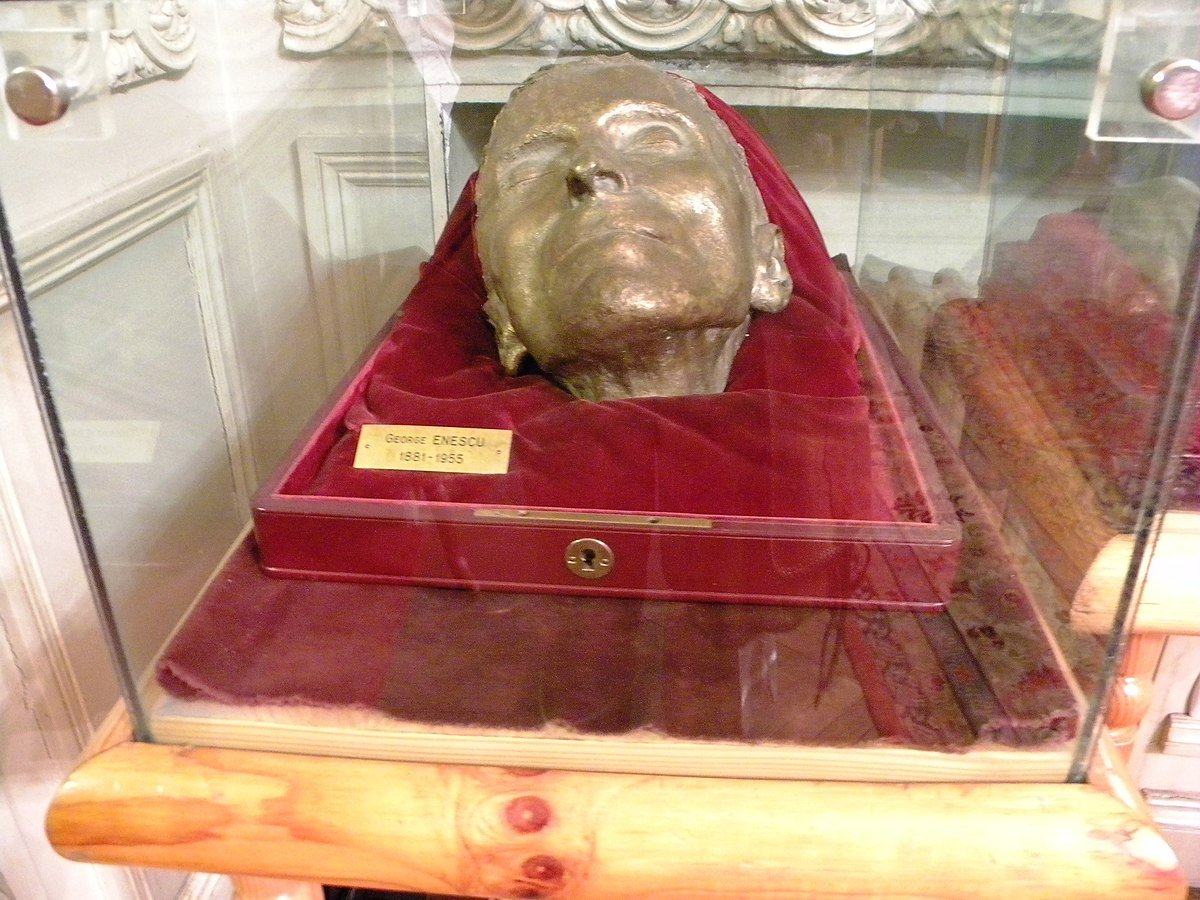
    There’s always something a little morbid about these casts of famous musicians’ hands. Aren’t the death masks enough?

    Oh, wait a minute. They’ve got one of those, too…

    These are the hands of George Enescu, on display at the George Enescu National Museum in Bucharest.

    Granted, while they were alive, the appendages that served as models were extraordinary, as were the synapses that fired inside the head that yielded the mask. Enescu was Romania’s most celebrated musician – as violinist, pianist, conductor, and composer a quadruple threat – a child prodigy who would also one day excel as a teacher.

    At the age of seven, Enescu became the youngest student ever to be admitted to the Vienna Conservatory. He graduated before his 13th birthday. From there, he went to Paris and embarked on a charmed career with too many highlights to detail here. Pablo Casals, described him as “the greatest musical phenomenon since Mozart.”

    He composed his biggest hit, the Romanian Rhapsody No. 1 (1901), at the age of 19. So popular did it prove that it became a kind of millstone to Enescu. People didn’t want to hear anything else. They still don’t!

    On Enescu’s birthday, I hope you’ll find these links “handy,” and that you’ll take a few minutes to sample some of his other music.


    A lovely piece for a summer’s day, the Decet for Winds (1906)

    A live performance of Enescu’s first published piece, the “Romanian Poem” (1898), written when he was only 16:

    Concert Overture on Popular Romanian Themes (1948)

    Enescu plays his own Violin Sonata No. 3 (1926), with legendary Romanian pianist Dinu Lipatti:

    Lipatti plays Enescu’s Piano Sonata No. 3 (1933-35)

    Symphonie Concertante for Cello and Orchestra (1901)

    The visionary Symphony No. 3, with choral finale (1916-18; rev. 1921-51)

  • Beyond Romanian Rhapsody Discover Enescu’s Genius

    Beyond Romanian Rhapsody Discover Enescu’s Genius

    Why exactly is composer George Enescu apoplectic? Because, still, 66 years after his death, all we ever hear is his Romanian Rhapsody No. 1.

    Enescu (1881-1955), arguably Romania’s greatest musical export, was a child prodigy who excelled also as a violinist, a pianist, a conductor, and a teacher. At the age of seven, he became the youngest student ever to be admitted to the Vienna Conservatory. He graduated before his 13th birthday. From there, he went to Paris and embarked on a charmed career with too many highlights to detail here. Pablo Casals, described him as “the greatest musical phenomenon since Mozart.”

    He composed his biggest hit, the Romanian Rhapsody No. 1 (1901), at the age of 19. So popular did it prove that it became a kind of millstone to Enescu. People didn’t want to hear anything else. They still don’t!

    On Enescu’s birthday, give the gift of an open mind and take a few minutes to sample some of his other music!


    A lovely piece for a summer’s day, the Decet for Winds (1906)

    A live performance of Enescu’s first published piece, the “Romanian Poem” (1898), written when he was only 16:

    Concert Overture on Popular Romanian Themes (1948)

    Enescu plays his own Violin Sonata No. 3 (1926), with legendary Romanian pianist Dinu Lipatti:

    Lipatti plays Enescu’s Piano Sonata No. 3 (1933-35)

    Symphonie Concertante for Cello and Orchestra (1901)

    The visionary Symphony No. 3, with choral finale (1916-18; rev. 1921-51)

  • Bach 500 Support Classical Music & Skip the Fundraiser

    Bach 500 Support Classical Music & Skip the Fundraiser

    Perhaps you’re a little tired of hearing about Bach by now.

    If you don’t know what I’m talking about, The Classical Network is heading into the homestretch on its annual “Bach 500.” In case you haven’t caught any of the pitches over the past weeks, if we can persuade 500 listeners to donate to the station IN ANY AMOUNT, we will cancel the on-air fundraiser we’ve got planned for March 21st – Bach’s birthday – and instead kick back and enjoy a celebratory day of just Bach’s music.

    Have you become one of the 500 yet? It doesn’t take much. Kick in ten or twenty bucks, and you’ll be counted toward the total. Of course, if you can go higher, that’s even better! Do it now, at our website, wwfm.org (look under the membership thermometer at the right of the page), or call during regular business hours at 1-888-232-1212.

    To get you in the spirit, among the featured recordings I’ve selected for today’s afternoon commute, from 4 to 7 p.m. EDT, will be some Bach-related music by Max Reger and a characteristically superb performance of some Bach keyboard music by the great Romanian pianist Dinu Lipatti.

    By all means, enjoy these musical offerings, but trust me when I say they will be that much more enjoyable once you’ve made the commitment to become one of the 500. Thank you for your support of WWFM – The Classical Network and wwfm.org!

Tag Cloud

Aaron Copland (92) Beethoven (95) Composer (114) Film Music (119) Film Score (143) Film Scores (255) Halloween (94) John Williams (185) KWAX (229) Leonard Bernstein (99) Marlboro Music Festival (125) Movie Music (134) Opera (198) Philadelphia Orchestra (86) Picture Perfect (174) Princeton Symphony Orchestra (106) Radio (87) Ralph Vaughan Williams (85) Ross Amico (244) Roy's Tie-Dye Sci-Fi Corner (290) The Classical Network (101) The Lost Chord (268) Vaughan Williams (102) WPRB (396) WWFM (881)

DON’T MISS A BEAT

Receive a weekly digest every Sunday at noon by signing up here


RECENT POSTS