Tag: Edvard Grieg

  • Edvard Grieg & His Composer Friends

    Edvard Grieg & His Composer Friends

    Edvard Grieg was a gentle, generous soul. But he was also something of a rebel-artist who established a personal and national identity outside the dominant Austro-German tradition. As Norway’s most important composer, he provided inspiration not only to Scandinavians, but to artists all over Europe and the United States.

    His personality and achievements engendered much affection and loyalty. Tchaikovsky dedicated his “Hamlet Fantasy Overture” to him. Liszt performed his piano concerto. Antonin Dvořák was a friend, and Frederick Delius worshipped him.

    This week on “The Lost Chord,” we’ll hear works dedicated to Grieg by some of his composer friends and admirers.

    The American composer Edward MacDowell never actually met Grieg, though they shared a certain musical affinity. He contacted the Norwegian to ask permission to dedicate to him his Piano Sonata No. 3, which he subtitled the “Norse.” Grieg was full of compliments about the piece, and he enthusiastically accepted. The two men enjoyed an admiring, though unfortunately short-lived correspondence, since both were already nearing the end of their lives. MacDowell died in 1908, at the age of 47; he was already in the throes of the illness that would claim him at the time Grieg passed in 1907, at the age of 64.

    Though Julius Röntgen was born in Leipzig, by his early 20s he had settled in Amsterdam. He went on to become one of the most important figures in Dutch music, establishing the city’s music conservatory and participating in the founding of the Concertgebouw. Röntgen was successful in becoming a good friend not only of Johannes Brahms (no mean feat), but also Grieg, whom he visited in Norway 14 times. The result was a number of works he composed on Norwegian themes. Röntgen dedicated his suite “Aus Jotunheim,” inspired by a hike he had taken with the composer through the Norwegian mountains, to Grieg and his wife, Nina, on the occasion of their 25th wedding anniversary.

    Finally, Grieg encountered the tireless Australian pianist Percy Grainger only toward the end of his life, but he was convinced he had found his ideal interpreter. He invited Grainger to perform his Piano Concerto in A Minor under his own direction. Sadly, Grieg died before it could come to pass. Nevertheless, Grainger continued to champion Grieg’s music for the rest of his life. Also, he dedicated a number of folk-inspired works to the memory of the Norwegian master. We’ll hear two historical recordings: one of Grainger playing music of Grieg and then another of the pianist playing one of his own such works.

    I hope you’ll join me in celebrating Edvard Grieg with music written for him by composer friends and admirers. That’s “Griegarious,” on “The Lost Chord,” now in syndication on KWAX, the radio station of the University of Oregon!


    Remember, KWAX is on the West Coast, so there’s a three-hour difference for the Trenton-Princeton area. Here are the respective air-times of my recorded shows (with East Coast conversions in parentheses):

    PICTURE PERFECT, the movie music show – Friday on KWAX at 5:00 PACIFIC TIME (8:00 PM EDT)

    THE LOST CHORD, unusual and neglected rep – Saturday on KWAX at 4:00 PACIFIC TIME (7:00 PM EDT)

    Stream them here!

    https://kwax.uoregon.edu/


    PHOTO: (left to right) Grieg, Grainger, Nina Grieg, and Röntgen at Grieg’s home, Troldhaugen, in 1907

  • Grieg Goes Electric Ragna-Rock Guitar

    Edvard Grieg on electric guitars? Get ready to Ragna-rock!

  • Agathe Backer Grøndahl 175th Anniversary

    Agathe Backer Grøndahl 175th Anniversary

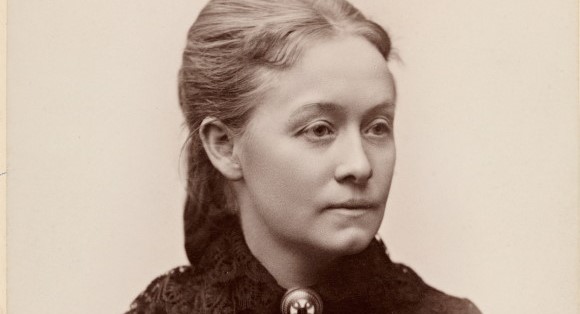
    Today is the 175th anniversary of the birth of Norwegian pianist and composer Agathe Backer Grøndahl. Backer, from a well-to-do, art-loving family, studied music in Christiana, Berlin, and Florence. Among her teachers were Theodor Kullak and Hans von Bülow.

    She made her professional debut in Christiana in 1868, as soloist in Beethoven’s “Emperor” Concerto, with Edvard Grieg on the podium. Of course, she was also a celebrated interpreter of Grieg’s own piano concerto. In fact, the two artists enjoyed a close friendship. She was also guided by Ole Bull, the famed Norwegian violinist, who recommended teachers and had a special piano constructed for her.

    In 1873, she became part of Franz Liszt’s circle at Weimar, and she took lessons with him. She herself was to become an influential teacher. George Bernard Shaw praised her as one of the greatest piano virtuosos of the century.

    She married Olaus Andreas Grøndahl, a vocal teacher, in 1875. A mother of three, Backer Grøndahl yet managed to compose more than 400 works for piano, voice, and orchestra. Over 70 of these were published in her lifetime. She died in 1907 at the age of 59.

    Her sister was the painter Harriet Backer.


    Sara Aimée Smiseth talks about and plays Agathe Backer Grøndahl. Smiseth recorded an album of Grøndahl’s works for the Grand Piano label.

    Geir Henning Braaten plays Grøndahl’s 3 Morceaux, Op. 15. The opening “Serenade” is among her most frequently performed works.

    Lubov Timofeyeva plays a Grøndahl assortment

    More about Grøndahl’s sister, Harriet Backer

    https://www.norwegianamerican.com/harriet-backer-a-gifted-determined-artist/


    PHOTOS: Agathe Backer Grøndahl, top, and at center, at an 1898 music festival in Bergen. To her left (our right) are some of the most famous names in Norwegian music: Edvard Grieg, Christian Sinding, Johan Svendsen, and Johan Halvorsen.

  • Broadway’s Classical Music Mashups

    Broadway’s Classical Music Mashups

    There is an interesting subgenre of the Broadway musical that owes its existence to some of classical music’s most shameless melodists. And it is largely attributable to the team of Robert Wright and George Forrest.

    Wright and Forrest, who were lifelong partners, both professionally and personally, knew a good tune when they heard one, and they were quick to appropriate the most insinuating of them as threads to be woven into the tapestries of some rather enduring musicals.

    Perhaps the most famous of these is “Kismet” (1953), which draws on the seductive lyricism of Alexander Borodin. I’m sure you’re familiar with its hit tunes, “Baubles, Bangles and Beads” and “Stranger in Paradise.”

    But there was also “Gypsy Lady” (1946) after Victor Herbert, and “Anya” (1965) after Rachmaninoff. Most ambitious of all was “Magdalena” (1948), a collaboration with Brazil’s still (at the time) very-much-alive and irrepressible Heitor Villa-Lobos.

    Wright and Forrest owed much to Edwin Lester, impresario of the Los Angeles Civic Light Opera, who first commissioned a number of these, which were presented as operettas. LACLO also revived works by of Sigmund Romberg, Victor Herbert, and Oscar Straus. The organization made its debut in 1938 with a revival of “Blossom Time,” a 1916 Viennese pastiche operetta after the music of Franz Schubert.

    Wright and Forrest were natural choices to retool “The Great Waltz,” after Johann Strauss II, which they did for a 1949 production by LACLO. This is the version that was used for a 1970 London stage revival and a 1972 motion picture remake.

    The original musical was conceived by Hassard Short, who also directed “Carmen Jones,” after Bizet, in 1943. (For once, Wright and Forrest had nothing to do with it.) Moss Hart wrote the original book. The lyrics were by Desmond Carter. This in turn was adapted from a 1930 pastiche operetta by Erich Wolfgang Korngold and Julius Bittner, “Waltzer aus Wien” (“Waltzes from Vienna”). A film adaptation from 1938 sported a screenplay and new lyrics by Oscar Hammerstein. The two films, which focus on different periods of Strauss’ life, are actually quite distinct.

    But before Wright and Forrest’s work on any of these came “Song of Norway” (1944), after Edvard Grieg, who was born on this date in 1843. The team cannily recognized that one hummable melody after another virtually poured from the sleeves of Norway’s most famous composer, whose music must have been very much in the air during his centenary.

    The show is a fictionalized account of the lives of three childhood friends: Grieg, his sweetheart Nina Hagerup, and the “poet” Rikard Nordraak. In reality, Nordraak was also a composer – in fact the composer of Norway’s national anthem! – but presumably, to keep it clear for American audiences, there was room in Bergen and Troldhaugen for only one.

    “Song of Norway” was a hit on Broadway and ran for 860 performances. George Balanchine provided the choreography for the original production. The dancers were members of the Ballet Russe de Monte-Carlo, including Maria Tallchief, who married Balanchine during the show’s run.

    A film was announced for 1950, but didn’t materialize for another 20 years. Florence Henderson, by then a familiar presence in American living rooms as Mrs. Brady on “The Brady Bunch,” played Nina. Grieg was portrayed by Norwegian actor Toralv Maurstad, and Nordraak was played by American tenor Frank Porretta. Porretta retired from the stage in his early 40s, but not before leaving an indelible mark on American opera. He spent the second half of his career as choir director at St. John’s Church in Darien, Connecticut.

    A transparent attempt to capitalize on the popularity of “The Sound of Music,” the film of “Song of Norway” did not succeed. It did, however, give Edward G. Robinson another unlikely opportunity to play a Norwegian, 25 years after “Our Vines Have Tender Grapes.”

    Here are the opening credits, restored, and in their proper aspect ratio. I suppose if you’re going to give it a chance, this is the way it should be seen. That’s pianist John Ogdon on the soundtrack.

    But perhaps you’re satisfied with a muddy, cropped, substandard TV print – even though the film was originally presented in theaters in Cinerama.

    A condensed version on radio, brought to you by the American railroad!

    In real life, Nordraak met Grieg in Copenhagen in 1864, and the two became fast friends. For a time, Nordraak had resigned himself to a career in business at the behest of his father, but gradually his musical interests prevailed. Grieg encouraged him to join him in forging a Norwegian national sound. Sadly, the following year, Nordraak was studying abroad when he was stricken by tuberculosis. He died in Paris at the age of 23.

    Due to his early demise, he composed only about 40 pieces, many of them songs, works for male choir, and piano works. He also wrote incidental music for a play, “Mary Stuart in Scotland.” Interestingly, Grieg was of Scottish descent, on his father’s side. His great-grandfather settled in Norway in 1770.

    Nordraak, “Scherzo Capriccio”

    Nordraak, “Purpose” from “Mary Stuart in Scotland”

    https://www.youtube.com/watch?v=PrA1GXG_qrg

    Nordraak, Norwegian National Anthem

    Grieg, “Funeral March for Rikard Nordraak”

    Nina sings Nordraak’s “Holder du af mig” (“If you love me”) in 1889. She was 43 or 44 at the time. It’s possible that that’s Grieg himself at the keyboard.

    https://www.youtube.com/watch?v=Q5XCnIVud1c

    Unquestionably Grieg

    Wright and Forrest were always credited equally as composer-lyricists, but it was really Forrest who worked with the music. ”Kismet” earned them a Tony Award for Best Musical in 1954, and in 1995 they were honored with an ASCAP Foundation Richard Rodgers Award.

    Grieg compositions that were used in “Song of Norway” include the Piano Concerto in A minor (“Prelude & Legend”), the “Norwegian Dance No. 2” (“Freddy and His Fiddle”), the Violin Sonata No. 2 and “Waltz” from the “Lyric Pieces” (“Now”), “Wedding Day at Troldhaugen” (“Strange Music”), “One Balmy Summer Eve” from “Five Poems,” Op.26, and Scherzo in E from the “Lyric Pieces” (“Midsummer’s Eve”), and “I Love You” from “Melodies of the Heart,” Op.5.

    The fjords are alive with the sound of Edvard Grieg! Happy birthday to Norway’s most-beloved composer!

  • Ellington’s Grieg A Jazz “Grotesque”?

    Ellington’s Grieg A Jazz “Grotesque”?

    Another tribute to Edvard Grieg on his birthday: Duke Ellington’s take on “Peer Gynt.” When the album came out in 1960, the Grieg Foundation was not flattered. The president of the organization found the arrangements to be ugly and uninspired and felt that Ellington and Billy Strayhorn had made Solveig “bray like a sow.” Critics in America, at best, expressed confusion. While conceding that the undertaking was a serious one, the results were deemed “grotesque” and even “contemptible.” The classical people weren’t happy. The jazz people weren’t happy. In the process, some reached past the Duke to take a slap at Grieg for his “lightweight” originals. Ouch! Tough crowd!

    More about it here:

    https://quod.lib.umich.edu/m/mp/9460447.0005.205/–duke-ellington-billy-strayhorn-and-the-adventures-of-peer?rgn=main;view=fulltext

    Fiedler conducting the original suites:

Tag Cloud

Aaron Copland (92) Beethoven (95) Composer (114) Film Music (119) Film Score (143) Film Scores (255) Halloween (94) John Williams (185) KWAX (229) Leonard Bernstein (99) Marlboro Music Festival (125) Movie Music (134) Opera (198) Philadelphia Orchestra (86) Picture Perfect (174) Princeton Symphony Orchestra (106) Radio (87) Ralph Vaughan Williams (85) Ross Amico (244) Roy's Tie-Dye Sci-Fi Corner (290) The Classical Network (101) The Lost Chord (268) Vaughan Williams (102) WPRB (396) WWFM (881)

DON’T MISS A BEAT

Receive a weekly digest every Sunday at noon by signing up here


RECENT POSTS