Elmer Bernstein scored films in just about every genre – from “The Man with the Golden Arm” (1955) to “The Ten Commandments” (1956) to “To Kill a Mockingbird” (1962) to “The Great Escape” (1963) to “Animal House” (1978) to “The Age of Innocence” (1993) to his final project, the Oscar-nominated “Far from Heaven” (2002) – but he had a particular knack for the western.
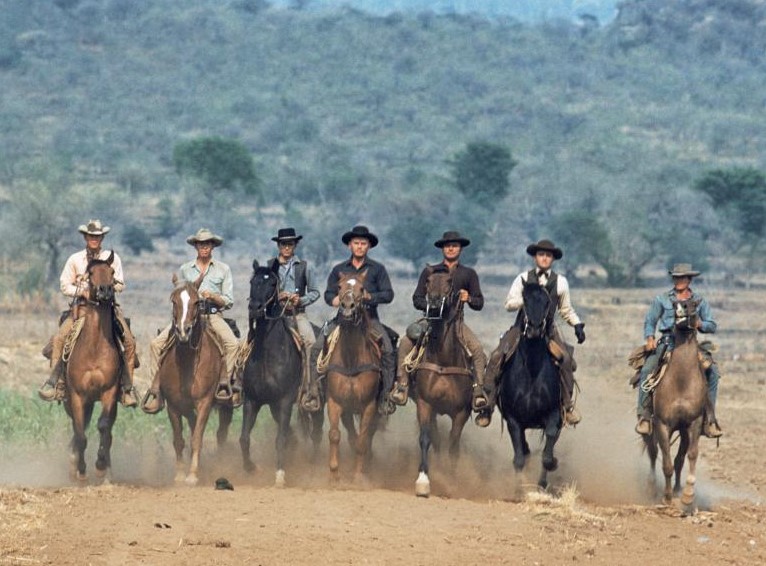
His swaggering theme for “The Magnificent Seven” (1960) is just about synonymous with most people’s idea of western adventure. (It also sold a heck of a lot of cigarettes when it was licensed by Marlboro.)
Not surprisingly, “The Magnificent Seven” put Bernstein much in demand as a western composer, and he wrote scores for many, including most of the films of John Wayne’s final decade. What’s striking is just how much he was able to vary them. His work for “The Comancheros” (1961) is very different from that for “True Grit” (1969), for instance, and “The Shootist” (1976), Wayne’s final film, is different still.
You’ll be able to sample some of them, when we saddle up for seven magnificent western scores of Elmer Bernstein, for the composer’s birthday, on “Picture Perfect” – music for the movies – now in syndication on KWAX, the radio station of the University of Oregon!
Clip and save the start times for all three of my recorded shows:
PICTURE PERFECT, the movie music show – Friday at 8:00 PM EDT/5:00 PM PDT
SWEETNESS AND LIGHT, the light music program – Saturday at 11:00 AM EDT/8:00 AM PDT
THE LOST CHORD, unusual and neglected rep – Saturday at 7:00 PM EDT/4:00 PM PDT
With the grand cacophony of Christmas still fresh in everyone’s ears, I thought it only appropriate this week on “Picture Perfect” to focus on music from movies about toys.
Without giving anything away, in the unlikely event you don’t already know the story’s big pay-off, “Citizen Kane” (1941) is a film flanked by toys. There’s even a snow globe in the film’s opening montage. A certain memory of Kane’s childhood provides a poignant glimpse of the larger-than-life newspaper magnate’s lost innocence. “Kane” is often cited as one of the greatest films ever made. Orson Welles triumphed in his debut as writer-director-star, even if, ultimately, his creation proved to be a bottle rocket that blew up in his face. The film also marked the Hollywood debut of composer Bernard Herrmann.
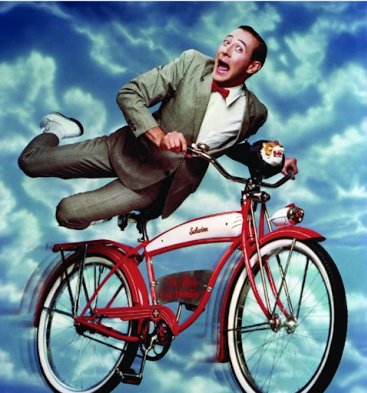
I’m not sure that “Pee-wee’s Big Adventure” (1985) could be described as the “Citizen Kane” of the ‘80s, exactly, but this endearingly goofy sojourn into the surreal does revolve around the recovery of a lost toy, as Pee-wee, the eternal boy, determines to make his way to “the basement of the Alamo” in an attempt to reclaim his stolen bike. The feature was director Tim Burton’s first. It was also his first collaboration with Danny Elfman, who is obviously a big fan of Nino Rota.
The husband-and-wife team of Charles and Ray Eames are better known for their contributions to architecture, industrial design, and manufacturing, but they also made short films. “Toccata for Toy Trains” (1957) was inspired by the Eames’ passion for vintage toys. The score was provided by their go-to composer, Elmer Bernstein.
Finally, in acknowledgement of the greatest toy series of our day, we’ll conclude with music from “Toy Story” (1995), the first full-length computer animated feature. The quality of the film propelled it beyond mere novelty status into the realm of instant classic, and the beloved “Toy Story” franchise has raked in hundreds of millions of dollars. Early on, it was decided by the filmmakers that they did not want “Toy Story” to be a musical, but that songs could be used to underline its emotional content. Randy Newman has provided the music for all the “Toy Story” films so far. He was recognized with an Academy Award for his work on “Toy Story 3,” for the song, “We Belong Together.”
Keep popping those aspirin. It’s “Toys Everywhere” this week, on “Picture Perfect,” music for the movies, now in syndication on KWAX, the radio station of the University of Oregon!
Clip and save the start times for all three of my recorded shows:
PICTURE PERFECT, the movie music show – Friday at 8:00 PM EST/5:00 PM PST
SWEETNESS AND LIGHT, the light music program – ALL NEW! – Saturday at 11:00 AM EST/8:00 AM PST
THE LOST CHORD, unusual and neglected rep – Saturday at 7:00 PM EST/4:00 PM PST
On the day after Thanksgiving, with the house alive with memories and perhaps a few lingering relatives, enjoy an hour of music from television “events” that once appealed to the entire family.
Years in advance of modern cable, at the very dawn of color television, the National Geographic Society aired its first “special” on September 10, 1965. The program, titled “Americans on Everest,” featured stunning footage taken from the summit of the world’s tallest peak. These specials really were special, with breathtaking images and real-life adventures unlike anything previously experienced in American living rooms.
Three months later, viewers were introduced to the familiar “National Geographic Theme,” which was composed by Elmer Bernstein for the third of the broadcast specials, “Voyage of the Brigantine Yankee.” When one realizes that Bernstein also wrote the score for “The Magnificent Seven,” it becomes one of those “Ah ha!” moments. Both themes remain among the most recognized by American audiences.
National Geographic went on to work with a number of the top film composers of the day. This week on “Picture Perfect,” we’ll travel the world with four of them.
Bernstein, who was also responsible for the music for “The Ten Commandments,” “The Great Escape,” and “To Kill a Mockingbird,” returned in 1967 to write the music for a follow-up to “Voyage of the Brigantine Yankee,” called “Yankee Sails Across Europe.”
Ernest Gold, composer of “Exodus,” was engaged in 1972 to write the score for “The Last Vikings,” a documentary about the inhabitants of the rugged northern coast of Norway, who at the time still practiced some of the traditions followed centuries before by their Norse forebears. Gold’s score is a good example of what a talented composer can accomplish through an economy of means – in this case, a wind ensemble, harp, cello and percussion.
Leonard Rosenman, a pupil of Arnold Schoenberg, Roger Sessions, and Luigi Dallapiccola – a most unlikely pedigree on which to build a career in Hollywood – wrote classic scores for “East of Eden,” “Rebel Without a Cause,” and “Fantastic Voyage.” He also composed the music for one of the best known of the National Geographic specials, “Dr. Leakey and the Dawn of Man,” in 1966.
Finally, Jerome Moross wrote a charming and buoyant Americana score for “Grizzly!,” which aired in 1967. Moross, of course, was the composer of one of the all-time great western scores, for “The Big Country.”
Naturally, we’ll also get more than our share of that iconic National Geographic theme. All of this music was issued on limited edition compact discs from the Intrada label.
I hope you’ll join me for music from outstanding television documentaries produced by National Geographic, on “Picture Perfect,” music for the movies, now in syndication on KWAX, the radio station of the University of Oregon!
Clip and save the start times for all three of my recorded shows:
PICTURE PERFECT, the movie music show – Friday at 8:00 PM EST/5:00 PM PST
SWEETNESS AND LIGHT, the light music program – ALL NEW! – Saturday at 11:00 AM EST/8:00 AM PST
THE LOST CHORD, unusual and neglected rep – Saturday at 7:00 PM EST/4:00 PM PST
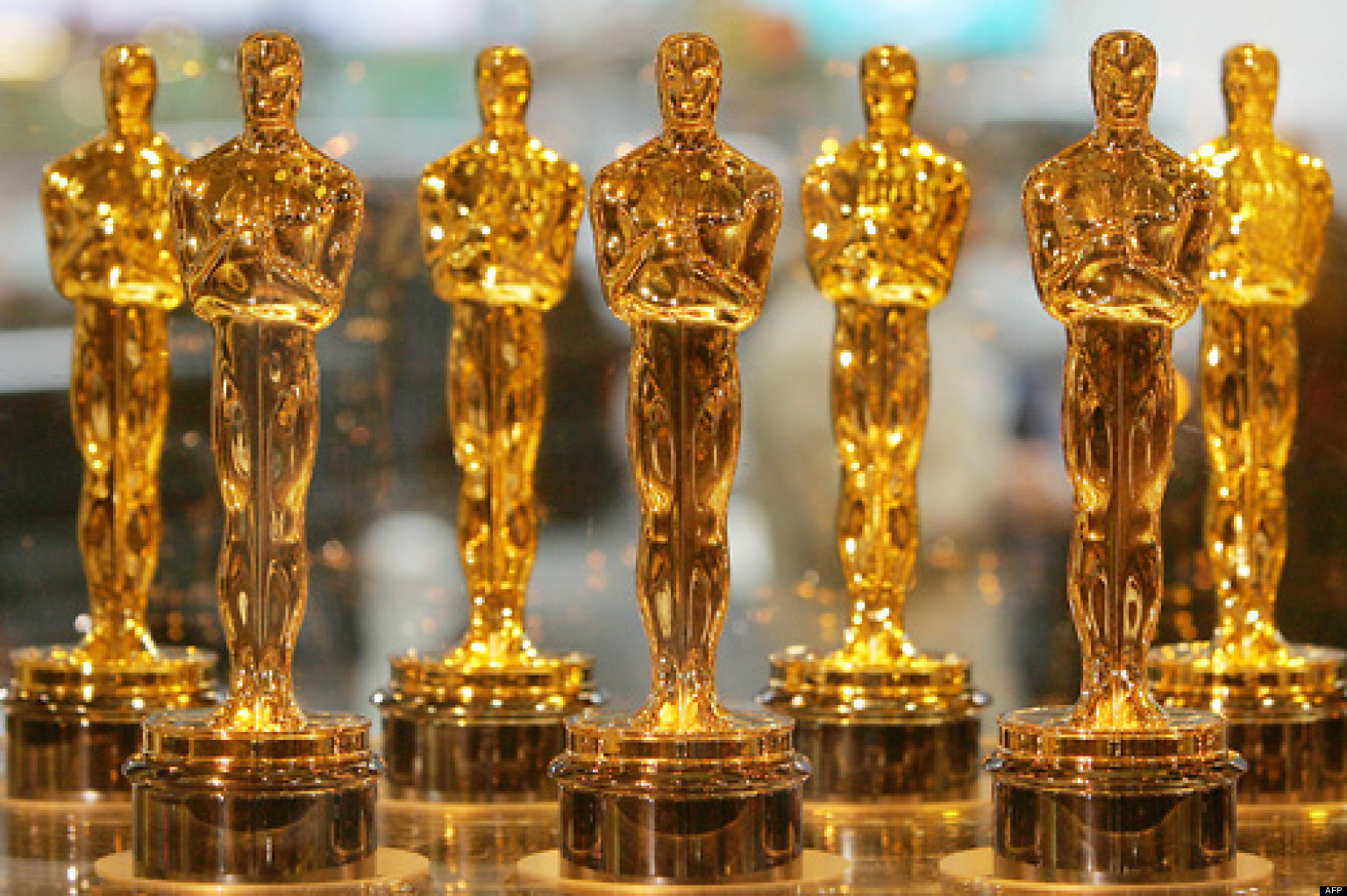
We’re entering Academy Awards weekend, and the winner is… YOU!
Why? Because I’ve recorded THREE BRAND NEW SHOWS for KWAX for your delectation.
Regardless of how you feel about the current state of the industry or the awards ceremony itself, you have to concede, there’s quite a rich history of impressive music written for film. And the Academy Awards is always the perfect excuse to go excavating.
I’ll be leaning heavily into the nostalgia, beginning today on PICTURE PERFECT. We’ll hear selections from what has been dubbed the greatest film music concert in history. Elmer Bernstein, Johnny Green, Bernard Herrmann, Henry Mancini, Alfred Newman, Alex North, David Raksin, Miklós Rózsa, Dimitri Tiomkin, Franz Waxman, and more turned out for the occasion – all of them to conduct their own music.
They were joined by Mahalia Jackson, Andy Williams, and Jack Benny. What could only be described as a Hollywood Bowl superconcert was broadcast live over the CBS television network on September 25, 1963.
Highlights were issued on what became a highly collectible LP. The content was expanded for a CD reissue on the Columbia Legacy label in 1995. However, based on my reading and the fact that I’m finding other selections in my personal library that were recorded at the venue on the same date, there’s still much that remains to be compiled. Put out whatever you’re holding back on a double-disc, please, Sony!
On today’s show, we’ll hear ten musical selections. I hasten to add, not everyone mentioned will be represented; nor were they even included on the commercial recordings. Tune in to KWAX at 8:00 pm EST/5:00 pm PST. (See the streaming information below).
Then be sure to join me tomorrow morning when I’ll present a potpourri of classic film themes on SWEETNESS AND LIGHT. Tune in sharp at 11:00 EST/8:00 PST to enjoy 90 seconds of introductory fanfares from the great studios of Hollywood’s Golden Age.
Finally, also tomorrow, on THE LOST CHORD, it’s another in an occasional series of programs devoted to concert works by composers better known for their work in film. Among the featured works will be “Pas de Deux,” a concerto for violin, cello and orchestra, by James Horner (“Star Trek II: The Wrath of Khan,” “Braveheart,” “Titanic”), and the Concerto for Flute and String Orchestra by Jerome Moross (“The Big Countrty,” “The Cardinal,” “The Valley of Gwangi”). That show will stream Saturday at 7:00 pm EST/4:00 pm PST.
That should give you plenty of time to load up on the popcorn and buffalo wings for Sunday night’s ceremony. Listen to all three of these NEWLY-RECORDED RADIO SHOWS, wherever you are, at the link!
PICTURE PERFECT, the movie music show – Friday on KWAX at 5:00 PM PACIFIC TIME (8:00 PM EST)
SWEETNESS AND LIGHT, the light music program – Saturday on KWAX at 8:00 AM PACIFIC TIME (11:00 AM EST)
THE LOST CHORD, unusual and neglected rep – Saturday on KWAX at 4:00 PM PACIFIC TIME (7:00 PM EST)
Alex North was born in Chester, Pennsylvania (just outside of Philadelphia), on this date in 1910. His journey took him from a working-class background, to the Curtis Institute of Music, the Juilliard School, and the Moscow Conservatory. He also studied with Aaron Copland and Ernst Toch.
He became involved with the Federal Theatre Project. He worked in ballet, especially with Martha Graham and Anna Sokolow. He accompanied the latter to Mexico, where he had an opportunity to study with Silvestre Revueltas. Perhaps not coincidentally, his three North American teachers, Copland, Toch, and Revueltas, had all worked in film.
North wrote his first film score as far back as the 1930s, around the time he met up with director Elia Kazan. North was drafted during the war, and put his talent to use writing music for the Office of War Information documentaries.
With the cessation of hostilities, he returned to the theater. He also composed some concert pieces. It was his incidental music for plays like “A Streetcar Named Desire” that earned him an invitation to Hollywood, where he wrote the score for Kazan’s classic film adaptation. It would be the first time jazz would be fully integrated into the drama, forming the basis for the film’s underscore, as opposed to being simply diegetic, or “source music,” played by a band or on a turntable in the background of a given scene. Its success opened the door to a new film score sensibility, paving the way for composers like Elmer Bernstein, Henry Mancini, and North’s beloved Duke Ellington.
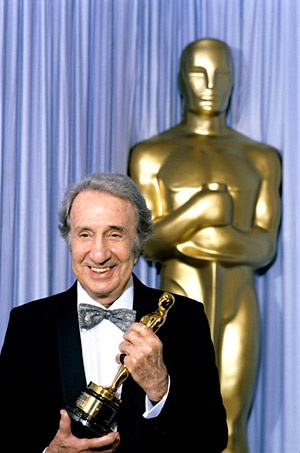
In all, North wrote 50 film scores, racking up 15 Academy Award nominations, yet never taking home the prize. In 1986, he received lifetime achievement recognition from the Academy, the first composer to be so honored.
There were times, during the course of his career, when his music took on an independent life, distinct from the films for which it was written. He scored major hits with “Unchained Melody” (originally written for the film “Unchained” and recorded some 500 times) and the love theme from “Spartacus.” The original soundtrack to “A Streetcar Named Desire” also sold extremely well.
His acclaimed contribution to “Spartacus” didn’t keep the film’s director, Stanley Kubrick, from rejecting North’s score for “2001: A Space Odyssey” – without bothering to tell him. North found out only after the lights went down at the film’s premiere. Director John Huston was more appreciative. Later in his career, North became Huston’s composer of choice, for films like “The Misfits,” “Under the Volcano,” “Prizzi’s Honor,” and “The Dead.”
It’s especially poignant, in 2023, to view North’s acceptance speech for his honorary Oscar. (You’ll find a link to the clip below.) At around the 4:50 mark, he says: “I would like to make a humble plea to all of us involved in the movies, and that is to encourage and convey hope, humor, compassion, and adventure, and love… as opposed to despair, synthetic theatrics, and blatant, bloody violence. And sex, sex, sex, by all means, indeed… but with a bit of mystery, a touch of charm and elegance, and lots of imagination.”
Amen to that. It’s a shame that it’s a plea that’s been almost wholly ignored. We would be in a better place today, psychologically, as morale colors everything, were we not buffeted by an aggressively crass and downbeat popular culture. Had filmmakers only heeded his advice.