Tag: English Composers

  • English Composers and the Occult

    English Composers and the Occult

    Since I am such a musical anglophile, and since Halloween happens to be my favorite holiday, I suppose it’s hardly surprising that my thoughts would gravitate to the influence of the occult on English music.

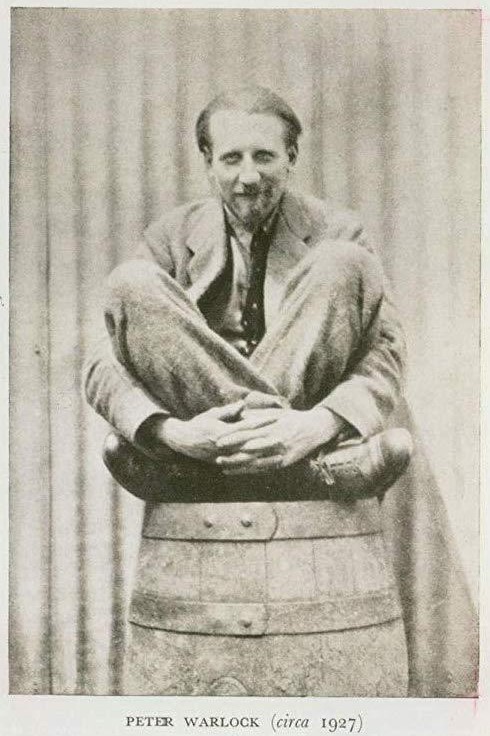
    Most notorious, perhaps, would be the case of Philip Heseltine, who composed under the name of Peter Warlock. Heseltine was born on this date in 1894. He lived a scandalous life – carousing, trolling his enemies, riding naked on a motorcycle, and using one of D.H. Lawrence’s manuscripts as toilet paper – while pursuing his fascination with “the science known as Black Magic.” His life ended when he was only 36 years-old, his body found in his flat – the cause of death: gas poisoning. He left behind 100 songs, a number of choral works, and a handful of orchestral pieces. Whether or not his end was accidental has never been unanimously accepted.

    The first time Heseltine assumed the pen name Warlock was for a 1916 article on the chamber music of Eugene Goossens. Goossens, who would later be honored with a knighthood, spent the better part of a decade in Australia, conducting the Sydney Symphony Orchestra and directing the NSW State Conservatorium of Music.

    It wasn’t all work and no play, however. During his leisure hours, Goossens entered into a passionate affair with Rosaleen Norton, soon to be known as the Witch of Kings Cross. Norton was an artist and occultist, whose paintings of demons and phalluses were decidedly out-of-step with the spirit of the time.

    In 1955, a scandal involving a mentally ill woman who claimed she had participated in a Satanic Black Mass at Norton’s flat had a domino effect. Sure, Norton had her own coven, but she denied ever being a Satanist. She did however stand by her charms and hexes. Her paintings were removed from public exhibitions and photographs were confiscated from her home. Arrests on obscenity and blasphemy charges came fast and furious. The tabloids had a field day.

    Unfortunately, Goossens became collateral damage. Incriminating letters, which he had asked Norton to destroy after reading, were found stashed beneath her sofa. Though he was in England when the storm broke, wholly ignorant of the antipodean moral panic, the authorities lay in wait upon his return. Among his luggage were found 800 “pornographic” photos, film, masks, and incense. As a high-profile musical figure, for all intents and purposes, the conductor’s Goossens was cooked.

    Then there was the matter of the Hermetic Order of the Golden Dawn. The order, which sported Aleister Crowley among its members, was a secret society devoted to occult, metaphysical, and paranormal activities. I once wrote a post about the composer John Ireland’s relationship with Welsh writer of the supernatural Arthur Machen, who also belonged to the society. Ireland wrote several works profoundly influenced by Machen’s philosophies and dedicated his piece for piano and orchestra, “Legend,” to him.

    Even Sir Edward Elgar, composer of “Land of Hope and Glory,” had his brush with the occult, by way of supernatural writer Algernon Blackwood, also a member of the Hermetic Order. Elgar provided incidental music for “The Starlight Express,” based on Blackwood’s “A Prisoner in Fairyland.” The two men struck up a friendship, and though there is no evidence to link Elgar to actual involvement with the Golden Dawn, there are those who allege there to be Rosicrucian symbols in the “Enigma Variations,” completed years earlier, in 1899.

    Sir Arthur Conan Doyle, Gustav Meyrink, Sax Rohmer, Bram Stoker, and William Butler Yeats were also members of the secret order. I imagine them all, like something out of Dennis Wheatley, gathering in their robes to offer up sacrifices to the Goat of Mendes!


    Peter Warlock and the occult
    https://interlude.hk/peter-warlock-league-devil/

    Eugene Goossens and the occult
    https://www.smh.com.au/lifestyle/the-conservatorium-director-and-the-witch-20150702-gi3h8y.html?fbclid=IwAR0-i_0lvKp5RUSECBdAKlZRzkRQdiHQfrSJFvARsJayM2ofjGUjSk18nao

    John Ireland and the occult
    https://www.overgrownpath.com/2011/11/secret-life-of-english-pastoralist.html?fbclid=IwAR09ZE8Xj8lEzgQnOIh49Kpqz9u-5VNKPODWg0e-KNfoo2PhSHJ9z0-dhU0

    Edward Elgar and the occult
    https://www.overgrownpath.com/2011/01/elgar-and-occult.html

    Warlock’s melancholy masterpiece, “The Curlew,” after poetry of Yeats

    Eugene Goossens, Concertino for Double String Orchestra

    John Ireland, “Legend”

    Sir Edward Elgar, “The Starlight Express”

    My post on Arthur Machen and John Ireland
  • Ravel’s Unexpected English Pupil

    Ravel’s Unexpected English Pupil

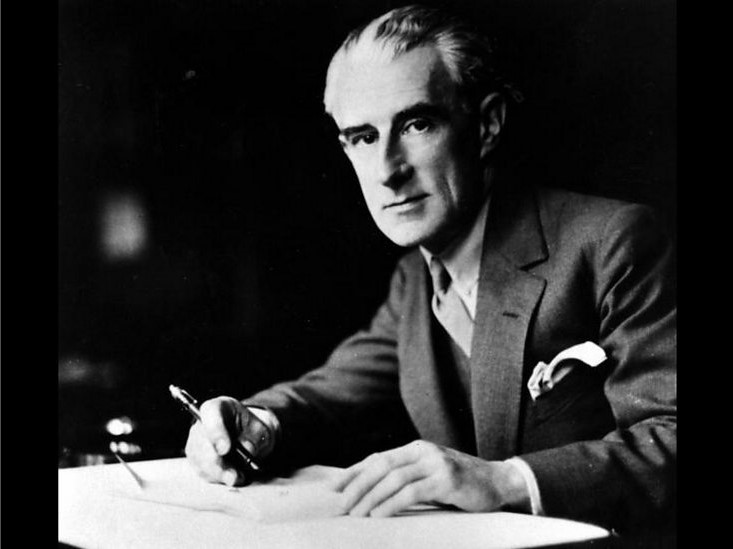
    Maurice Ravel was one of the greatest of French composers. Reluctantly, he also became the teacher of one of England’s.

    Ralph Vaughan Williams studied in Paris with Ravel for three months in 1907-08. Ravel betrayed some hesitancy at first. He took few pupils, but this untidy bear of an Englishman was not about to take no for an answer. Despite his earthy disposition (his response to Ravel’s assignment to write a minuet in the manner of Mozart was met with an unprintable response), Vaughan Williams quickly earned his teacher’s admiration and soon his friendship. Ravel later remarked of Vaughan Williams, “He is my only pupil who does not write my music.” That is to say, RVW remained his own man.

    For his part, Vaughan Williams credited Ravel with having helped him to overcome the heavy Teutonic influence on his earlier training. Ravel had the effect of lightening the textures in Vaughan Williams’ music and sharpening its focus. RVW, already in his mid-30s and three years older than his teacher, learned his lessons well (at least the ones he considered valid), assimilated what he found useful, and applied it to the achievement of his own objectives. It could be said that Ravel’s greatest gift to his English pupil was the courage to be himself.

    Ravel organized the first French performance of Vaughan Williams’ “On Wenlock Edge” in Paris in 1912. RVW later recollected that it was one of the worst things he’d ever heard. But he was thankful for Ravel’s advocacy in a country that rarely showed much interest in English music. Ravel also visited Vaughan Williams in London and quite enjoyed steak and kidney pudding with stout at Waterloo Station.

    The two friends continued to correspond through World War I, during which both served as, among other things, ambulance drivers. Vaughan Williams had some experience with the “big guns,” which contributed to his gradual deafness, and Ravel was rejected from the air force for being too short. Ravel wrote RVW after the war and urged him to return to Paris. “I would be happy to see you after so many terrible years,” he confessed.

    Pictured are some of Ravel’s letters to his friend. Unfortunately, to my knowledge, Vaughan Williams’ letters to Ravel have not survived.

    Remembering Ravel’s influence on one of my favorite composers –happy birthday, Maurice Ravel!

  • Vaughan Williams at 150 A Master’s Vision

    Vaughan Williams at 150 A Master’s Vision

    One of England’s greatest composers, Ralph Vaughan Williams looked back to his country’s agrarian roots as a roundabout way of securing the future of its cultural identity. On the 150th anniversary of his birth, I salute him in all his rumpled glory.

    As did so many composers who were caught in the wildfire of nationalism that swept across Europe, beginning in the middle of the 19th century, Vaughan Williams rebelled against the prevailing academicism that reached its tendrils from the capitals of German music to choke the “provincial” hinterlands. He emerged from an environment that had produced far too many knock-offs of Mendelssohn and Brahms. Vaughan Williams would revolutionize his compatriots’ perception of art music by embracing the sounds of the English countryside.

    However, like Béla Bartók, he was no simplistic, twee purveyor of folk music. On the contrary, the rhythms and inflections of his native land were already part of his DNA. The songs he documented while roaming the fields and fens with his colleague, Gustav Holst, merely brought to the surface what was already innate. What he expressed in his original music was thoroughly digested and deeply personal.

    Some of Vaughan Williams’ best loved works are imbued with nostalgia for a faded world, but the composer pushed forward also, through two world wars and into the Great Beyond. He was not a conventionally religious man, but mysticism seems to color a fair amount of his music. He was also unafraid, in works like his Sixth Symphony, to stare desolation unflinchingly in the face. Technically, his lessons with Maurice Ravel made him a thoughtful orchestrator, so that throughout his life he deployed his instrumental forces with considerable craft and creativity. Given the proper attention, there is much to engage on all levels of his music.

    While you might not want to take his advice on the best way to tie a tie, musically, with Vaughan Williams, you are always in the hands of a master. Put your faith in Ralph (pronounced “Rafe”) for the Vaughan Williams sesquicentenary.

    Thank you, RVW, for a lifetime of enrichment, and happy birthday!

  • Vaughan Williams & Holst Friendship in Letters

    Vaughan Williams & Holst Friendship in Letters

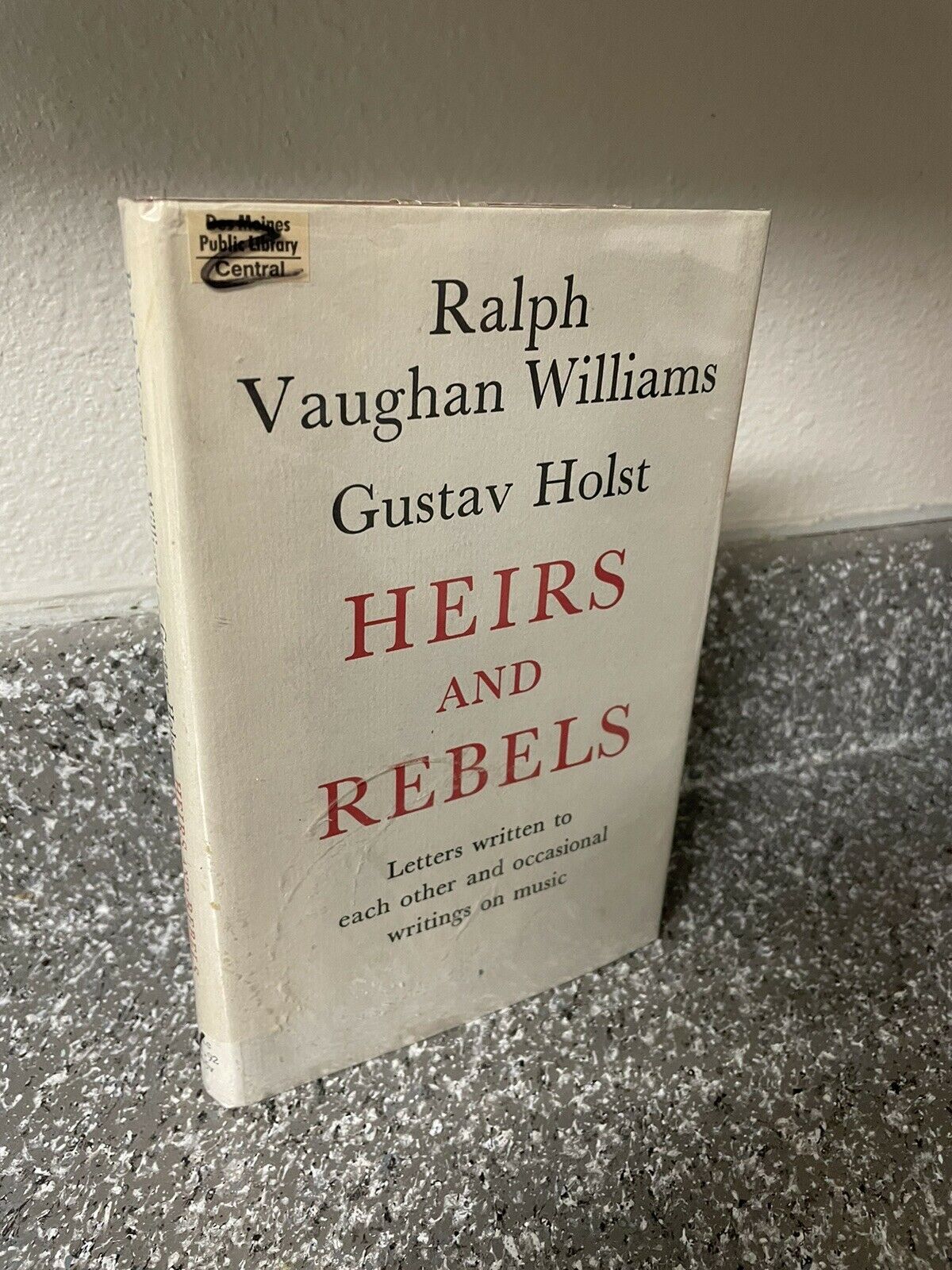
    You may recall, I posted here a couple of times that I was the beneficiary of the Des Moines Public Library, which for some reason opted to discard a number of collectible volumes about Ralph Vaughan Williams, in the year that marks the sesquicentennial of his birth. (The actual date is October 12.) In any case, Des Moines’ loss is my gain, as I snatched them off eBay not long after they appeared.

    One of these is a collection of correspondence between Vaughan Williams and fellow composer Gustav Holst, edited by Ursula Vaughan Williams (RVW’s widow) and Imogen Holst (Gustav’s daughter). The letters are interleaved with musical essays by both artists.

    Having just finished the book, which is rather slender at just over 100 pages, I come away with a better understanding of their friendship and just how much they influenced one another. There was such honesty and trust between them. In their shared pursuit of artistic excellence and a new English music, neither of them were ever insensitive in their criticism, but they weren’t afraid to be direct in stating what they thought worked and didn’t work in each other’s compositions.

    There are several interesting essays by Holst that make me want to revisit the music of Thomas Weelkes and Samuel Wesley, so highly did he regard them at their best. It’s interesting what things the editors decide to footnote and what they don’t. I got a bit of a swollen head when I realized how much I was able to pick up that would have slipped past a reader perhaps not quite so well-versed in English music.

    Of course, being a library discard, there are a few instances in my copy of random scrawl in the margins and unnecessary underlining in ink, which is irksome – who writes in a book in pen? – but for the price I am glad to have it, as copies on the secondhand market are many times the cost.

    The title is a reference to a lecture delivered by Holst at Yale in 1929, in which he quotes Gilbert Murray: “Every man who counts is a child of tradition and a rebel from it.”

    Vaughan Williams and Holst embodied this dictum most demonstratively, absorbing their lessons from hidebound Hubert Parry and Charles Villiers Stanford at the Royal College of Music, striking out on their own to harvest English folk song from its natural habitat before it could be plowed under by industrialization, and, in Vaughan Williams’ case, reaching back to the Tudor era to revitalize “The English Hymnal.” Holst also found inspiration in ancient Hindu texts. Both men built their own idiosyncratic structures on these foundations to become two of England’s most distinctive musical voices.

    Holst offered the following words to Vaughan Williams, in a moment of self-doubt. Amidst all the advice and constructive criticism, he writes perceptively, in a letter from 1903, “Your best – your most original and beautiful style or ‘atmosphere’ is an indescribable sort of feeling as if one were listening to very lovely lyrical poetry. I may be wrong but I think this (what I call to myself the REAL RVW) is more original than you think.”

    Theirs was a special friendship, and Vaughan Williams felt keenly Holst’s loss when he died in 1934, at the age of 59. RVW had a lot of creative years ahead of him. He died in 1958, at 85, active until the end. For the rest of his life, he missed the valued input of his close friend and kindred spirit.

    Happy birthday, Gustav Holst.


    “Jupiter” (1914)

    “Beni Mora” (1910)

    Vaughan Williams’ setting of “Seventeen Come Sunday” from his “English Folk Song Suite” (1923)

    Listen for the tune in Holst’s “Somerset Rhapsody” (1906), about three minutes in

    “Choral Hymns from the Rig Veda” (1911), anticipating Britten?

    “Hammersmith” (1930), prelude and scherzo

    “Song of the Blacksmith”

    https://www.youtube.com/watch?v=DbNwpJPlpAQ

    “My sweetheart’s like Venus”

  • Gustav Holst: Beyond The Planets

    Gustav Holst: Beyond The Planets

    It’s interesting that Gustav Holst and Ralph Vaughan Williams were born three weeks apart, albeit separated by two years. Uncle Ralph’s birthday is looming on October 12, but today we celebrate Holst.

    “Gustav” may be a strange name for one of England’s greatest composers. Even stranger, he was actually christened Gustavus. Also, there was a “von” in his name – Gustavus Theodore von Holst. Holst’s father was of Swedish, Latvian, and German descent. His great-grandfather had also been a composer, who taught harp at the Imperial Russian Court in St. Petersburg. Continuing in the family trade, his grandfather set up shop in England. In doing so, he added the “von,” thinking it lent a little gravitas and might help to drum up business. Sensibly, Gustav dropped the prefix with the outbreak of war with Germany in 1914.

    Like Vaughan Williams, Holst was born in Gloucestershire. Both were students at the Royal College of Music, who studied with Sir Charles Villiers Stanford. Significantly, they were also linked by a common destiny, spearheading a movement to establish a distinctly “English” national sound in music. They accomplished this by getting their hands dirty, tying on their boots and striking out for the fields and fens, to notate by cylinder and by hand songs of the countryside, already endangered by encroaching industrialization. In some of their best original music, both composers assimilate English folk inflections into their respective styles.

    Holst himself was an exacting teacher, who took his duties very seriously. However, in common with the best of his profession, he never imposed his will on his students, but rather shepherded them in finding their own solutions. Holst served as director of music at St. Paul’s Girls’ School, Hammersmith, and at Morley College.

    Of course his masterpiece would be “The Planets,” composed between 1914 and 1916. Hard to believe, in a world of composers schooled on the piano, that Holst’s principal instrument was the trombone! I recall listening to this music for the first time in my teens and thinking “Jupiter,” in particular, positively exuded “England.” Its roistering, galumphing, perhaps even Falstaffian antics give way to a stately, processional theme, later adapted into the patriotic hymn “I Vow to Thee, My Country.” But with the passage of time, and longer familiarity, “The Planets’” English identity, as detectable in every note, has become increasingly evident.

    Even so, Holst was never of a provincial mindset. On the contrary, he was a much more adventurous – and frequently modernist – composer than he is frequently given credit for having been. His literary inspirations were far-flung, from Thomas Hardy to Walt Whitman to Sanskrit. His music is often less emotive than Vaughan Williams’. I’ve always detected more of an objective detachment in his works. Remarked Vaughan Williams, “He was not afraid of being obvious when the occasion demanded, nor did he hesitate to be remote when remoteness expressed his purpose.”

    The two were one another’s most constructive critics. When Holst died, young, at the age of 59, Vaughan Williams felt his friend’s passing keenly. Aside from the personal loss, from a professional and artist standpoint, suddenly he was bereft of his most valued confidante and advisor.

    Holst’s legacy can be detected best in those composers who reacted against Vaughan Williams and the pastoral school. His economy and restraint appealed to the generation of Walton, Britten, and Tippett. Also – and I never see this remarked upon – I detect his spirit often in the film and concert music of Bernard Herrmann. (Herrmann was a great anglophile, who championed Holst.) There is a certain aloofness, perhaps even a chill, in the work of both artists, but also great sensitivity.

    Happy birthday, Gustav Holst (1874-1934)! You may be regarded by most as a one-hit wonder, but you connected squarely, and the resulting line drive carried further than is generally accepted.


    “Jupiter” (1914):

    “Beni Mora” (1910):


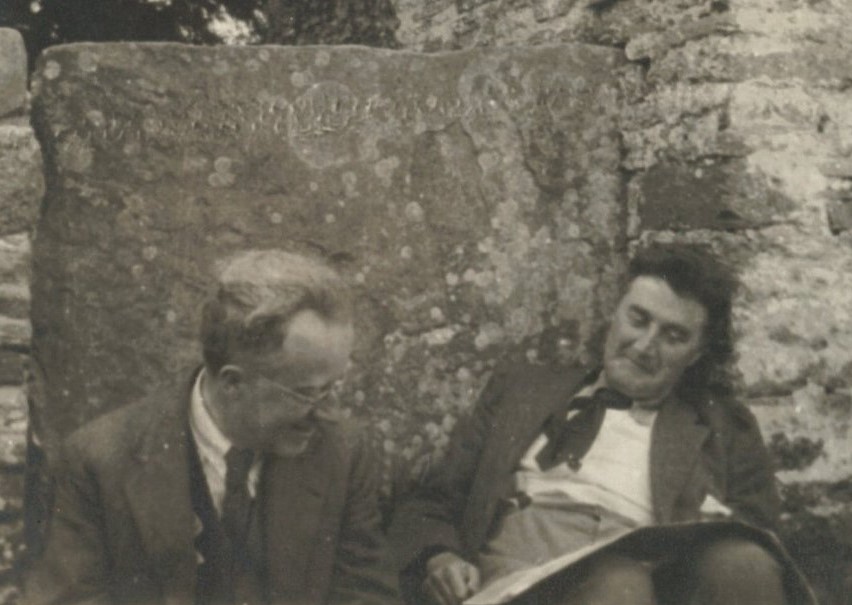
    PHOTO: Holst (left) with Vaughan Williams, who never could tie a tie

Tag Cloud

Aaron Copland (92) Beethoven (95) Composer (114) Film Music (120) Film Score (143) Film Scores (255) Halloween (94) John Williams (185) KWAX (229) Leonard Bernstein (100) Marlboro Music Festival (125) Movie Music (135) Opera (198) Philadelphia Orchestra (88) Picture Perfect (174) Princeton Symphony Orchestra (106) Radio (87) Ralph Vaughan Williams (85) Ross Amico (244) Roy's Tie-Dye Sci-Fi Corner (290) The Classical Network (101) The Lost Chord (268) Vaughan Williams (103) WPRB (396) WWFM (881)

DON’T MISS A BEAT

Receive a weekly digest every Sunday at noon by signing up here


RECENT POSTS