Tag: Ennio Morricone

  • Evolving Western Heroes in Film Music

    Evolving Western Heroes in Film Music

    The American western must be the most adaptable of cinematic genres. As times have changed, so has the western, to reflect the world around it – which seems funny, in a way, since the figures at its core are so resolute.

    This week on “Picture Perfect,” we reflect on the evolution of the western hero with music from four films.

    “Shane” (1953) depicts a classic western archetype, the reluctant gunfighter, a drifter with a past, who pauses on his way to nowhere to defend a family of homesteaders against injustice at the hands of a greedy cattle baron. Mysterious, laconic, but with an unshakeable moral compass, Shane can be counted on always to do the right thing, resorting to violence only when he’s out of options. Alan Ladd’s mythic turn is supported by one of Victor Young’s best-loved scores.

    Dimitri Tiomkin was once asked how a composer of Ukrainian origin could write such convincing western music. He responded, in accented English, “A steppe is a steppe is a steppe.”

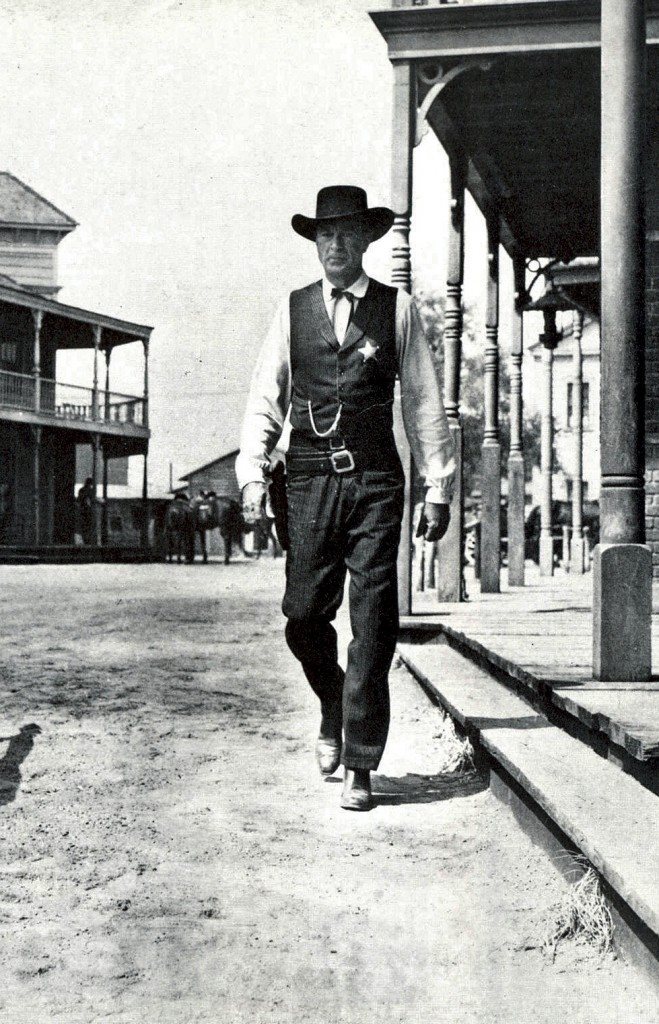
    Tiomkin would become the composer of choice for the American western throughout the 1950s, due to his distinctive handling of “High Noon” (1952). The success of its title song, “The Ballad of High Noon” (otherwise known as “Do Not Forsake Me, Oh My Darlin’”) – with its melody integrated into the orchestral score – provided a western blueprint for well over a decade. Tiomkin was honored with two Academy Awards, for Best Song and Best Scoring of a Dramatic Motion Picture.

    In “High Noon,” we are presented with a very different hero from that of the “Shane” archetype, a hero allowed to show uncertainty. Gary Cooper’s Marshal Will Kane seeks help for the final showdown, but winds up having to stand alone. As Mark Twain observed, “Courage is not the absence of fear. It’s acting in spite of that fear.”

    Clint Eastwood’s The Man With No Name, the anti-hero of Sergio Leone’s “Dollars Trilogy” of spaghetti westerns, is very much a product of the 1960s – cynical and self-serving, with his own moral code, lots of grays clouding up the black and white. The character was introduced in 1964’s “A Fistful of Dollars” (1964), a western remake of Akira Kurosawa’s “Yojimbo,” with a wandering gun-for-hire standing in for Kurosawa’s ronin, or masterless samurai.

    The Man With No Name assumes a mercenary pose, his allegiance shifting with the most profitable wind. However, he is revealed to have his own sense of justice, unorthodox as it may be.

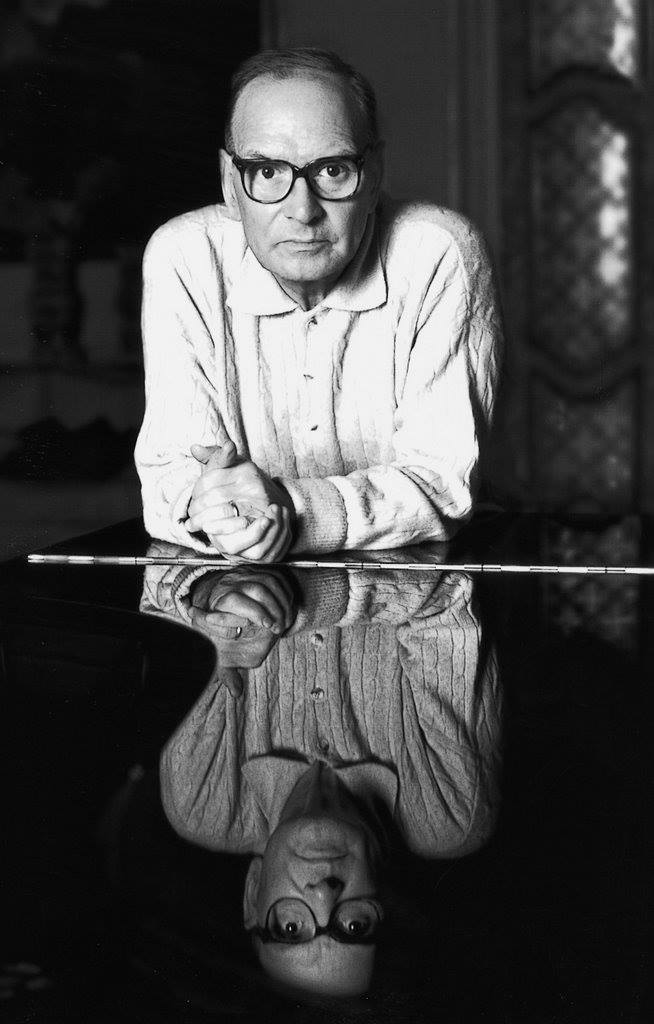
    Ennio Morricone brought a fresh sound to this new kind of hero and earned international attention, which would intensify a few years later with his iconic score for “The Good, the Bad and the Ugly.”

    By the late ‘70s, the western as a genre appeared to be in its death-throes. But never underestimate the durability of a good myth. Even as galloping horses and dusty plains grew increasingly scarce on movie screens, the tropes and iconography of the western endured, transferred to the final frontier of space.

    Following the success of “Star Wars,” in 1977, with its cantinas and space cowboys, shoot-‘em-ups and showdowns were, increasingly, set in distant galaxies, though regrettably, often without much of the former “western” moral gravitas.

    “Outland” (1981) is a gritty update of “High Noon,” transferred to a mining colony on one of the moons of Jupiter. This time Sean Connery plays the marshal, like Gary Cooper’s Will Kane, determined to do the right thing, even as he is left to stand alone against hired gunman. The score is by Jerry Goldsmith, who, earlier in his career, had written music for a fair number of true westerns, on both big screen and small.

    I hope you’ll join me for four faces of the western hero, this week, on “Picture Perfect,” this Friday evening at 6, with a repeat Saturday morning at 6; or that you’ll enjoy it later as a webcast at http://www.wwfm.org.
  • Ennio Morricone Navajo Joe Birthday Tribute

    Ennio Morricone Navajo Joe Birthday Tribute

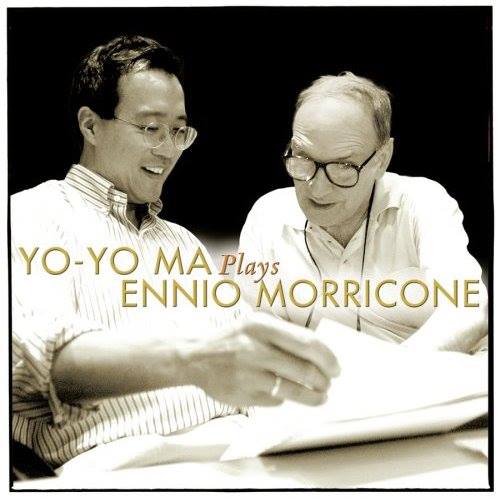
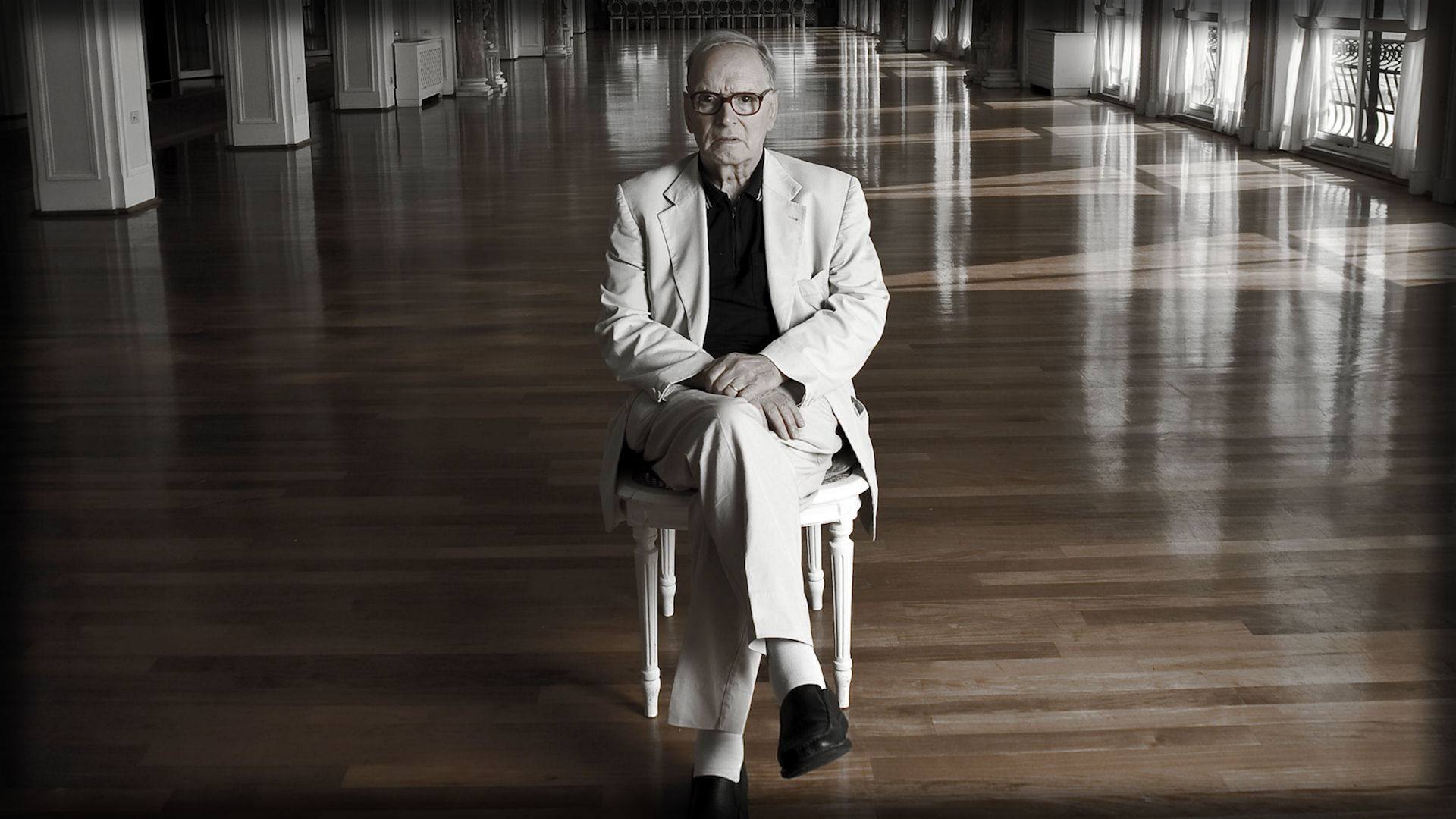
    Ennio Morricone’s birthday (b. 1928). Give it up for “Navajo Joe.”

  • Cinecittà World Rome: Italy’s New Movie Theme Park

    Cinecittà World Rome: Italy’s New Movie Theme Park

    At last, somewhere I can put my eye-squinting and Toscano-chomping skills to good use.

    Cinecittà Studios has opened Italy’s largest amusement park in Rome. In addition to two roller coasters, a flight simulator, an immersive tunnel, a water attraction, four theaters and theme restaurants, the park is home to attractions inspired by classic films.

    Visitors enter the park through the jaws of the Temple of Moloch from the silent classic “Cabiria,” the film that introduced the world to the enduring strongman Maciste. The Maciste craze reached its peak in the late ‘50s and early ‘60s, prior to the rise of the spaghetti western, the character appearing on American screens in the guise of Hercules, Samson, Atlas or whatever other mythological, Biblical or historical strongman you can think of. “Cabiria” was shot in Turin in 1914.

    The studios, cofounded by Mussolini in 1937, became a creative hotbed for the Italian neorealist movement and directors such as Federico Fellini, Roberto Rossellini and Vittorio De Sica. Cinecittà also supplied lots and soundstages for American productions from “Ben-Hur” and “Cleopatra” to “The Gangs of New York,” “The Passion of the Christ” and “The Life Aquatic with Steve Zissou.”

    The park, which opened in July, was designed by three-time Academy Award-winner Dante Ferretti, with music supplied from the film scores of Ennio Morricone.

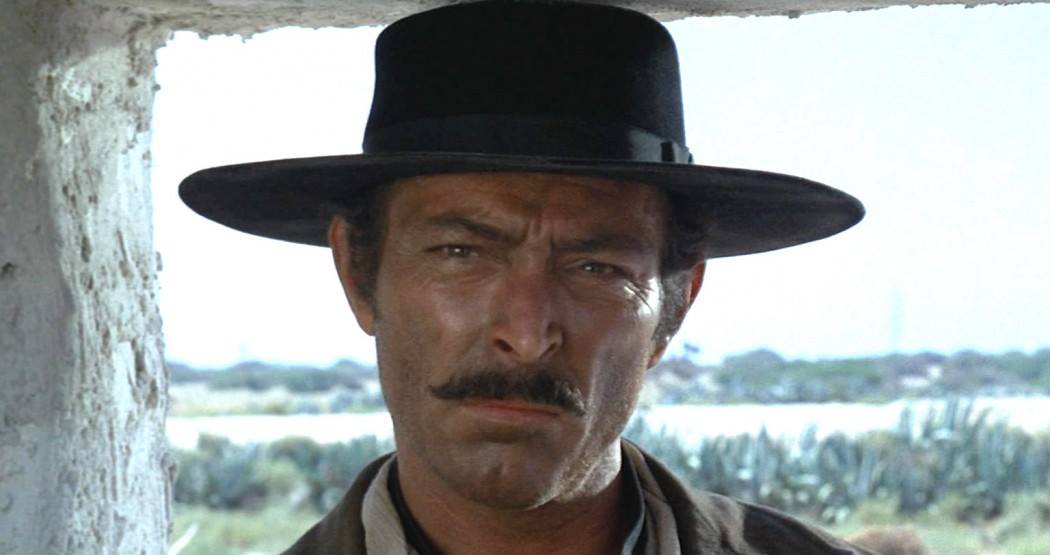
    Of particular interest is Ennio’s Creek, built on a spaghetti western motif, where Morricone’s music evokes the dusty, sundrenched terrain so memorably occupied by Clint Eastwood, Eli Wallach and Lee Van Cleef. The attraction was introduced earlier this month.

    Sounds an awful lot like “Westworld,” without the robots.

    You can read more about it here, though you may have to hit the translate button:

    http://www.cinecittaworld.it/set/ennios-creek-citta-di-frontiera/

    In inglese:

    http://www.hollywoodreporter.com/news/cinecitta-world-theme-park-opens-721738

  • European Film Music for a Summer Getaway

    European Film Music for a Summer Getaway

    With less than two weeks left in August, summer has nearly run its course, but there’s still time for a quick European vacation. This week on “Picture Perfect,” we glance across the pond for an hour of music from foreign films with summer settings.

    “A Summer Story,” based on a tale of John Galsworthy, tells of young London lawyer and a farm girl who fall profoundly in love at the turn of last century. Georges Delerue provides the poignant score.

    The juxtaposition of “Igmar Bergman” and “comedy” may seem like something of an oxymoron, but the dour Swede’s “Smiles of a Summer Night” proves to be a witty examination of the folly of the human heart. Frequent Bergman collaborator Erik Nordgren wrote the music.

    Director Yves Robert adapted the memoirs of Marcel Pagnol, who spent his childhood summers in the south of France, into two lovely films, “My Father’s Glory” and “My Mother’s Castle.” We’ll hear music composed for both by Vladimir Cosma. Pagnol’s experiences in Provence marked him for life, informing the films and writings of his maturity, including “The Baker’s Wife,” and “Jean de Florette.”

    Finally, we’ll have a generous sampling from one of Ennio Morricone’s most beloved scores, that for “Cinema Paradiso.” “Cinema Paradiso,” set in a post-war Siciy where it seems always to be summer, is a nostalgic paean to the shared experience of film and the significance it holds in our lives. It won a special jury prize at the Cannes Film Festival and was honored with an Academy Award for Best Foreign Film.

    Join me for summer overseas this week, on “Picture Perfect,” this Friday evening at 6 ET, or enjoy it later as a webcast, at http://www.wwfm.org.

  • Conan’s Great Movie Music Soundtracks

    Conan’s Great Movie Music Soundtracks

    In “Conan the Destroyer” (1984), one of Conan’s companions speculates, “I suppose nothing hurts you.”

    To which he replies, “Only pain.”

    Discriminating viewers may feel a little pain themselves watching these silly, cheesy and violent films, all of which were inspired by the writings of pulp master Robert E. Howard. Howard created the warrior Conan in 1932. The character became the center of a series of lucrative stories first published in “Weird Tales” magazine.

    In 1982, Conan made the leap to the big screen, under the guidance of director John Milius. The film, “Conan the Barbarian,” made Arnold Schwarzenegger, already a legend in the field of bodybuilding, an international superstar. While “Conan” isn’t exactly “Citizen Kane,” it does have its pleasures. The intensity of the violence can be a little disturbing, but the ponderous tone is a blast. “Conan” is a film that takes itself just seriously enough to make it occasionally hilarious.

    Another thing “Conan” had going for it was the fact that it was made on a blockbuster budget. The first-rate production values extended to the music by Basil Poledouris, who employed a full symphony orchestra to impressive ends. In fact, the “Conan” score is one of the strongest of the decade. It’s amazing that anyone would find so much inspiration in such a mediocre film, but Poledouris’ music intersperses Central Asia-style lyricism with brawny, thrilling action music.

    Sadly, the sequel, “Conan the Destroyer,” showed all-too-evident signs of penny-pinching, so that it often wound up feeling like a direct-to-video production. Poledouris was forced to make do with a smaller orchestra, which at times sounds like a television ensemble. Still, he gave it his all, and there’s something to be said for the fact that it is an original score, rather than a mere retread of the original.

    In 1997, Howard’s Kull of Atlantis was given the big screen treatment as “Kull the Conqueror.” Kevin Sorbo, TV’s Hercules, played the title role. The composer, Joel Goldsmith (son of Jerry Goldsmith), was asked to incorporate heavy metal riffs into his orchestral underscore. I haven’t actually seen this one, but for some reason I don’t feel like I’m missing anything.

    The astoundingly prolific Ennio Morricone – who has more than 500 motion picture and television scores to his name – has an uncanny knack for spinning garbage into gold. His music for “Red Sonja” (1985) lends the film an aura of ‘80s fun, perhaps more so than it deserves. This is the film that introduced Brigette Nielsen as the chain-mailed barbarian beauty. Schwarzenegger appears in the supporting role of Lord Kalidor.

    In the ‘80s, even bad films had great scores. I hope you’ll give “Conan the Barbarian” a chance this week, on “Picture Perfect” – music for the movies – this Friday evening at 6:00 ET, or enjoy it later as a webcast at http://www.wwfm.org.
    By the way, is it pronounced “Co-NAN,” as it was in the 1982 version, or “CO-nin,” as it was in the 2011 remake? Interesting meditation here:

    http://www.vulture.com/2011/08/conan_the_barbarian_has_change.html

    I pronounce it “Co-NAN” in the promo, and “CO-nin” in the show.

Tag Cloud

Aaron Copland (93) Beethoven (95) Composer (114) Film Music (126) Film Score (143) Film Scores (255) Halloween (94) John Williams (189) KWAX (229) Leonard Bernstein (101) Marlboro Music Festival (125) Movie Music (141) Mozart (87) Opera (203) Philadelphia Orchestra (89) Picture Perfect (174) Princeton Symphony Orchestra (107) Radio (87) Ross Amico (244) Roy's Tie-Dye Sci-Fi Corner (290) The Classical Network (101) The Lost Chord (268) Vaughan Williams (103) WPRB (396) WWFM (881)

DON’T MISS A BEAT

Receive a weekly digest every Sunday at noon by signing up here


RECENT POSTS