Tag: Ennio Morricone

  • De Palma’s Thrilling Scores Perfect Music

    De Palma’s Thrilling Scores Perfect Music

    Brian De Palma is an extraordinarily adept filmmaker, who has been criticized for his adherence to what has been perceived in some circles as genre trash. He has always been attracted to suspense and crime thrillers, usually of a particularly violent nature, many of them tinged with horror.

    This week on “Picture Perfect,” with Hallowe’en right around the corner, we’ll hear music from four of De Palma’s films.

    It’s hardly surprising that such an admirer of Alfred Hitchcock would also hire Hitchcock’s signature composer. Bernard Herrmann scored two films for De Palma – the first, “Sisters,” in 1973, and the second, “Obsession,” in 1976.

    “Obsession” is a spin on Hitchcock’s “Vertigo,” with a botched rescue attempt resulting in the death of a businessman’s kidnapped wife, and a seemingly chance encounter, years later, with a woman who is her doppelganger. The film stars Genevieve Bujold, John Lithgow, and a very tan Cliff Roberston.

    “The Fury,” from 1978, based on the novel by John Farris, is a supernatural thriller about two teenagers, endowed with the powers of telekinesis and extra-sensory perception, and the researchers who plan to use them for their own nefarious ends. For a time, Kirk Douglas has fun as a former CIA agent, and John Cassavetes is a particularly slimy villain. Cassavetes’ comeuppance makes for one of the most memorable movie endings of its era – and we’ll leave it at that!

    Critic Pauline Kael praised the music, which is by none other than John Williams – hot off his third Academy Award, for “Star Wars” – characterizing it as “as elegant and delicately varied a score as any horror film has ever had.”

    Of course, “The Fury” was not the first De Palma film to deal with telekinesis. His adaptation of Stephen King’s “Carrie,” from 1976, became one the decade’s landmark horror films. It broadened the popularity of King, whose first novel “Carrie” was, and propelled De Palma into the A-list of Hollywood directors. It also essentially launched the careers of Amy Irving, John Travolta, and Nancy Allen, among others. Sissy Spacek was nominated for an Academy Award for her performance in the title role, as was Piper Laurie as Carrie’s fundamentalist mother.

    The music was by Pino Donaggio. The director had wanted to continue his collaboration with Herrmann, but the composer died before the film could be completed. Donaggio, though classically trained, made his fortune writing popular songs. His biggest hit was “You Don’t Have to Say You Love Me,” as it is known in English. It was recorded by Dusty Springfield, with a well-known cover by Elvis Presley. Donnagio went on to become a regular De Palma collaborator, providing the music for seven of his films.

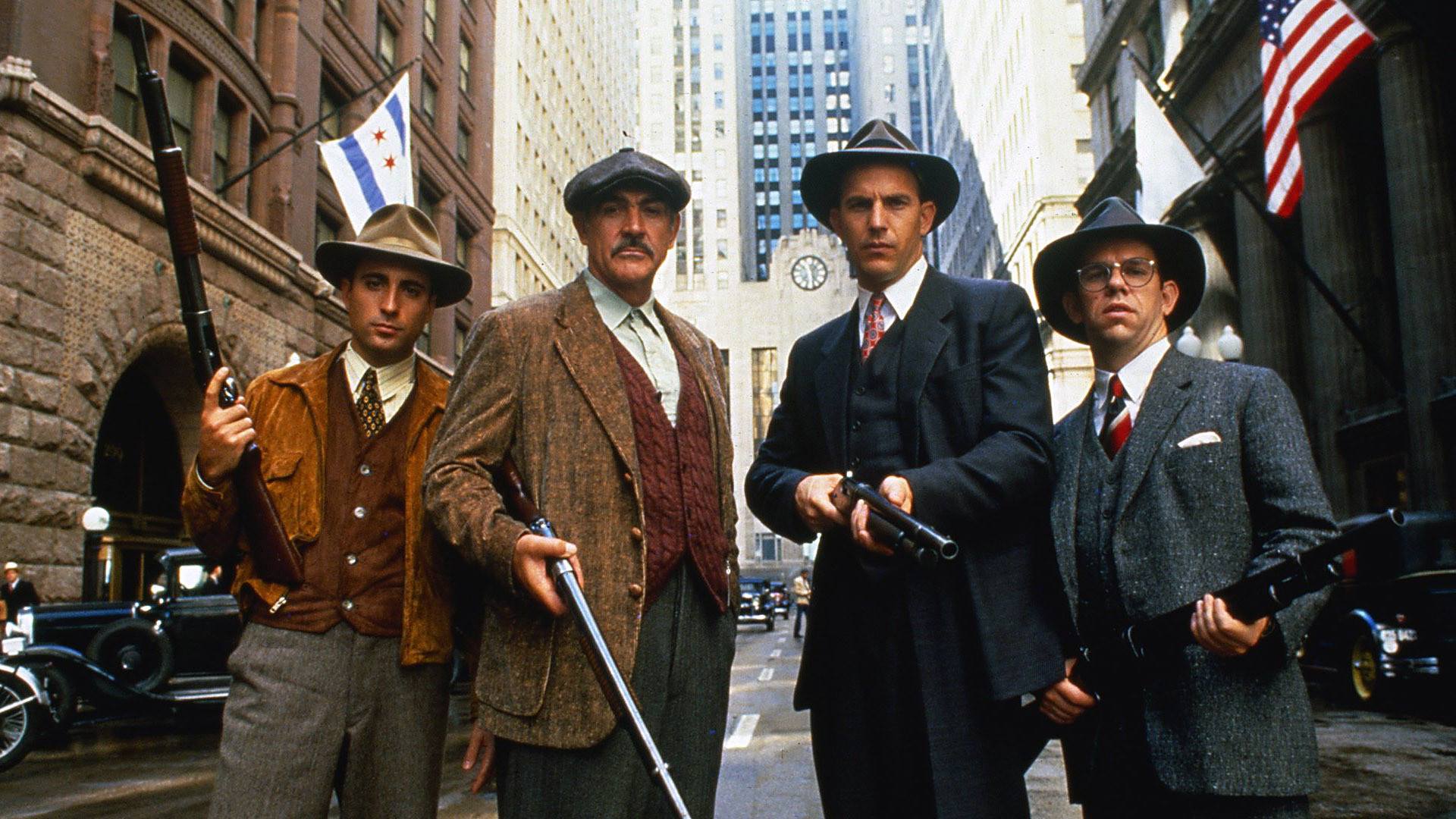
    Finally, we’ll turn our back on horror, to listen to music from a successful period crime thriller, loosely based on the real-life exploits of Eliot Ness and his fellow prohibition agents, “The Untouchables,” from 1987. Kevin Costner plays the by-the-book FBI agent who is given a valuable lesson in street smarts by an Irish beat cop played by Academy Award winning Sean Connery. (“He pulls a knife, you pull a gun. He sends one of yours to the hospital, you send one of his to the morgue. That’s the Chicago way, and that’s how you get Capone.”) Capone is played, incidentally, by a baseball bat wielding Robert De Niro.

    The score is by Ennio Morricone. Morricone, of course, was propelled to fame through his work on Sergio Leone’s spaghetti westerns. He applies some of that same mythmaking skill to this big screen adaptation, which had previously been published as a memoir and developed into a popular television series starring Robert Stack. The high point of the film must be the director’s nail-biting homage to Sergei Eisenstein, a slow motion shoot-out around a baby carriage as it teeters down the steps of Chicago Union Station.

    I hope you’ll join me for music from the films of Brian De Palma, on “Picture Perfect,” this Friday evening at 6:00 EDT, on WWFM – The Classical Network and at wwfm.org.
  • Conan Movie Music Tonight on WWFM

    Conan Movie Music Tonight on WWFM

    When met with the conjecture, “I suppose nothing hurts you,” Conan responded, philosophically, “Only pain.” That was in the Hyborian Age, before the advent of “Picture Perfect.”

    Join me this evening at 6:00 EDT for an hour of music from movies inspired by the writings of pulp master Robert E. Howard. We’ll have over-the-top scores from barbarian movies, by the likes of Ennio Morricone, Joel Goldsmith and Basil Poledouris, on WWFM – The Classical Network and at wwfm.org.
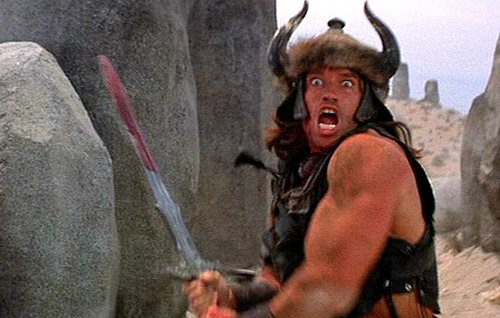
    It’s only minutes away, but there’s still time to pray to Crom.

  • Film & Concert Composers on WPRB Today

    Film & Concert Composers on WPRB Today

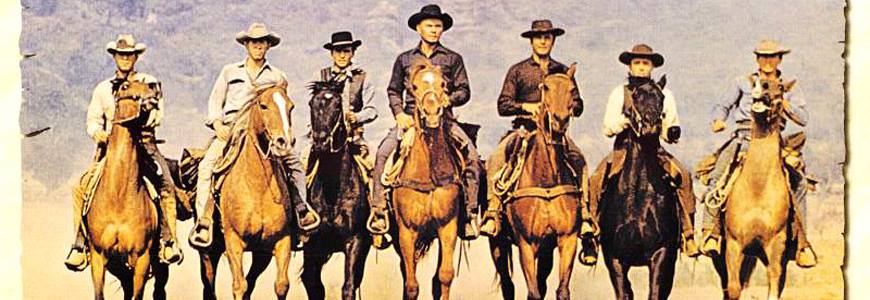
    Composers writing for film AND the concert hall this morning. Right now, we’re listening to Ennio Morricone’s “Esercizi for 10 String Soloists.” Just ahead, Elmer Bernstein’s theme for “The Magnificent Seven” and his Guitar Concerto. Later on this morning, works by Jerry Goldsmith, John Williams, Bernard Herrmann, Miklós Rózsa and more.

    At 10:00, we’ll be joined by Daniel Spalding. Spalding will conduct the New Jersey Capital Philharmonic Orchestra in a blockbuster program of “Cinematic Classics” this weekend, including works by Rózsa, Herrmann and William Walton, with Odin Rathnam the soloist in Erich Wolfgang Korngold’s Violin Concerto. The concert will take place at the Trenton War Memorial on Saturday evening at 7:30.

    It’s ALL magnificent, until 11:00 EDT, on WPRB 103.3 FM and at wprb.com.

  • Nuns and Missionaries Film Scores Picture Perfect

    Nuns and Missionaries Film Scores Picture Perfect

    Every once in a while, when faced with the challenge of programming film music for Easter, I try to shake it up a bit, so that I’m not playing Biblical epics every year. With this in mind, the focus on this week’s “Picture Perfect” will be on four scores from films about nuns and missionaries.

    “Black Robe” (1991), directed by Bruce Beresford, is based on a novel by the Irish Canadian writer Brian Moore. The film tells the tale of a Jesuit priest who treks through 1500 miles of Canadian wilderness on a mission to convert the native tribes of the Huron and the Algonquin. The evocative score is by Georges Delerue.

    The Powell-Pressburger classic, “Black Narcissus” (1947), is one of those amazing films that just sort of sneaks up on you. Psychological and emotional tensions abound in a tale of repressed nuns struggling to maintain their composure in a voluptuous Himalayan valley. Somehow it manages to inspire a kind of awe in the viewer, as the wheels begin to spin off the tracks.

    The stunning cinematography is by Jack Cardiff. Incredibly, the entire film was shot in England, mostly on soundstages, at Pinewood Studios. Brian Easdale (of “The Red Shoes” fame) wrote the music.

    Audrey Hepburn gave one of her most impressive performances in Fred Zinnemann’s “The Nun’s Story” (1959). A young woman enters a convent of nursing sisters and undergoes many trials in the hopes of becoming a missionary in the Belgian Congo. The film also features Peter Finch, Edith Evans, Peggy Ashcroft, and, in a memorable early role, Colleen Dewhurst. The music was by Franz Waxman.

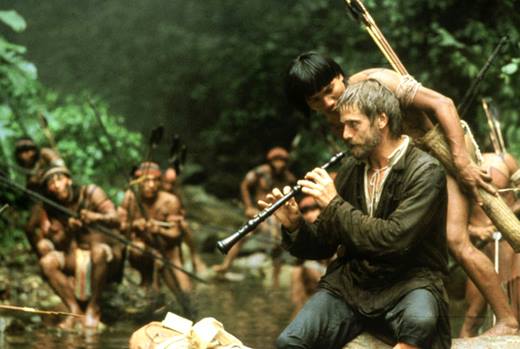
    We’ll conclude with selections from one of Ennio Morricone’s best-loved scores, that for “The Mission” (1986). Jeremy Irons plays a Jesuit priest, who penetrates the South American jungle to convert the native Guarani to Christianity. Robert DeNiro plays a reformed slave hunter. The moving score has received a great deal of exposure over the years through its use in television commercials and by figure skaters, who have made “Gabriel’s Oboe” a recognizable hit.

    I hope you’ll join me for music from films about nuns and missionaries this week on “Picture Perfect,” this Friday evening at 6, with a repeat Saturday morning at 6; or that you’ll listen to it later as a webcast at wwfm.org.

  • Lang Lang Plays Morricone Hateful Eight Oscar?

    Lang Lang Plays Morricone Hateful Eight Oscar?

    I’m telling you, the zeitgeist positively screams “Morricone!”

    Lang Lang gives “The Hateful Eight” the Franz Liszt treatment:

    https://www.youtube.com/watch?v=O8ic-gCiCN4

    If Morricone doesn’t get his Oscar next Sunday, I’ll eat a great big bowl of spaghetti (as in western).

    Here’s the original, by way of comparison:


    PHOTO: No confusing whose piano that is

Tag Cloud

Aaron Copland (93) Beethoven (95) Composer (114) Film Music (143) Film Score (143) Film Scores (255) Halloween (94) John Williams (195) KWAX (229) Leonard Bernstein (104) Marlboro Music Festival (125) Movie Music (158) Mozart (90) Opera (212) Philadelphia Orchestra (89) Picture Perfect (174) Princeton Symphony Orchestra (108) Radio (88) Ross Amico (244) Roy's Tie-Dye Sci-Fi Corner (290) The Classical Network (101) The Lost Chord (269) Vaughan Williams (105) WPRB (397) WWFM (881)

DON’T MISS A BEAT

Receive a weekly digest every Sunday at noon by signing up here


RECENT POSTS