Tag: Ennio Morricone

  • Ennio Morricone at 90 Celebrating a Maestro

    Ennio Morricone at 90 Celebrating a Maestro

    This week on “Picture Perfect,” we’ll stick a feather in our cap and call it Morricone.

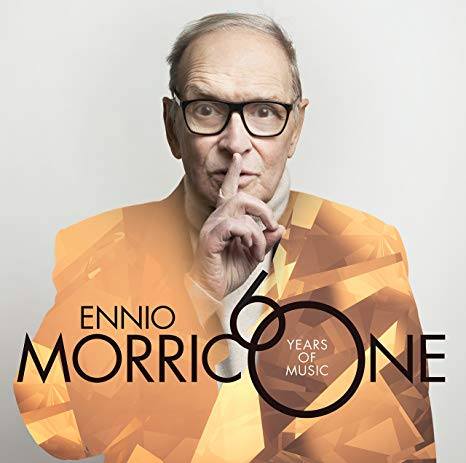
    Ennio Morricone, author of over 500 film and television scores, is perhaps the most prolific movie composer of all time. Tomorrow will mark his 90th birthday(!).

    We’ll celebrate this extraordinary artist by revisiting some of his most indelible inspirations, including selections from “Cinema Paradiso” (1988), “The Good, the Bad and the Ugly” (1966), “The Mission” (1986), “Once Upon a Time in the West” (1968), “Navajo Joe” (1966), “The Untouchables” (1987), and his Academy Award winning music for “The Hateful Eight” (2015).

    I’d hate for you to miss it. Join me this Friday evening at 6:00 EST, as we salute Italy’s maestro of the movies. It’s Morricone at 90, on WWFM – The Classical Network and wwfm.org.

  • Ennio Morricone Retires Film Music?

    Ennio Morricone Retires Film Music?

    Ennio Morricone, who has been engaged this year in farewell appearances conducting his “60 Years of Music Tour,” in sold-out arenas and to standing ovations all across Europe, allegedly announced to Italian media that he has retired from film scoring. Multiple Google searches have so far turned up nothing in the way of confirmation, but such an announcement would not be far-fetched. Morricone will turn 90 on November 10. With over 500 film and television scores to his credit, on top of 100 concert works, he may very well be the most prolific film composer who ever lived.

  • Lee Van Cleef From Accountant to Spaghetti Western Star

    Lee Van Cleef From Accountant to Spaghetti Western Star

    Angel Eyes! I hardly knew ya.

    Anyone out there know that Lee Van Cleef (a) was born in Somerville, NJ; and (b) began his career as an accountant? Would the IRS ever second-guess this guy?

    He also chased submarines during WWII, only to chop off his finger while building his daughter a playhouse.

    Van Cleef went from bit-part villain’s henchman in films like “High Noon” and “The Man Who Shot Liberty Valance” to international superstar thanks the Italian “spaghetti western” circuit. Enjoy music from Sergio Leone’s “Dollars” Trilogy (“A Fistful of Dollars,” “For a Few Dollars More,” and “The Good, the Bad and the Ugly”), composed by Ennio Morricone, and Gianfranco Parolini’s “Sabata” Trilogy (including “Sabata” and “Return of Sabata”), composed by Marcello Giombini. There will be plenty of spaghetti for everyone on “Picture Perfect,” this Friday evening at 6:00 EDT, on WWFM – The Classical Network and wwfm.org.

  • Spaghetti Western Music for Father’s Day

    Spaghetti Western Music for Father’s Day

    This week on “Picture Perfect,” with Father’s Day right around the corner, I thought it would be a good time to revisit the spaghetti western. After all, whose Dad doesn’t like spaghetti?

    We’ll hear an hour of distinctive scores written for these ultra-cool, hyper-stylized westerns that were originally released in Italy, with their multinational casts heavily dubbed in post-production.

    Spaghetti westerns frequently turned the conventions of American westerns on their heads. At any rate, the morality of the traditional western was made much murkier, with antiheroes cast as protagonists, usually motivated by greed and revenge. Especially greed.

    As with the American film industry, only more so, when the Italians found something that worked, they went into overdrive, churning out literally dozens of knock-offs and imitations a year, until a given genre had run its financially lucrative course.

    To this end, over 600 European westerns were produced between 1960 and 1980. The most influential of these were those directed by Sergio Leone, especially those of the so-called “Dollars” Trilogy – “A Fistful of Dollars,” “For a Few Dollars More,” and “The Good, the Bad and the Ugly.”

    These, of course, featured then-rising star Clint Eastwood. His co-star in the second and third films was Lee Van Cleef, who in American westerns like “High Noon” and “The Man Who Shot Liberty Valance” had bit parts as one of the villain’s henchmen, but became an international superstar as the spaghetti western’s most reliable – and bankable – heavy.

    We’ll sample from music for the “Dollars” Trilogy, composed by Ennio Morricone, and the “Sabata” Trilogy (which also starred Van Cleef), composed by Marcello Giombini.

    Tell Dad it’s all-you-can-eat. I’ll be piling the plates high with music from spaghetti westerns, on “Picture Perfect,” this Friday evening at 6:00 EDT, on WWFM – The Classical Network and wwfm.org.

  • Rózsa Morricone South America Film Scores

    Rózsa Morricone South America Film Scores

    If you are a Miklós Rózsa fan, you’ll want to join me for this week’s “Picture Perfect,” as I dig deep into the archive for two contrasting scores to movies set in South America.

    Rózsa, who is probably best remembered for his work on Biblical and historical epics (he won his third Academy Award for “Ben Hur” in 1959) provides a lush symphonic tapestry for “Green Fire” (1954), starring Stewart Granger and Grace Kelly. Rózsa piles on the MGM gloss, for a conflict between love and lust for emeralds in the jungles of Colombia.

    Then we’ll hear perhaps Rózsa’s most unusual venture, “Crisis” (1950). “Crisis” starred Cary Grant and Jose Ferrer in the story of a brain surgeon who must weigh ethical considerations when faced with saving the life of a dictator who oppresses the people of an unnamed banana republic. Unusual for a composer who likes to swing for the fences, Rózsa set himself the limitations of writing for solo guitar.

    M-G-M must have felt it had scored a major coup when securing famed Brazilian composer Heitor Villa-Lobos to supply music for “Green Mansions” (1959). The big screen an adaptation of W.H. Hudson’s novel, set in the rainforests of southeastern Venezuela, starred Audrey Hepburn as Rima the Bird Girl. Unfortunately, the studio deemed what Villa-Lobos produced unusable, since the composer had begun writing based on his impressions of the novel, rather than wait for the completed film. M-G-M house composer Bronislau Kaper was brought in to salvage what he could.

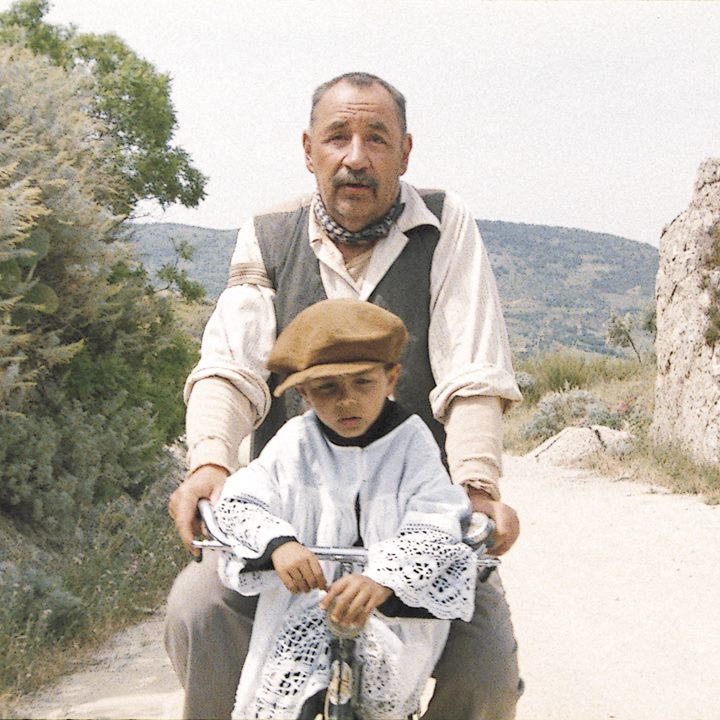
    Finally, we’ll turn to one of Ennio Morricone’s best-loved scores – that for “The Mission” (1986). “The Mission” starred Jeremy Irons, as a Jesuit priest who penetrates the South American jungle to convert the native Guarani to Christianity, and Robert DeNiro, as a reformed slave hunter. The lovely and moving “Gabriel’s Oboe” became a recognizable hit, thanks in particular to its use by figure skaters and Aer Lingus.

    This is the score for which Morricone believed he should have won the Oscar.

    I hope you’ll join me for these South American adventures this week, on “Picture Perfect” – music for the movies – this Friday evening at 6:00 EDT, on WWFM – The Classical Network and wwfm.org.

Tag Cloud

Aaron Copland (93) Beethoven (95) Composer (114) Film Music (126) Film Score (143) Film Scores (255) Halloween (94) John Williams (189) KWAX (229) Leonard Bernstein (101) Marlboro Music Festival (125) Movie Music (141) Mozart (87) Opera (203) Philadelphia Orchestra (89) Picture Perfect (174) Princeton Symphony Orchestra (107) Radio (87) Ross Amico (244) Roy's Tie-Dye Sci-Fi Corner (290) The Classical Network (101) The Lost Chord (268) Vaughan Williams (103) WPRB (396) WWFM (881)

DON’T MISS A BEAT

Receive a weekly digest every Sunday at noon by signing up here


RECENT POSTS