Well… it appears that signals were crossed. It’s now WESTERN SCORES BY ENNIO MORRICONE, UNTIL 7:00 EDT, ON “PICTURE PERFECT,” music for the movies, on WWFM – The Classical Network and wwfm.org.
If you miss it, I’m sure it will be posted as a webcast soon. Sorry for the confusion. I would have liked to have promoted the show with a nice write-up on Morricone, who died last month at the age of 91, with an ample side dish on the art of the spaghetti western, but, alas, now there’s no time.
Tune in for Latin swords, including “The Adventures of Don Juan,” next week!
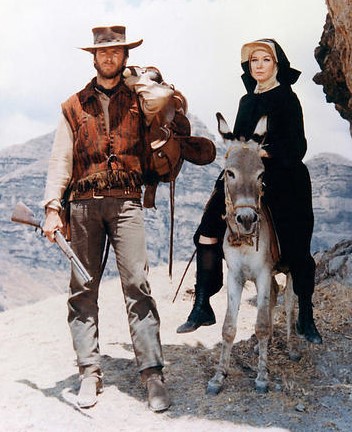
What was initially planned to mark the 50th anniversary of the release of a film now inadvertently serves as a memorial. Within days of the passing of Ennio Morricone, La-La Land Records has reissued his score to “Two Mules for Sister Sara.”
It promises to be an especially popular release, since, while not an actual “spaghetti western,” the film shares many of the same trappings with the three Sergio Leone-directed features that made Clint Eastwood an international superstar, and Morricone’s music is very much of a piece. If you ever wondered what a romantic comedy featuring The Man With No Name would be like, this is it. The 2-CD set includes the original soundtrack album and lots of previously unreleased material, including every note of music heard in the film. This expanded release is limited to 3000 copies.
In other news, it has been announced that the city of Rome will rename the Auditorium Parco della Musica (Music Park Auditorium) in honor of the composer. On July 17, Rome’s city council voted unanimously in favor of the proposal. A selection from Morricone’s score to “Once Upon a Time in America” was performed for the occasion by members of the Orchestra dell’Accademia Nazionale di Santa Cecilia (Orchestra of the National Academy of Saint Cecilia), conducted by the composer’s son, Andrea. The auditorium serves as home base for the group. Morricone has led the orchestra there many times.
“We want to remember a genius who gave so much to Rome and Italy, linking his name to an international symbol of culture and art,” tweeted the city’s mayor, Virginia Raggi.
The multifunctional arts complex, designed by Renzo Piano (and yes, that is his real name), was inaugurated in 2002. The auditorium’s halls are dedicated to composer Goffredo Petrassi (who was Morricone’s teacher), conductor Giuseppe Sinopoli, and to Cecilia herself, the patron saint of music.
Ennio Morricone died on July 6 at the age of 91.
Morricone celebrates his 90th birthday with the Orchestra and Chorus of the Accademia Nazionale di Santa Cecilia. The music is from “The Mission.”
Andrea conducts his father’s Concerto for Orchestra:
This week’s Classic Ross Amico crossword honors the life and career of Ennio Morricone, who died on Monday at the age of 91. The composer of over 500 film and television scores, Morricone was likely the most prolific film composer of all time, but he also left his mark on the classical and popular worlds. For a “film composer,” he was unusually influential.
To fill out the puzzle, follow the link and select “solve online” at the bottom of the page. You’ll then be able to type directly into the squares. Once you feel you’ve exhausted the puzzle, you’ll find the solutions by clicking on “Answer Key PDF.”
Celebrate the composer of “The Mission,” “The Untouchables,” “Cinema Paradiso,” “Once Upon a Time in the West,” and “The Good, the Bad and the Ugly.” With Ennio, it was all good.
A sad day for anyone who loves the movies. Ennio Morricone is dead.
The composer of over 500 film and television scores, he was likely the most prolific film composer of all time.
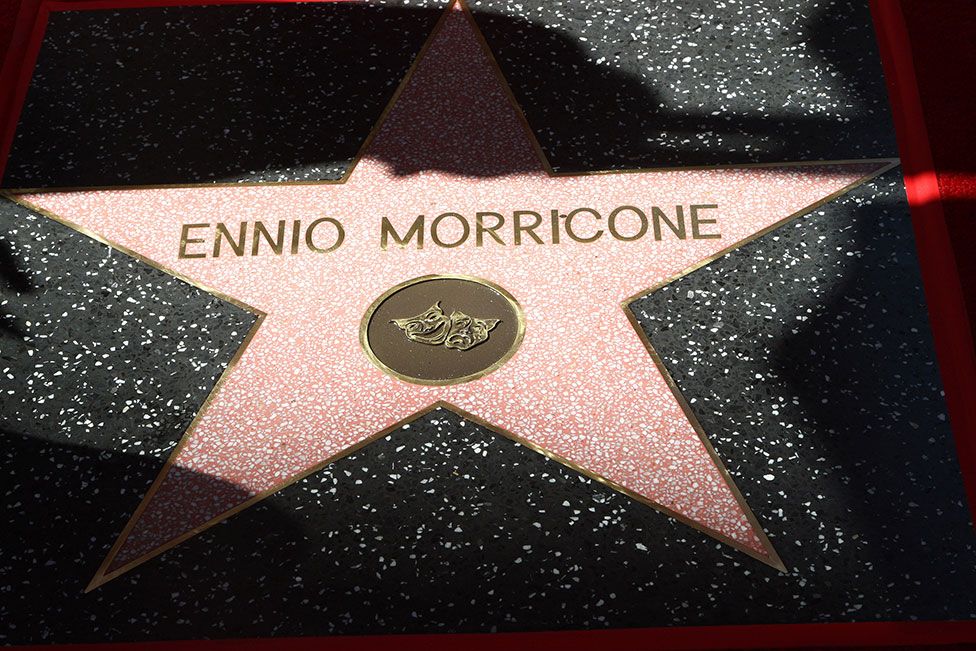
Although he has always been very popular in America, and around the world, with tributes pouring in over the decades from both pop and classical artists, acknowledgment from the Hollywood establishment came only fairly recently. He received a star on Hollywood’s Walk of Fame in 2016, the same year he won his only competitive Academy Award, for his score to Quentin Tarantino’s “The Hateful Eight.” By then, he was 87 years-old. (He was nominated five other times, the first in 1979.) Earlier, he received an honorary Oscar, for lifetime achievement, in 2007.
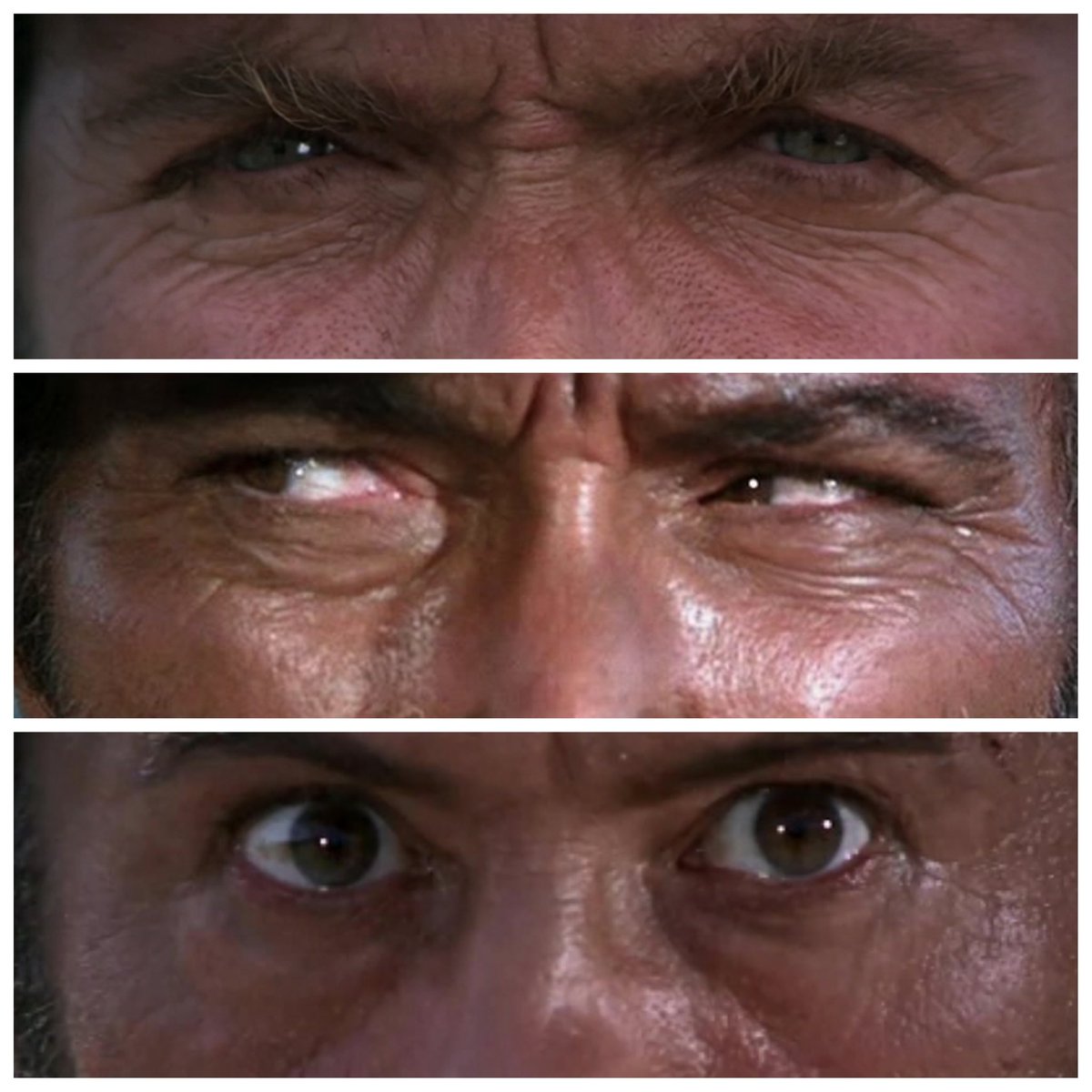
Of course, Morricone never needed Hollywood to confirm his greatness. He churned out score after score from his home in Rome, and always supplied his own orchestrations – by no means standard practice in the film industry. The sheer volume of his output ensured that he left his mark on nearly every genre, but none more indelibly than the western. His collaborations in the form with director Sergio Leone – especially “A Fistful of Dollars,” “For a Few Dollars More,” “The Good, the Bad and the Ugly,” and “Once Upon a Time in the West” – made him internationally famous.
His music for “The Mission,” “The Untouchables,” and “Cinema Paradiso” also remains popular. His melodies are much appropriated by figure skaters, television commercials, and by the movies themselves. His music has been quoted or reused in over 150 films, in which he has had absolutely no involvement. Even in instances in which the movies were absolutely atrocious, Morricone could be counted on to draw on his unfailing professionalism, infusing the ridiculous with dramatic tension and often heartbreaking lyricism.
No word on whether or not he was able to follow through on his commitment to write music for the 2026 Olympic Games in Milano Cortina.
Morricone was 91 years-old. One of the last of the legends is gone.
If you are a Miklós Rózsa fan, you’ll want to join me for this week’s “Picture Perfect,” as I dig deep into the archive for two contrasting scores to movies set in South America.
Rózsa, who is probably best remembered for his work on Biblical and historical epics (he won his third Academy Award for “Ben Hur” in 1959) provides a lush symphonic tapestry for “Green Fire” (1954), starring Stewart Granger and Grace Kelly. Rózsa piles on the MGM gloss, for a conflict between love and lust for emeralds in the jungles of Colombia.
Then we’ll hear perhaps Rózsa’s most unusual venture, “Crisis” (1950). “Crisis” stars Cary Grant and Jose Ferrer in the story of a brain surgeon who must weigh ethical considerations when faced with saving the life of a dictator who oppresses the people of an unnamed banana republic. Unusual for a composer who likes to swing for the fences, Rózsa set himself the limitations of writing for solo guitar.
MGM must have felt it had scored a major coup when securing famed Brazilian composer Heitor Villa-Lobos to supply music for “Green Mansions” (1959). The big screen adaptation of W.H. Hudson’s novel, set in the rainforests of southeastern Venezuela, stars Audrey Hepburn as Rima the Bird Girl. Unfortunately, the studio deemed what Villa-Lobos produced unusable, since the composer had begun writing based on his impressions of the novel, rather than wait for the completed film. MGM house composer Bronislau Kaper was brought in to salvage what he could.
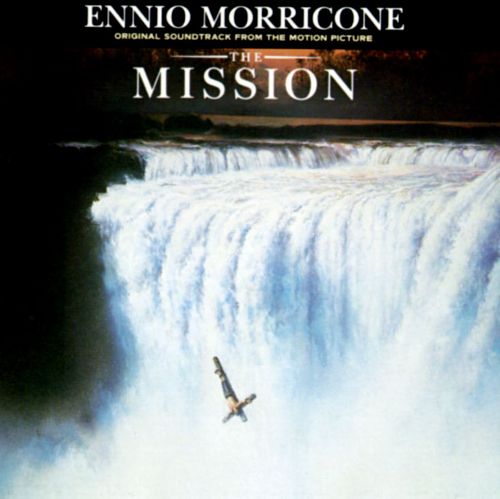
Finally, we’ll turn to one of Ennio Morricone’s best-loved scores – that for “The Mission” (1986). “The Mission” stars Jeremy Irons, as a Jesuit priest who penetrates the South American jungle to convert the native Guarani to Christianity, and Robert DeNiro, as a reformed slave hunter. The lovely and moving “Gabriel’s Oboe” became a recognizable hit, thanks in particular to its use by figure skaters and Aer Lingus.
This is the score for which Morricone believed he should have won the Oscar.
I hope you’ll join me for these South American adventures this week, on “Picture Perfect” – music for the movies – this Friday evening at 6:00 EDT, on WWFM – The Classical Network and wwfm.org.