Tag: Ennio Morricone

  • Summer Film Music from Europe

    Summer Film Music from Europe

    With several weeks left in August, there’s still time for a quick European vacation. This week on “Picture Perfect,” we glance across the pond for an hour of music from foreign films with summer settings.

    “A Summer Story” (1988), based on a tale by John Galsworthy, tells of a young London lawyer and a farm girl who fall profoundly in love at the turn of last century. Georges Delerue provides the poignant score.

    The juxtaposition of “Igmar Bergman” and “comedy” may seem like something of an oxymoron, but the dour Swede’s “Smiles of a Summer Night” (1955) proves to be a witty examination of the folly of the human heart. Frequent Bergman collaborator Erik Nordgren wrote the music.

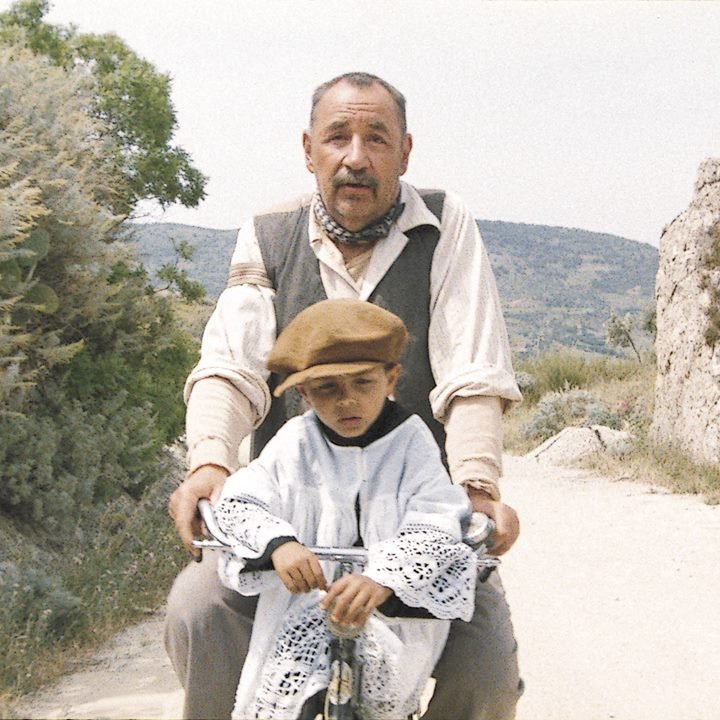
    Director Yves Robert adapted the memoirs of Marcel Pagnol, who spent his childhood summers in the south of France, into two lovely films, “My Father’s Glory” and “My Mother’s Castle” (1990). We’ll hear music composed for both by Vladimir Cosma. Pagnol’s experiences in Provence marked him for life, informing the films and writings of his maturity, including “The Baker’s Wife,” and “Jean de Florette.”

    Finally, we’ll have a generous sampling from one of Ennio Morricone’s most beloved scores, that for “Cinema Paradiso” (1988). “Cinema Paradiso,” set in a post-war Sicily where it seems always to be summer, is a nostalgic paean to the shared experience of film and the significance it holds in our lives. It won a special jury prize at the Cannes Film Festival and was honored with an Academy Award for Best Foreign Film.

    Music is the universal language. I hope you’ll join me for summer overseas on “Picture Perfect,” music for the movies, this Saturday evening at 6:00 EDT, on WWFM – The Classical Network and wwfm.org.

  • Princeton Record Exchange Film Score Haul

    Princeton Record Exchange Film Score Haul

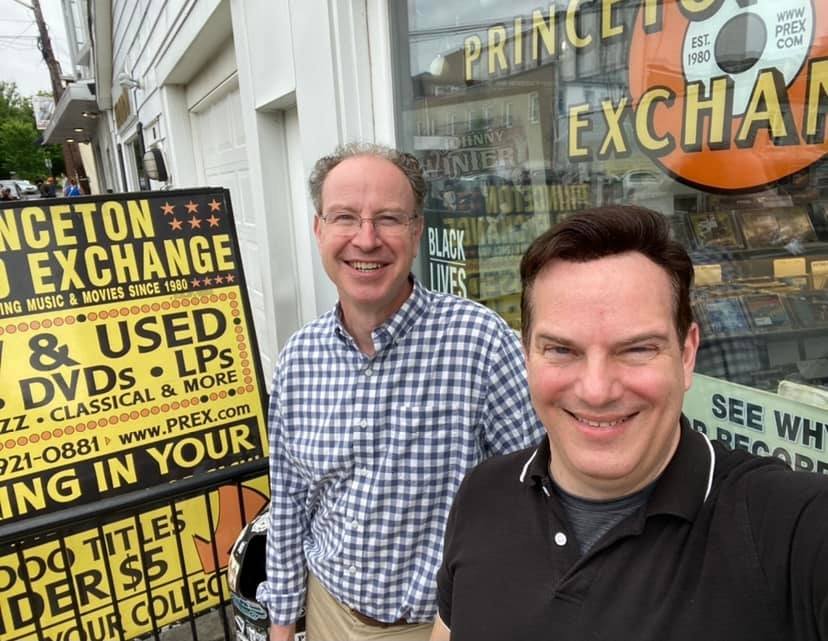
    Roy made the trek down to Princeton yesterday. I showed him around the town and campus and introduced him to Princeton Record Exchange, the Holy of Holies for savvy record collectors. Even just to get through the classical music section can sometimes take me a couple of hours, if I comb through everything, so there’s often little energy left to check out the other sections.

    Yesterday, even though I felt the perspiration beading on my forehead, I deliberately didn’t look too closely as we passed through. However, I had to fight hard not to grow roots when I happened to glance at the soundtracks and noticed a mother lode of classic film scores!

    Not wanting to waste our time together, I came back later and cleaned the place out. I filled up a bag with Max Steiner, Franz Waxman, Alfred Newman, Dimitri Tiomkin, David Raksin, Hugo Friedhofer, Victor Young, George Duning, Alex North, André Previn, Bronislau Kaper, Elmer Bernstein, Ernest Gold, Laurence Rosenthal, John Barry, Ron Goodwin, Ennio Morricone, Mario Nascimbene, Pino Donaggio, and Jerry Goldsmith (among others). I even found a suite from “The Skull” by Elisabeth Lutyens, some French scores for the films of Marcel Carné, and Alessandro Cicognini’s music for Kirk Douglas’ “Ulysses!”

    Roy, you’re my good luck charm!

  • Western Heroes Music From Shane to Outland

    Western Heroes Music From Shane to Outland

    The western must be the most adaptable of cinematic genres – which seems funny, in a way, since the figures at its core are so resolute. This week on “Picture Perfect,” we reflect on the evolution of the western hero with music from four contrasting films.

    “Shane” (1953) depicts a classic western archetype, the reluctant gunfighter, a drifter with a past, who pauses on his way to nowhere to defend a family of homesteaders against injustice at the hands of a greedy cattle baron. Mysterious, laconic, but with an unshakeable moral compass, Shane can be counted on always to do the right thing, resorting to violence only when he’s out of options. Alan Ladd’s mythic turn is supported by one of Victor Young’s best-loved scores.

    Dimitri Tiomkin was once asked how a composer of Ukrainian origin could write such convincing western music. He responded, in accented English, “A steppe is a steppe is a steppe.”

    Tiomkin would become the composer of choice for the American western throughout the 1950s, due to his distinctive handling of “High Noon” (1952). The success of its title song, “The Ballad of High Noon” (“Do Not Forsake Me, Oh My Darlin’”), with its melody integrated into the orchestral score, provided a western blueprint for well over a decade. Tiomkin was honored with two Academy Awards, for Best Song and Best Scoring of a Dramatic Motion Picture.

    In “High Noon,” we are presented with a very different hero from that of the “Shane” archetype, a hero allowed to show uncertainty. Gary Cooper’s Marshal Will Kane seeks help for the final showdown, but winds up having to stand alone. As Mark Twain observed, “Courage is not the absence of fear. It’s acting in spite of that fear.”

    Clint Eastwood’s The Man With No Name, the anti-hero of Sergio Leone’s “Dollars Trilogy” of spaghetti westerns, is very much a product of the 1960s – cynical and self-serving, with his own moral code, lots of grays clouding up the black and white. The character was introduced in 1964’s “A Fistful of Dollars” (1964), a western remake of Akira Kurosawa’s “Yojimbo,” with a wandering gun-for-hire standing in for Kurosawa’s ronin, or masterless samurai.

    The Man With No Name strikes a mercenary pose, his allegiance shifting with the most profitable wind. However, he is revealed to have his own sense of justice, unorthodox as it may be.

    Ennio Morricone brought a fresh sound to this new kind of hero and earned international attention, which would intensify a few years later with his iconic score for “The Good, the Bad and the Ugly.”

    By the late ‘70s, the western as a genre appeared to be in its death-throes. But never underestimate the durability of a good myth. Even as galloping horses and dusty plains grew increasingly scarce on movie screens, the tropes and iconography of the western endured, transferred to the final frontier of space.

    Following the success of “Star Wars,” in 1977, with its cantinas and space cowboys, shoot-’em-ups and showdowns were, increasingly, set in distant galaxies, though, regrettably, often without much of the former “western” moral gravitas.

    “Outland” (1981) is a gritty update of “High Noon,” transferred to a mining colony on one of the moons of Jupiter. This time Sean Connery plays the marshal, like Gary Cooper’s Will Kane, determined to do the right thing, even as he is left to stand alone against hired gunmen. The score is by Jerry Goldsmith, who, earlier in his career, had written music for a fair number of true westerns, on both big screen and small.

    I hope you’ll join me for four faces of the western hero, on “Picture Perfect,” music for the movies, this Saturday evening at 6:00 EDT, on WWFM – The Classical Network and at wwfm.org.

  • Ennio Morricone Gone But Never Forgotten

    Ennio Morricone Gone But Never Forgotten

    Happy birthday, Ennio Morricone, gone but never forgotten.

    The composer of an estimated 500 film and television scores – perhaps the most prolific film composer of all time – Morricone died last year at the age of 91.

    Grazie, Maestro. You are greatly missed.


    Morricone celebrates his 90th birthday with the Orchestra and Chorus of the Accademia Nazionale di Santa Cecilia and music from “The Mission”

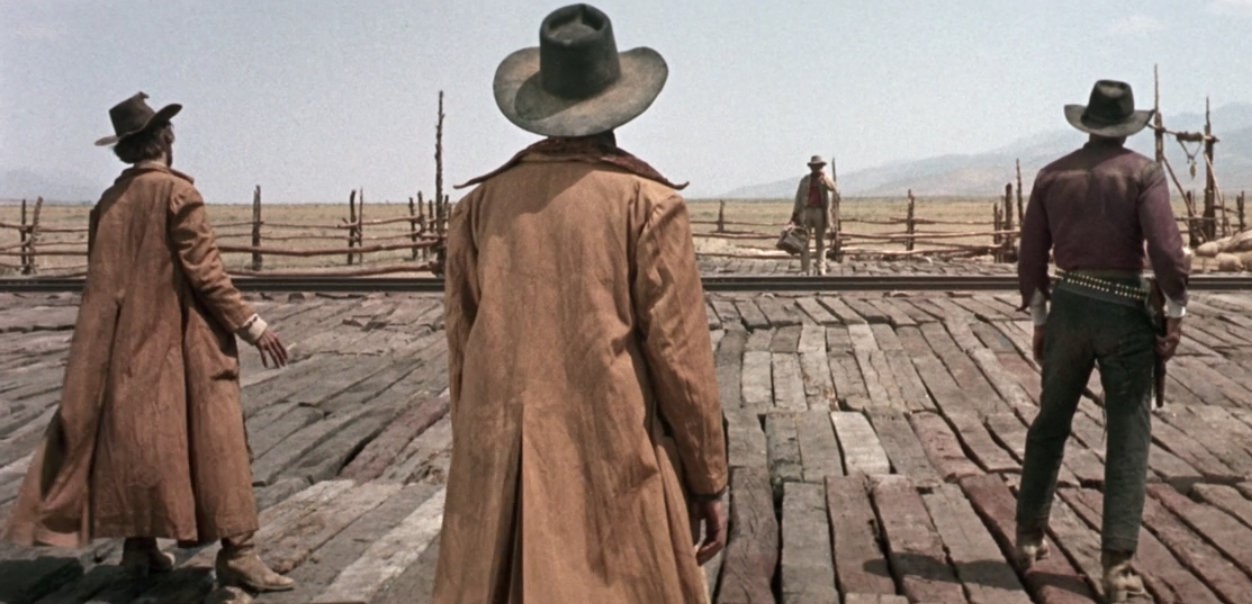
    “Once Upon a Time in the West”

    Vintage Morricone: “Two Mules for Sister Sara”

    A personal favorite

    Another, not to be confused with the oft-reissued “Il Gatto a Nove Code” – a completely different animal! Is that a mandolin and a muted trombone? Morricone always provided his own orchestrations.

    Conducting “Cinema Paradiso”

    Andrea Morricone conducts his father’s Concerto for Orchestra:

    Another concert work: “Esercizi for 10 Strings”

    Ricercare per pianoforte (thanks to Paul Moon)

    Easily his greatest hit

    “The Ecstasy of Gold.” I think I need to watch this movie NOW!!

    Far and away the best thing about “The Hateful Eight” (for which he received his only competitive Oscar)

    Morricone conducts “The Untouchables”

  • Williams & Morricone Film Music Legends

    Williams & Morricone Film Music Legends

    I’ve been sitting on these articles for a week or two, waiting for an opportunity to share them. If you’re into film music or love the movies, you may find them equally of interest.

    John Williams talks to Steinway:

    https://www.steinway.com/news/features/owners/john-williams

    Criterion assesses Ennio Morricone:

    https://www.criterion.com/current/posts/7379-beyond-the-western-the-staggering-range-of-ennio-morricone


    LAST OF THE LIONS: Williams congratulates Morricone, as he wins his only competitive Oscar for “The Hateful Eight,” in 2016

Tag Cloud

Aaron Copland (93) Beethoven (95) Composer (114) Film Music (126) Film Score (143) Film Scores (255) Halloween (94) John Williams (189) KWAX (229) Leonard Bernstein (101) Marlboro Music Festival (125) Movie Music (141) Mozart (87) Opera (203) Philadelphia Orchestra (89) Picture Perfect (174) Princeton Symphony Orchestra (107) Radio (87) Ross Amico (244) Roy's Tie-Dye Sci-Fi Corner (290) The Classical Network (101) The Lost Chord (268) Vaughan Williams (103) WPRB (396) WWFM (881)

DON’T MISS A BEAT

Receive a weekly digest every Sunday at noon by signing up here


RECENT POSTS