Tag: Ennio Morricone

  • European Film Music for Summer Vacation Dreams

    European Film Music for Summer Vacation Dreams

    The light is shifting. It’s still summer, but the perceptible creep toward shorter days has begun.

    That said, with nearly three weeks left in August, there’s still time for a quick European vacation. This week on “Picture Perfect,” we’ll glance across the pond for an hour of music from foreign films with summer settings.

    “A Summer Story,” based on a tale of John Galsworthy, tells of young London lawyer and a farm girl who fall profoundly in love at the turn of last century. Georges Delerue provides the poignant score.

    The juxtaposition of “Igmar Bergman” and “comedy” may seem like something of an oxymoron, but the dour Swede’s “Smiles of a Summer Night” proves to be a witty examination of the folly of the human heart. Frequent Bergman collaborator Erik Nordgren wrote the music.

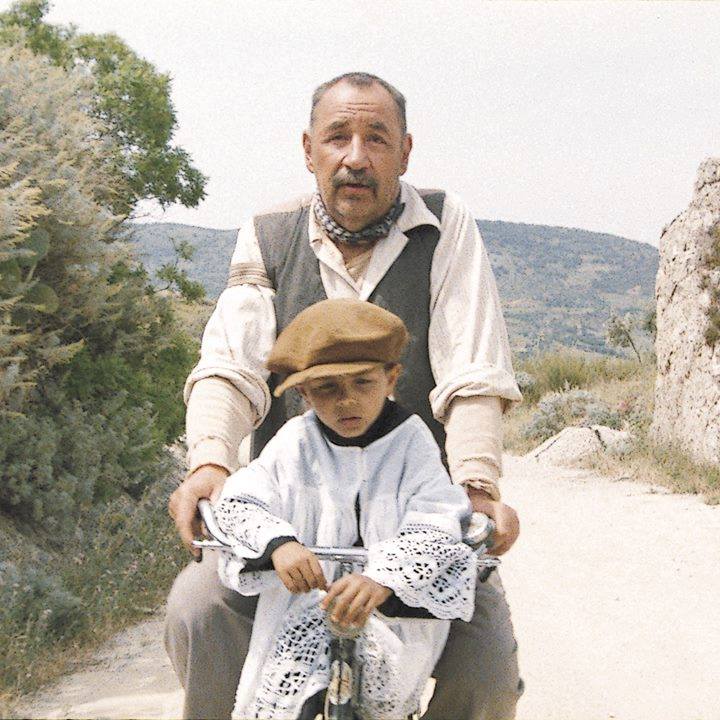
    Director Yves Robert adapted the memoirs of Marcel Pagnol, who spent his childhood summers in the south of France, into two lovely films, “My Father’s Glory” and “My Mother’s Castle.” We’ll hear music composed for both by Vladimir Cosma. Pagnol’s experiences in Provence marked him for life, informing the films and writings of his maturity, including “The Baker’s Wife,” and “Jean de Florette.”

    Finally, we’ll have a generous sampling from one of Ennio Morricone’s most beloved scores, that for “Cinema Paradiso.” “Cinema Paradiso,” set in a post-war Siciy where it always seems to be summer, is a nostalgic paean to the shared experience of film and the significance it holds in our lives. It won a special jury prize at the Cannes Film Festival and was honored with an Academy Award for Best Foreign Film.

    I hope you’ll join me for summer overseas, on “Picture Perfect,” this Friday evening at 6:00 EDT, on WWFM – The Classical Network and wwfm.org.

  • Alessandro Alessandroni R.I.P.

    Alessandro Alessandroni R.I.P.

    You may have heard him on “Picture Perfect” last Friday, on WWFM – The Classical Network, whistling the distinctive main title music for “A Fistful of Dollars.” Alessandro Alessandroni, whose talent, as a guitarist, mandolinist, sitarist, accordionist, pianist, and, yes, whistler, graced over 70 film scores, died on Sunday at the age of 92. Among his recent credits: “The Lego Movie.” He essentially whistled Ennio Morricone to international fame.

    Learn more about Alessandroni here:

    http://exclaim.ca/film/article/r_i_p_italian_soundtrack_great_alessandro_alessandroni

    R.I.P.

  • Western Heroes The Evolution of the Genre

    Western Heroes The Evolution of the Genre

    The American western must be the most adaptable of cinematic genres. As times have changed, so has the western, to reflect the world around it – which seems funny, in a way, since the figures at its core are so resolute.

    This week on “Picture Perfect,” we reflect on the evolution of the western hero with music from four films.

    “Shane” (1953) depicts a classic western archetype, the reluctant gunfighter, a drifter with a past, who pauses on his way to nowhere to defend a family of homesteaders against injustice at the hands of a greedy cattle baron. Mysterious, laconic, but with an unshakeable moral compass, Shane can be counted on always to do the right thing, resorting to violence only when he’s out of options. Alan Ladd’s mythic turn is supported by one of Victor Young’s best-loved scores.

    Dimitri Tiomkin was once asked how a composer of Ukrainian origin could write such convincing western music. He responded, in accented English, “A steppe is a steppe is a steppe.”

    Tiomkin would become the composer of choice for the American western throughout the 1950s, due to his distinctive handling of “High Noon” (1952). The success of its title song, “The Ballad of High Noon” (otherwise known as “Do Not Forsake Me, Oh My Darlin’”) – with its melody integrated into the orchestral score – provided a western blueprint for well over a decade. Tiomkin was honored with two Academy Awards, for Best Song and Best Scoring of a Dramatic Motion Picture.

    In “High Noon,” we are presented with a very different hero from that of the “Shane” archetype, a hero allowed to show uncertainty. Gary Cooper’s Marshal Will Kane seeks help for the final showdown, but winds up having to stand alone. As Mark Twain observed, “Courage is not the absence of fear. It’s acting in spite of that fear.”

    Clint Eastwood’s The Man With No Name, the anti-hero of Sergio Leone’s “Dollars Trilogy” of spaghetti westerns, is very much a product of the 1960s – cynical and self-serving, with his own moral code, lots of grays clouding up the black and white. The character was introduced in 1964’s “A Fistful of Dollars” (1964), a western remake of Akira Kurosawa’s “Yojimbo,” with a wandering gun-for-hire standing in for Kurosawa’s ronin, or masterless samurai.

    The Man With No Name assumes a mercenary pose, his allegiance shifting with the most profitable wind. However, he is revealed to have his own sense of justice, unorthodox as it may be.

    Ennio Morricone brought a fresh sound to this new kind of hero and earned international attention, which would intensify a few years later with his iconic score for “The Good, the Bad and the Ugly.”

    By the late ‘70s, the western as a genre appeared to be in its death-throes. But never underestimate the durability of a good myth. Even as galloping horses and dusty plains grew increasingly scarce on movie screens, the tropes and iconography of the western endured, transferred to the final frontier of space.

    Following the success of “Star Wars,” in 1977, with its cantinas and space cowboys, shoot-‘em-ups and showdowns were, increasingly, set in distant galaxies, though, regrettably, often without much of the former “western” moral gravitas.

    “Outland” (1981) is a gritty update of “High Noon,” transferred to a mining colony on one of the moons of Jupiter. This time Sean Connery plays the marshal, like Gary Cooper’s Will Kane, determined to do the right thing, even as he is left to stand alone against hired gunman. The score is by Jerry Goldsmith, who, earlier in his career, had written music for a fair number of true westerns, on both big screen and small.

    I hope you’ll join me for four faces of the western hero, on “Picture Perfect” – music for the movies – this Friday evening at 6:00 EDT, on WWFM – The Classical Network and at wwfm.org.

  • De Palma’s Thrilling Scores Perfect Music

    De Palma’s Thrilling Scores Perfect Music

    Brian De Palma is an extraordinarily adept filmmaker, who has been criticized for his adherence to what has been perceived in some circles as genre trash. He has always been attracted to suspense and crime thrillers, usually of a particularly violent nature, many of them tinged with horror.

    This week on “Picture Perfect,” with Hallowe’en right around the corner, we’ll hear music from four of De Palma’s films.

    It’s hardly surprising that such an admirer of Alfred Hitchcock would also hire Hitchcock’s signature composer. Bernard Herrmann scored two films for De Palma – the first, “Sisters,” in 1973, and the second, “Obsession,” in 1976.

    “Obsession” is a spin on Hitchcock’s “Vertigo,” with a botched rescue attempt resulting in the death of a businessman’s kidnapped wife, and a seemingly chance encounter, years later, with a woman who is her doppelganger. The film stars Genevieve Bujold, John Lithgow, and a very tan Cliff Roberston.

    “The Fury,” from 1978, based on the novel by John Farris, is a supernatural thriller about two teenagers, endowed with the powers of telekinesis and extra-sensory perception, and the researchers who plan to use them for their own nefarious ends. For a time, Kirk Douglas has fun as a former CIA agent, and John Cassavetes is a particularly slimy villain. Cassavetes’ comeuppance makes for one of the most memorable movie endings of its era – and we’ll leave it at that!

    Critic Pauline Kael praised the music, which is by none other than John Williams – hot off his third Academy Award, for “Star Wars” – characterizing it as “as elegant and delicately varied a score as any horror film has ever had.”

    Of course, “The Fury” was not the first De Palma film to deal with telekinesis. His adaptation of Stephen King’s “Carrie,” from 1976, became one the decade’s landmark horror films. It broadened the popularity of King, whose first novel “Carrie” was, and propelled De Palma into the A-list of Hollywood directors. It also essentially launched the careers of Amy Irving, John Travolta, and Nancy Allen, among others. Sissy Spacek was nominated for an Academy Award for her performance in the title role, as was Piper Laurie as Carrie’s fundamentalist mother.

    The music was by Pino Donaggio. The director had wanted to continue his collaboration with Herrmann, but the composer died before the film could be completed. Donaggio, though classically trained, made his fortune writing popular songs. His biggest hit was “You Don’t Have to Say You Love Me,” as it is known in English. It was recorded by Dusty Springfield, with a well-known cover by Elvis Presley. Donnagio went on to become a regular De Palma collaborator, providing the music for seven of his films.

    Finally, we’ll turn our back on horror, to listen to music from a successful period crime thriller, loosely based on the real-life exploits of Eliot Ness and his fellow prohibition agents, “The Untouchables,” from 1987. Kevin Costner plays the by-the-book FBI agent who is given a valuable lesson in street smarts by an Irish beat cop played by Academy Award winning Sean Connery. (“He pulls a knife, you pull a gun. He sends one of yours to the hospital, you send one of his to the morgue. That’s the Chicago way, and that’s how you get Capone.”) Capone is played, incidentally, by a baseball bat wielding Robert De Niro.

    The score is by Ennio Morricone. Morricone, of course, was propelled to fame through his work on Sergio Leone’s spaghetti westerns. He applies some of that same mythmaking skill to this big screen adaptation, which had previously been published as a memoir and developed into a popular television series starring Robert Stack. The high point of the film must be the director’s nail-biting homage to Sergei Eisenstein, a slow motion shoot-out around a baby carriage as it teeters down the steps of Chicago Union Station.

    I hope you’ll join me for music from the films of Brian De Palma, on “Picture Perfect,” this Friday evening at 6:00 EDT, on WWFM – The Classical Network and at wwfm.org.

  • Conan Movie Music Tonight on WWFM

    Conan Movie Music Tonight on WWFM

    When met with the conjecture, “I suppose nothing hurts you,” Conan responded, philosophically, “Only pain.” That was in the Hyborian Age, before the advent of “Picture Perfect.”

    Join me this evening at 6:00 EDT for an hour of music from movies inspired by the writings of pulp master Robert E. Howard. We’ll have over-the-top scores from barbarian movies, by the likes of Ennio Morricone, Joel Goldsmith and Basil Poledouris, on WWFM – The Classical Network and at wwfm.org.

    It’s only minutes away, but there’s still time to pray to Crom.

Tag Cloud

Aaron Copland (93) Beethoven (95) Composer (114) Film Music (126) Film Score (143) Film Scores (255) Halloween (94) John Williams (189) KWAX (229) Leonard Bernstein (101) Marlboro Music Festival (125) Movie Music (141) Mozart (87) Opera (203) Philadelphia Orchestra (89) Picture Perfect (174) Princeton Symphony Orchestra (107) Radio (87) Ross Amico (244) Roy's Tie-Dye Sci-Fi Corner (290) The Classical Network (101) The Lost Chord (268) Vaughan Williams (103) WPRB (396) WWFM (881)

DON’T MISS A BEAT

Receive a weekly digest every Sunday at noon by signing up here


RECENT POSTS