Tag: Errol Flynn

  • Korngold Errol Flynn Hollywood Birthday

    Korngold Errol Flynn Hollywood Birthday

    May 29 marks the birthday of one of my favorite composers, Erich Wolfgang Korngold (1897-1957). Thanks to a steady diet of Errol Flynn films, Korngold will forever be a part of the soundtrack to my life.

    Korngold went from being one of Europe’s great musical prodigies, his works admired by Mahler, Strauss and Puccini – and championed by Schnabel, Weingartner and Klemperer – to becoming one of Hollywood’s transformative film composers. He is a link from Old World opulence to New World fantasy, his music gracing a number of Warner Brothers’ classic historical adventures.

    The best ones starred Flynn, and we’ll hear music from “The Sea Hawk” (1940) and “The Adventures of Robin Hood” (1938), as well as the mostly forgotten “Another Dawn” (1937). Flynn stars alongside Kay Francis and Ian Hunter (who would go on to play Richard the Lionheart in “Robin Hood”) in this love triangle involving pilots in a British desert colony.

    The film may be an obscurity to all save classic movie buffs, but Korngold thought enough of his music that he salvaged the main title as the opening theme to his Violin Concerto, premiered by Heifetz in 1947.

    It was an invitation from theatrical impresario Max Reinhardt that brought Korngold to Hollywood in the first place, for a cinematic adaptation of “A Midsummer Night’s Dream” (1935). The film stars James Cagney, Dick Powell and Olivia de Havilland, in her big screen debut, with Mickey Rooney an irrepressible Puck.

    For the project, Korngold adapted the famous incidental music of Felix Mendelssohn, interweaving material from Mendelssohn’s symphonies and orchestrating some of the “Songs without Words.” Even so, the music bears the composer’s unmistakable stamp, as you’ll hear in the opening number, lifted from the “Scottish Symphony,” which is marked by plenty of Korngoldian swagger.

    It’s all-Korngold this week, on “Picture Perfect,” music for the movies. Enjoy it this evening at 6 ET; make your heart crow with a repeat, tomorrow morning at 6; or listen to it later as a webcast at http://www.wwfm.org.

    Happy birthday, EWK!

  • Tudor Movie Music From Wolf Hall & Beyond

    Tudor Movie Music From Wolf Hall & Beyond

    With the current interest generated by “Wolf Hall,” through adaptations of Hilary Mantel’s award-winning novels for stage and television, it seems as good excuse as any to explore music from movies about the Tudors.

    We’ll hear selections from “Young Bess” (1953), which stars Jean Simmons as the future Elizabeth I. The colorful and entertaining cast includes Stewart Granger, Deborah Kerr and most notably Charles Laughton, who reprises his memorable turn as Henry VIII. Laughton was honored with an Academy Award for Best Actor for playing Henry in the 1933 film, “The Private Lives of Henry VIII.” Miklós Rózsa’s score conjures the era of the great MGM Technicolor spectacles.

    By the time of the events portrayed in “Mary, Queen of Scots” (1971), Elizabeth already wears the crown, though uneasy with the existence of her first cousin once removed, who had previously claimed Elizabeth’s throne as her own. Vanessa Redgrave is Mary and Glenda Jackson is Elizabeth, with a supporting cast that includes Timothy Dalton, Nigel Davenport, Patrick McGoohan, Trevor Howard and Ian Holm. As seems to be the custom in dramatic interpretations of the historical events, the film features several fictional meetings between the queens, even though in reality the two never met. The poignant score is by John Barry.

    “Anne of the Thousand Days” (1969) tells the story of Henry’s doomed second wife, Anne Boleyn. This time Richard Burton plays the king. Anne is played by Genevieve Bujold. Despite mixed reviews, the film was nominated for ten Academy Awards and recognized for its exceptional costumes. Among the other nominees was Georges Delerue for his period-flavored music.

    Finally, in a lighthearted change of pace from all the intrigue and execution, we turn to a big screen adaptation of Mark Twain’s “The Prince and the Pauper” (1937). Set in the time of Prince Edward (later Edward VI), Twain’s novel plays on the conceit that the heir apparent at some point had become mixed up with a commoner who bore a remarkable resemblance to him.

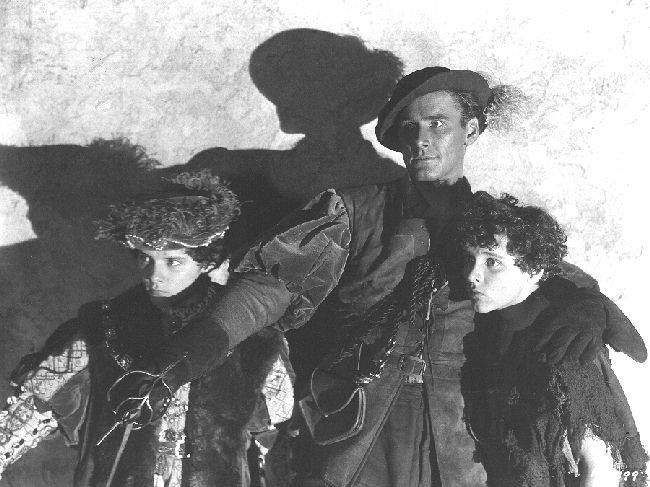
    Top-billed Errol Flynn is really a supporting player as the devil-may-care Miles Hendon, who throws himself in with the scraggly-looking prince, though he hardly believes his claims. Though it would still be a year until the release of “The Adventures of Robin Hood,” Flynn was already well on his way to becoming the screen’s quintessential swashbuckler, thanks to his turn in “Captain Blood” (1935). He easily dominates the film, and it’s a treat to see him duel with his old pal Alan Hale.

    Montagu Love plays Henry VIII, though he’s upstaged by the scheming Claude Rains as Edward Seymour, the Earl of Hertford. Composer Erich Wolfgang Korngold follows Flynn all the way, his music full of swagger and fun.

    I hope you’ll join me for music from movies about the Tudors, on “Picture Perfect,” this Friday evening at 6, with a repeat Saturday morning at 6; or that you’ll listen to it later as a webcast at http://www.wwfm.org.

  • Pirate Movie Music Scores on “Picture Perfect”

    Pirate Movie Music Scores on “Picture Perfect”

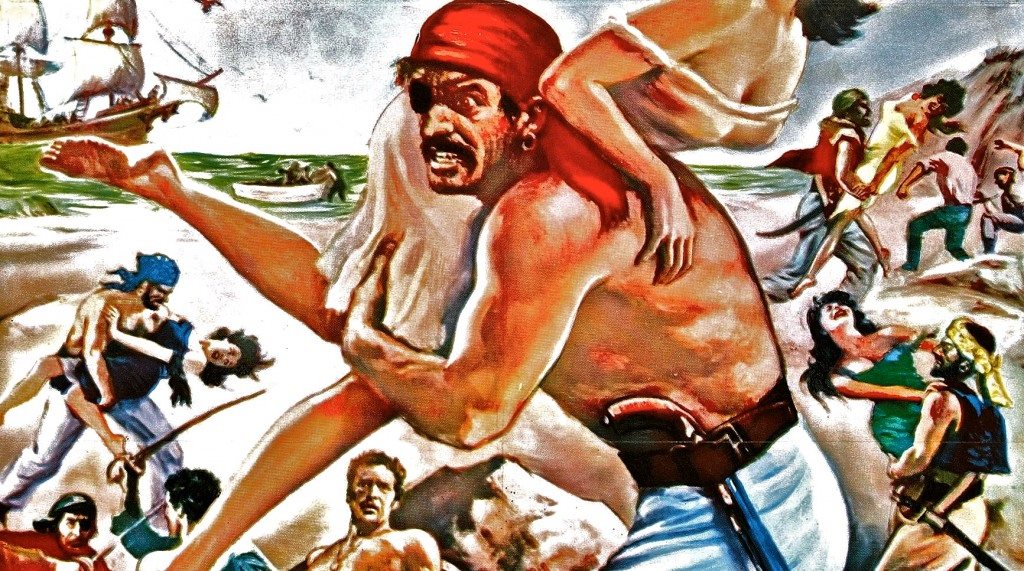
    Ahoy! This week on “Picture Perfect,” we sharpen our sabers and head for the high seas with an hour of music from pirate movies.

    We’ll exhume a buried treasure full of scores by Franz Waxman (“Anne of the Indies”), Elmer Bernstein (“The Buccaneer”), William Alwyn (“The Crimson Pirate”), Alfred Newman (“The Black Swan”) and Erich Wolfgang Korngold (“The Sea Hawk”).

    Remember, Turner Classic Movies: TCM is showing pirate movies every Friday night in June. You’ll be able to catch “The Crimson Pirate” tomorrow night at 8 ET and “The Sea Hawk” June 20 at 11:45, part of a full night of Errol Flynn films.

    Comb out your beards and polish your hooks, me mateys. We vary piracy with a little burglary, on “Picture Perfect,” this Friday evening at 6, or listen to it later as a webcast at http://www.wwfm.org.

  • TCM Pirate Movies All June Long Arrr!

    TCM Pirate Movies All June Long Arrr!

    All right, I know I already posted today, but Turner Classic Movies: TCM is showing pirate movies every Friday night in June. No Douglas Fairbanks, Sr., alas, though tonight offers the rare opportunity to see the original silent version of “The Sea Hawk” (8 p.m. ET), which hews much closer to the Rafael Sabatini novel than the classic version with Errol Flynn.

    Next Friday offers a smiley, bare-chested Burt Lancaster as “The Crimson Pirate” (also 8 p.m.). Lancaster’s equally toothy, mute sidekick is none other than Nick Cravat, who he’d met as a boy at summer camp. The two literally ran away and joined the circus, creating an acrobatic act called Lang and Cravat in 1930s. Cravat later appeared in nine of Lancaster’s films. He also played the gremlin in the classic “Twilight Zone” episode, “Nightmare at 20,000 Feet.”

    June 20 is all-Flynn, at least until 3:45 a.m., which means I will finally get a chance to see “Against All Flags” (8 p.m.) Doubtful that it is one of Flynn’s better vehicles, though it does offer the opportunity to see Maureen O’Hara in pirate garb.

    I’m also curious to see “The Boy and the Pirates” (June 27, 10 p.m.), directed by B-movie sci-fi/horror maestro Bert I. Gordon. Gordon’s house composer, Albert Glasser, though very much on a budget, clearly attempts to channel Erich Wolfgang Korngold’s pirate scores of the classic era.

    I may have to do something on “Picture Perfect” soon!

    AAAAAAAARRRRRRRRGGGGGHHHHHHH!!!!!!!!!!!!!

  • Erich Wolfgang Korngold: Hollywood’s Prodigy

    Erich Wolfgang Korngold: Hollywood’s Prodigy

    Today is the birthday of one of my favorite composers, Erich Wolfgang Korngold (1897-1957). I don’t know, maybe it has something to do with watching those Errol Flynn movies on television as a kid – you know, the ones that inspire you to take down the curtain rods and start dueling around the house.

    Korngold was one of music’s great child prodigies. His ballet-pantomime “Der Schneemann” (“The Snowman”), composed at the age of 11, was performed at the Vienna Court Opera before Emperor Franz Josef. His early piano and chamber works were picked up by Artur Schnabel. His “Sinfonietta” (a full-scale symphony in all but name) was performed by Felix Weingartner and the Vienna Philharmonic when he was 15. At one performance, Korngold shared a box with Richard Strauss.

    Several of his operas are knock-outs. The double premiere in Hamburg and Cologne of “Die tote Stadt” (“The Dead City”) in 1920 made Korngold, at the age of 23, one of the leading opera composers of his time.

    Several factors contributed to an enormous shake-up in Korngold’s reputation. One was the fact that his musical language never really developed. His earliest works are as finely crafted and as fully realized as those written at the end of his life – most impressive, except that what seemed strikingly modern when he was a teen later seemed hopelessly romantic and passé.

    Another was that Korngold followed theatrical impresario Max Reinhardt to Hollywood for a big screen adaptation of “A Midsummer Night’s Dream.” This led to further offers from Warner Brothers, under terms he couldn’t refuse. In the meantime, the Nazis rolled into Austria, effectively sealing off his return home.

    For decades, Korngold’s reputation among “serious” music aficionados suffered. His Violin Concerto was famously derided by one critic as “more Korn than Gold.” But that all began to change in the 1970s, with the issue of an album on the RCA label, featuring music from Flynn’s “The Sea Hawk,” “Captain Blood” and “The Adventures of Robin Hood,” that proved there was indeed a market for classic film music. Ironically, the very projects that had dragged him down in the eyes of some served to jumpstart his posthumous revival.

    With the advent of compact disc, with labels searching for worthwhile though underexposed repertoire to lure consumers who had already replaced their entire record collections, Korngold’s reputation again began to soar. While he will never be regarded as the next Mahler or even Richard Strauss, it’s fairly obvious at this point that his place in “serious music” is secure.

    Still it is with affection that many remember his film scores, which he regarded as operas without words. It was Korngold who brought Old World opulence to New World popular culture. His efforts earned him two Academy Awards.

    This week on “Picture Perfect,” we’ll have two scores by Korngold as part of our second installment celebrating the films of 1939, which film historians frequently refer to as “Hollywood’s greatest year.” The first installment aired in February, and featured music from “The Wizard of Oz,” (Harold Arlen & Herbert Stothart) “Of Mice and Men” (Aaron Copland), “Gunga Din” (Alfred Newman) and “Goodbye, Mr. Chips” (Richard Addinsell).

    This week’s episode will include Korngold’s “Juarez,” an historical drama about Mexican resistance against the French army of Napoleon III, which starred Paul Muni, Bette Davis and Claude Rains, and “The Private Lives of Elizabeth and Essex,” with Davis and Errol Flynn, as Elizabeth I and Robert Devereux, 2nd Earl of Essex, respectively. The latter features plenty of Korngold’s signature pageantry.

    The show will also include two scores by Alfred Newman, for “Wuthering Heights” and “The Hunchback of Notre Dame.”

    A third installment, focusing on the indefatigable Max Steiner – who worked on 13 films in 1939 – will air in the fall. So no more brickbats from you “Gone With the Wind” fans, please!

    Join us on the second leg of our journey to celebrate the 75th anniversary of “Hollywood’s greatest year,” on “Picture Perfect,” Friday evening at 6, or enjoy it later as a webcast at http://www.wwfm.org.

    PHOTO: Erich Wolfgang Korngold (right) works with a score mixer laying down the tracks for “Juarez.” That’s Paul Muni onscreen.

Tag Cloud

Aaron Copland (92) Beethoven (95) Composer (114) Film Music (120) Film Score (143) Film Scores (255) Halloween (94) John Williams (185) KWAX (229) Leonard Bernstein (100) Marlboro Music Festival (125) Movie Music (135) Opera (198) Philadelphia Orchestra (88) Picture Perfect (174) Princeton Symphony Orchestra (106) Radio (87) Ralph Vaughan Williams (85) Ross Amico (244) Roy's Tie-Dye Sci-Fi Corner (290) The Classical Network (101) The Lost Chord (268) Vaughan Williams (103) WPRB (396) WWFM (881)

DON’T MISS A BEAT

Receive a weekly digest every Sunday at noon by signing up here


RECENT POSTS