Tag: Eugene Ormandy

  • Einstein’s Unexpected Music Taste at Princeton

    Einstein’s Unexpected Music Taste at Princeton

    Yesterday, I had folks in from out of town and took them over to see Einstein’s furniture at Updike Farm on Quaker Road. Since 2004, the property has been owned by the Historical Society of Princeton.

    I’d been there before, but yesterday was the first time I thought to lean in and take note of what was on Einstein’s turntable. By squinting, I could just about make out Eugene Ormandy and the Philadelphia Orchestra, but it was only by taking a photo, flipping it, and enlarging that I could make out the music: William Schuman’s Symphony No. 3! A most bizarre selection as, despite his friendship with Bohuslav Martinů and association with Arnold Schoenberg, from everything I’ve heard, Einstein was not really a contemporary music guy. He was all about the meat-and-potato classics. (He loved Haydn and Mozart.)

    If this record was indeed from Einstein’s personal collection, it was a very interesting choice, making more of an impression on me than E = mc². But I am the first to admit, as a classical music lover at the science fair, I tend to look at things a little differently.

    More than likely, someone who didn’t know William Schuman from Robert Schumann had selected it – if he or she even knew who Schumann was. I like to think the record was actually from Einstein’s collection and not just something from the period that somebody picked up at a yard sale. The docent, while friendly and attentive, didn’t seem to know anything about it. But I’m used to that.

    In the same room, as part of an Innovators Gallery, there’s also some material on Freeman Dyson, one of Einstein’s colleagues at Princeton’s Institute for Advanced Study, who also happened to be the son of eminent English composer Sir George Dyson. Again, I appeared to be the only one with much interest in the connection (neither was it noted, that I could see, in the literature).

    In his day, William Schumann was recognized as one of our great American symphonists. In particular, his Symphony No. 3 of 1941 was held up, alongside the corresponding symphonies of Roy Harris and Aaron Copland, as among the best this country had to offer. Schuman won the Pulitzer Prize for Music in 1943, became president of the Juilliard School in 1945, and president of Lincoln Center in 1961.

    By coincidence, he was a student of Roy Harris, whose Symphony No. 3 is being performed this afternoon by the Princeton University Orchestra. The concert, a repeat of last night’s program, will be held at Princeton University’s Richardson Auditorium at 3:00. Also on the program will be Hector Berlioz’s “Symphonie fantastique.” Be there, or be square.

    For tickets, visit

    https://tickets.princeton.edu/

    Discover Albert Einstein at Updike Farmstead

    Discover Albert Einstein

    Ormandy conducts William Schuman’s Symphony No. 3

    Article I wrote about Einstein’s musical activities and enthusiasms

    https://www.communitynews.org/princetoninfo/artsandentertainment/relatively-musical-albert-einstein-and-bohuslav-martin/article_68a1ba00-fe7d-11ef-a05a-2f8ce43f2de6.html

  • Bernard Garfield, Philadelphia Orchestra Bassoon, RIP

    Bernard Garfield, Philadelphia Orchestra Bassoon, RIP

    Old news perhaps, but I’m just learning of it. Long-time principal bassoonist of the Philadelphia Orchestra Bernard Garfield has died at a venerable age.

    Garfield served as Philadelphia’s principal for 43 years, from 1957 to 2000, which means I saw and heard him perform many times, in the latter part of his career (from 1984 forward), including as soloist in Strauss’ Duet-Concertino, with Anthony Gigliotti taking the clarinet part. In 1949, and until he moved to Philadelphia, he was principal bassoonist of the Little Orchestra Society of New York. He was offered his position in Philly by Eugene Ormandy without audition.

    Garfield, who as an undergraduate studied NOT music, but English literature (at New York University), also received a master’s degree (from Columbia) in composition. I recall airing a bassoon quartet of his when I used to host the radio broadcasts of “Music from Marlboro.” Earlier, he did obtain an associate diploma from the Royal College of Music and, much later, an honorary doctorate from the Curtis Institute of Music, where he taught from 1976 to 2008. He also taught at Temple University from 1957 to 2004.

    Garfield was a member of the New York Woodwind Quintet, which in fact he organized, from 1946 to 1957. Later, he performed in the Philadelphia Woodwind Quintet (replacing Sol Schoenbach), made up of principal players of the Philadelphia Orchestra. Garfield’s recordings as soloist in Philadelphia include works by Mozart, Haydn, and Weber.

    Garfield served in the U.S. Army during World War II. He was married for nearly 70 years. He died on April 29, closer to his 101st birthday than not. (He was born on May 27, 1924.)

    R.I.P.


    Period instruments be damned! Garfield plays the Mozart concerto:

    Original compositions by Bernard Garfield, including his Bassoon Quartet No. 1


    PHOTO: On stage at Philadelphia’s Academy of Music in 1960

  • Remembering Norman Carol Philly Legend

    Remembering Norman Carol Philly Legend

    Even though I continue to attend the occasional Philadelphia Orchestra concert (most recently on April 11 to hear Mahler 7 and, coming up, Sibelius 5), for me the glory days of my attendance were from the mid-‘80s to the mid-‘90s, when I was there nearly every week, often standing in line for a couple of hours on a Friday or Saturday evening, with a cup of coffee and a friend or a book, in order to score a $2.00 seat in the amphitheater at the old Academy of Music. (The price was later raised to $2.50.) Norman Carol, therefore, will always be the Philadelphia Orchestra concertmaster closest to my heart.

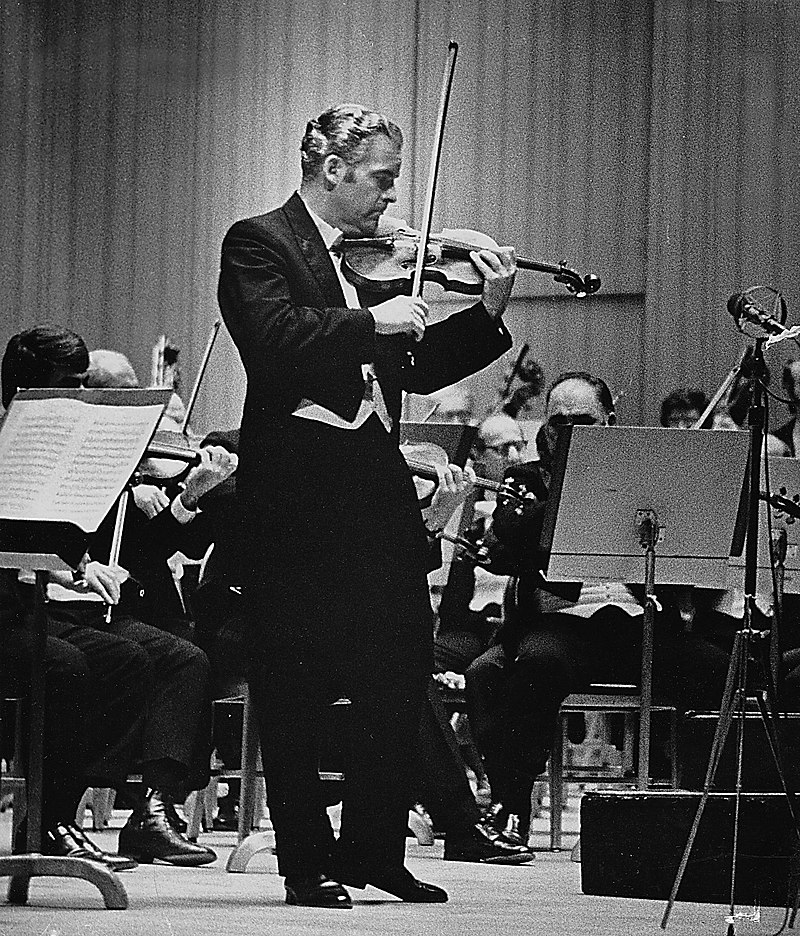
    Carol joined the orchestra, at the invitation of Eugene Ormandy, in 1966. He served as concertmaster (succeeding Anshel Brusilow) under Ormandy, Riccardo Muti, and Wolfgang Sawallisch. His retirement in 1994, I remember, came ahead of his scheduled performance as soloist in Samuel Barber’s Violin Concerto, the piece with which he had made his Philadelphia solo debut decades earlier. As I recall, he had been playing through excruciating shoulder pain and he just couldn’t do it anymore.

    In the years of my attendance, I was fortunate to hear Carol step up from his position as leader of the orchestra to solo in many concertos. One of the most memorable, for me, was that of Benjamin Britten, which, at the time, I had never heard before.

    Prior to his position in Philadelphia, Carol had played in the Boston Symphony Orchestra under Serge Koussevitzky (who extended the invitation to join when Carol was 17) and Charles Munch. He was concertmaster with the orchestra, when, under Leonard Bernstein, it gave the U.S. premiere of Britten’s “Peter Grimes” at Tanglewood in 1946.

    Following service in the Korean War (André Previn relates playing with Carol and Chet Baker at the Presidio in his book “No Minor Chords”), he became concertmaster of the New Orleans Symphony and then the Minneapolis Symphony, under Antal Doráti and Stanislaw Skrowaczewski. Decades later, Carol would give the premiere of Skrowaczewski’s Violin Concerto in Philadelphia, as Skrowaczewski guest conducted.

    As a student at the Curtis Institute, Carol was groomed for a solo career. He went on to record an early recital for RCA. Later, of course, he played solo violin passages on all the Philadelphia Orchestra recordings from the time he joined the group, including Ormandy’s later recordings of “Ein Heldenleben” and “Scheherazade.”

    After his retirement, he continued to perform and record with the Philadelphia Piano Quartet. He also taught orchestral repertoire at Curtis. (He was on the Curtis faculty for some 40 years.) His violin, a 1743 Guarneri “del Gesù,” formerly belonged to Albert Spalding. Spalding gave the first public performances of Barber’s Violin Concerto in Philadelphia in 1941.

    Carol was old school, tuning the orchestra in evening dress, his wavy hair impeccably Brylled, seemingly unflappable in his reserve. But when he played, he played like the principal of one of the greatest orchestras in the land. I knew him neither as a man nor behind the scenes, but only from my vantage in the appreciative audience. He embodied the traditions of a fabled era. His like will not come again.

    Carol, who was born in Philadelphia, died on Sunday at the age of 95. R.I.P.


    Carol plays the Nielsen Violin Concerto

    Big band Telemann

    1958 recorded recital with Julius Levine

    Vaughan Williams’ “Fantasia on a Theme by Thomas Tallis,” featuring solos by Carol, violist Joseph De Pasquale, and cellist Samuel Mayes

    Two-part interview with Ovation Press:

    Part 1

    Interview with Norman Carol, Part 1

    Part 2

    Interview with Norman Carol, Part 2

  • Ormandy’s All-American Philadelphia Sound

    Ormandy’s All-American Philadelphia Sound

    This week on “The Lost Chord,” it’s one more trip to the well, with well-played works of American composers rendered by Eugene Ormandy and the Philadelphia Orchestra.

    Slake your thirst with selections from “Five Songs of William Blake” by Virgil Thomson (born on this date in 1896), the Symphony No. 7 by Roy Harris, and “Four Squares of Philadelphia” by Louis Gesensway.

    Gesensway was born in Latvia in 1906. A violin prodigy, he was one of the founders of the Toronto Symphony Orchestra. He came to Philadelphia at the age of 19, where he played under both Stokowski and Ormandy.

    In his mid-20s, he took a leave of absence to study composition with Zoltán Kodály. “Four Squares of Philadelphia” was described by the composer as a “symphonic poem for large orchestra, narrator and street criers.”

    The piece opens with a recitation of William Penn’s prayer, then continues with musical evocations of Washington Square (in early morning, during Colonial times, with street criers hawking their wares), Rittenhouse Square (on a bright and cheerful afternoon), Logan Square (with its fountains at dusk), and Franklin Square (at night, evocative of noisy bridge traffic, a side excursion into Chinatown, and musical interjections from the honky tonk joints located around the square in the 1950s).

    Be there or be square. Eugene Ormandy serves up the last of the Thanksgiving leftovers. I hope you’ll join me for “All-American Ormandy III,” now in syndication on KWAX, the radio station of the University of Oregon!


    Remember, KWAX is on the West Coast, so there’s a three-hour difference for the Trenton-Princeton area. Here are the respective air-times of my recorded shows (with East Coast conversions in parentheses):

    PICTURE PERFECT, the movie music show – Friday on KWAX at 5:00 PACIFIC TIME (8:00 PM EST)

    THE LOST CHORD, unusual and neglected rep – Saturday on KWAX at 4:00 PACIFIC TIME (7:00 PM EST)

    Stream them here!

    https://kwax.uoregon.edu/


    PLEASE NOTE: This show was recorded in 2015 and employs material reissued on compact disc for the first time on the Albany and Bay Cities labels. All three of these performances have since been remastered (including the wholly restored “Five Blake Songs”), as part of Sony Classical’s 120-CD box set of Ormandy’s Philadelphia mono recordings, “Eugene Ormandy: The Columbia Legacy,” in 2021.

    The first installment of Ormandy’s stereo recordings were released earlier this month in an 88-CD box, also from Sony, “Eugene Ormandy/The Philadelphia Orchestra: The Columbia Stereo Collection,” on November 17.

    Both Sony sets sound fantastic (with the caveat that the first is in mono). Both are highly recommended.


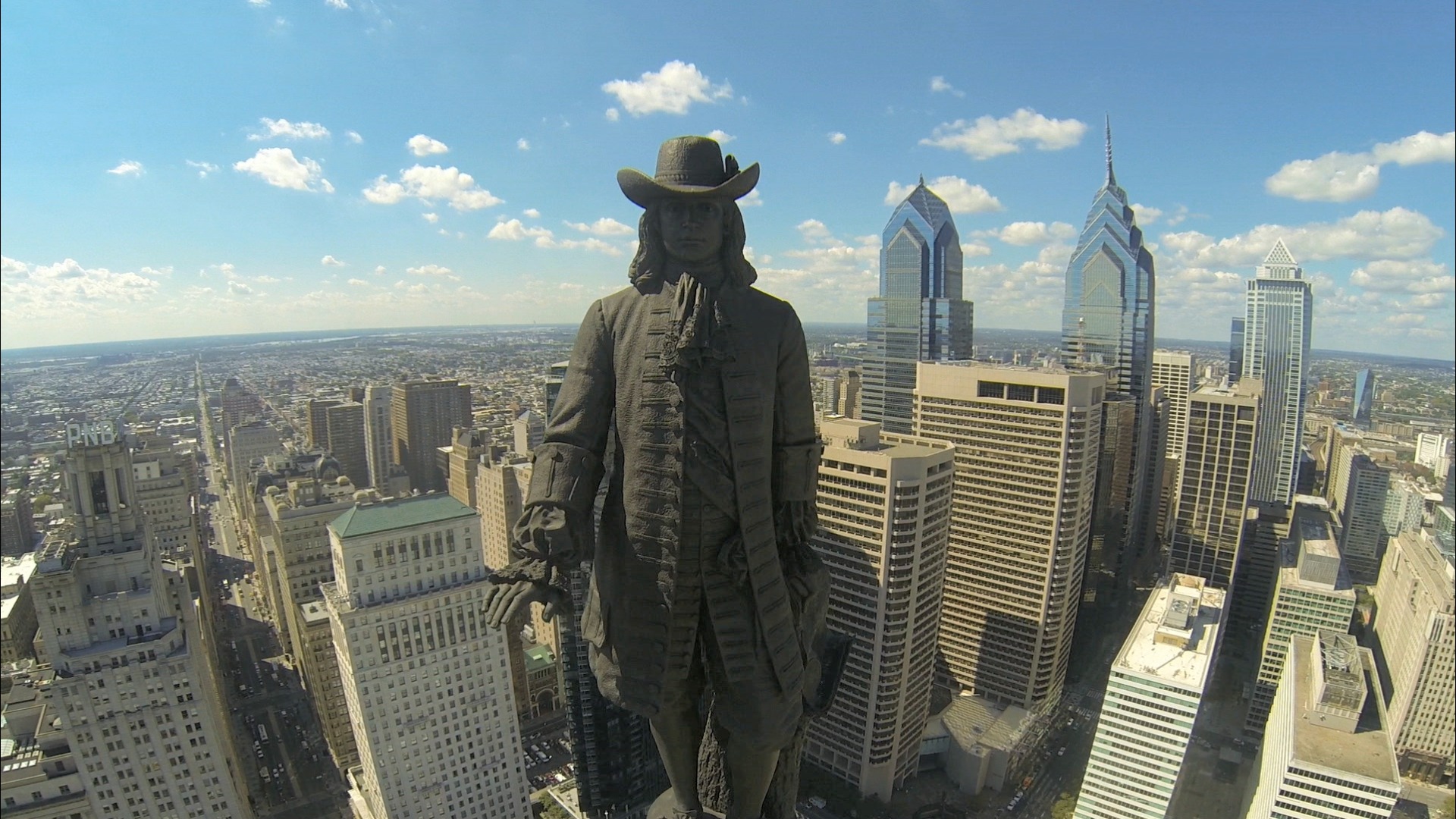
    PHOTO: Statue of Penn, high atop the city he founded

  • Ormandy’s Lost Chord American Music

    Ormandy’s Lost Chord American Music

    This week on “The Lost Chord,” for Eugene Ormandy’s birthday, it’s the second installment in a three-part series of Ormandy conducting the Philadelphia Orchestra in rarely-heard recordings of American music.

    Samuel Barber was born in West Chester, Pa., not far from Philly, in 1910. He attended Philadelphia’s Curtis Institute of Music and had his first orchestral work, the “School for Scandal Overture,” performed by the Philadelphia Orchestra in 1931, when he was 21 years-old.

    His “First Essay for Orchestra” was sent to Arturo Toscanini in the same mail as his “Adagio for Strings.” Toscanini performed both works with the NBC Symphony in 1938, but it was Eugene Ormandy who made the first recording of “Essay,” with the Philadelphians, in 1940.

    Vincent Persichetti was born in Philadelphia in 1915, and he died there in 1987. In between, he attended Combs College of Music, the Curtis Institute (where he studied conducting with Fritz Reiner) and the Philadelphia Conservatory. He taught at Combs and the Philly Conservatory. Then he received an invitation from William Schuman (some of whose music we heard last week) to take up a professorship at Juilliard.

    Persichetti was one of our great composers, but to this day he remains underappreciated, more respected than loved. His Symphony No 4 of 1951 must be one of his most immediately attractive works.

    Finally, John Vincent may be the most undeservedly neglected composer in Ormandy’s entire discography. Ormandy described his recording of Vincent’s Symphony in D (“A Festival Piece in One Movement”) as “one of the best we have ever done,” and the piece itself as “one of the finest compositions created by an American composer in the past decade.” The 1954 work sounds at times like Sibelius gone to the rodeo, but my, is it good stuff!

    I hope you’ll join me for “All-American Ormandy II.” Ormandy recommends a visit to the Barber (pictured), then convinces with the Vincents, on “The Lost Chord,” now in syndication on KWAX, the radio station of the University of Oregon!

    Happy birthday, Eugene Ormandy!


    Remember, KWAX is on the West Coast, so there’s a three-hour difference for the Trenton-Princeton area. Here are the respective air-times of my recorded shows (with East Coast conversions in parentheses):

    PICTURE PERFECT, the movie music show – Friday on KWAX at 5:00 PACIFIC TIME (8:00 PM EST)

    THE LOST CHORD, unusual and neglected rep – Saturday on KWAX at 4:00 PACIFIC TIME (7:00 PM EST)

    Stream them here!

    https://kwax.uoregon.edu/


    PLEASE NOTE: Ormandy’s recording of John Vincent’s Symphony in D was reissued yesterday, November 17, as part of Sony Classical’s new 88-CD box, “Eugene Ormandy/The Philadelphia Orchestra: The Columbia Stereo Collection.” I opened my set this morning with trembling hands!

    Persichetti’s Symphony No. 4 was reissued in 2021, as part of Sony’s laudable 120-CD box of Ormandy’s Philadelphia mono recordings, “Eugene Ormandy: The Columbia Legacy.”

    Both Sony releases are newly-remastered.

Tag Cloud

Aaron Copland (92) Beethoven (94) Composer (114) Film Music (116) Film Score (143) Film Scores (255) Halloween (94) John Williams (185) KWAX (228) Leonard Bernstein (99) Marlboro Music Festival (125) Movie Music (131) Opera (197) Philadelphia Orchestra (86) Picture Perfect (174) Princeton Symphony Orchestra (106) Radio (86) Ralph Vaughan Williams (85) Ross Amico (244) Roy's Tie-Dye Sci-Fi Corner (290) The Classical Network (101) The Lost Chord (268) Vaughan Williams (99) WPRB (396) WWFM (881)

DON’T MISS A BEAT

Receive a weekly digest every Sunday at noon by signing up here


RECENT POSTS