Tag: Experimental Music

  • Avraamov’s Symphony of Sirens: Moran’s Precursor

    Avraamov’s Symphony of Sirens: Moran’s Precursor

    Who knew? Anticipating by roughly fifty years the city-wide performance pieces of my friend, Philadelphia composer Robert Moran, was this work by Azerbaijani composer Arseny Avraamov.

    Moran gained notoriety in the late 1960s and early ‘70s through a series of events incorporating, respectively, the cities of San Francisco (“39 Minutes for 39 Autos”), Bethlehem, PA (“Hallelujah”), and Graz, Austria (“Pachelbel Promenade”). These involved tens of thousands of performers.

    With “39 minutes for 39 Autos,” Moran enlisted skyscrapers, airplanes, radio stations, musicians, dancers, and yes, automobiles, to create a one-of-a-kind, purely-of-the-moment spectacular of light and sound. Sooner or later, such a thing was bound to occur to a composer living in San Francisco in 1969.

    Avraamov, on the other hand, had his own motivation. He was celebrating the fifth anniversary of the October Revolution.

    Thanks to Debbie Smith for bringing to my attention this article about Avraamov and the centenary of his “Symphony of Sirens.”

    https://www.bbc.com/culture/article/20221103-arseny-avraamov-the-man-who-conducted-a-city

    On a related note, and wholly by coincidence, on November 20, I’ll be observing the centenary of Azerbaijani composer Fikret Amirov on “The Lost Chord” on WWFM – The Classical Network and wwfm.org!


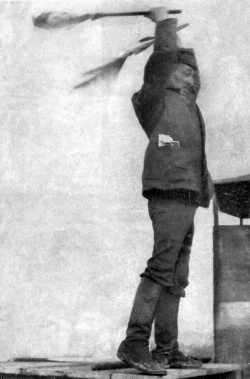
    An atmospheric recreation of Avraamov’s “Symphony of Sirens”

    Sadly, to my knowledge, no such document exists of Moran’s city pieces, so we’ll just have to settle for his roughly contemporaneous “Lunchbag Opera”

  • Find Meaning in Silence The Legacy of Cage’s 433

    Find Meaning in Silence The Legacy of Cage’s 433

    You don’t always have to make a racket to get noticed.

    One of the most notorious pieces ever “composed,” John Cage’s “4:33,” was given its debut at Maverick Concert Hall in Woodstock, NY, on this date 70 years ago.

    You probably know it, even if you think you don’t. Somebody walks out to a piano, closes the lid, produces a stop watch, and sits absolutely still for 4 minutes and 33 seconds. At the end of the allotted time, the musician stands up and takes a bow.

    At the first performance, some snickered, others scoffed, but Cage’s piece is now world famous. It turns out “4:33” is more than just the wacky stunt it appeared to be. Any perceptive listen who joins the musician in his or her silence soon realizes the passing time is not silent at all, but full of sounds. People coughing, chairs creaking, the central air kicking on, extraneous noise from the street or lobby. It really does force you to be aware of your surroundings. In its way, 70 years later, in our crazy digitized, wireless world of constant distraction, “4:33” is more necessary than ever.

    It’s interesting that this experimental work, which some would regard as not for every day, is in its truest sense “every day music.” Cage has taken a lot of guff over the years (I had a colleague at the radio who refused to acknowledge his centenary), but he was one of the most influential musical thinkers of the 20th century.

    Ironically, it took a composer by the name of Cage to get us thinking outside the box. Me, I’ll have “4:33” on infinite repeat all day.


    Original version for piano

    Transcribed for orchestra – and performed by the Berlin Philharmonic

  • Prepared Piano A Beginner’s Guide

    Prepared Piano A Beginner’s Guide

    A “prepared piano” is a piano that has foreign objects laid on or inserted between its strings. These serve to alter the sound, character, timbre, and tuning of the instrument, and in the process create some rather fascinating percussive effects. It’s kind of like having your own gamelan orchestra at your fingertips. For a composer, it’s both effective and economical – if a little time consuming to get it set up.

    John Cage was a pioneer of the practice. He composed “A Valentine Out of Season” for prepared piano in 1944, shortly before his separation from his wife, Xenia – which could very well account for the title. In this instance, he employed weather stripping, rubber, wood, bolts, pennies, and bamboo.

    Cage’s first foray into the prepared piano came about as a solution for the writing of a dance piece, “Bacchanale,” for performance in a venue too small to accommodate a percussion ensemble, in 1938. To give an idea of how radical this was, that was the same year Aaron Copland’s “Billy the Kid” was introduced!

    “A Valentine Out of Season” was choreographed by Merce Cunningham, as “Effusion avant l’heure,” for presentation in Paris in 1946. For New York, the title was changed to “Games,” and later “Trio.”

    Thanks to a little ingenuity, Cage’s out-of-season Valentine turned out to be music for all seasons.

    “Bacchanale”

    How to prepare a piano with Stephen Drury

  • Percy Grainger Free Music Pioneer

    Percy Grainger Free Music Pioneer

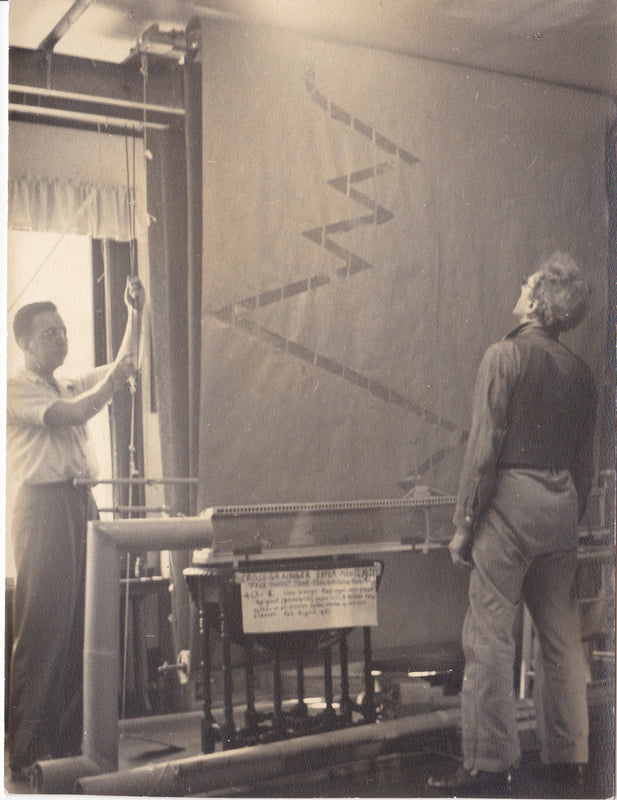
    Percy Grainger, composer of beloved, albeit quirky arrangements of familiar English folk songs and Morris dance tunes, was also a pioneer of “free music.” Here’s a fascinating look at the experimental machines he worked on at his home in White Plains, NY. The sounds they generate anticipated the electronic sound synthesizer.

    “In 1938, Grainger wrote that he first heard ‘free music’ in his head when, as a boy in Melbourne [Australia], he watched the sea at Brighton and Albert Park. He could never see why, in a scientific age, music shouldn’t be as free and as infinitely variable as the waves.”

    Percy Grainger’s Synthesizers

    The first programmable electronic sound synthesizer, the RCA Mark II (nicknamed Victor), an instrument of heroic dimensions, was developed by American acoustical engineers Harry Olson and Herbert Belar in 1955, at the Radio Corporation of America (RCA) laboratories in Princeton, NJ. It was installed at the legendary Columbia-Princeton Electronic Music Center at Columbia University in 1957. Controlled by punch cards and employing hundreds of vacuum tubes, the interconnected components filled an entire room.

    Gain a greater appreciation for the amount of sweat that went into synthesized composition prior to the invention of the Moog!


    PHOTO: Grainger (right) with Burnett Cross, standing before one of his “free music” machines, in 1951

  • Conlon Nancarrow’s Haunting Player Pianos

    Conlon Nancarrow’s Haunting Player Pianos

    Automatons are always a little unnerving.

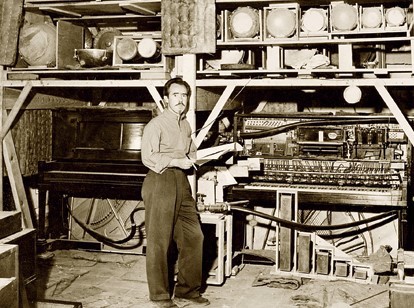
    Conlon Nancarrow was one of the first composers to treat musical instruments as if they were machines, rigging them so that they could perform in a manner far beyond human capability. He worked his experiments in virtual isolation, living in Mexico (where he fled to escape harassment for his political leanings) since the 1940s.

    He remained largely unrecognized until the late ‘60s, when Columbia Records released an album of his music. Indeed, it could be said he wasn’t terribly well known until recordings of his player piano pieces began to appear, on the 1750 Arch label, about ten years later. György Ligeti lauded Nancarrow as “the greatest discovery since Webern or Ives… the best of any composer living today.”

    In 1947, Nancarrow acquired a custom-built, manual punching machine, which enabled him to create his own piano rolls. It was very meticulous work, and time-consuming. He also souped-up his player pianos, increasing their dynamic range, and covering the hammers with materials like leather and metal to create a more percussive sound.

    While his later pieces tend to be abstract, a lot of them extremely intricate canons, his early experiments emulate jazz and blues. This is haunted funhouse music, if there ever was any. Make your breakfast batty with Conlon Nancarrow, on his birthday.

    Study for Player Piano No. 21 (Canon X):

    But when the ghosts really feel like letting their hair down and cutting a rug, they listen to the “Boogie-Woogie Suite”:

    PHOTO: Nancarrow with two player pianos and “percussion orchestra,” Mexico City, 1955

Tag Cloud

Aaron Copland (92) Beethoven (94) Composer (114) Film Music (117) Film Score (143) Film Scores (255) Halloween (94) John Williams (185) KWAX (228) Leonard Bernstein (99) Marlboro Music Festival (125) Movie Music (132) Opera (197) Philadelphia Orchestra (86) Picture Perfect (174) Princeton Symphony Orchestra (106) Radio (86) Ralph Vaughan Williams (85) Ross Amico (244) Roy's Tie-Dye Sci-Fi Corner (290) The Classical Network (101) The Lost Chord (268) Vaughan Williams (101) WPRB (396) WWFM (881)

DON’T MISS A BEAT

Receive a weekly digest every Sunday at noon by signing up here


RECENT POSTS