Tag: Florence Price

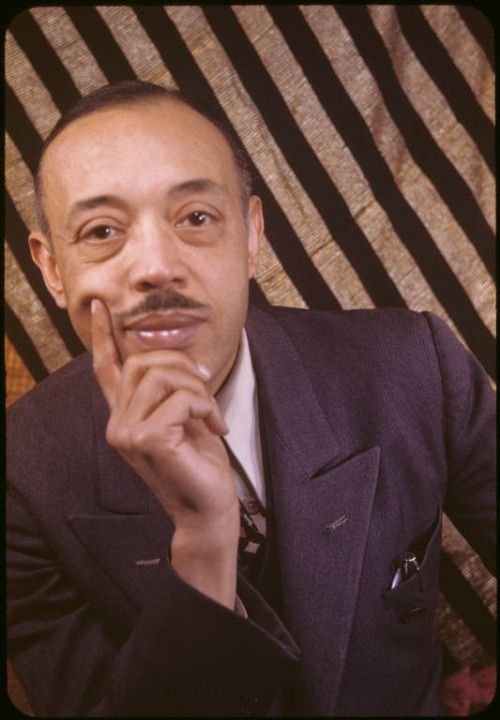
  • William Grant Still: An American Voice

    William Grant Still: An American Voice

    Perhaps it’s not “The Great American Symphony,” self-consciously aspirational, oratorical, or grandiose in the manner the third symphonies of Roy Harris, William Schuman, or Aaron Copland; but it does go straight to the heart, which is something none of the composers of that great American triumvirate do, at least in those particular works.

    William Grant Still’s “Afro-American Symphony” is poetic, it’s genuinely reflective, it’s beautiful, and it brims with great tunes. It’s congenial, and in the end quite moving. It remains one of my favorite symphonies by an American composer.

    When I want “big statements” made on a colossal scale, I will turn to those Lincoln Center composers, who would have us believe they are eating out of lunch pails in their spare time, and riveting skyscrapers, or busting sod in denim overalls. But let’s face it, they are mostly hobnobbing in suits, jostling to get their music conducted by “Lenny.”

    Still is a composer in the mold, if not the manner, of Charles Ives. He’s a perpetual outsider, and always true to himself. His music grows directly out of his autobiographical experience, the blues, ballads, and spirituals of his childhood, in Woodville, Mississippi and Little Rock, Arkansas, and later his experience playing in pit bands during the Harlem Renaissance.

    He also studied at the Oberlin Conservatory and privately with George Whitefield Chadwick and Edgard Varèse, of all people. There is no Varèse to be found in Still’s music.

    He composes with the directness of a Virgil Thomson, but with none of Thomson’s affected naiveté. He shares with George Gershwin a refreshing lack of pretention – or at any rate his music does (he did, after all, subtitle one of his symphonies “Autochthonous”) – and a wonderful facility with melody.

    Of course, any discussion of Still must come with a litany of “firsts.” His “Afro-American Symphony” was the first written by a black composer to be performed by a major orchestra (the New York Philharmonic at Carnegie Hall). He was the first to be given the opportunity to conduct a major orchestra (the Los Angeles Philharmonic, at the Hollywood Bowl). His opera, “Troubled Island,” became the first to be produced by a major company (the New York City Opera). Another of his operas, “A Bayou Legend,” was the first to be performed on national television (as late as 1981). His works were performed internationally by the Berlin Philharmonic, the London Symphony Orchestra, the BBC Symphony, and the Tokyo Philharmonic.

    For years, all I could locate was the “Afro-American Symphony,” and that only in two out-of-print, albeit very fine recordings (with Karl Krueger and the Royal Philharmonic, and Paul Freeman and the London Symphony Orchestra). It wasn’t until the digital era that the other four symphonies gradually – very gradually – became available. Thankfully, all of them have now been recorded and are available for purchase.

    Furthermore, in all these years, I’ve only ever come across a single modern recording of any of his nine operas, “Highway One U.S.A,” with Philip Brunelle and Vocal Essence. This especially is a shame, since, as an opera lover himself, Still so wanted to add something significant to the repertoire.

    For all the love Florence Price has had lavished on her as a woman of color (the Philadelphia Orchestra was recently awarded a Grammy for its excellent recording of two of her symphonies, for the Deutsche Grammophon label), it would be great if a world-class, American ensemble would take up the cause of Still.

    Let’s face it, most American orchestras are pretty terrible about recording even the white guys that were once so revered during that era. Unless you’re Copland, Gershwin, or Barber, you’re pretty much out of luck with the majors. Must so many of our American composers be documented by less-costly orchestras abroad?

    Fashion would seem to favor a Still revival. At least play his music in concert, Americans!

    Happy birthday, WGS (1895-1978).


    “Afro-American Symphony”

    “Danzas de Panama”

    A little more severe, “Dismal Swamp” for piano and orchestra

    “Lenox Avenue,” conducted by Still

    “Troubled Island,” still awaiting a modern recording
  • Florence Price Overnight Success

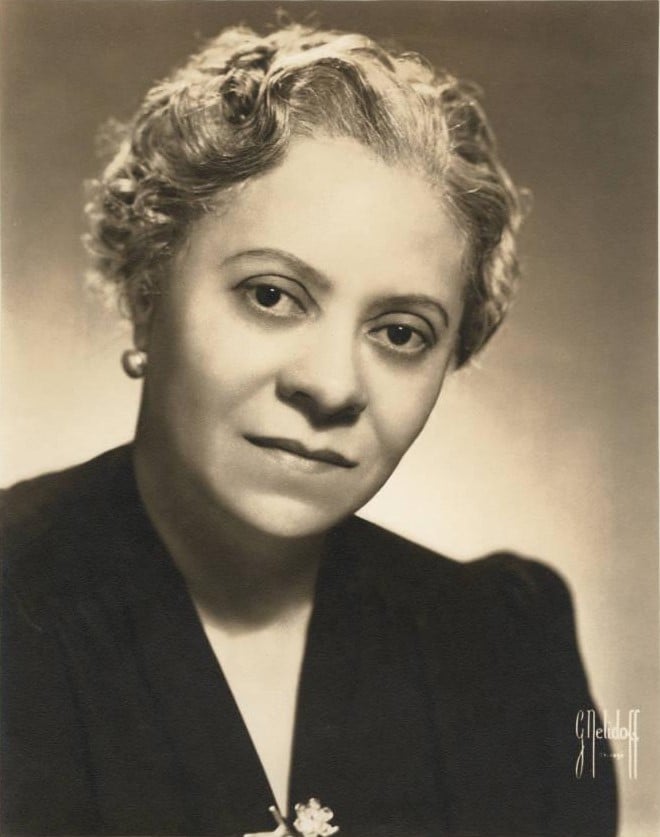
    Florence Price Overnight Success

    It took nearly 90 years for her to become an overnight success.

    Florence Price was the first African American woman to have a symphony performed by a major orchestra. Her Symphony No. 1 was played by the Chicago Symphony, conducted by Frederick Stock, in 1933.

    But it’s only fairly recently, after decades of comparative neglect, that her music has finally begun to gain traction. Now she’s being played everywhere.

    Is her sudden popularity a result of social or political trends? Who cares? When the music is this beautiful, everyone wins.

    The Chicago Symphony plays Price in 2021 – the Andante Moderato for string orchestra, after a Quartet in G major:

    Happy birthday, Florence Price.

  • Lincoln, Price, Harris: Midnight Meditations

    Lincoln, Price, Harris: Midnight Meditations

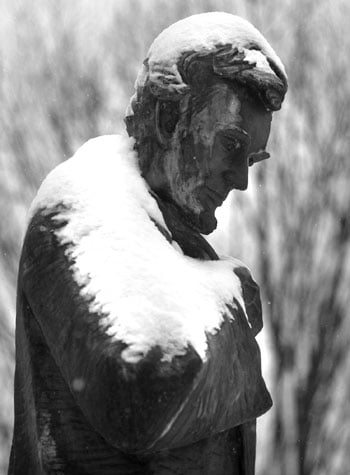
    Before “Lincoln in the Bardo,”* there was “Abraham Lincoln Walks at Midnight.”

    Vachel Lindsay’s poem, written in 1914, depicts Lincoln stirring from his eternal rest to roam the streets of Springfield, Illinois, still burdened by the nation’s troubles. I’d hate to think what Lincoln’s spirit must be going through today.

    On Lincoln’s birthday, here’s Florence Price’s setting of Lindsay’s meditation. It is one of three Price settings of the poem rediscovered in 2009. From the information available, it would seem that all three would fit on one album. Somebody record these, please!

    By coincidence, today also happens to be the anniversary of the birth of Roy Harris. Born on Lincoln’s birthday in 1898 – in a log cabin in Lincoln County, Oklahoma – Harris had to have been imbued with a sense of destiny. Harris also set Lindsay’s poem, for mezzo-soprano, violin, cello and piano.

    Harris was regarded as one of America’s greatest composers. He was particularly renowned for his symphonies. His Symphony No. 3 is his most famous work. The Symphony No. 6, formulated over a reading of Sandburg, is subtitled “Gettysburg.”

    Each of the four movements bears a superscription from Lincoln’s Gettysburg Address:

    I. Awakening (“Fourscore and seven years ago…”);

    II. Conflict (“Now we are engaged in a great civil war…”);

    III. Dedication (“We are met on a great battlefield of that war…”);

    IV. Affirmation (“…that we here highly resolve that these dead shall not have died in vain…).

    I call that putting a Price on linkin’ Harris and Lincoln.


    “Abraham Lincoln Walks at Midnight”

    (In Springfield, Illinois)

    It is portentous, and a thing of state
    That here at midnight, in our little town
    A mourning figure walks, and will not rest,
    Near the old court-house pacing up and down,

    Or by his homestead, or in shadowed yards
    He lingers where his children used to play,
    Or through the market, on the well-worn stones
    He stalks until the dawn-stars burn away.

    A bronzed, lank man! His suit of ancient black,
    A famous high top-hat and plain worn shawl
    Make him the quaint great figure that men love,
    The prairie-lawyer, master of us all.

    He cannot sleep upon his hillside now.
    He is among us:—as in times before!
    And we who toss and lie awake for long,
    Breathe deep, and start, to see him pass the door.

    His head is bowed. He thinks of men and kings.
    Yea, when the sick world cries, how can he sleep?
    Too many peasants fight, they know not why;
    Too many homesteads in black terror weep.

    The sins of all the war-lords burn his heart.
    He sees the dreadnaughts scouring every main.
    He carries on his shawl-wrapped shoulders now
    The bitterness, the folly and the pain.

    He cannot rest until a spirit-dawn
    Shall come;—the shining hope of Europe free:
    A league of sober folk, the Workers’ Earth,
    Bringing long peace to Cornland, Alp and Sea.

    It breaks his heart that things must murder still,
    That all his hours of travail here for men
    Seem yet in vain. And who will bring white peace
    That he may sleep upon his hill again?


    • Mizzy Mazzoli’s adaptation of George Saunders’ experimental novel, “Lincoln in the Bardo,” is scheduled for a 2025 Metropolitan Opera debut

    PHOTOS: (Clockwise from upper right) Florence Price, Roy Harris, and Abraham Lincoln walking at midnight

  • Marian Anderson Florence Price Triumph

    Marian Anderson Florence Price Triumph

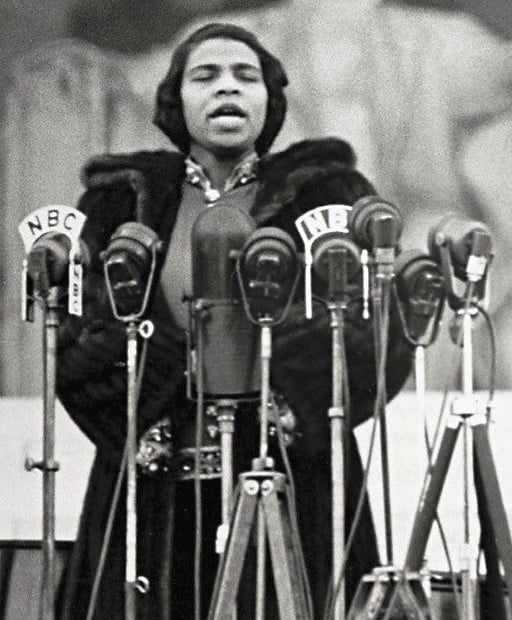
    On this date in 1939 – Easter Sunday, as it turns out – in a supreme demonstration of turning lemons into lemonade, Marian Anderson, barred from performing at Constitution Hall by the Daughters of the American Revolution, on account of her race, sang instead from the steps of the Lincoln Memorial, to a diverse crowd of 750,000 people on the mall and a national radio audience estimated in the millions.

    The program concluded with the spiritual “My Soul is Anchored in the Lord,” in an arrangement by Florence Price (1887-1953). By coincidence, today also happens to be Price’s birthday. Price, born in Little Rock, Arkansas, became the first African-American woman to be recognized as a symphonic composer, when her Symphony in E minor was performed by the Chicago Symphony in 1933. Needless to say, in an era when White American males struggled to find acceptance on Eurocentric classical music programs, Price, as a Black American woman, faced even greater challenges

    The playing field has shifted in recent years, and interest in Price’s music has been on the rise. It’s hard to believe, for a composer of her accomplishments, that dozens of her manuscripts were rescued from her dilapidated summer home, on the outskirts of St. Anne, Illinois, only as recently as 2009.

    It’s an exciting time to be alive. Who knows what other musical riches are out there, undervalued in their time, awaiting rediscovery?

    Anderson sings “My Soul’s Been Anchored in the Lord”

    Price’s Symphony No. 1 in E minor

  • Florence Price Rediscovered A Women’s Day Gift

    Florence Price Rediscovered A Women’s Day Gift

    Only yesterday, I was enjoying BBC Radio 3’s programming of wall-to-wall women composers, for International Women’s Day (after first attending a Ruth Gipps video conference in honor of her centenary), and now this comes my way from two different sources – a rediscovered piece by American composer Florence Price. If you haven’t heard it yet, I’m sharing it here.

    https://www.bbc.com/news/entertainment-arts-56322440

Tag Cloud

Aaron Copland (92) Beethoven (95) Composer (114) Film Music (119) Film Score (143) Film Scores (255) Halloween (94) John Williams (185) KWAX (229) Leonard Bernstein (99) Marlboro Music Festival (125) Movie Music (134) Opera (198) Philadelphia Orchestra (86) Picture Perfect (174) Princeton Symphony Orchestra (106) Radio (87) Ralph Vaughan Williams (85) Ross Amico (244) Roy's Tie-Dye Sci-Fi Corner (290) The Classical Network (101) The Lost Chord (268) Vaughan Williams (102) WPRB (396) WWFM (881)

DON’T MISS A BEAT

Receive a weekly digest every Sunday at noon by signing up here


RECENT POSTS