Tag: Florence Price

  • Stream Classical Music During Inclement Weather

    Stream Classical Music During Inclement Weather

    Inclement weather got you down? As long as the power holds, there’s no reason to be glum.

    In recent days, my inbox has been a logjam of press releases for streamed concerts. It’s still a big, wide, wonderful world of music out there, and there’s something for just about every taste.

    My pick for the weekend – and I realize it may not be everyone’s cup of cocoa – is a FREE stream of Erich Wolfgang Korngold’s most opulent opera, “Das Wunder der Heliane” (“The Miracle of Heliane”). Korngold was a celebrated child prodigy and an opera composer well before he came to Hollywood to write music for Errol Flynn and Bette Davis. “Heliane” is a heady blend of eroticism, pathos, and redemption. I can’t speak for the production, but the music is guaranteed to be transporting. The opera is being offered on-demand, from Deutsche Oper Berlin, now through Sunday at 9 am EST (assuming the times on the website are German). Visit https://www.deutscheoperberlin.de/de_DE/das-wunder-der-heliane-als-video-on-demand?fbclid=IwAR0gsLk8oT5GFsq5q_73iwq6K9IVVBhOc9e7W5jYxn8ZwOvuKXvcKqbmx14

    Closer to home, the Princeton Symphony Orchestra has posted the first of a four-part series devoted to Johann Sebastian Bach’s “The Musical Offering.” The installments, which include illuminating commentary by PSO assistant conductor Nell Flanders, will be released weekly over the coming month and can be viewed FREE. Part One is posted now at https://princetonsymphony.org/

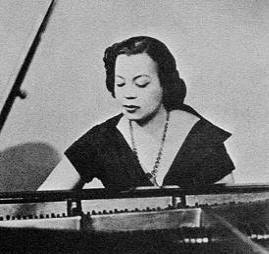
    Whether because of the political zeitgeist, for Black History Month, or the natural result of cumulative exposure to the repertoire, there has been a really nice representation of music by Black composers recently. And the development is a welcome one. This weekend, The Philadelphia Orchestra will present Florence Price’s Piano Concerto, alongside works by Rossini and Schubert. The on-demand concert will be available starting tonight at 8 pm and will stream through next Thursday at 11 pm EST. Tickets available at https://philorch.org/

    Pianists Danny Driver and Piers Lane will offer an elegant recital of French classics by Franck, Fauré, Saint-Saëns, and Lili Boulanger, courtesy of the Fisher Center at Bard. On-demand access will be available from Friday at 10 am through next Thursday at 5 pm EST. For tickets, visit https://fishercenter.bard.edu/events/driver-lane?utm_source=wordfly&utm_medium=email&utm_campaign=2021-02-17-Driver-Lane-TON-AFAIG-Dev&utm_content=version_A

    If new music is more your thing, Bang on a Can will present a marathon of 16 world premieres by living composers, including avant-garde icon Alvin Lucier and Princeton’s own Bora Yoon. Streaming of the four-hour event will begin this Sunday at 1 pm EST. The marathon is FREE and can be viewed at https://live.bangonacan.org/

    As always, free may be free, but donations are welcome – indeed encouraged – and help support the performers and organizations.

    Snowbound? ‘S no problem! There’s still plenty to munch on. Classical music is like grilled cheese for the soul, and it’s a lot easier on the arteries.

  • Lincoln Walks: Price Harris & a Nation’s Burden

    Lincoln Walks: Price Harris & a Nation’s Burden

    Before “Lincoln in the Bardo,” there was “Abraham Lincoln Walks at Midnight.”

    Vachel Lindsay’s poem, written in 1914, portrays Lincoln stirring from his eternal rest to roam the streets of Springfield, Illinois, still burdened by the nation’s troubles. I’d hate to think what Lincoln’s spirit must be going through today.

    On Lincoln’s birthday, here’s Florence Price’s setting of Lindsay’s meditation. It is one of three Price settings of the poem rediscovered in 2009. From the information available, it would seem that all three would fit on one album. Somebody record these, please!

    By coincidence, today also happens to be the anniversary of the birth of Roy Harris. Born on Lincoln’s birthday in 1898 – in a log cabin in Lincoln County, Oklahoma – surely Harris must have been filled with an apposite sense of destiny. Harris also set Lindsay’s poem, for mezzo-soprano, violin, cello and piano.

    Harris was regarded as one of America’s greatest composers. He was particularly renowned for his symphonies. His Symphony No. 3 is his most famous work. The Symphony No. 6, formulated over a reading of Sandburg, is subtitled “Gettysburg.”

    Each of the four movements bears a superscription from Lincoln’s Gettysburg Address:

    I. Awakening (“Fourscore and seven years ago…”);

    II. Conflict (“Now we are engaged in a great civil war…”);

    III. Dedication (“We are met on a great battlefield of that war…”);

    IV. Affirmation (“…that we here highly resolve that these dead shall not have died in vain…).

    I call that putting a Price on linkin’ Harris and Lincoln.


    “Abraham Lincoln Walks at Midnight”

    (In Springfield, Illinois)

    It is portentous, and a thing of state
    That here at midnight, in our little town
    A mourning figure walks, and will not rest,
    Near the old court-house pacing up and down,

    Or by his homestead, or in shadowed yards
    He lingers where his children used to play,
    Or through the market, on the well-worn stones
    He stalks until the dawn-stars burn away.

    A bronzed, lank man! His suit of ancient black,
    A famous high top-hat and plain worn shawl
    Make him the quaint great figure that men love,
    The prairie-lawyer, master of us all.

    He cannot sleep upon his hillside now.
    He is among us:—as in times before!
    And we who toss and lie awake for long,
    Breathe deep, and start, to see him pass the door.

    His head is bowed. He thinks of men and kings.
    Yea, when the sick world cries, how can he sleep?
    Too many peasants fight, they know not why;
    Too many homesteads in black terror weep.

    The sins of all the war-lords burn his heart.
    He sees the dreadnaughts scouring every main.
    He carries on his shawl-wrapped shoulders now
    The bitterness, the folly and the pain.

    He cannot rest until a spirit-dawn
    Shall come;—the shining hope of Europe free:
    A league of sober folk, the Workers’ Earth,
    Bringing long peace to Cornland, Alp and Sea.

    It breaks his heart that things must murder still,
    That all his hours of travail here for men
    Seem yet in vain. And who will bring white peace
    That he may sleep upon his hill again?


    Clockwise from upper right: Florence Price, Roy Harris, and Abraham Lincoln walking at midnight

  • Philly Orchestra Celebrates 120 Years

    Philly Orchestra Celebrates 120 Years

    Happy birthday, The Philadelphia Orchestra! Looking pretty good for 120.

    The Fabulous Philadelphians gave their first public concert under Fritz Scheel on this date in 1900. The event took place at the orchestra’s former home of the Academy of Music, located on the southwest corner of Broad and Locust Streets. On the program were works by Carl Goldmark (“In Spring” Overture), Beethoven (Symphony No. 5), Tchaikovsky (Piano Concerto No. 1), Weber-Berlioz (“Invitation to the Dance”), and Wagner (“Entry of the Gods into Valhalla”).

    The soloist on that occasion was Ossip Gabrilowitsch. Gabrilowitsch’s teachers at the Saint Petersburg Conservatory included Anton Rubinstein and Nikolai Medtner. He then studied for two years in Vienna under the legendary pedagogue Theodor Leschitizky. Not only was Gabrilowitsch a prominent pianist, he was also offered the music directorship of the Boston Symphony Orchestra, which he politely declined. Later, he became founding director of the Detroit Symphony in 1918. He was also Mark Twain’s son-in-law. In my possession is a biography I picked up at a library sale a few years ago, “My Husband, Gabrilowitsch,” that I noticed had been inscribed by Twain’s daughter, Clara Clemens!

    Fritz Scheel was succeeded as music director of the Philadelphia Orchestra by Carl Pohlig in 1908. Leopold Stokowski (pictured) followed in 1912; Stoky would lead the group for the next 24 years. Then came Eugene Ormandy, who held the podium until 1980 – 44 years. Ormandy passed the baton to Riccardo Muti, who directed from 1980 to 1992. Muti was followed Wolfgang Sawallisch, who remained with the orchestra for the next decade. Sawallisch was succeeded by Christoph Eschenbach in 2003. Eschenbach was followed by Charles Dutoit, appointed “Chief Conductor” in 2008. And, bringing us up to the present, Yannick Nézet-Séguin arrived, with vitality to burn, in 2012. What a history!

    Looking forward to next week’s Digital Stage concert (available November 25-29), which will include the Philadelphia premiere of Florence Price’s Symphony No. 1. Price’s symphony was the first by an African American woman to be performed by a major orchestra (the Chicago Symphony, in 1933). Also on the program will be Samuel Barber’s “Adagio for Strings.” For more information on this and other Philadelphia Orchestra events, visit philorch.org.

    Thank you, Philadelphia, for taking a chance on substantial works by composers such as Price and Louise Farrenc. I was there, in the hall, for Farrenc’s Symphony No. 2. So sorry not to be able to attend the Price performance in person. Perhaps next year.

    Happy 120th!


    PHOTO: The Philadelphia Orchestra at the Academy of Music in 1916, ready to go for the American premiere of Gustav Mahler’s “Symphony of a Thousand”

  • Webcasts: Love Eternal & Educational Bonds

    Webcasts: Love Eternal & Educational Bonds

    Last weekend’s “Picture Perfect” (“Love Eternal”) and “The Lost Chord” (“Educational Bonds”) are now posted as webcasts. Follow the respective link (below) and click on the “Listen” button.


    “Love Eternal,” music from “Somewhere in Time” (John Barry), “The Ghost and Mrs. Muir” (Bernard Herrmann), “Always” (John Williams), and “Wuthering Heights” (Alfred Newman):

    https://www.wwfm.org/post/picture-perfect-february-14-love-eternal

    “Educational Bonds,” selections by African-American composer Margaret Bonds and her teachers, Florence Price and William Levi Dawson:

    https://www.wwfm.org/post/lost-chord-january-16-educational-bonds

  • Margaret Bonds & Black Classical Pioneers

    Margaret Bonds & Black Classical Pioneers

    Margaret Bonds was one of the first Black composers and performers of classical music to gain recognition in the U.S. Born in Chicago on March 3, 1913, she is perhaps best-remembered for her collaborations with Langston Hughes and for her piano work “Troubled Water.”

    This Sunday night on “The Lost Chord,” we’ll pay tribute to Bonds and her notable teachers, Florence Price and William Levi Dawson, both of whom were also important figures in the development of African-American art music.

    Price is regarded as the first African-American woman to have composed symphonies. She wrote three of them. One was performed by the Chicago Symphony Orchestra. She also wrote orchestral works, chamber music, instrumental music, and numerous choral and vocal pieces. She and Bonds shared not only a teacher-student relationship, but also became very good friends. Tonight, we’ll hear Price’s “Fantasie Nègre.”

    In addition to his many fine works for chorus, Dawson is notable for having written one of the most successful symphonies by an African-American composer, the so-called “Negro Folk Symphony.” The work was composed in 1934 and given its first performance by the Philadelphia Orchestra, under Leopold Stokowski. Dawson revised the piece in 1952, following a trip to West Africa, where he was influenced by the indigenous rhythms he encountered there. Stokowski later recorded the piece, as did Neeme Järvi with the Detroit Symphony Orchestra.

    In 1933, Bonds appeared as a piano soloist with the Chicago Symphony. She performed Price’s Piano Concerto with the Women’s Symphony Orchestra of Chicago the next year. In 1939, she moved to New York, where she continued her studies at the Juilliard School. She also studied privately with Roy Harris.

    For all her accomplishments – her collaborations with Langston Hughes, her establishment of a cultural community center in Harlem, and the composition of two ballets and several theater works – the Bonds discography is woefully thin. She’ll be represented tonight by her cycle of four songs, “Ah! Love But a Day,” and by her most-recorded piano work, “Troubled Water.”

    Shortly before her death in Los Angeles in 1972 (at the age of 59), Bonds’ “Credo” for baritone, chorus and orchestra was performed by the Los Angeles Philharmonic, under the direction of Zubin Mehta. Would that they had recorded it!

    Make an investment in Bonds. That’s “Educational Bonds” – music by Margaret Bonds and her teachers – this Sunday night at 10:00 EST, on WWFM – The Classical Network and at wwfm.org.

Tag Cloud

Aaron Copland (92) Beethoven (95) Composer (114) Film Music (119) Film Score (143) Film Scores (255) Halloween (94) John Williams (185) KWAX (229) Leonard Bernstein (99) Marlboro Music Festival (125) Movie Music (134) Opera (198) Philadelphia Orchestra (86) Picture Perfect (174) Princeton Symphony Orchestra (106) Radio (87) Ralph Vaughan Williams (85) Ross Amico (244) Roy's Tie-Dye Sci-Fi Corner (290) The Classical Network (101) The Lost Chord (268) Vaughan Williams (102) WPRB (396) WWFM (881)

DON’T MISS A BEAT

Receive a weekly digest every Sunday at noon by signing up here


RECENT POSTS