Tag: French Composer

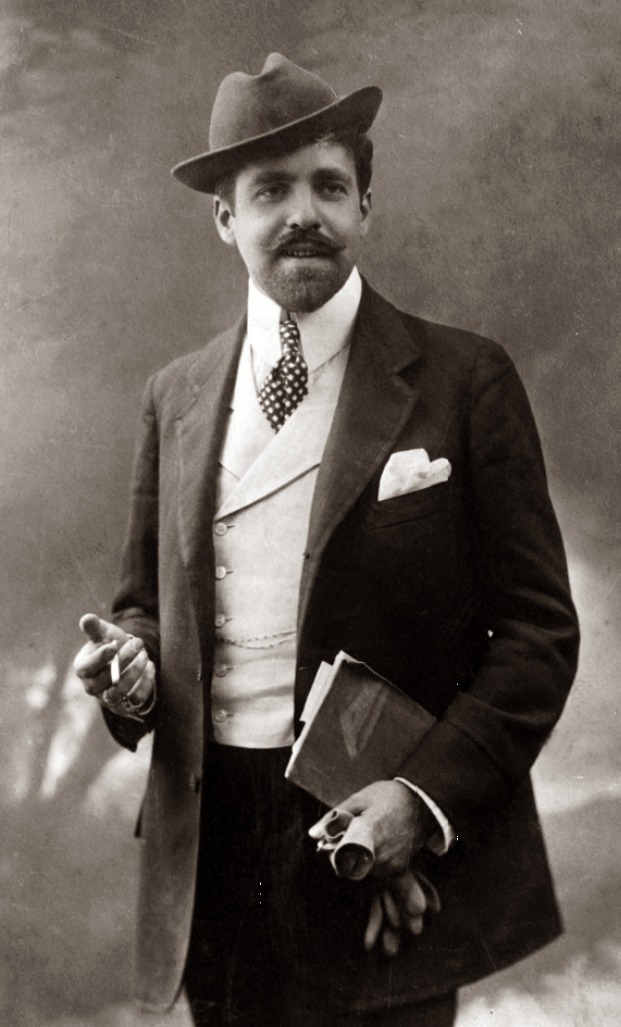
  • Florent Schmitt Rediscovered Composer

    Florent Schmitt Rediscovered Composer

    Florent Schmitt was one of the most successful French composers of the early 20th century. However, as fashions changed, his characteristically opulent music became marginalized, only to experience something of a revival, in recent years, mostly on recordings.

    This week on “The Lost Chord,” we’ll mark the anniversary of Schmitt’s birth (on September 28, 1870) by sharing selections from his incidental music for a production of Shakespeare’s “Antony and Cleopatra” and his grandiose setting of “Psalm XLVII.”

    Schmitt entered the Paris Conservatory in 1889, where he studied with Gabriel Fauré, Jules Massenet, and Théodore Dubois. He was a winner of the Prix de Rome in 1900. He also befriended Frederick Delius, while Delius was in Paris, and prepared the vocal scores for a number of his operas.

    In addition, Schmitt was a music critic, who attained a degree of notoriety for shouting out his assessments from the audience. He was described by one music publisher as an irresponsible lunatic.

    The later neglect of his music may have been due, in part, to his willingness to go along with the Vichy regime during the Nazi occupation of France. But Schmitt is too fascinating a figure to be dismissed out-of-hand. Stravinsky was an early admirer, remarking that the composer’s “The Tragedy of Salome” gave him greater joy than any other he had heard in a long time. Certain elements of the ballet anticipate analogous experiments in Stravinsky’s own “The Rite of Spring.”

    Indeed, Schmitt’s appetite for overheated decadence and lurid orientalism seems to have been insatiable. There will be nothing on our menu this week but overegged Florentine. I hope you’ll join me for “Schmitt Happens,” on “The Lost Chord,” now in syndication on KWAX, the radio station of the University of Oregon!


    Clip and save the start times for all three of my recorded shows:

    PICTURE PERFECT, the movie music show – Friday at 8:00 PM EDT/5:00 PM PDT

    SWEETNESS AND LIGHT, the light music program – ALL NEW! – Saturday at 11:00 AM EDT/8:00 AM PDT

    THE LOST CHORD, unusual and neglected rep – Saturday at 7:00 PM EDT/4:00 PM PDT

    Stream them, wherever you are, at the link!

    https://kwax.uoregon.edu/


    Exhaustive website devoted to all things Florent Schmitt: florentschmitt.com
  • Lili Boulanger Prix de Rome Prodigy

    Lili Boulanger Prix de Rome Prodigy

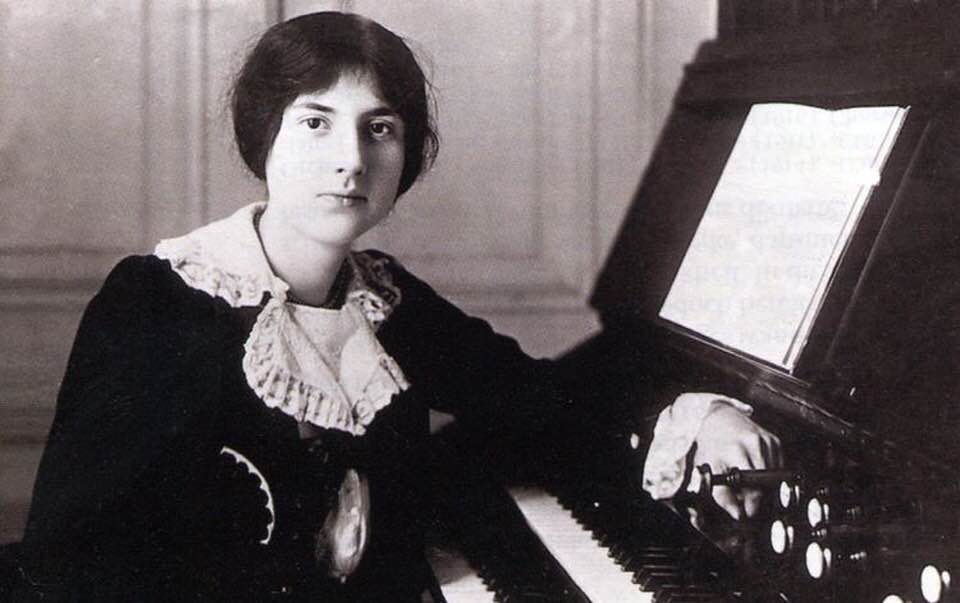
    Lili Boulanger (1893-1918), the younger sister of the renowned pedagogue Nadia – who taught Aaron Copland, Elliot Carter, Astor Piazzolla, Philip Glass, Michel Legrand, Quincy Jones, and just about everyone else – was one of the great hopes of French music, the first woman to win the Prix de Rome composition prize. She won the prize in 1913, at the age of 19, for her cantata “Faust et Hélène.” It was actually Lili’s second attempt. The year before, she collapsed during her performance.

    Lili suffered from chronic ill health, having contracted bronchial pneumonia at the age of 2. Her compromised immune system left her vulnerable to Crohn’s disease, which ended her life in 1918 at the age of 24. (Nadia’s life was as long as her sister’s was brief. She died in 1979 at the age of 92.)

    Nadia too had had ambitions to compose. She herself attempted to attain the Prix de Rome (as their father had done in 1835), but was repeatedly frustrated. She got as far as second place in 1908. It became evident that her sister was the real deal in that regard, so Nadia pursued organ and, of course, pedagogy.

    Both sisters were greatly influenced by Gabriel Fauré, who was director of the Paris Conservatory – Lili, a musical prodigy, had been accompanying her sister to the conservatory from before the age of 5 – and of course Debussy’s impact in those days was inescapable. Like Debussy, Lili gravitated toward a kind of indirection in her music, more characteristic of Symbolism than the evocative sorts of atmospheres often attempted by the Impressionists (a classification, by the way, Debussy disliked).

    Lili was greatly affected by the death of her father in 1900, and many of her works are marked by grief and loss. Ernest fathered his children quite late in life. He was 72 when Nadia was born, and 77 at the time of Lili’s birth. The girls’ mother was 41 years his junior. Despite the inherent melancholy that pervades much of her music, Lili displayed a colorful mastery of harmony and orchestration.

    Often she was perceived as destined for greatness. Her music has actually been programmed fairly frequently for a woman composer of her era. But now with greater sensitivity to male dominance in the world’s concert halls, we are starting to hear even more Lili Boulanger. It’s just a pity she didn’t leave us more.

    Happy birthday, Lili Boulanger.


    Deux morceaux for violin and piano: Nocturne and Cortège

    “Faust et Hélène”

    “D’un soir triste” (“Of a Sad Evening”)

    “D’un matin de printemps” (“Of a Spring Morning”)

    “Vieille prière bouddhique” (“Old Buddhist Prayer”)

  • Edouard Lalo A Bicentennial Appreciation

    Edouard Lalo A Bicentennial Appreciation

    Not that anyone seems to care, as the music world prostrates itself yet again at the feet of the unassailable Amadeus, but today also happens to be the 200th anniversary of the birth of Édouard Lalo. Lalo may not have possessed the same level of extraordinary facility exhibited by Mozart, but he is a thoroughly accomplished and enjoyable composer, with a number of his works still hanging on around the periphery of the active repertoire. In particular, if I’m to judge by the frequency with which it is abused on public radio, his “Symphonie espagnole” remains very well known.

    I don’t care how great you are; even genius can wear out its welcome. Thank god for the Édouard Lalos of this world. Joyeux bicentenaire, mon ami!


    “Symphonie espagnole”

    https://www.youtube.com/watch?v=wyKD0WOXY3c

    Cello Concerto in D minor

    Symphony in G minor

    “Le roi d’Ys” Overture

    “Rapsodie” (a.k.a. “Rapsodie norvégienne”)

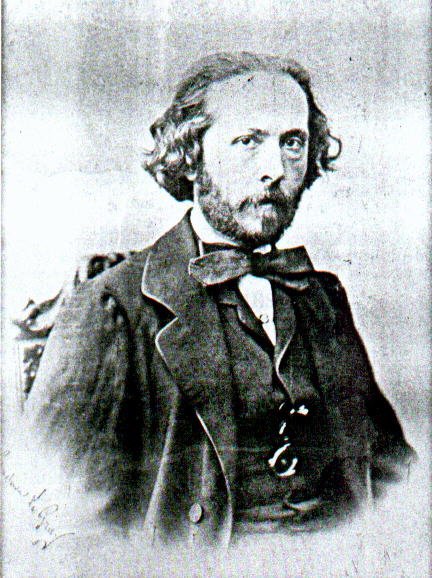
  • César Franck Bicentennial A Late Appreciation

    César Franck Bicentennial A Late Appreciation

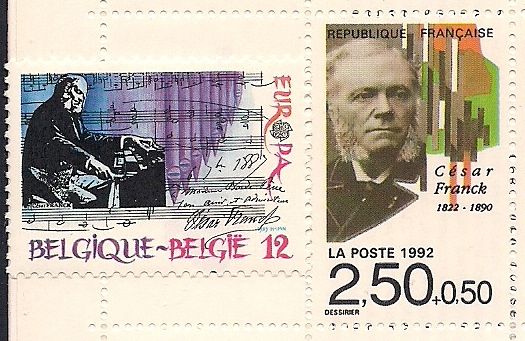
    The Belgian-born French composer César Franck was born on this date 200 years ago.

    I was slow to warm to Franck’s highly-regarded Symphony in D minor, in particular to the insipid theme of the last movement. It’s taken decades, but I think I’ve finally gotten to the point where I’m willing to concede its overall greatness.

    Much more congenial to me have always been Franck’s symphonic poems and his lovely chamber music.

    No comment on the organ works – although I once attended a “Franckathon” at St. Clement’s Church in Philadelphia, back in the 1990s, at which his complete output for the instrument was presented, with two intermissions. Just to say that I did. Well, that and for the free doughnuts and coffee.

    He may very well have had the finest mutton chops in the world, I’ll grant him that.

    Happy bicentennial, César Franck!


    Symphony in D minor (insipid theme starts at 28:39)

    “Le Chasseur maudit” (“The Accursed Huntsman”)

    Piano Quintet in F minor

    Violin Sonata in A major

    “Grande pièce symphonique,” played by Marcel Dupré

    Prelude, Chorale and Fugue

    https://www.youtube.com/watch?v=wHftZ2-w4XE

    And, for the season, “Panis Angelicus”

  • Reynaldo Hahn Bon Vivant Birthday Hit

    Reynaldo Hahn Bon Vivant Birthday Hit

    August 9. Get a hit of bon vivant Reynaldo Hahn.

    Hahn was born in Caracas, Venezuela, on this date in 1874. He was the youngest of twelve children of a German-Jewish businessman, a convert to Catholicism, who arrived in Venezuela in 1845 at the age of 22 and married a Venezuelan woman of Basque origin. Political instability drove the family to resettle in Paris, where young Reynaldo was given a cosmopolitan education.

    He studied composition at the Paris Conservatory (which he entered at the age of 11) with Charles Gounod and Jules Massenet, among others. He also took private lessons with Camille Saint-Saëns.

    Hahn met Marcel Proust at the age of 19, and the two essentially combusted. Their affair lasted for two years and is thought to have been Proust’s only real relationship. The romance may have fizzled, but the friendship was lifelong. Hahn’s influence permeates Proust’s “Remembrance of Things Past” (now frequently translated as “In Search of Lost Time”), often cited as one of the greatest novels of the 20th century. It’s certainly one of the longest.

    Hahn composed operas, tone poems, concertos, chamber music, a successful operetta (“Ciboulette”), and a musical comedy (“Mozart”). But far and away he is best remembered for his art songs – or mélodies – of which he composed over 100.

    He certainly enjoyed the good life, nattily attired, living in a lavishly appointed flat, and always with fine cigarettes at hand. He also gained a considerable reputation as a most charming performer. His delightfully informal presentations at musical evenings of the Belle Epoque would involve him leaning far back at the piano, cigarette dangling from a corner of his mouth, and casting languid glances at the audience through long lashes. Sample his artistry below.

    Happy birthday, Reynaldo Hahn!


    Hahn conducts one of his most frequently heard works, “Le bal de Béatrice d’Este” for winds, percussion, two harps, and piano

    One of his most famous songs, “À Cloris”

    Another, “L’heure exquise” (“The Exquisite Moment”)

    https://www.youtube.com/watch?v=aRnE7EYnp1A

    Hahn sings in 1909. (Great photos too!)

    Always fond of this one

    Hahn’s Piano Concerto

Tag Cloud

Aaron Copland (92) Beethoven (95) Composer (114) Film Music (120) Film Score (143) Film Scores (255) Halloween (94) John Williams (185) KWAX (229) Leonard Bernstein (100) Marlboro Music Festival (125) Movie Music (135) Opera (198) Philadelphia Orchestra (88) Picture Perfect (174) Princeton Symphony Orchestra (106) Radio (87) Ralph Vaughan Williams (85) Ross Amico (244) Roy's Tie-Dye Sci-Fi Corner (290) The Classical Network (101) The Lost Chord (268) Vaughan Williams (103) WPRB (396) WWFM (881)

DON’T MISS A BEAT

Receive a weekly digest every Sunday at noon by signing up here


RECENT POSTS