Tag: French Composers

  • Magnard Sohy: Music, War, and Remembrance

    Magnard Sohy: Music, War, and Remembrance

    To say that French composer Albéric Magnard had a fiery disposition runs the risk of skirting bad taste.

    It was on this date in 1914 that Magnard went out in a blaze of glory, when, at the age of 59, and as a civilian, he refused to surrender his property to invading German forces. After ushering his wife and two daughters out the back door, he opened fire on some trespassing soldiers, instantly killing one of them. In retaliation, the Germans set fire to his house. Magnard is assumed to have perished in conflagration. However, his body was never found.

    A couple of weeks ago, I was streaming KWAX (as all good folks should), and for the first time encountered a symphony by Charlotte Sohy, written in 1917, that may have been composed in memory of Magnard. Sohy and her husband, Marcel Labey, were friends of the composer, and Sohy’s symphony shares the same key, the uncommon C-sharp minor, as Magnard’s Symphony No. 4.

    Her symphony is subtitled “Grand Guerre,” or “Great War.” Marcel would survive the conflict, having served in the French army. He died in 1968. Sohy, who studied composition with Vincent d’Indy and was a cousin of Louis Durey (of “Les Six” fame), died in 1955.

    Her symphony was never performed in her lifetime. It was heard for the first time in France only in 2019!

    In this age of wonders, now you can enjoy it here:

    Also, Magnard’s Symphony No. 4:


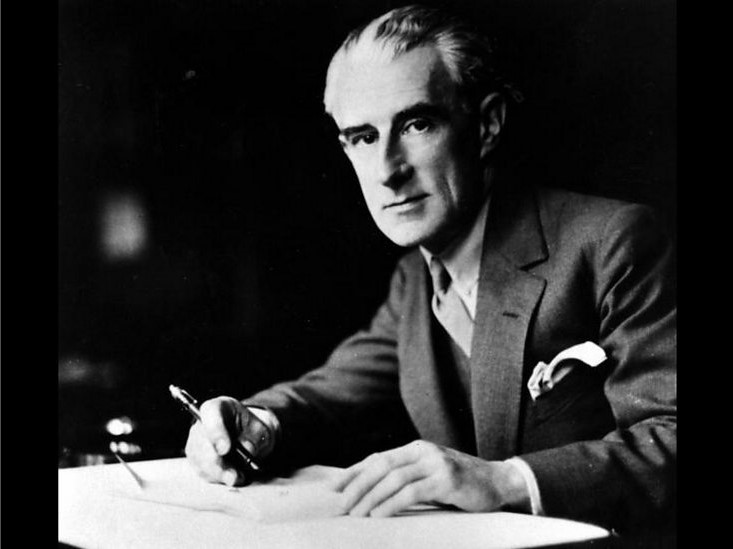
    PHOTOS: Albéric Magnard and Charlotte Sohy

  • Les Six: French Composers on KWAX

    Les Six: French Composers on KWAX

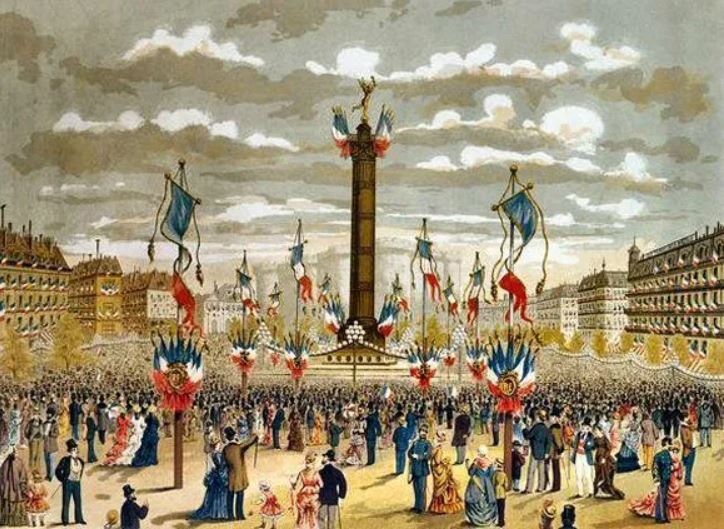
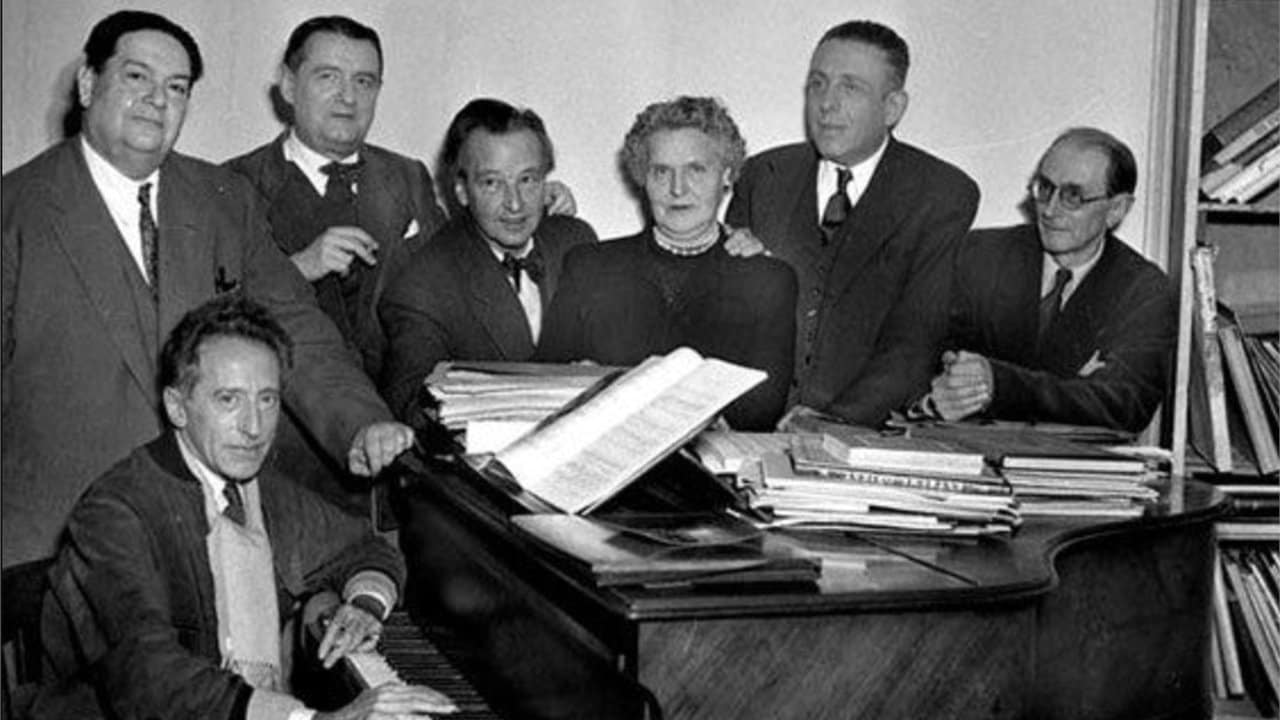
    With Bastille Day coming up on Monday, the focus this week on “The Lost Chord” will be Les Six, that collective of French composers who rose to prominence in Paris in the 1920s, followers of Jean Cocteau and Erik Satie – in reality, each following their own aims, but loosely organized around a reactionary stance against Wagnerism in music and the so-called Impressionism of Debussy and Ravel.

    But never mind all that. What’s important is that they wrote plenty of delightful music, mostly in a neoclassical style.

    We’ll have a chance to get up close and personal, as we listen to music by Les Six, performed by members of Les Six, with Georges Auric and Jacques Février playing music of Erik Satie into the bargain.

    You can always count on The Six. I hope you’ll join me for “Six by Six” on “The Lost Chord,” now in syndication on KWAX, the radio station on University of Oregon!


    Clip and save the start times for all three of my recorded shows:

    PICTURE PERFECT, the movie music show – Friday at 8:00 PM EDT/5:00 PM PDT

    SWEETNESS AND LIGHT, the light music program – Saturday at 11:00 AM EDT/8:00 AM PDT

    THE LOST CHORD, unusual and neglected rep – Saturday at 7:00 PM EDT/4:00 PM PDT

    Stream them, wherever you are, at the link!

    https://kwax.uoregon.edu/
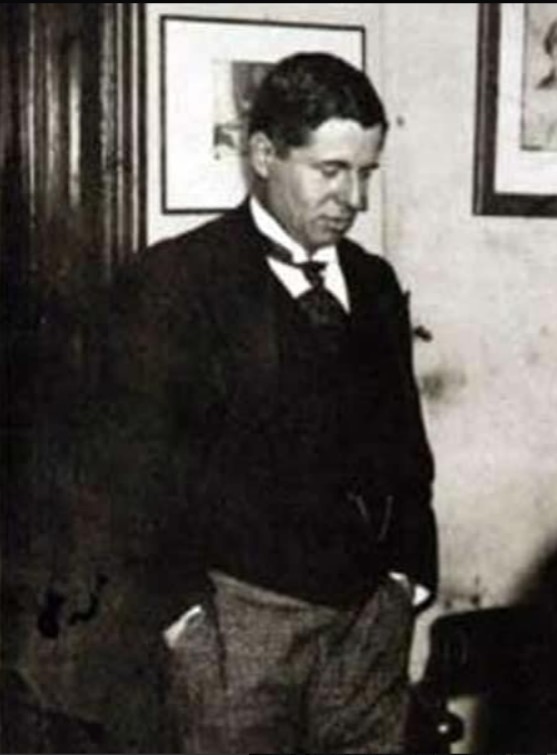

    PHOTO: Standing, left-to-right, Darius Milhaud, Georges Auric, Arthur Honegger, Germaine Tailleferre, Francis Poulenc, and Louis Durey, with Jean Cocteau at the piano

  • French Orchestrators Behind the Music

    French Orchestrators Behind the Music

    Vive les orchestrateurs de musique classique français!

    This week on “The Lost Chord,” for Bastille Day, enjoy original works by figures who employed their skills as orchestrators in the service of more celebrated French composers.

    Henri Rabaud (1873-1949) was, variously, conductor at the Paris Opéra Comique, director of the Paris Opera, and director of the Paris Conservatory. For a season, he even led the Boston Symphony Orchestra. Though he wrote several operas and two symphonies, as well as choral, chamber and instrumental music, Rabaud’s own original output is very seldom heard. However, his orchestration of Gabriel Fauré’s charming “Dolly Suite,” originally for piano four-hands, endures. We’ll hear Rabaud’s symphonic poem “La Procession nocturne,” inspired by Nicolas Lenau’s “Faust.”

    André Caplet (1878-1925) directed the Boston Opera from 1910 to 1914. He was gassed while serving in the First World War, which resulted in the pleurisy that plagued him for the remainder of his short life. Caplet died at the age of 44. His harp quintet, “Conte fantastique,” after Edgar Allan Poe’s “The Masque of the Red Death” is occasionally heard. But his tenuous grip on fame is really through his association with another composer, Claude Debussy, for whom he orchestrated “Children’s Corner,” “Clair de lune,” “Le Martyrdom de saint Sébastien,” and “La boîte à joujoux.” Today, we’ll have the opportunity to enjoy Caplet’s lovely Septet for Voices and String Quartet.

    Henri Büsser (1872-1973) acted as secretary to Charles Gounod. He also became a protégé and friend of Jules Massenet. At Debussy’s request, Büsser conducted the fourth performance of “Pélleas and Mélisande” and numerous performances thereafter. He died in Paris less than three weeks shy of his 102nd birthday! Büsser’s own output includes much music for the stage, including 14 operas, a ballet, and incidental music. Yet his name is kept alive principally as the orchestrator of Debussy’s “Petite Suite” and “Printemps.” He’ll be represented today’s program by “Andalucia,” an original work for flute, on Spanish themes.

    Charles Koechlin (1867-1950) had many enthusiasms: medieval music, Bach, travel, stereoscopic photography, communism, pantheism, sports. He was especially interested in early film stars (he wrote works in tribute to Ginger Rogers, Douglas Fairbanks, Charles Chaplin, and Lillian Harvey) and the “Jungle Books” of Rudyard Kipling. Despite enjoying an astonishingly prolific career as a composer himself, Koechlin is associated in most people’s minds with his orchestration of Fauré’s “Pélleas and Mélisande.” He also worked as an orchestrator on Debussy’s “Khamma.”

    Koechlin’s series of orchestral works, inspired by Kipling, span most of his creative life. These were composed in a broad array of styles, encompassing impressionism, neo-classicism, polytonality, and even quasi-serialism. We’ll hear the last of his Kipling cycle, “Les Bandar-Log,” ostensibly about a barrel of chattering monkeys, but the term has also come to be used to describe anyone who irresponsibly prattles.

    I hope you’ll join me in liberating these overlooked composers from the Bastille of neglect on “French Connections,” on “The Lost Chord,” now in syndication on KWAX, the radio station of the University of Oregon!


    Clip and save the start times for all three of my recorded shows:

    PICTURE PERFECT, the movie music show – Friday at 8:00 PM EDT/5:00 PM PDT

    SWEETNESS AND LIGHT, the light music program – ALL NEW! – Saturday at 11:00 AM EDT/8:00 AM PDT

    THE LOST CHORD, unusual and neglected rep – Saturday at 7:00 PM EDT/4:00 PM PDT

    Stream them, wherever you are, at the link!

    https://kwax.uoregon.edu/
  • Bastille Day Music on Sweetness and Light

    Bastille Day Music on Sweetness and Light

    Admittedly, there’s not much “sweetness” or “light” in revolution. Nevertheless, I hope you’ll join me, as we anticipate Bastille Day this morning on “Sweetness and Light.”

    We’ll have music on French patriotic themes by Franz Liszt, Georges Bizet, and Hector Berlioz, a symphony by Revolutionary Era composer Etienne-Nicolas Méhul (also a favorite of Napoleon), and a selection from the collaborative ballet “The Wedding on the Eiffel Tower” – set at the iconic Paris landmark on July 14 (Bastille Day) – by Germaine Tailleferre.

    The playlist was thoughtfully curated in commemoration of the storming of the Bastille on July 14, 1789, a defining moment of the French Revolution that toppled the monarchy and abolished feudalism. But I’m a lover, not a fighter.

    Vive la sucrosité et la légèreté on “Sweetness and Light,” this Saturday morning at 11:00 EDT/8:00 PDT, exclusively on KWAX, the radio station of the University of Oregon!

    Stream it, wherever you are, at the link.

    https://kwax.uoregon.edu/

  • Ravel’s Unexpected English Pupil

    Ravel’s Unexpected English Pupil

    Maurice Ravel was one of the greatest of French composers. Reluctantly, he also became the teacher of one of England’s.

    Ralph Vaughan Williams studied in Paris with Ravel for three months in 1907-08. Ravel betrayed some hesitancy at first. He took few pupils, but this untidy bear of an Englishman was not about to take no for an answer. Despite his earthy disposition (his response to Ravel’s assignment to write a minuet in the manner of Mozart was met with an unprintable response), Vaughan Williams quickly earned his teacher’s admiration and soon his friendship. Ravel later remarked of Vaughan Williams, “He is my only pupil who does not write my music.” That is to say, RVW remained his own man.

    For his part, Vaughan Williams credited Ravel with having helped him to overcome the heavy Teutonic influence on his earlier training. Ravel had the effect of lightening the textures in Vaughan Williams’ music and sharpening its focus. RVW, already in his mid-30s and three years older than his teacher, learned his lessons well (at least the ones he considered valid), assimilated what he found useful, and applied it to the achievement of his own objectives. It could be said that Ravel’s greatest gift to his English pupil was the courage to be himself.

    Ravel organized the first French performance of Vaughan Williams’ “On Wenlock Edge” in Paris in 1912. RVW later recollected that it was one of the worst things he’d ever heard. But he was thankful for Ravel’s advocacy in a country that rarely showed much interest in English music. Ravel also visited Vaughan Williams in London and quite enjoyed steak and kidney pudding with stout at Waterloo Station.

    The two friends continued to correspond through World War I, during which both served as, among other things, ambulance drivers. Vaughan Williams had some experience with the “big guns,” which contributed to his gradual deafness, and Ravel was rejected from the air force for being too short. Ravel wrote RVW after the war and urged him to return to Paris. “I would be happy to see you after so many terrible years,” he confessed.

    Pictured are some of Ravel’s letters to his friend. Unfortunately, to my knowledge, Vaughan Williams’ letters to Ravel have not survived.

    Remembering Ravel’s influence on one of my favorite composers –happy birthday, Maurice Ravel!

Tag Cloud

Aaron Copland (92) Beethoven (95) Composer (114) Film Music (120) Film Score (143) Film Scores (255) Halloween (94) John Williams (185) KWAX (229) Leonard Bernstein (100) Marlboro Music Festival (125) Movie Music (135) Opera (198) Philadelphia Orchestra (88) Picture Perfect (174) Princeton Symphony Orchestra (106) Radio (87) Ralph Vaughan Williams (85) Ross Amico (244) Roy's Tie-Dye Sci-Fi Corner (290) The Classical Network (101) The Lost Chord (268) Vaughan Williams (103) WPRB (396) WWFM (881)

DON’T MISS A BEAT

Receive a weekly digest every Sunday at noon by signing up here


RECENT POSTS