Tag: French Composers

  • Rediscovering Louise Farrenc & Neglected Romantics

    Rediscovering Louise Farrenc & Neglected Romantics

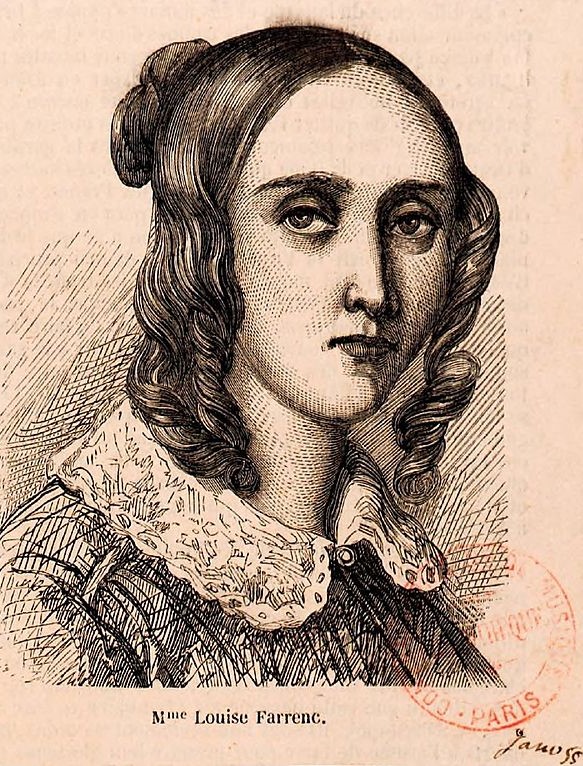
    Nearly 150 years after her death, composer Louise Farrenc is finally coming into her own. Farrenc (1804-1875) was the only female professor at the Paris Conservatory during the whole of the 19th century. Of course, she was only allowed to teach women.

    This Sunday night on “The Lost Chord,” we’ll hear Farrenc’s remarkable Third Symphony, on a program of music by three neglected French Romantics.

    A pupil of Moscheles (teacher of Mendelssohn) and Hummel (who studied with Mozart), Farrenc was a formidable pianist, who also took private lessons with Conservatory professor Anton Reicha. She paused in her career as a performer in order to start a successful publishing house, with her husband, Éditions Farrenc, which flourished for nearly 40 years.

    Beginning in 1842, Farrenc was finally accepted it into the Paris Conservatory, as a professor. There, she taught piano, but not composition. However, her stature was such that she was able to demand – and receive – equal pay.

    We’ll also hear music by Augusta Holmès (1847- 1903), French composer of Irish ancestry. Holmès received encouragement from Liszt and Wagner, as well as multiple marriage proposals from Saint-Saëns (which she declined). She became a pupil of César Franck. It’s said that Franck’s Piano Quintet enshrines the teacher’s ardent longing for his student. Saint-Saëns, who participated in the work’s scandalous premiere, was not amused.

    Holmès will be represented by her symphonic poem “Andromède,” from 1883. Andromeda, you may recall from Greek mythology, is the daughter of Cassiopeia, who incurs the wrath of the gods when she brags of Andromeda’s extraordinary beauty (comparing her favorably to the Nereids). Andromeda is chained to a rock as a sacrifice to a sea serpent, but rescued from her fate by Perseus, who arrives just in the nick of time, astride the winged horse Pegasus and bearing the severed head of the Gorgon Medusa, with which he turns the serpent to stone.

    Finally, Marie Gandval (1830-1907) studied with Flotow, then Chopin, and later Saint-Saëns. Saint-Saëns dedicated his Christmas Oratorio to her. She was the most frequently performed composer on concerts of the Société Nationale de Musique. The Société was founded by Saint-Saëns with an aim to promote orchestral music, which he found underserved in opera-mad France, where orchestras were tied to the theatres. Grandval herself was a composer of opera and choral music, but tonight there will be just enough time for her “Deux pièces” for oboe, cello and piano.

    Look for the women on “Cherchez la Femme,” this Sunday night at 10:00 EST, on WWFM – The Classical Network and wwfm.org.
  • French Seascapes Music From the Water

    French Seascapes Music From the Water

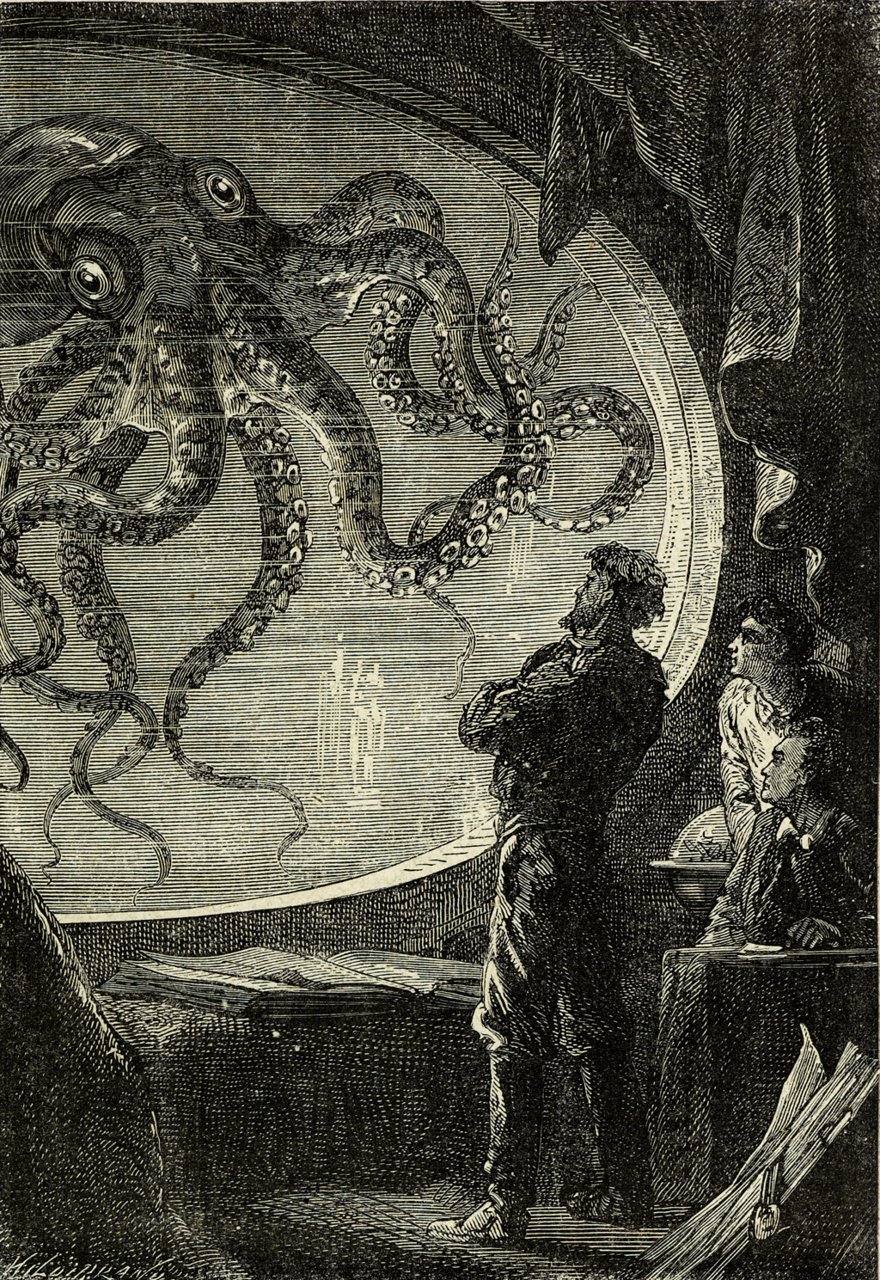
    Claude Debussy wasn’t the only French composer to write music inspired by the sea. This Sunday night on “The Lost Chord,” we’ll find refreshment in an hour of “musique de l’eau.”

    Jacques Ibert served as a naval officer during World War I. One of his most frequently performed pieces, “Escales” (“Ports of Call”), conjures impressions of three Mediterranean locales: Palermo, Tunis-Nefti, and Valencia. Considerably less well known is his “Symphonie marine,” composed nine years later, in 1931. Ibert refused to allow the work to be performed in his lifetime, though exactly why is unclear.

    The music actually derives from a film score (for a short film titled “S.O.S. Foch”). Ibert was the first European composer to write music for a talking picture. He certainly wasn’t ashamed of his output for the cinema. In all, he wrote some 30 film scores.

    For whatever reason, the “Symphonie marine” was given its belated premiere shortly after the composer’s death, in 1963, with Charles Munch conducting. We’ll hear the City of Birmingham Symphony Orchestra conducted by Louis Frémaux.

    Joseph-Guy Ropartz (1864-1955) was a student of Théodore Dubois, Jules Massenet, and César Franck. He composed five symphonies, chamber music, and a number of choral works. When his friend, Albéric Magnard, was killed defending his home from German soldiers during the First World War – in retribution Magnard’s house was burned to the ground and his unpublished manuscripts destroyed – Ropartz was able to reconstruct the orchestration of Magnard’s opera, “Guercœur,” from memory, since he had conducted a performance of its third act.

    Ropartz was associated with the Breton Cultural Renaissance and an ardent supporter of Breton regional autonomy. He joined the Breton Regionalist Union in 1898.

    The central movement of his “Prélude, marine et chansons,” composed in 1928 – actually a quintet for flute, violin, viola, cello and harp – is clearly a seascape. The finale is based on an old Breton folk song, “What noise there is upon the earth.” We’ll hear a performance by the Linos Ensemble.

    Another composer with a connection to Brittany was Jean Cras (1879-1932). Cras, who was born and died in Brest, wrote a ravishing opera, “Polyphème” (“Polyphemus”), about a forlorn cyclops, unlucky in love, who wanders off into the sea. Not only was he a productive composer of meltingly lovely music, he was also a career naval officer. And one of distinction. He commanded a torpedo boat in the Adriatic, during the First World War. On one occasion, he sank an enemy submarine, then rescued one of his sailors who had fallen overboard. Clearly he would have written a lot more music if not for the demands of his day job.

    Cras’ “Journal de bord” (“Ship’s Log”) was composed in 1927. Like Debussy’s “La mer,” composed in 1903-05, the work suggests the sea at different times of the day and under various conditions.

    First: Eight to midnight quarter – swell on the open sea, the sky is overcast, clearing at sunset, nothing in sight.

    Second: Midnight to four quarter – beautiful weather, beautiful sea, nothing unusual, moonlight.

    Third: Four to midnight quarter: Land ahoy!

    We’ll hear the Luxembourg Philharmonic Orchestra, conducted by Jean-Francois Antonioli.

    I hope you’ll get yourself a crusty bread, then join me for “Fruits de mer,” a nourishing repast of French music for the sea, this Sunday night at 10:00 EDT, on WWFM – The Classical Network and wwfm.org.
  • César Franck a Late Appreciation & Happy Birthday

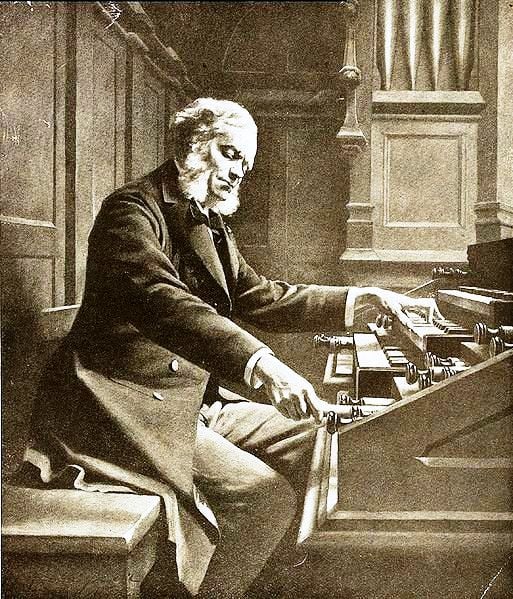
    César Franck a Late Appreciation & Happy Birthday

    César Franck wrote a highly-regarded symphony, which I’ve been very slow to warm to (it’s taken decades, in fact). Never liked the insipid theme of the last movement. But I’ve gotten to the point where at last I’m willing to concede its overall greatest.

    Much more congenial to me are his symphonic poems and his lovely chamber music.

    No comment on the organ works – although I once attended a “Franckathon” at St. Clement’s Church in Philadelphia, back in the 1990s, at which his complete output for the instrument was presented, with two intermissions. Just to say I did. Well, that and for the free doughnuts and coffee.

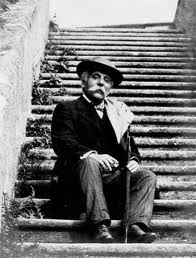
    He may very well have had the finest mutton chops in the world, I’ll grant him that.

    Happy birthday, César Franck.


    Symphony in D minor

    “Le Chasseur maudit” (“The Accursed Huntsman”)

    Piano Quintet in F minor

    Violin Sonata in A major

    “Grande pièce symphonique,” played by Marcel Dupré

    Prelude, Chorale and Fugue

    https://www.youtube.com/watch?v=wHftZ2-w4XE

    And, for the season, “Panis Angelicus”

  • Halloween Music from France on The Lost Chord

    Halloween Music from France on The Lost Chord

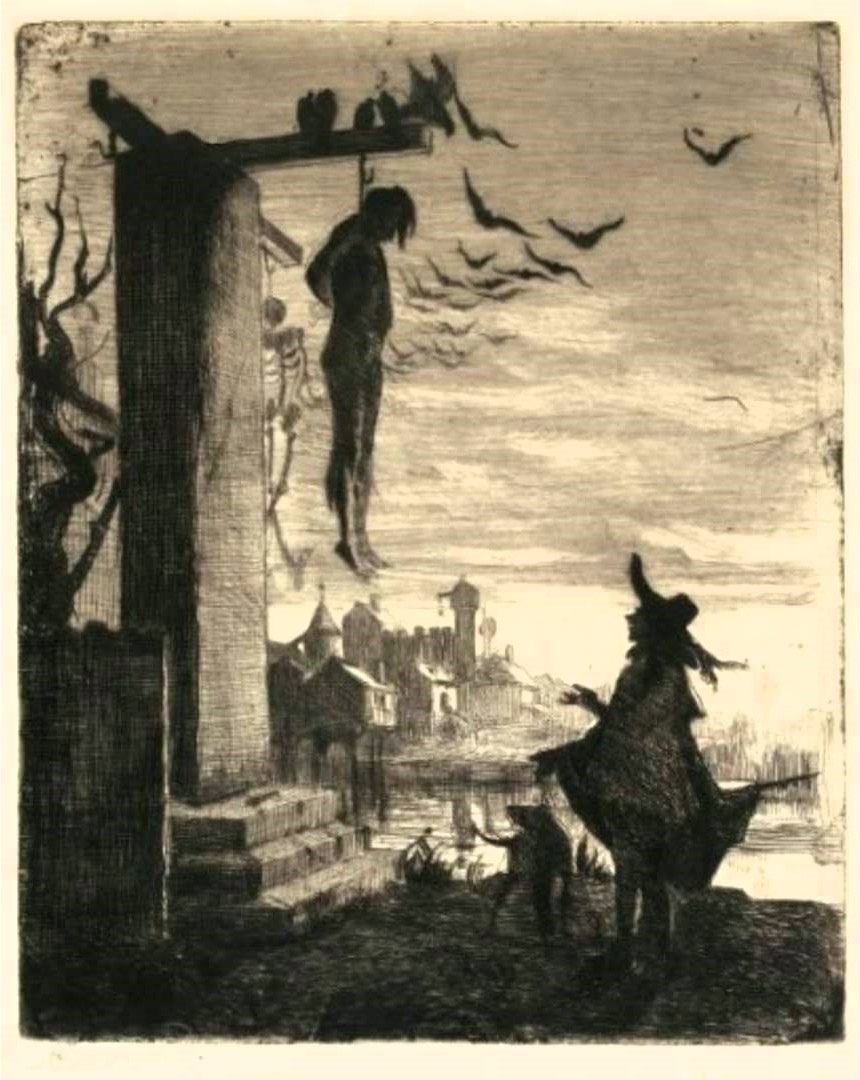
    Ah! ce que j’entends, serait-ce la bise nocturne qui glapit, ou le pendu qui pousse un soupir sur la fourche patibulaire?

    This Sunday night on “The Lost Chord,” we’ll have three works suitable for Halloween, all of them by French composers.

    Sir John Gielgud will join pianist Gina Bachauer for recitations of weird and sinister poems by Aloysius Bertrand, to preface the three movements of Maurice Ravel’s “Gaspard de la Nuit” (Gaspard of the Night).

    Claude Debussy was enthralled by the writings of Edgar Allan Poe, which he knew through translations by Charles Baudelaire. At the time of his death, he left incomplete sketches for two operas after Poe stories – “The Fall of the House of Usher” and “The Devil in the Belfry.” We’ll hear fragments of the former, conducted by Georges Prêtre.

    Finally, we’ll listen to the third of the “Etudes in Minor Keys,” subtitled “Scherzo Diabolico,” by Charles-Valentin Alkan. Alkan, a sometimes neighbor of Chopin and Georges Sand, shared a home with his illegitimate son, two apes and a hundred cockatoos. Franz Liszt is alleged to have commented, “Alkan had the finest technique I had ever known, but preferred the life of a recluse.”

    Best known is the story surrounding the circumstances of his death: while reaching for a copy of the Talmud, situated on a high shelf of a heavy bookcase, the case let go and crushed Alkan beneath it. It’s been suggested that the composer actually collapsed while in the kitchen – but when the legend becomes fact, print the legend.

    I hope you’ll join me for “Jacques o’ Lanterns” – lurid music by French composers for Halloween – this Sunday night at 10:00 EDT, on WWFM – The Classical Network and wwfm.org.

    While I have your attention: WWFM is in the midst of its fall fundraiser. If you’re “hanging around” on a Sunday evening, enjoying “The Lost Chord” or any of our other specialty programs, remember you can support them at any time by making a donation at wwfm.org. Your contribution in any amount would be greatly appreciated. It’s because of adventurous and generous listeners just like you that we’re able to continue with our ongoing mission to discover “The Lost Chord.” Thank you for your support!

  • Massenet & Fauré Anniversary Celebrating Two French Masters

    Massenet & Fauré Anniversary Celebrating Two French Masters

    Today is the anniversary of the births of two outstanding French composers: Jules Massenet (1842-1912) and Gabriel Fauré (1845-1924).

    Massenet’s fluency and emotionally direct style made him the most successful French opera composer of his generation. Fauré was the more progressive of the two. He wrote meticulously-crafted music of great nuance, with a harmonic sense that seemed to yearn for the 20th century. As an administrator, he blew the dust off the Paris Conservatory and ushered in an era of unprecedented reform.

    Here are two absorbing interpretations of music by these very different French masters.

    Joan Sutherland sings a selection from Massenet’s medieval romance “Esclarmonde”:

    Germaine Thyssens-Valentin, a Fauré pupil, plays his Nocturne No. 6 in D-flat:

    Joyeux anniversaire, mes amis!


    PHOTOS: Fauré (left) and Massenet en plein air

Tag Cloud

Aaron Copland (92) Beethoven (95) Composer (114) Film Music (120) Film Score (143) Film Scores (255) Halloween (94) John Williams (185) KWAX (229) Leonard Bernstein (100) Marlboro Music Festival (125) Movie Music (135) Opera (198) Philadelphia Orchestra (88) Picture Perfect (174) Princeton Symphony Orchestra (106) Radio (87) Ralph Vaughan Williams (85) Ross Amico (244) Roy's Tie-Dye Sci-Fi Corner (290) The Classical Network (101) The Lost Chord (268) Vaughan Williams (103) WPRB (396) WWFM (881)

DON’T MISS A BEAT

Receive a weekly digest every Sunday at noon by signing up here


RECENT POSTS