Tag: French Composers

  • Massenet & Fauré Anniversary Celebrating French Masters

    Massenet & Fauré Anniversary Celebrating French Masters

    Today is the anniversary of the births of two outstanding French composers: Jules Massenet (1842-1912) and Gabriel Fauré (1845-1924).

    Massenet’s fluency and emotionally direct style made him the most successful French opera composer of his generation. Fauré was the more progressive of the two. He wrote meticulously-crafted music of great nuance, with a harmonic sense that seemed to yearn for the 20th century. As an administrator, he blew the dust off the Paris Conservatory and ushered in an era of unprecedented reform.

    Here are two absorbing interpretations of music by these very different French masters.

    Joan Sutherland sings a selection from Massenet’s medieval romance “Esclarmonde”:

    Germaine Thyssens-Valentin, a Fauré pupil, plays his Nocturne No. 6 in D-flat:

    Joyeux anniversaire, mes amis!


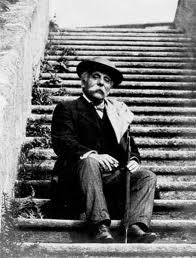
    PHOTOS: Fauré (left) and Massenet en plein air

  • Massenet & Fauré Birthdays Celebrate French Music

    Massenet & Fauré Birthdays Celebrate French Music

    Today is the anniversary of the births of two outstanding French composers: Jules Massenet (1842-1912) and Gabriel Fauré (1845-1924).

    Massenet’s fluency and emotionally direct style made him the most successful French opera composer of his generation. Fauré was the more progressive of the two. He wrote meticulously-crafted music of great nuance, with a harmonic sense that seemed to yearn for the 20th century. As an administrator, he blew the dust off the Paris Conservatory and ushered in an era of unprecedented reform.

    Here are two absorbing interpretations of music by these very different French masters.

    Joan Sutherland sings a selection from Massenet’s medieval romance “Esclarmonde”:

    Germaine Thyssens-Valentin, a Fauré pupil, plays his Nocturne No. 6 in D-flat:

    Joyeux anniversaire, mes amis!


    PHOTOS: Fauré (left) and Massenet en plein air

  • Halloween Night French Music Ravel Debussy Alkan

    Halloween Night French Music Ravel Debussy Alkan

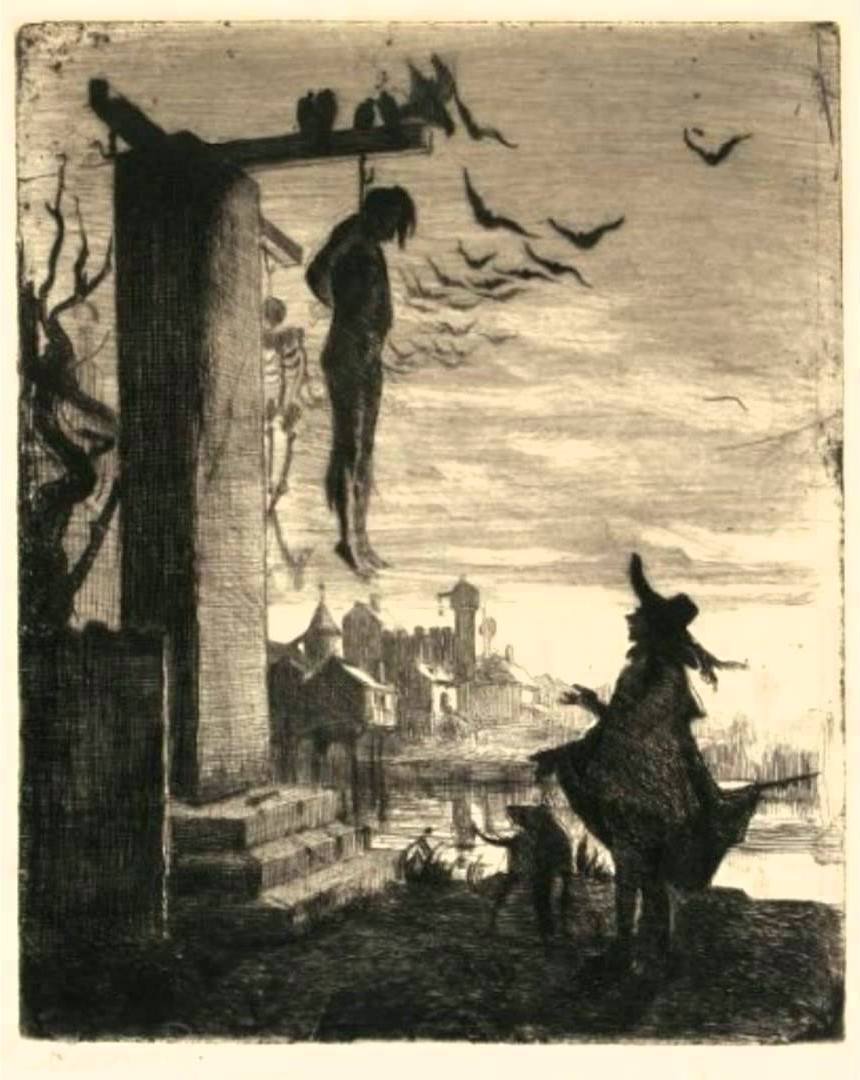
    Ah! ce que j’entends, serait-ce la bise nocturne qui glapit, ou le pendu qui pousse un soupir sur la fourche patibulaire?

    This Sunday night on “The Lost Chord,” we’ll have three works suitable for Halloween, all of them by French composers.

    Sir John Gielgud will join pianist Gina Bachauer for recitations of weird and sinister poems by Aloysius Bertrand, to preface the three movements of Maurice Ravel’s “Gaspard de la Nuit” (Gaspard of the Night).

    Claude Debussy was enthralled by the writings of Edgar Allan Poe, which he knew through translations by Charles Baudelaire. At the time of his death, he left incomplete sketches for two operas after Poe stories – “The Fall of the House of Usher” and “The Devil in the Belfry.” We’ll hear fragments of the former, conducted by Georges Prêtre.

    Finally, we’ll listen to the third of the “Etudes in Minor Keys,” subtitled “Scherzo Diabolico,” by Charles-Valentin Alkan. Alkan, a sometimes neighbor of Chopin and Georges Sand, shared a home with his illegitimate son, two apes and a hundred cockatoos. Franz Liszt is alleged to have commented, “Alkan had the finest technique I had ever known, but preferred the life of a recluse.”

    Best known is the legend surrounding the circumstances of his death: while reaching for a copy of the Talmud, which was positioned on a high shelf, the bookcase let go and crushed Alkan beneath it. It’s been suggested that he really collapsed while in the kitchen, but when the legend becomes fact, print the legend.

    I hope you’ll join me for “Jacques o’ Lanterns” – lurid music by French composers for Halloween – this Sunday night at 10:00 EDT, on WWFM – The Classical Network and wwfm.org.

  • Ravel, Les Six, and Marlboro’s French Trios

    Ravel, Les Six, and Marlboro’s French Trios

    Maurice Ravel’s Piano Trio in A minor had been gestating for at least six years before he finally sat down to write the work over the summer of 1914. At first, progress was slow, but when war was declared in August, Ravel put on a burst of speed to finish the piece so that he could he could do his patriotic duty and enlist in the French army. He was rejected from the infantry and the air force on account of his diminutive size and precarious health, but he learned to drive a truck and cared for the wounded at Verdun on the Western Front.

    We’ll hear Ravel’s Piano Trio on this week’s “Music from Marlboro,” alongside a couple of other trios by composers of the next generation – Francis Poulenc and Darius Milhaud – both of whom had complex reactions to Ravel’s music.

    Poulenc and Milhaud together formed one-third of Les Six, that collective of French composers who rose to prominence in Paris in the late ‘teens and 1920s. Each had his or her own distinctive style – the group’s other members included Arthur Honegger, Georges Auric, Germaine Tailleferre, and Louis Durey – but together they displayed a united front in resistance to the so-called Impressionists (Debussy and Ravel) and most of all Richard Wagner. Any trace of Wagnerian portentousness would be blown out between the tent flaps, as the spirit of the circus, café and cabaret came to dominate a new aesthetic.

    You’ll hear it embodied in Poulenc’s Trio for Oboe, Bassoon and Piano (1926), which begins very somberly indeed, before taking off with irrepressible joie de vivre. The central movement is both elegant and wistful in a manner characteristic of this composer, and the cheeky finale is presented with an ironic smile.

    Interestingly, Milhaud’s Suite for Clarinet, Violin and Piano (1936) revisits material from incidental music he composed for Jean Anouilh’s play “Le Voyageur sans bagages” (“The Traveler without Luggage”), about an amnesiac World War I soldier. The piece falls into four movements: “Ouverture;” “Divertissement;” “Jeu;” and “Introduction et Final.” As the titles suggest, much of the music is sassy and full of play, and it is to be wondered what Ravel, a veteran of the Great War would have thought of it.

    I hope you’ll join me for a trio of French trios, performed by musicians of the legendary Marlboro Music Festival, this Wednesday evening at 6 EDT, on WWFM – The Classical NetworkWWFM The Classical Network and wwfm.org.

    Marlboro School of Music and Festival: Official Page


    PHOTO: Ravel in uniform
  • French Composers Beyond Orchestration

    French Composers Beyond Orchestration

    This Sunday night on “The Lost Chord,” it’s music by French composers better known for their skill as orchestrators of others’ works. We’ll hear original compositions by Henri Rabaud (orchestrator of Gabriel Fauré’s “Dolly Suite”), André Caplet (orchestrator of Claude Debussy’s “Children’s Corner,” “Clair de lune,” “Le Martyre de saint Sébastien,” and “La Boite à joujoux”), Henri Büsser (orchestrator of Debussy’s “Petite Suite” and “Printemps”) and Charles Koechlin (orchestrator of Fauré’s “Pelléas et Mélisande” and Debussy’s “Khamma”).

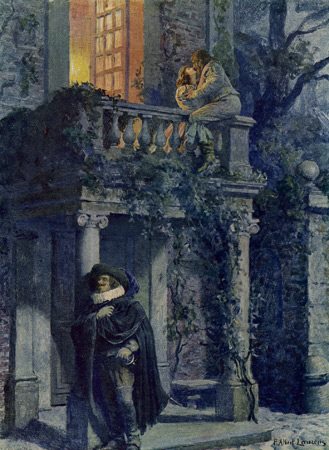
    These musical Cyranos emerge from the shadow of Roxane’s balcony, on “French Connections,” this Sunday night at 10:00 EDT, on WWFM – The Classical Network and wwfm.org.

Tag Cloud

Aaron Copland (92) Beethoven (95) Composer (114) Film Music (120) Film Score (143) Film Scores (255) Halloween (94) John Williams (185) KWAX (229) Leonard Bernstein (100) Marlboro Music Festival (125) Movie Music (135) Opera (198) Philadelphia Orchestra (88) Picture Perfect (174) Princeton Symphony Orchestra (106) Radio (87) Ralph Vaughan Williams (85) Ross Amico (244) Roy's Tie-Dye Sci-Fi Corner (290) The Classical Network (101) The Lost Chord (268) Vaughan Williams (103) WPRB (396) WWFM (881)

DON’T MISS A BEAT

Receive a weekly digest every Sunday at noon by signing up here


RECENT POSTS