Tag: George Szell

  • George Szell Composer Conductor?

    George Szell Composer Conductor?

    Did you know that one of the most revered – and feared – conductors of the 20th century was also a composer? Or at least he was, at one time.

    George Szell, the musical martinet who built the Cleveland Orchestra into one of the world’s finest – even as he drove 40 percent of its musicians to seek psychiatric help, according to clarinetist Murray Khouri, who wasn’t joking – at 11 toured Europe as “the next Mozart.”

    By 17, Szell added conducting to his precocious skills as a pianist-composer and soon determined the latter discipline was where his future lay.

    If his own music reminds you of Richard Strauss, Szell was very much from that world. At 18, Szell was appointed to Berlin’s Royal Court Opera, where Strauss was music director. He quickly earned the older composer’s admiration and friendship. Strauss once said that he could die a happy man knowing that there was someone who could perform his music so perfectly.

    It’s good that he felt that way, because Szell wound up having to conduct the first half of the world premiere recording of Strauss’ “Don Juan,” when the composer overslept. Since a 78-rpm record could only accommodate four minutes of music per side, the session was planned in four parts. Strauss walked in just as Szell was completing the second and thought it so good, he allowed it stand. The complete performance was issued under Strauss’ name.

    Szell credited Strauss as being a major influence on his conducting style. For Strauss’ part, he continued to keep track of his protégé even after Szell settled in the United States.

    By then, for Szell, there would be no more composing. He did, however, keep up with his pianism, which came in handy during rehearsals. Occasionally, he also played and recorded chamber music.

    He brought all his experience to bear on his quest for artistic excellence on the podium. That he was a triple-threat was like gilding the lily for one already as threatening as George Szell.


    One of Szell’s early compositions, “Variations on an Original Theme”

    World premiere recording of “Don Juan” (1917), with Szell and Strauss conducting

    Szell as a Mozart pianist

    Szell’s benchmark modern orchestra Haydn

    While on tour with the Cleveland Orchestra in Tokyo, and with only two months to live (he was terminally ill with cancer), Szell conducted what may very well be the most thrilling performance of Sibelius’ Symphony No. 2 I have ever heard, certainly on a par with the classic Barbirolli account with the Royal Philharmonic Orchestra

    Szell speaks!

    Szell on “The Bell Telephone Hour” on NBC. These days, you won’t even find something like this on PBS.

    Szell rehearses Beethoven

    Szell conducts Beethoven and Bruckner in Vienna

    https://www.youtube.com/watch?v=vuXODojyfME

    Happy birthday, G.S.!
  • Still’s “In Memoriam” & Black Soldiers’ Sacrifice

    Still’s “In Memoriam” & Black Soldiers’ Sacrifice

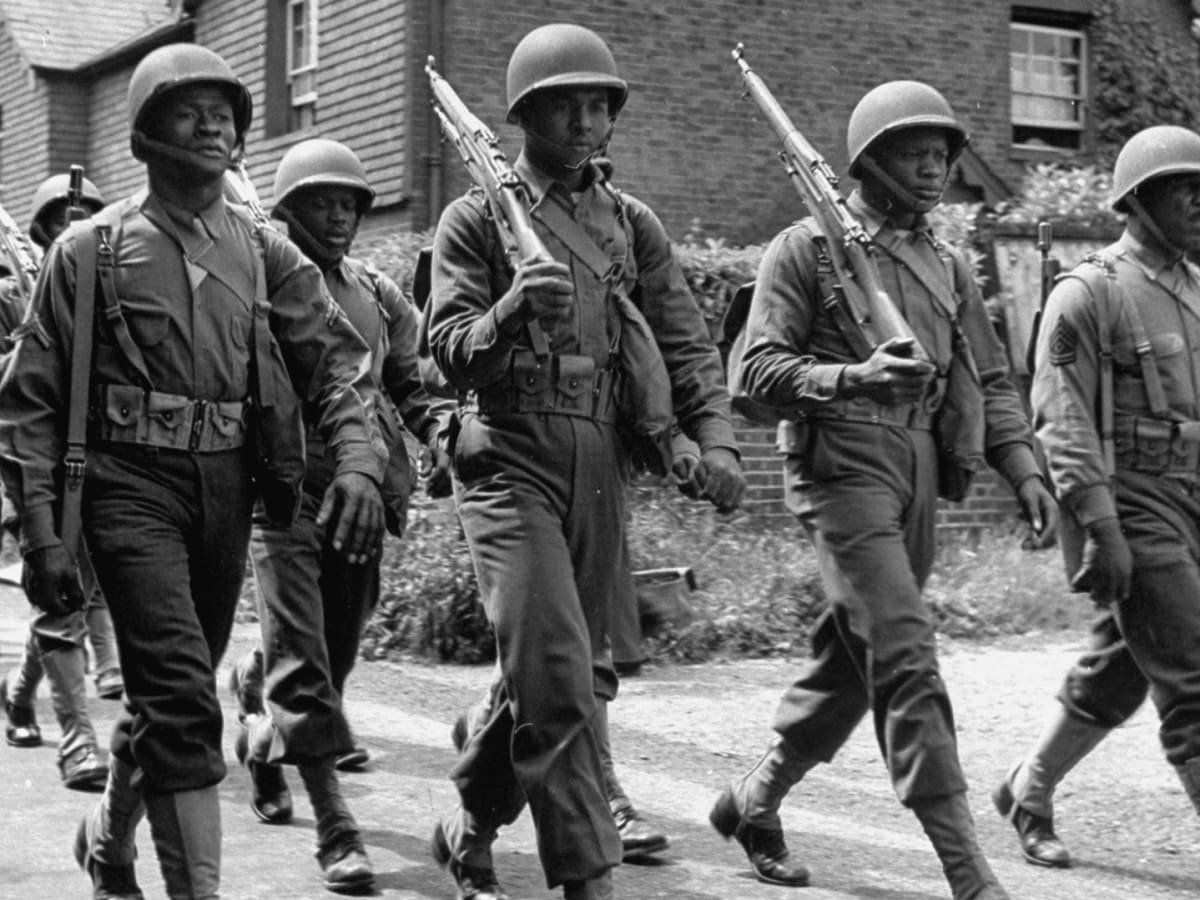
    In common with many American composers, William Grant Still turned to patriotic themes during World War II. Only in his case, there is an added poignancy in his choice of subject matter, “In Memoriam, The Colored Soldiers Who Died for Democracy” (1943), since the black soldiers to whom the work is dedicated not only fought in segregated units, but also experienced inequality at home.

    By nature, Still was not a political person, but because of the simple fact of his skin color, the association of race – of what it meant to live in and serve a country that wasn’t always fair to its minorities – is inescapable. The piece is about democracy and war, but the subtext, whether or not the composer intended it as such, is one of racial inequality, even for those who served with honor and gave everything for this country.

    Still himself served in the U.S. Navy during World War I.

    George Szell and the Cleveland Orchestra perform “In Memoriam, The Colored Soldiers Who Died for Democracy” in Kyiv in 1965:

    Charles Ives was inspired by the Memorial to Colonel Robert Gould Shaw and the 54th Massachusetts Infantry Regiment, one of the earliest African American units in the American Civil War, when he composed “Saint-Gaudens on Boston Common,” the first movement of his “Three Places in New England” (1915). The 54th was also the subject of the film “Glory.”

  • Richard Strauss The Conducting Secrets

    Richard Strauss The Conducting Secrets

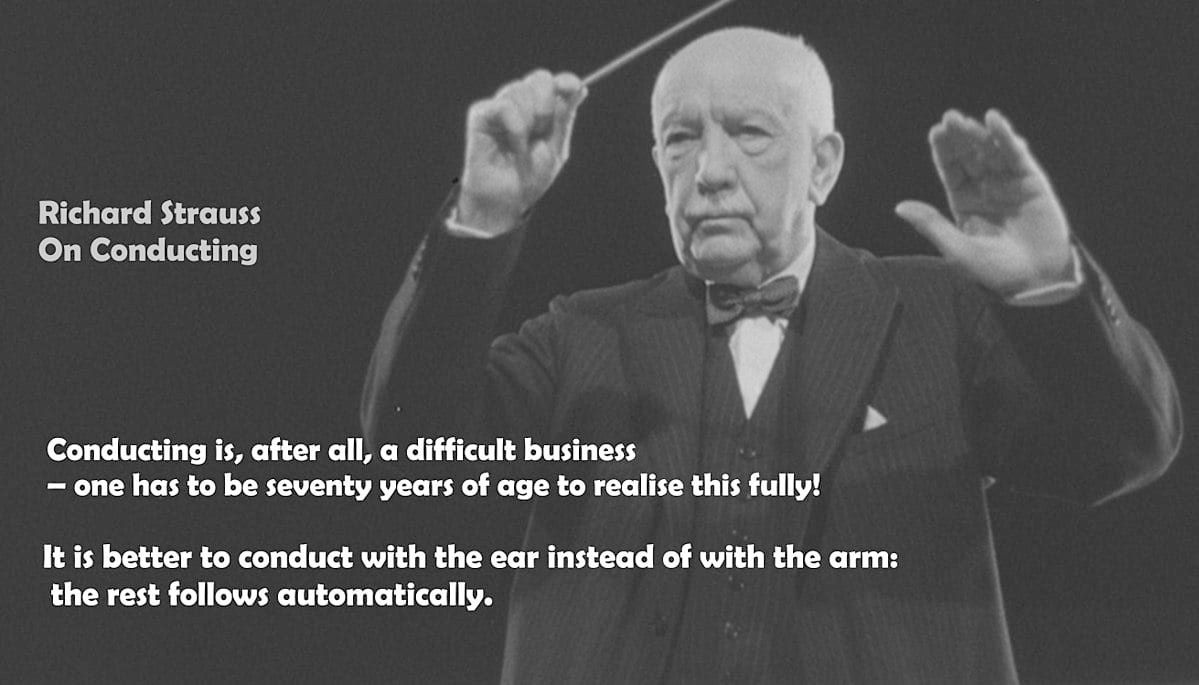
    Richard Strauss will probably always be remembered, first, as the composer of Dionysian tone poems, employing opulent, even hedonistic orchestration, and for the turbulent, angst-ridden operas “Salome” and “Elektra.”

    But when it came to conducting, he took a decidedly Apollonian stance. His technique might best be described as no-nonsense. Some have even remarked on his looking bored. George Szell suggested Strauss often just wanted to get a performance over with, so that he could get out and go to a card game.

    (Szell, by the way, wound up conducting the first half of the premiere recording of Strauss’ “Don Juan” in 1917, on account of the composer oversleeping.)

    Here are Strauss’ “Ten Golden Rules for the Album of a Young Conductor,” set down in 1927:

    1. Remember that you are making music not to amuse yourself, but to delight your audience.

    2. You should not perspire when conducting. Only the audience should get warm.

    3. Conduct “Salome” and “Elektra” as if they were by Mendelssohn: fairy music.

    4. Never look encouragingly at the brass, except with a brief glance to give an important cue.

    5. But never let the horns and woodwinds out of your sight. If you can hear them at all, they are still too strong.

    6. If you think that the brass is now blowing hard enough, tone it down another shade or two.

    7. It is not enough that you yourself should hear every word the soloist sings. You should know it by heart anyway. The audience must be able to follow without effort. If they do not understand the words, they will go to sleep.

    8. Always accompany the singer in such a way that he can sing without effort.

    9. When you think you have reached the limits of prestissimo, double the pace.

    10. If you follow these rules carefully, you will, with your fine gifts and your great accomplishments, always be the darling of your listeners.

    In 1948, Strauss wrote of Number 9, “Today I should like to amend this: take the tempo half as fast.”

    Some of his suggestions may seem as if they’re tongue-in-cheek, but the idea to lighten the textures makes a whole lot of sense when you consider just how overblown these works can be, and how impossible to hear the singers.

    Strauss recorded most of his orchestral works over the last two decades of his life. A few of these were captured on film.

    See for yourself if Strauss follows his own advice, or, if as Szell, suggests, all he’s really thinking about is playing cards.

    “Till Eulenspiegel’s Merry Pranks”:

    With commentary by Szell, his one-time assistant:

    “Allerseelen” (“All Souls’ Day”), with a glimpse of lederhosen!

    Happy birthday, Richard Strauss.

  • George Szell Autocrat Genius Cleveland Orchestra

    George Szell Autocrat Genius Cleveland Orchestra

    All’s Szell that ends well.

    A notorious autocrat from an era when autocrats were tolerated, respected, and even revered on the podium, George Szell was a formidable perfectionist, even to the extent of lecturing the Severance Hall custodians on the proper way to mop a floor and what kind of toilet paper they should be supplying in the restrooms.

    When he took over as music director in Cleveland in 1946, straight off, he fired 12 of the orchestra’s 97 players and signed the rest to short-term contracts. His aim was to rebuild the ensemble into a force to be reckoned with. “A new leaf will be turned over with a bang,” he declared. By the time of his death in 1970, 40 percent of his musicians were seeing psychiatrists.

    Dietrich Fischer-Dieskau noted “his compulsive need to always have an opinion different from others and his considerable paranoia when it came to the orchestra’s ill-will.” Just because you’re paranoid doesn’t mean they don’t hope you fall down the stairs and break your neck.

    He may have been a bit of a martinet and a world-class S.O.B., but Szell’s goal was a lofty one. He whipped Cleveland into one of the country’s top orchestras – which is to say, one of the best in the world. If he expected much of his musicians, he himself never phoned-in a performance. He was always hyper-prepared, and in rehearsals, nothing escaped his notice. It was not unusual for him to take everything apart and rebuild it from the ground up, even at the expense of his musician’s nerves. Sometimes it backfired, and the orchestra was so wrung out, it had nothing left for the actual performance.

    While the uncanny precision of Szell’s Clevelanders was often praised, many of their performances were criticized for a perceived lack of warmth. Certainly, there is enough documentary evidence to prove that on occasion Szell could indeed catch fire and inspire his players. He is much kinder in filmed rehearsals than his reputation would suggest.

    He may have been a little tightly wound, but you can’t quibble with the results. Thank your lucky stars you didn’t have to work for him, but boy, he certainly could conduct!

    Happy birthday, George Szell.


    Szell’s benchmark modern orchestra Haydn:

    While on tour with the Cleveland Orchestra in Tokyo, and with only two months to live (he was terminally ill with cancer), Szell conducted what may very well be the most thrilling performance of Sibelius’ Symphony No. 2 I have ever heard, certainly on a par with the classic Barbirolli account with the Royal Philharmonic Orchestra:

    Szell as a Mozart pianist:

    One of Szell’s own, early compositions, “Variations on an Original Theme”:

    Szell speaks!

    Szell on “The Bell Telephone Hour” on NBC. These days, you won’t even find something like this on PBS.

    Szell rehearses Beethoven

    Szell conducts Beethoven and Bruckner in Vienna

    https://www.youtube.com/watch?v=vuXODojyfME

  • Leon Fleisher: A Legend Remembered

    Leon Fleisher: A Legend Remembered

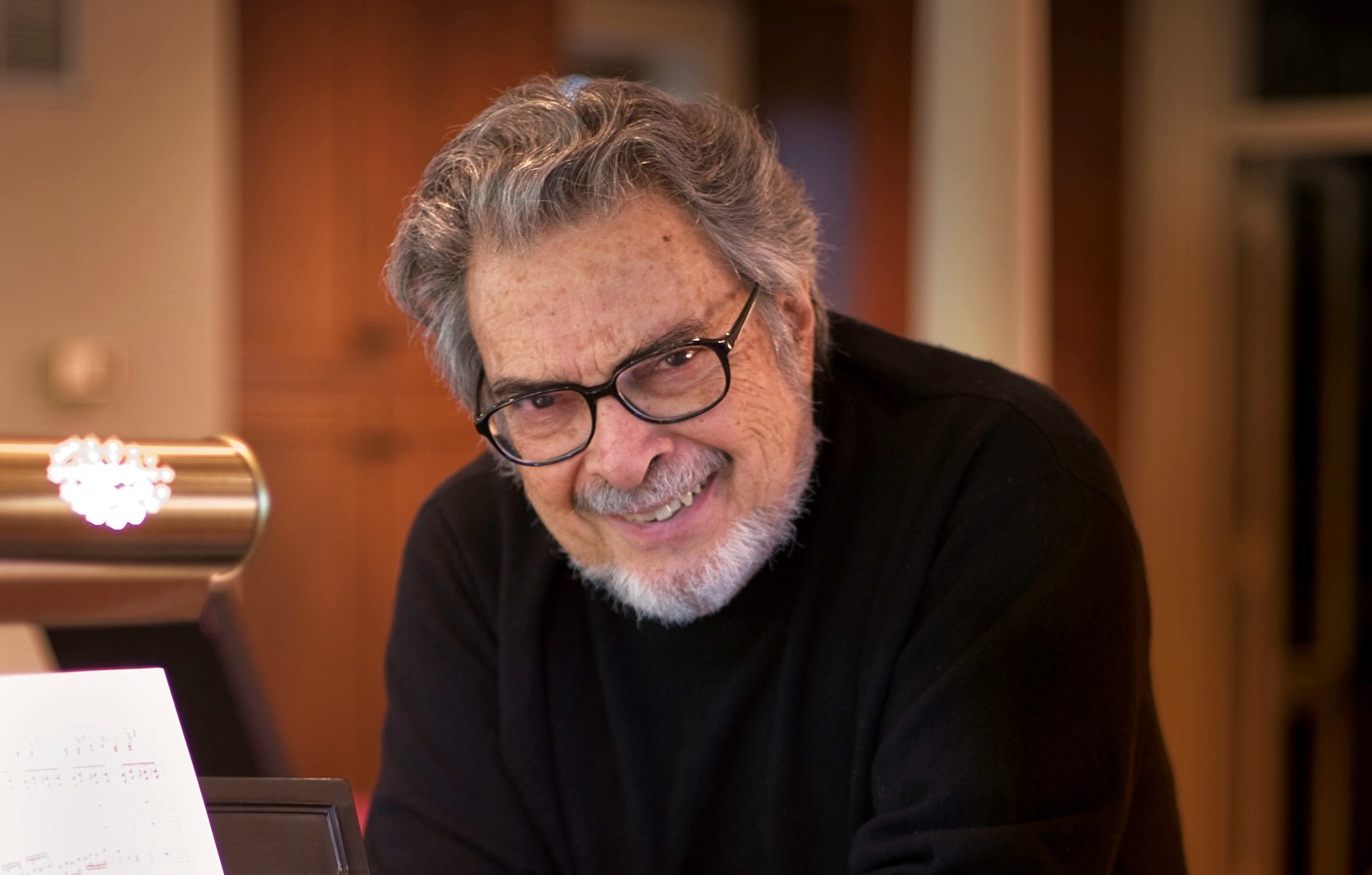
    The word legend gets bandied a lot at times like these, but rarely has it been so completely deserved. Leon Fleisher has died at 92. He leaves us not only as one of the greatest pianists of his time, but also as one of the greatest all-around artists. The man exuded music, and he did so with genuine humility and unusual generosity.

    Fleisher’s career as an interpreter of the standard, two-handed repertoire may have been cut short by focal dystonia at the age of 37 – by the mid-1960s, it had caused two of his fingers on his right hand to curl into his palm – but already he had distinguished himself as a lion of the keyboard. His prowess as a young man is preserved in benchmark recordings of works by Brahms, Beethoven, Rachmaninoff, and others.

    But even with his dexterity diminished, Fleisher’s intelligence remained unimpaired. His recordings of music for the left hand alone, again, are some of the finest in existence. By the late ‘60s, he also turned to conducting – he became associate conductor of the Baltimore Symphony Orchestra and music director in Annapolis – but it was his generous spirit as a teacher that perhaps best reflected the man. Fleisher taught at the Peabody Institute since 1959. He also had ties to the Curtis Institute, the Royal Conservatory of Music in Toronto, and the Tanglewood Music Center, and he oversaw countless master classes.

    He himself had been a pupil of Artur Schnabel, who had been a student of Theodor Leschetizky, who in turn had studied with Carl Czerny, who had learned directly from Beethoven. And Fleisher gave as good as he got. His benign influence sent off tendrils that now circle the globe. In his life’s work, Fleisher realized Schnabel’s maxim, that music came first, piano second.

    As a performer, whenever Fleisher came near a piano in the middle of his career, it was to champion music for the left hand. Fortunately, the repertoire is substantial, and Fleisher added to it, as composers flocked to write new pieces for him.

    Then, three decades after he was forced to give it up, suddenly he resumed performance of the two-handed repertoire, to an extent, thanks to Botox injections. He went on to record several more acclaimed albums, of both left-hand and two-handed works, later in life.

    I had the privilege to hear him perform several times, including at the East Coast premiere of Paul Hindemith’s “Piano Music with Orchestra” at Philadelphia’s Kimmel Center for the Performing Arts. The work was written for Paul Wittgenstein, of Ravel concerto fame, who had lost his right arm during the First World War. Wittgenstein, who had somewhat conservative tastes, never played Hindemith’s concerto publicly, but it remained in his possession and was rediscovered, among his widow’s belongings, in a Pennsylvania farm house only in 2002! Fleisher gave the world premiere of the work, with the Berlin Philharmonic, in 2004.

    Our delayed face-to-face meeting occurred several years after we had chatted by telephone. An earlier attempt had been thwarted by illness, but we finally got to shake hands and say hello following a recital at the Kimmel’s Perleman Theater. For a figure of his stature, you couldn’t have found a humbler, nicer man. At the time of our earlier interview, in 1987, when I called at the appointed hour, Fleisher – the legend – was only just driving home from work at Peabody, and he couldn’t have been more apologetic. The man who had studied with Schnabel, who at 16 was proclaimed by Pierre Monteux “the pianistic find of the century,” the artist who fearlessly collaborated with George Szell in some of the most revered music in the entire repertoire, was sorry to be late for our interview. Clearly, he was a person who put on no airs.

    But judge for yourself. Here’s the raw audio of that interview, which came to pass about a half hour later. The occasion was the release of his new album of left-hand piano works, “All the Things You Are,” on the Bridge Records, Inc., that remains one of the finest of his later years. Keep in mind that the conversation would be edited into sequence for use, with musical interludes, on my Sunday night program, “The Lost Chord.”

    Needless to say, I am very sorry to be cut off by COVID-19 from access to WWFM – The Classical Network’s production studios, or I would re-edit this material for a posthumous tribute.

    Leon Fleisher was one of the most genuine people I ever met, totally without pretense – a great artist, yes, but also a gracious and lovely man.


    Fleisher plays Beethoven with Szell and the Cleveland Orchestra:

    Erich Wolfgang Korngold, “Suite for 2 Violins, Cello, and Piano Left-Hand;” the fourth movement “Lied,” about 25 minutes in, must be one of the loveliest things I’ve ever heard:

    The West Coast premiere of Hindemith’s “Klaviermusik mit Orchester” (for piano left-hand):

    Brahms’ left-hand arrangement of the Bach “Chaconne”:


    PHOTOS (counterclockwise from top): Leon Fleisher; with Artur Schnabel; with George Szell; and with Classic Ross Amico

Tag Cloud

Aaron Copland (92) Beethoven (95) Composer (114) Film Music (120) Film Score (143) Film Scores (255) Halloween (94) John Williams (185) KWAX (229) Leonard Bernstein (100) Marlboro Music Festival (125) Movie Music (135) Opera (198) Philadelphia Orchestra (88) Picture Perfect (174) Princeton Symphony Orchestra (106) Radio (87) Ralph Vaughan Williams (85) Ross Amico (244) Roy's Tie-Dye Sci-Fi Corner (290) The Classical Network (101) The Lost Chord (268) Vaughan Williams (103) WPRB (396) WWFM (881)

DON’T MISS A BEAT

Receive a weekly digest every Sunday at noon by signing up here


RECENT POSTS