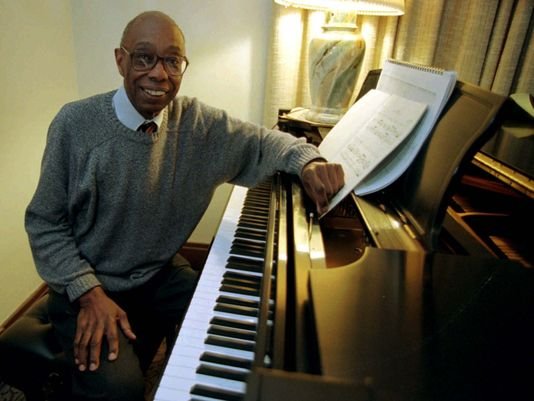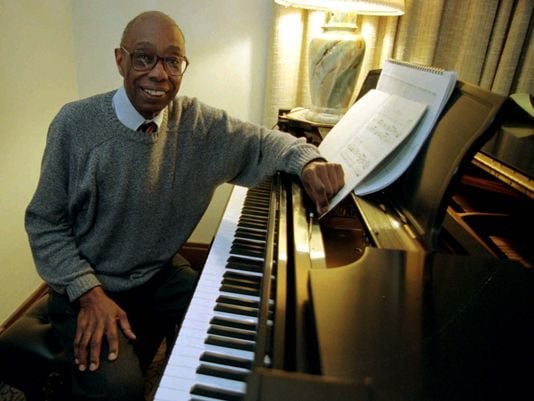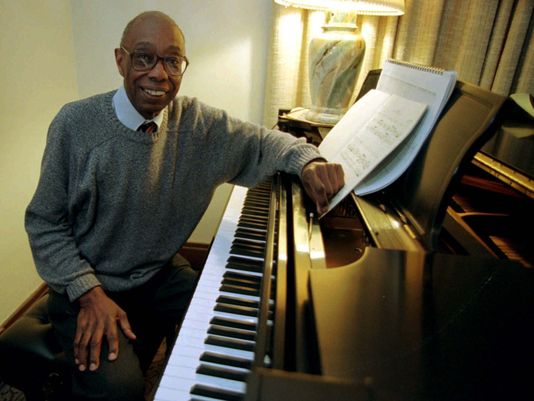
Tag: George Walker

  • Perambulations with Walker on “The Lost Chord”

    Perambulations with Walker on “The Lost Chord”

    It’s crazy that the first time an African American composer would receive the Pulitzer Prize for Music was only in 1996. I remember when it happened. It was a pretty big deal. A special award had been made to Scott Joplin in 1976 – 59 years after Joplin’s death – and there have been some special citations and a number of Black honorees since. In more recent years, it’s not been unusual for composers of all races to be recognized. But it was George Walker who broke the glass ceiling.

    This week on “The Lost Chord,” we’ll celebrate this trailblazing artist with a program of four of his original works, including his Piano Sonata No. 2 (with the composer himself at the keyboard), the award-winning “Lilacs” (after poetry of Walt Whitman), “Address for Orchestra” (his first major orchestral work), and “Lyric for Strings” (his most famous music, in its original version for string quartet).

    By his own assessment, Walker was a composer more interested in building “elegant structures” than in “creating beauty.” Depending on one’s sensibility, it could be argued that he achieved both.

    In an interview given in 2012, he commented, “I’ve always thought in universal terms, not just what is Black or what is American, but simply what has quality.”

    I hope you’ll join me for “Perambulations with Walker” on “The Lost Chord,” now syndication on KWAX Classical Oregon!

    ——–

    Clip and save the start times for all three of my recorded shows:

    PICTURE PERFECT, the movie music show – Friday at 8:00 PM EST/5:00 PM PST

    SWEETNESS AND LIGHT, the light music program – Saturday at 11:00 AM EST/8:00 AM PST

    THE LOST CHORD, unusual and neglected rep – Saturday at 7:00 PM EST/4:00 PM PST

    Stream them, wherever you are, at the link!

    https://kwax.uoregon.edu

    ——–

    A fascinating interview with Walker by Frank J. Oteri, which, among other things, lends an added dimension to Walker’s most frequently performed music (the “Lyric”) and offers insights into his life and musical philosophy. Also, some great photos!

    https://nmbx.newmusicusa.org/george-walker-concise-and-precise/
  • Columbia Records Black Composers Series Rediscovered

    Columbia Records Black Composers Series Rediscovered

    Columbia Records’ Black Composers Series was a bold undertaking in the 1970s, a pioneering effort and an idealistic investment in the future – nine albums of unknown repertoire by minority composers, only several of whom might have been on the very periphery of a few collectors’ consciousness, at best. Even so, it’s rumored that the series was originally intended to run to 20 volumes. We are so lucky to have what we got.

    On some level, it’s hardly surprising that the plug got pulled, back in the day. After all, the series was a bold gamble. (On the other hand, record labels did take more chances then, and it was an accepted fact that classical records needed time to find their audience.) But did it really have to take Sony 40 years to reissue it on compact disc?

    Yet somehow, remarkably, they were still ahead of the curve. Since the seismic social and political shift precipitated by the death of George Floyd, you can’t get through a week without new recordings and live performance of music by Black composers. But in the 1970s, these records were like Holy Grails, and as a collector, in the decades since, my heart would skip a beat if I ever happened across one of the original albums on vinyl.

    I was so juiced at obtaining the entire series on CD that I promptly devoted four weeks of shows to the box set on “The Lost Chord” in 2019. Now, for the first time, the programs are being repeated, to coincide with Black History Month, over the four Saturdays in February. Part II will feature contrasting works by George Walker and José Maurício Nunes Garcia.

    Walker was the first African American recipient of the Pulitzer Prize for Music – as recently as 1996 – for his “Lilacs for Voice and Orchestra.” He was the first Black musician to graduate from the Curtis Institute of Music. He also studied at the Eastman School and was a pupil of Nadia Boulanger. Tune in for Walker’s Trombone Concerto of 1957.

    Then it’s off to South America for Nunes Garcia’s Requiem Mass of 1816. Nunes Garcia was Master of Music of the Royal Chapel in Rio de Janeiro. He composed over four hundred pieces of music, including the first Brazilian opera. The Requiem was written at the request of John VI of Portugal for funeral services for his mother, Maria I.

    I hope you’ll join me for Part II of “Black to the Future” – selections from Columbia Records’ landmark Black Composers Series of the 1970s – on “The Lost Chord,” now in syndication on KWAX, the radio station of the University of Oregon!


    Clip and save the start times for all three of my recorded shows:

    PICTURE PERFECT, the movie music show – Friday at 8:00 PM EST/5:00 PM PST

    SWEETNESS AND LIGHT, the light music program – ALL NEW! – Saturday at 11:00 AM EST/8:00 AM PST

    THE LOST CHORD, unusual and neglected rep – Saturday at 7:00 PM EST/4:00 PM PST

    Stream them, wherever you are, at the link!

    https://kwax.uoregon.edu/

  • George Walker Pulitzer Winner and Pioneer

    George Walker Pulitzer Winner and Pioneer

    It’s crazy that the first time an African-American composer would receive the Pulitzer Prize for Music was only in 1996. I remember when it happened. It was a pretty big deal. A special award had been made to Scott Joplin in 1976 – 59 years after Joplin’s death – and there have been some special citations and a number of Black honorees since. But it was George Walker who broke the glass ceiling.

    It was not the first time he was a “first.” Walker was the first Black pianist to present a solo recital at New York’s Town Hall (in 1945); he was the first Black performer to appear as soloist with the Philadelphia Orchestra (performing Rachmaninoff’s Piano Concerto No. 3); and he was the first Black musician to graduate from the Curtis Institute of Music (where he studied with Rudolf Serkin and Rosario Scalero).

    Walker was born in Washington, D.C., on this date in 1922. His father emigrated from Kingston, Jamaica, to study at Temple University School of Medicine. Walker’s mother supervised his first piano lessons. He was accepted into the Oberlin School of Music at the age of 14. He was then admitted to the Curtis Institute in Philadelphia. Later, he attended the Eastman School. For two years, in common with so many 20th century composer of merit, especially Americans, he studied in Paris with the famed pedagogue Nadia Boulanger.

    Walker’s own academic career included posts with Dillard University in New Orleans, the Dalcroze School of Music, the New School for Social Research, Smith College, the University of Colorado Boulder, Rutgers University (where he served as chairman of the music department), the Peabody Institute of John Hopkins University, and the University of Delaware.

    “Lilacs for Voice and Orchestra” was introduced by soprano Faye Robinson on February 1, 1996, with the Boston Symphony Orchestra conducted by Seiji Ozawa. The 15-minute work is a setting of texts from Walt Whitman’s 1865 Lincoln elegy “When Lilacs Last in the Dooryard Bloom’d.” “Lilacs” was described by the Pulitzer committee as a “passionate, and very American, musical composition with a beautiful and evocative lyrical quality.”

    “Lyric” is a descriptor that followed Walker his entire life, or at least since his music became more widely known. His most popular work is his “Lyric for Strings,” a touching piece for string orchestra. Like the ubiquitous “Adagio” by Samuel Barber (who also attended Curtis), “Lyric” was arranged from the slow movement of a string quartet, in Walker’s case written while he was still a student. Originally, he had titled the piece “Lament.” But comparisons with Barber’s “Adagio” end there. Walker’s work doesn’t strive for profundity or wrench the soul as Barber’s does. But it is moving, all the same, for being so evidently personal, confessional even.

    Walker wrote the piece in 1946, following the death of his grandmother. For anyone who learned about slavery in America from a history textbook, it’s sobering to discover that Melvina King actually lived it. Walker went on to a career studded with impeccably crafted works that brought him many honors and much critical praise. But “Lyric” has the distinction of going straight to the heart.

    A longtime resident of Montclair, NJ, George Walker died in 2018 at the age of 96. I often wonder if he ever got tired of hearing about his resume of firsts. In relation to his skin color, I mean. It was always the first thing you ever read or heard about him (and, alas, this post is no different).

    In an interview given in 2012, Walker commented, “I’ve always thought in universal terms, not just what is Black or what is American, but simply what has quality.”


    Hearing “Lyric for Strings” was once a rare treat. Now, in the past few years, everyone has taken it up. I have no doubt that the work will hold a lasting place in the standard repertoire.

    “Lilacs for Voice and Orchestra”

    Walker plays his Piano Sonata No. 1

    Brief 2012 documentary on Walker, in which he is interviewed, for the occasion of his 90th birthday:

    A fascinating interview conducted by Frank J. Oteri. Also includes some great photos!

    George Walker: Concise and Precise

  • George Walker Pulitzer Winner Centennial

    George Walker Pulitzer Winner Centennial

    The first African American recipient of the Pulitzer Prize for Music was born 100 years ago today.

    George Walker was awarded the prize for “Lilacs for Voice and Orchestra.” “The unanimous choice of the Music Jury, this passionate, and very American, musical composition… has a beautiful and evocative lyrical quality using words of Walt Whitman,” stated the committee. That was as recent as 1996.

    Born in Washington, D.C. in 1922, Walker was a longtime resident of Montclair, NJ. His father emigrated from Kingston, Jamaica, to study at Temple University School of Medicine; Walker’s mother supervised his first piano lessons. He was accepted into the Oberlin School of Music at the age of 14. He was then admitted to the Curtis Institute in Philadelphia, and later attended the Eastman School. For two years, he studied in Paris with Robert Casadesus and Nadia Boulanger.

    Walker’s own academic career included posts with Dillard University in New Orleans, the Dalcroze School of Music, the New School for Social Research, Smith College, the University of Colorado Boulder, Rutgers University (where he served as chairman of the music department), the Peabody Institute of John Hopkins University, and the University of Delaware.

    He was the father of two sons, violinist and composer Gregory T.S. Walker and playwright Ian Walker. His sister was the pianist Frances Walker-Slocum. George Walker died in 2018, at the age of 96.

    As a composer, he produced an impressive body of work, in a career that spanned some 80 years. By his own assessment, as an artist, he was more interested in building “elegant structures” than in “creating beauty.” Depending on one’s sensibility, it could be argued that he achieved both.

    I saw him in person only once, in 2009, when the Philadelphia Orchestra gave the world premiere of his Violin Concerto, with his son, Gregory, as soloist, and Neeme Järvi conducting. On a separate series of concerts that season, the orchestra also performed “Lilacs.”

    However, it is for a piece Walker composed while still a student at Curtis that he is probably best-known. The “Lyric for Strings,” dedicated to the memory of his grandmother, is touching in its simplicity. It deserves to be as widely played as Barber’s “Adagio,” although Walker’s is quite a different piece. The tender recollection manages to be moving without spilling over into anguish.

    I often wonder if Walker ever got tired of hearing about his resume of firsts. In relation to his skin color, I mean. It was always the first thing you ever read or heard about him (and this post is no different). In addition to his landmark Pulitzer win, Walker was the first black pianist to present a solo recital at New York’s Town Hall (in 1945). He was the first black performer to appear as soloist with the Philadelphia Orchestra (playing Rachmaninoff’s Piano Concerto No. 3). He was the first black musician to graduate from the Curtis Institute of Music (where he studied with Rudolf Serkin, Mieczyslaw Horszowski, and Rosario Scalero).

    All important achievements. But he was also so much more than a statistic. In an interview given in 2012, Walker commented, “I’ve always thought in universal terms, not just what is black or what is American, but simply what has quality.”

    Happy birthday, George Walker.


    “Lyric,” in its original version for string quartet:

    “Lilacs,” with Faye Robinson (the movements are posted separately, so allow it to play through)

    Walker plays his Piano Sonata No. 1

    Brief 2012 documentary on Walker, in which he is interviewed, for the occasion of his 90th birthday:

    A fascinating interview conducted by Frank J. Oteri. Also includes some great photos!

    https://nmbx.newmusicusa.org/george-walker-concise-and-precise/?fbclid=IwAR16RYQ-Gjml1pmcnr3sxnRH–d2u51w574R8X9sQx9b_0sAqPzd79E13_4

  • George Walker Pulitzer Winner Remembrance

    George Walker Pulitzer Winner Remembrance

    George Walker would have been 99 years-old today.

    Walker was the first African-American recipient of the Pulitzer Prize for Music – as recently as 1996 – for “Lilacs for Voice and Orchestra.” He was the first black pianist to present a solo recital at New York’s Town Hall (in 1945). He was the first black performer to appear as soloist with the Philadelphia Orchestra (performing Rachmaninoff’s Piano Concerto No. 3). He was the first black musician to graduate from the Curtis Institute of Music (where he studied with Rudolf Serkin and Rosario Scalero).

    Walker died on August 23, 2018, at the age of 96. This Sunday night on “The Lost Chord,” we’ll celebrate this trailblazing artist with a program of four of his original works, including his Piano Sonata No. 2 (with the composer himself at the keyboard), the award-winning “Lilacs” (after poetry of Walt Whitman), “Address for Orchestra” (his first major orchestral work), and “Lyric for Strings” (his most famous music, in its original version for string quartet).

    Born in Washington, D.C., Walker was a longtime resident of Montclair, NJ. His father emigrated from Kingston, Jamaica, to study at Temple University School of Medicine; Walker’s mother supervised his first piano lessons. He was admitted to the Oberlin School of Music at the age of 14. He was then admitted to the Curtis Institute in Philadelphia, and later attended the Eastman School. For two years, he studied in Paris with famed pedagogue Nadia Boulanger.

    Walker’s own academic career included posts with Dillard University in New Orleans, the Dalcroze School of Music, the New School for Social Research, Smith College, the University of Colorado Boulder, Rutgers University (where he served as chairman of the music department), the Peabody Institute of John Hopkins University, and the University of Delaware.

    He was the father of two sons, violinist and composer Gregory T.S. Walker and playwright Ian Walker. His sister was the pianist Frances Walker-Slocum.

    By his own assessment, Walker was a composer more interested in building “elegant structures” than in “creating beauty.” Depending on one’s sensibility, it could be argued that he achieved both.

    I hope you’ll join me in “Perambulating with Walker,” this Sunday night at 10:00 EDT, on WWFM – The Classical Network and wwfm.org.


    A fascinating interview with Walker by Frank J. Oteri, which, among other things, lends an added dimension to Walker’s most frequently performed music (the “Lyric”) and offers insights into his life and musical philosophy. Also, some great photos!

    https://nmbx.newmusicusa.org/george-walker-concise-and-precise/


    Do you enjoy exploring unusual and neglected repertoire like that offered on “The Lost Chord?” Whatever it is you appreciate about WWFM The Classical Network, we hope you will help support it with your contribution today. Make a donation through Wednesday, June 30 (the end of our fiscal year), and help balance our budget, at wwfm.org.

    We couldn’t do it without enthusiastic and committed listeners like you. Thank you for all that you do to keep classical music on the radio!

    https://wwwfm.secureallegiance.com/wwfm/WebModule/Donate.aspx?P=DEFAULT&PAGETYPE=PLG&CHECK=vOU2bz5JCWmgCDbf53nm9ezWDeZ%2beA1M

Tag Cloud

Aaron Copland (92) Beethoven (95) Composer (114) Film Music (119) Film Score (143) Film Scores (255) Halloween (94) John Williams (185) KWAX (229) Leonard Bernstein (99) Marlboro Music Festival (125) Movie Music (134) Opera (198) Philadelphia Orchestra (86) Picture Perfect (174) Princeton Symphony Orchestra (106) Radio (87) Ralph Vaughan Williams (85) Ross Amico (244) Roy's Tie-Dye Sci-Fi Corner (290) The Classical Network (101) The Lost Chord (268) Vaughan Williams (102) WPRB (396) WWFM (881)

DON’T MISS A BEAT

Receive a weekly digest every Sunday at noon by signing up here


RECENT POSTS