This week on “Sweetness and Light,” hie thee to the church on time. it’s an hour of June weddings!
We’ll have a comedy overture, “The Tinker’s Wedding,” by English composer Havergal Brian. Brian attained notoriety for his “Gothic Symphony,” a work so grand it entered the Guinness Book, when it was acknowledged as the world’s largest symphony. He composed 32 symphonies in all, 20 of them after the age of 80!
We’ll also hear a wedding march by Alexander Glazunov, composed to mark his parents’ silver anniversary and a processional by Philadelphia composer Robert Moran, written as a wedding gift for his friend, organist Robert Ridgell (then of Trinity Wall Street).
Camille Saint-Saëns wrote his confectionery, the “Wedding Cake,” a work for piano and orchestra, as a matrimonial offering to former Liszt pupil Caroline de Serres Wieczffinski (née Montigny-Rémaury). Imagine trying to fit that name on an invitation.
Speaking of the piano, anyone who took lessons surely bears the scars of Carl Czerny. But Czerny composed more than just exercises and etudes. We’ll hear his “Fantaisie brillante” on themes from Mozart’s “The Marriage of Figaro.”
We’ll also hear a work by Wolfie’s father, Leopold Mozart, a raucous, descriptive symphony called “The Peasant Wedding.” And a rowdy wedding it is!
Once experienced, there’s no turning back, so we’ll wrap things up with violinist Lara St. John’s polka band, Polkastra, and the “Shotgun Wedding March,” from their album, “I Do.” And I think you’ll agree, Spike Jones would be proud.
Look for me in my squirting boutonniere. Say “I do” to “Sweetness and Light,” this Saturday morning at 11:00 EDT/8:00 PDT, exclusively on KWAX Classical Oregon!
Stream it, wherever you are, at the link:
https://kwax.uoregon.edu/
Tag: Havergal Brian
-
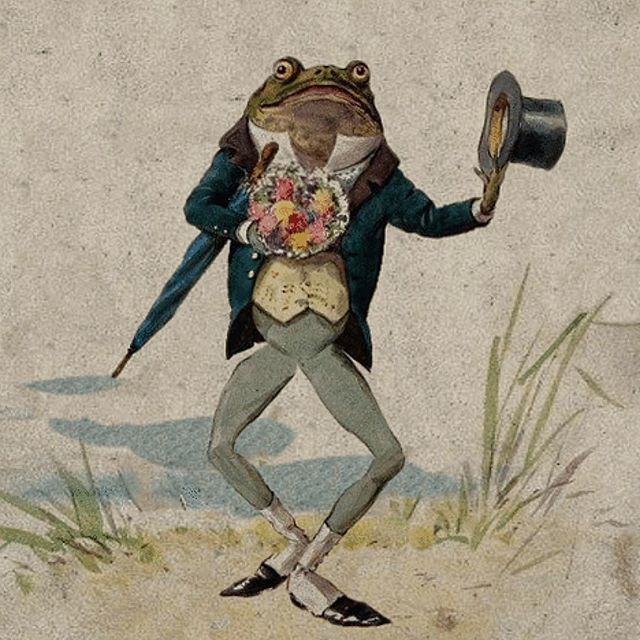
Say I Do to June Weddings on “Sweetness and Light”
-
Life of (Havergal) Brian
According to the Guinness Book of World Records, Havergal Brian’s Symphony No. 1, the “Gothic Symphony,” composed between 1919 and 1927, is the longest symphony ever written.
It’s certainly one of the largest, requiring multiple choirs and orchestras. The work calls for vocal soloists, two double choruses, brass bands, and a much-enlarged symphony orchestra, including 32 woodwinds, 24 brass, two timpani, assorted other percussion (requiring 17 players), celesta, two harps, organ, and a greatly expanded string section. In addition, two horns, two trumpets, two tubas, and one set of timpani combine in each of the four brass bands – a total of nearly 200 players. And that’s before factoring in the singers!
The composer had to paste multiple sheets together in the writing of the piece in order to accommodate its titanic demands. Brian dedicated the work to Richard Strauss, who declared it magnificent.
A contemporary of Ralph Vaughan Williams and Gustav Holst, Brian dropped out of school at the age of 12 and went to work in a coal mine. He also worked for timber firms and as a carpenter’s apprentice, the whole while nursing a secret desire to write music.
Though attracting early admiration from the likes of Sir Edward Elgar, Sir Thomas Beecham, and Sir Donald Francis Tovey, Brian was destined always to be a cult figure. But there were and are enough people out there who believe strongly enough in his music that most of his major works have been recorded.
Among them are 32 symphonies – 20 of them composed after the age of 80 and the last at the age of 93. Brian died in 1972, the result of a fall, two months shy of his 97th birthday.
The “Gothic” falls into two parts, subdivided into three movements each. Part One was inspired by Goethe’s “Faust,” and Part Two is a gargantuan setting of the “Te Deum” – combined they present a symphonic vision of the Gothic Age, a period of incalculable expansion in human knowledge. The music in Part Two is essentially modeled on Gothic architecture. It’s literally Brian’s conception of a cathedral in sound.
Have a couple of hours to spare? Check out Havergal Brian’s “Gothic Symphony,” on this, the 150th anniversary of the composer’s birth.——–
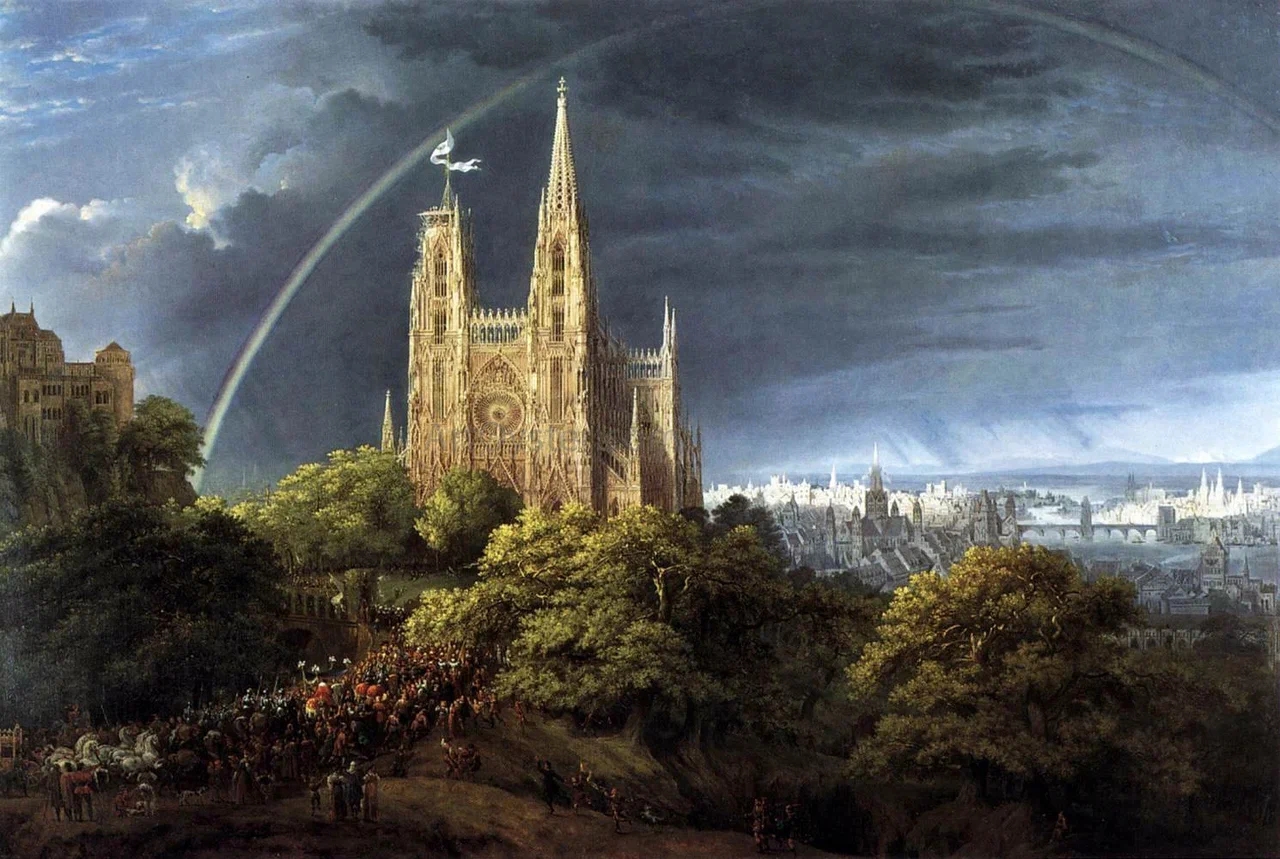
IMAGE: “Medieval City on a River” (1815), by Karl Friedrich Schinkel -

Phil Lesh’s Classical Music Legacy
I received a text from a friend the other day, alerting me that Phil Lesh had died. While I probably couldn’t name a single Grateful Dead song, Lesh has always had my greatest respect. How many Deadheads are aware, I wonder, of his many philanthropic efforts on behalf of neglected, struggling, or simply unloved classical music composers? He had a soft spot, especially, for contemporary English music.
What’s perhaps not commonly known is that he and future bandmate Tom Constanten studied at Mills College with Luciano Berio. One of his classmates happened to be my friend and frequent Mahler concert companion, Philadelphia composer Robert Moran. Another was Steve Reich.
I can’t speak for the dead, but we the living should be grateful for Lesh’s efforts on behalf of contemporary classical music.
Here are a few links to works and/or recordings he subsidized through the Dead’s Rex Foundation:
Havergal Brian, “Gothic Symphony,” recording paid for by Lesh, who also produced several others of the composer’s music. Its success brought a commitment from the Marco Polo label to document the rest of Brian’s unrecorded symphonies. He wrote 32 of them in all, twenty of them between the ages of 83 and 92!
Robert Simpson talks about his Symphony No. 9, commissioned by Lesh. The entire work spans some 50 minutes, and the sections are all posted (separately, alas) on YouTube.
Individual movements compiled into a playlist here:
For a time, a bootleg of Harrison Birtwistle’s “Earth Dances” was Lesh’s workout tape. He funded the music’s first commercial recording, employing these same forces.
Bernard Stevens was long gone by the time Lesh discovered his Symphony No. 2. Again, he paid for the recording.
You can learn more about his munificence in this article from 1991 in the Los Angeles Times:
If the article is paywalled, you’ll find much the same content here:
Rest easy, kindred spirit.
-

James Loughran Dies: Champion of Havergal Brian
The Scottish conductor James Loughran has died. Although perhaps not so well known in the United States, Loughran made some fine recordings, including a fondly-remembered cycle of Brahms symphonies. But for fans of the cult composer Havergal Brian, he will forever have their gratitude for having conducted the first commercial recording of any of Brian’s music.
Loughran’s recording of Brian’s Symphony No. 10, with the Leicestershire Schools Symphony Orchestra, was released in 1973, paired with the composer’s Symphony No. 21, conducted by Eric Pinkett, on a Unicorn-Kanchana LP.
Learn more about Havergal Brian in this televised documentary segment, broadcast when the composer was 96 years-old, including footage of Loughran conducting during the recording session. Also, Brian himself speaks!
https://www.youtube.com/watch?v=41ZFu-MKTRQ
Brian was a composer of almost superhuman tenacity. Despite encouragement from Sir Edward Elgar and early performances by Sir Granville Bantock and Sir Thomas Beecham, hardly any of his music was ever played. Yet he went right on composing for decades.
By coincidence, today marks the anniversary of the first performance of Brian’s most notorious work, his Symphony No. 1, the “Gothic” Symphony, a work of elephantine scale, so long and so large that it was enshrined in the Guinness Book of World Records. The work received its belated premiere – four decades after it was written – on this date in 1961.
The interest generated by the work spurred a belated reassessment of Brian’s output, with the BBC committed to performing all of Brian’s symphonies. There are 32 of them in all, 20 of them composed after the age of 80. Talk about faith in one’s own ability!
Although in the last year of Brian’s life he was named Composer of the Year by the Composers Guild of Great Britain, recognition came too late for him to see any of his symphonies issued commercially prior to his death in 1972, two months shy of his 97th birthday.
Brian, a contemporary of Vaughan Williams and Gustav Holst, emerged from a Midlands working-class background. He left school at the age of 12 and supported himself as a coal miner, a worker for timber firms, and a carpenter’s apprentice – all the while mastering his craft as a composer – until the modest patronage of a wealthy Staffordshire businessman lessened his burden. However, with the outbreak of war in Europe and turbulence in his personal life, the arrangement was not to last, and Brian struggled to keep his head above water. He took menial jobs as he continued to compose, through decades of obscurity and borderline poverty.
It was BBC producer and symphonist Robert Simpson who arranged for a performance of Brian’s Symphony No. 8 in 1954, at which point Brian was already 78 years-old. It was the first time the composer had ever heard one of his symphonies. Simpson continued to use his influence to secure performances of Brian’s music, mostly as radio broadcasts.
This commenced the final chapter of the composer’s most remarkable life as, in his early 80s, he doubled-down and tapped into a well of creative energy that blossomed into an astonishing Indian summer that yielded twenty more symphonies.
The insane demands of the “Gothic,” with its orchestra of 200 players, even before factoring in 500 singers and four brass bands, makes Mahler’s so-called “Symphony of a Thousand” seem like chamber music.
The work falls into two parts. Part I is inspired by Goethe’s “Faust,” and Part II is a gargantuan setting of the “Te Deum.” If ever there was a cathedral in sound, this work would be it. Eat your heart out, Anton Bruckner.
Loughran began his career in the early 1960s, when he worked alongside chief conductor Constantin Silvestri with the Bournemouth Symphony Orchestra. He took up his own music directorships, or the equivalent, when he moved on to the BBC Scottish Symphony Orchestra (1965-71) and then Hallé Orchestra (1971-83).
It was after an acclaimed performance of “Aida” at Covent Garden that Benjamin Britten invited him to assume the music directorship of the English Opera Group.
Loughran became the first British conductor to be appointed chief of a German orchestra, when he was appointed principal conductor of the Bamberg Symphony Orchestra (1979-83).
Between 1977 and 1985, he conducted the Last Night at the Proms five times. He was also principal guest conductor of the BBC National Orchestra of Wales from 1987 to 1990.
He made his American debut with the New York Philharmonic in 1972.
Loughran died on Wednesday, eleven days shy of his 93rd birthday. R.I.P.
Brian, “Gothic Symphony”
Loughran conducts Brian’s Symphony No. 10
Loughran conducts Brahms’ Piano Concerto No. 2, with Garrick Ohlsson the soloist, at Royal Albert Hall in 1978
Loughran conducts Sir Arthur Sullivan, Sir William Walton, and Benjamin Britten
-

Havergal Brian’s Gothic Symphony A Colossal Masterpiece
According to the Guinness Book of World Records, Havergal Brian’s Symphony No. 1, the “Gothic Symphony,” composed between 1919 and 1927, is the longest symphony ever written.
It’s certainly one of the largest, requiring multiple choirs and orchestras. The work calls for vocal soloists, two double choruses, brass bands, and a much-enlarged symphony orchestra, including 32 woodwinds, 24 brass, two timpani, assorted other percussion (requiring 17 players), celesta, two harps, organ, and a greatly expanded string section. In addition, two horns, two trumpets, two tubas, and one set of timpani combine in each of the four brass bands – a total of nearly 200 players. And that’s before factoring in the singers!
The composer had to paste multiple sheets together in the writing of the piece in order to accommodate its titanic demands. Brian dedicated the work to Richard Strauss, who declared it magnificent.
We’ll get to sample but a fraction of it this week, on “The Lost Chord.”
A contemporary of Ralph Vaughan Williams and Gustav Holst, Brian dropped out of school at the age of 12 and went to work in a coal mine. He also worked for timber firms and as a carpenter’s apprentice, the whole while nursing a secret desire to write music.
Though attracting early admiration from the likes of Sir Edward Elgar, Sir Thomas Beecham, and Sir Donald Francis Tovey, Brian was destined always to be a cult figure. But there were and are enough people out there that believe strongly enough in his music, that most of his major works have been recorded.
Among them are 32 symphonies – 20 of them composed after the age of 80 and the last at the age of 93. Brian died in 1972, the result of a fall, two months shy of his 97th birthday.
The “Gothic” falls into two parts, subdivided into three movements each. Part One was inspired by Goethe’s “Faust,” and Part Two is a gargantuan setting of the “Te Deum” – combined they present a symphonic vision of the Gothic Age, a period of incalculable expansion in human knowledge. The music in Part Two is essentially modeled on Gothic architecture. It’s literally Brian’s conception of a cathedral in sound.
Clearly, this is one musical edifice that’s too big for an hour, so well cut to the chase and grapple with the last 40 minutes. As a curtain raiser, we’ll enjoy Brian’s comedy overture “The Tinker’s Wedding,” composed in 1948, at the age of 72.
Of course, there will be plenty of biographical information along the way. I hope you’ll join me for “Life of Brian,” now in syndication on KWAX, the radio station of the University of Oregon.
Keep in mind that KWAX is on the West Coast, so there’s a three-hour time difference (conversion included in parentheses) – actually rather convenient for those of us located in the vicinity of the show’s erstwhile home at WWFM.
THE LOST CHORD – Saturdays on KWAX at 4:00 PACIFIC TIME (7:00 PM EDT)
And don’t forget my movie music show, PICTURE PERFECT, now on Fridays on KWAX at 5:00 PACIFIC TIME (8:00 PM EDT)!
Tag Cloud
Aaron Copland (93) Beethoven (95) Composer (114) Film Music (144) Film Score (143) Film Scores (255) Halloween (94) John Williams (195) KWAX (229) Leonard Bernstein (104) Marlboro Music Festival (125) Movie Music (159) Mozart (90) Opera (212) Philadelphia Orchestra (89) Picture Perfect (174) Princeton Symphony Orchestra (109) Radio (88) Ross Amico (244) Roy's Tie-Dye Sci-Fi Corner (290) The Classical Network (101) The Lost Chord (269) Vaughan Williams (105) WPRB (397) WWFM (881)