Tag: Haydn

  • Haydn Strauss Brahms on WWFM Today

    Haydn Strauss Brahms on WWFM Today

    I don’t what it is, but for some reason I’ve really been on a Haydn kick recently. How fortuitous, then, that a Haydn string quartet would be at the heart of today’s Noontime Concert.

    Members of the Manhattan Chamber Players will perform music for various combinations of strings by Richard Strauss, Haydn, and Brahms.

    We’ll hear the Sextet from Strauss’ final opera, “Capriccio” (1942). The extended movement is not an arrangement, by rather an intimate introduction to an opera which poses the question: which is the greater art, poetry or music? In the opera, the composer Flamand rehearses his new composition at the chateau of Countess Madeleine, who is divided in her affections between Flamand and his rival, the poet Olivier.

    Haydn’s String Quartet No. 19 in C minor, Op. 17, No. 4 (c. 1770), mingles agitation with pathos. You can feel the composer teetering into his “sturm und drang” phase.

    On the other hand, Brahms’ String Quintet No. 1 in F Major, Op. 88 (1882), couldn’t be more different. Brahms doubles the violas for the piece, which he described to Clara Schumann as “one of my finest works.” He also intimated to his publisher, Simrock, “You have never heard such a beautiful work from me.” This was no idle boast. The work is occasionally referred to as the “Spring” Quintet. Brahms completed the piece at a spa in Upper Austria, and the work exudes warmth, contentment, and even joy.

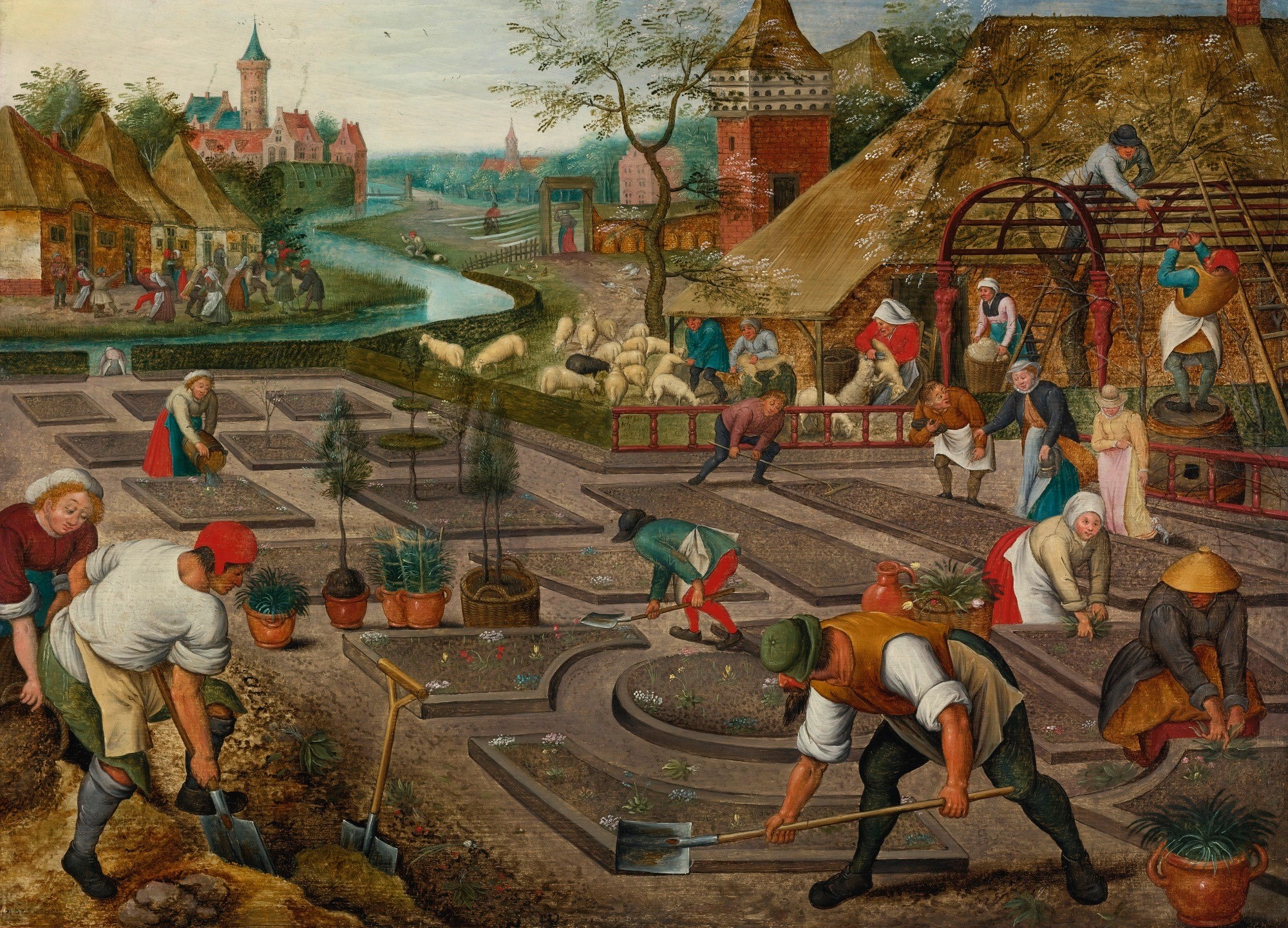
    Then stick around – I will further indulge my Haydn fancy with his magnificent oratorio, “The Seasons,” in advance of the composer’s birthday, which is coming up this Saturday. This is music that truly never goes out of season.

    Strings are the thing on today’s Noontime Concert, and then soloists and chorus sing the praises of spring, courtesy of Haydn, from 12 to 4 p.m. EDT, on WWFM – The Classical Network and wwfm.org.
  • Haydn to Rochberg: Marlboro’s Musical Journey

    Haydn to Rochberg: Marlboro’s Musical Journey

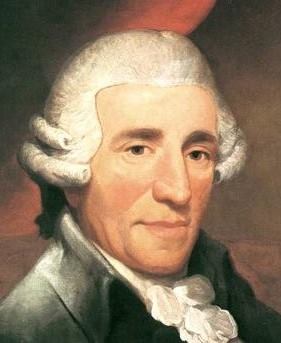
    Where has this music been Haydn?

    Discover music of George Rochberg on this week’s “Music from Marlboro.”

    Rochberg, born in Paterson, NJ, in 1918, studied at the Mannes College of Music and the Curtis Institute in Philadelphia. He later served as chairman of the music department at the University of Pennsylvania.

    His big claim to fame – or, in some circles, notoriety – is that he was one of the first composers to emerge from the predominant serialism of the 1960s to embrace a new tonality, a shift brought on, it is said, by the untimely death of his son. Rochberg found his particular brand of expressionism inadequate to convey his strong emotional upheaval. The inclusion of tonal passages in his works acted as a balm, even as it lit a slow fuse that would blow wide open the future for up-and-coming composers. He is often credited with having ushered in the Age of Pluralism. Now a composer can write any way he or she wants and still be taken seriously. It’s easy to forget that that was not always the case.

    Rochberg’s desire to communicate must have been a latent one, since his Trio for Clarinet, Horn, and Piano, from 1947 (predating his “twelve tone” period), is direct and, in its second movement adagio, introspective and full of feeling. We’ll hear it performed at the 2007 Marlboro Music Festival by clarinetist Charles Neidich, hornist José Vicente Castelló, and pianist Igor Levit.

    The trio will be bookended by two works associated with Franz Joseph Haydn – the String Quartet in B flat major, Op. 33, No. 4, by turns puckish and transporting, and Johannes Brahms’ “Variations on a Theme of Haydn.”

    Who cares that the theme that inspired Brahms to write his variations isn’t by Haydn at all? The “Saint Anthony Chorale” that forms the basis of the slow movement of Haydn’s Divertimento No. 1 in B flat major, Hob. II: 46, is a preexisting melody. In fact, the composer of the divertimento itself has been disputed. None of that really matters in music this well-crafted, especially when performed at the 1976 Marlboro Music Festival by pianists Stephanie Brown and Cynthia Raim.

    Haydn’s Op. 33, No. 4, will open the hour. We’ll hear it played in 1990 by violinists Chee-Yun Kim and Felix Galimir, violist Caroline Levine, and cellist Jean-Guihen Queyras.

    Listen in, as Rochberg emerges from Haydn, on this week’s “Music from Marlboro,” Wednesday evening at 6:00 EST, on WWFM – The Classical Network and wwfm.org.
    Marlboro School of Music and Festival: Official Page

  • Handel The Greatest Composer Ever?

    Handel The Greatest Composer Ever?

    Beethoven is remembered to have praised Handel on numerous occasions. “Handel is the greatest composer who ever lived,” he said. “I would uncover my head and kneel down on his tomb.” On his deathbed, he indicated an edition of Handel’s works and said, “There is the truth.”

    Upon hearing the “Hallelujah Chorus,” Haydn wept and declared, “He is the master of us all.”

    Mozart said, “He understands effect better than any of us – when he chooses, he strikes like a thunderbolt.”

    Berlioz? Berlioz called him “a tub of pork and beer.” Knowing what I do of Handel, he probably would have enjoyed that best of all.

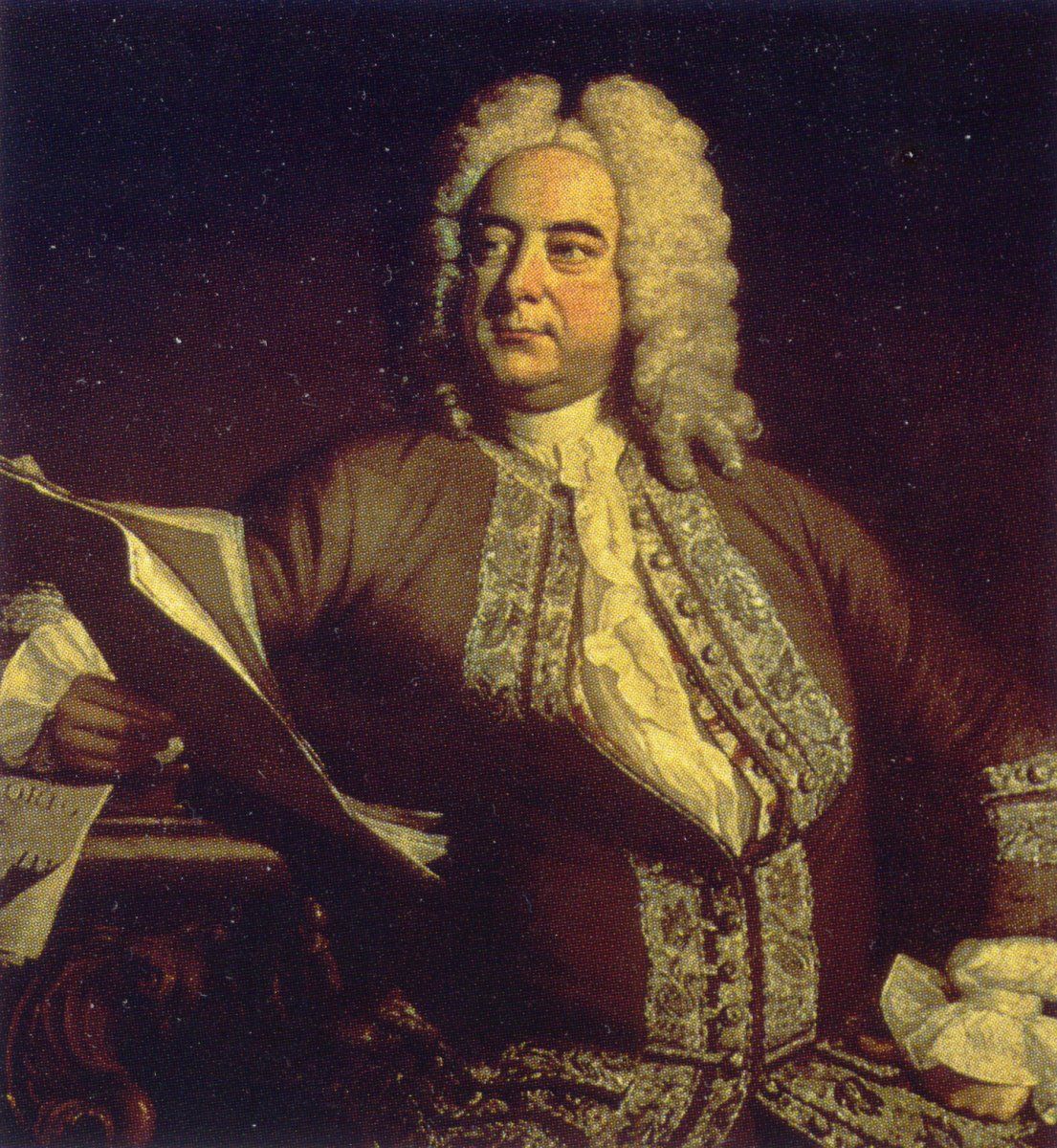
    Happy birthday, George Frideric Handel (1685-1759).


    “Ariodante” was the opera I hated most when I first heard it in 1990. Now I hold it dear. Funny how things change.

    “Scherza infida”

    “Dopo notte”

  • Haydn and Ravel at Kaufman Music Center

    Haydn and Ravel at Kaufman Music Center

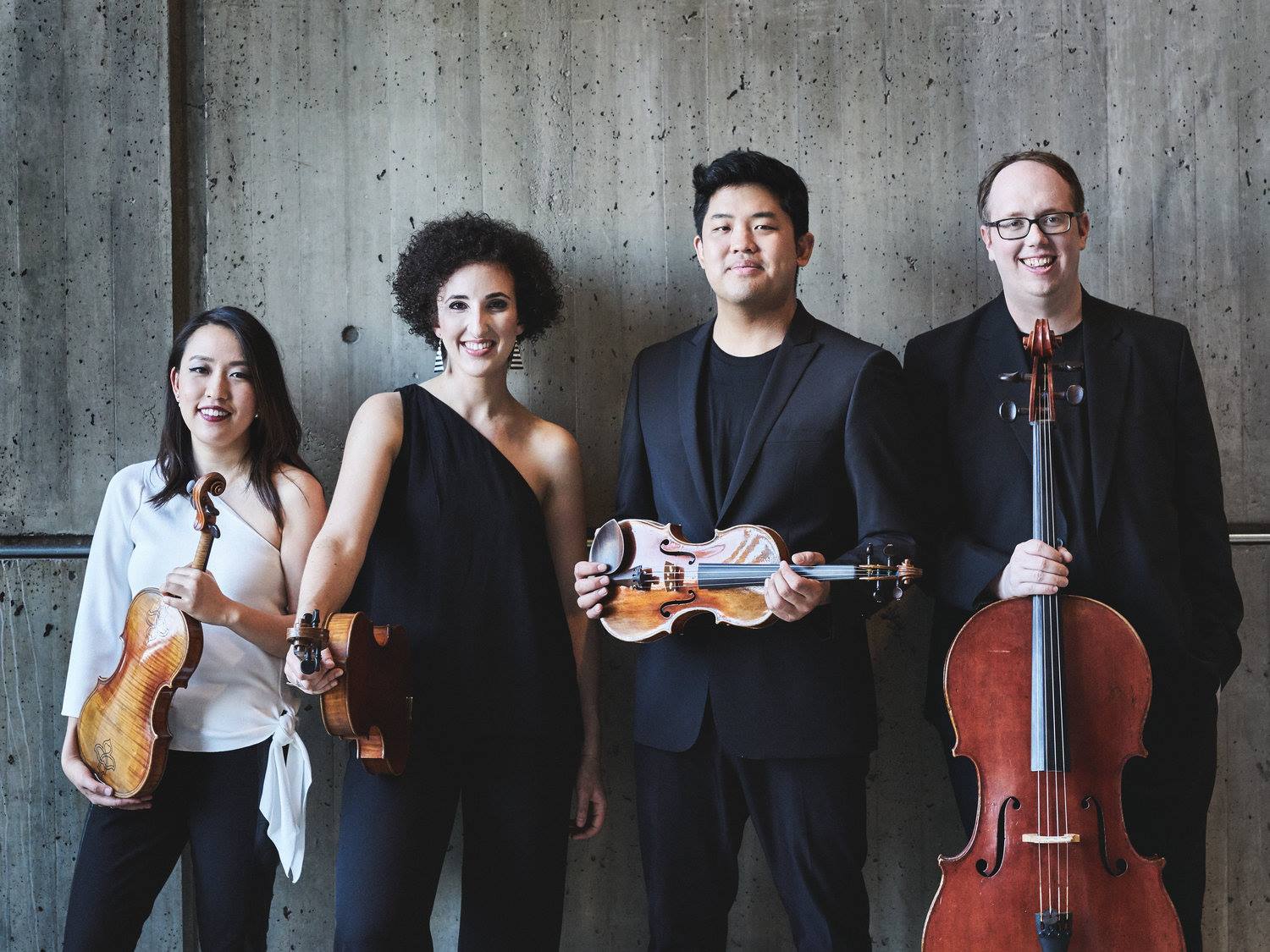
    There will be no hiding from Haydn, and we’ll revel in Ravel, on today’s Noontime Concert on The Classical Network, as we bring you another program from Merkin Concert Hall at Kaufman Music Center. The award-winning Verona Quartet will perform Franz Joseph Haydn’s String Quartet in B-flat major, Op. 50, No. 1 “Prussian” (1787) and Maurice Ravel’s String Quartet in F major (1903).

    Kaufman Music Center is located at 129 West 67th Street in New York City. The center is home to Merkin Concert Hall, as well as Lucy Moses School, a community arts school for all ages, and Special Music School, a K-12 public school for musically gifted children. Merkin’s Tuesday Matinee series presents rising stars from all over the world, which have won some the most prestigious international prizes and have delighted audiences on the stages of major concert halls both here and abroad.

    The next program in the series will feature pianist Xuesha Hu. She will perform Beethoven’s “Appassionata” Sonata, Samuel Barber’s Sonata in E minor, Mendelssohn’s “Scottish Fantasy,” and Liszt’s “Dante” Sonata. The concert will take place on February 6 at 2 p.m. You’ll find more information, including a complete schedule, at kaufmanmusiccenter.org.

    Following today’s concert broadcast, I hope you’ll stick around for music by the late Finnish master Einojuhani Rautavaara, among my featured composers, between 12 and 4 p.m., on WWFM – The Classical Network and wwfm.org.
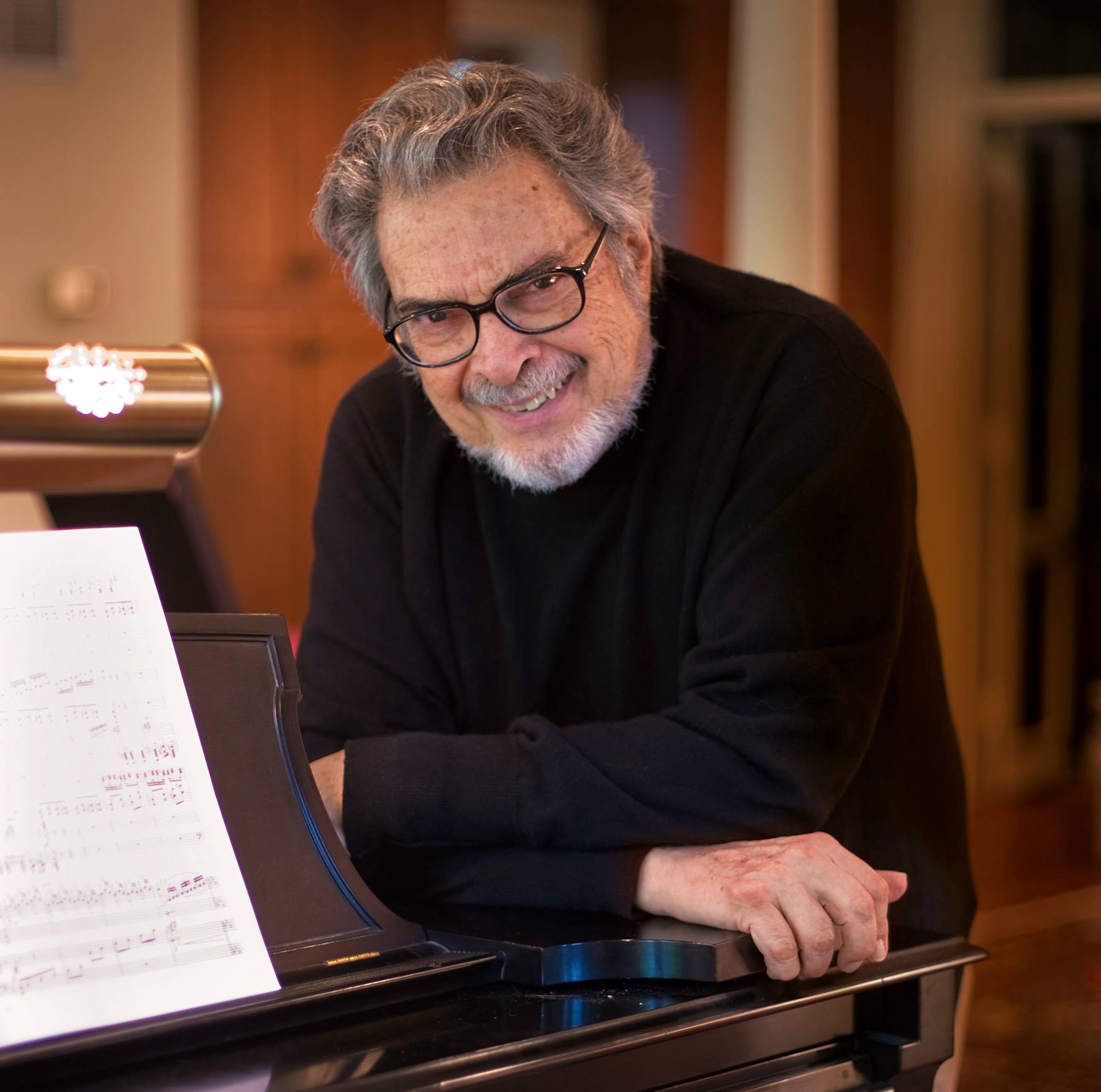

    PHOTO: Two gentlemen – and ladies – of Verona

  • Mozart’s Jupiter Symphony: Marlboro Festival

    Mozart’s Jupiter Symphony: Marlboro Festival

    With the new year bearing down upon us, I can think of nothing more appropriate – indeed more necessary – than the energetic striving and eternal optimism of the finale of Mozart’s last symphony, the Symphony No. 41, subtitled the “Jupiter.”

    Incredibly, Mozart composed the “Jupiter” along with the Symphonies Nos. 39 and 40 in a burst of sustained inspiration over the summer of 1788. Though he had nothing to do with the work’s lofty moniker, it is the composer’s longest symphony, and quite possibly his greatest.

    Mozart’s magnum opus will be the main attraction on this week’s “Music from Marlboro.” The Marlboro Music Festival, of course, is renowned primarily as a retreat for some of the world’s most revered artists and promising young talent, who come together each summer to explore works from the vast chamber music repertoire. Every once in a while, though, many of the musicians assemble to perform an enduring orchestral masterpiece.

    Leon Fleisher, himself a pianist and beloved teacher, was forced to diversify with the onset of focal dystonia, a chronic neurological condition that impaired the mobility of his right hand. He continues to achieve much – even to the point of reclaiming in recent years some of his former, two-handed piano repertoire. He will take up the baton, at the age of 87, to lead Mozart’s “Jupiter” in an inspirational performance from the 2015 Marlboro Music Festival.

    The program will open with several part-songs, composed around 1801, by Mozart’s friend and sometimes mentor Franz Joseph Haydn.

    “Alles hat seine Zeit” (Everything has its time) sets a text by Johann Arnold Ebert:

    Live, love, drink, clamor,
    Circle with me,
    Enthuse with me when I enthuse,
    I am wise with you.

    Haydn’s setting of “Die Harmonie in der Ehe” (Harmony in Marriage), on a text of Johann Nikolaus Götz, includes an ironic discord on the word “harmony,” perhaps reflective of his own problematic union:

    Oh, wondrous harmony, what he likes, she likes too,
    He likes to drink, she too, he likes cards, she too,
    He likes to fill his purse and to act like a great man. This is also her custom.
    Oh, wondrous harmony.

    Finally, “Abendlied zu Gott” (Evening Song to God), sets a text by Christian Fürchtegott Gellert:

    Lord, You who have given me life
    Up until this very day,
    Child-like, I pray to You.
    I am much too unworthy of the faithfulness that I sing of,
    And that You grant me today.

    The performances, from the 1976 Marlboro Music Festival, will feature soprano Claudia Visca, mezzo-soprano Constance Fee, tenor Michael Sylvester, bass John Paul White, and pianist Luis Batlle.

    Haydn and Mozart give us the strength to endure on this week’s “Music from Marlboro,” this Wednesday evening at 6:00 EST, on WWFM – The Classical Network and wwfm.org.

    Marlboro School of Music and Festival: Official Page

Tag Cloud

Aaron Copland (92) Beethoven (95) Composer (114) Film Music (120) Film Score (143) Film Scores (255) Halloween (94) John Williams (185) KWAX (229) Leonard Bernstein (100) Marlboro Music Festival (125) Movie Music (135) Opera (198) Philadelphia Orchestra (88) Picture Perfect (174) Princeton Symphony Orchestra (106) Radio (87) Ralph Vaughan Williams (85) Ross Amico (244) Roy's Tie-Dye Sci-Fi Corner (290) The Classical Network (101) The Lost Chord (268) Vaughan Williams (103) WPRB (396) WWFM (881)

DON’T MISS A BEAT

Receive a weekly digest every Sunday at noon by signing up here


RECENT POSTS