
On the air right now: some well-seasoned music by Franz Joseph Haydn. Until 4 p.m. EST, it’s a complete performance of his oratorio “The Seasons.” If you hurry, you might be able to catch a hit of spring! Haydn is a man for all seasons, on WWFM – The Classical Network and wwfm.org.
Tag: Haydn
-
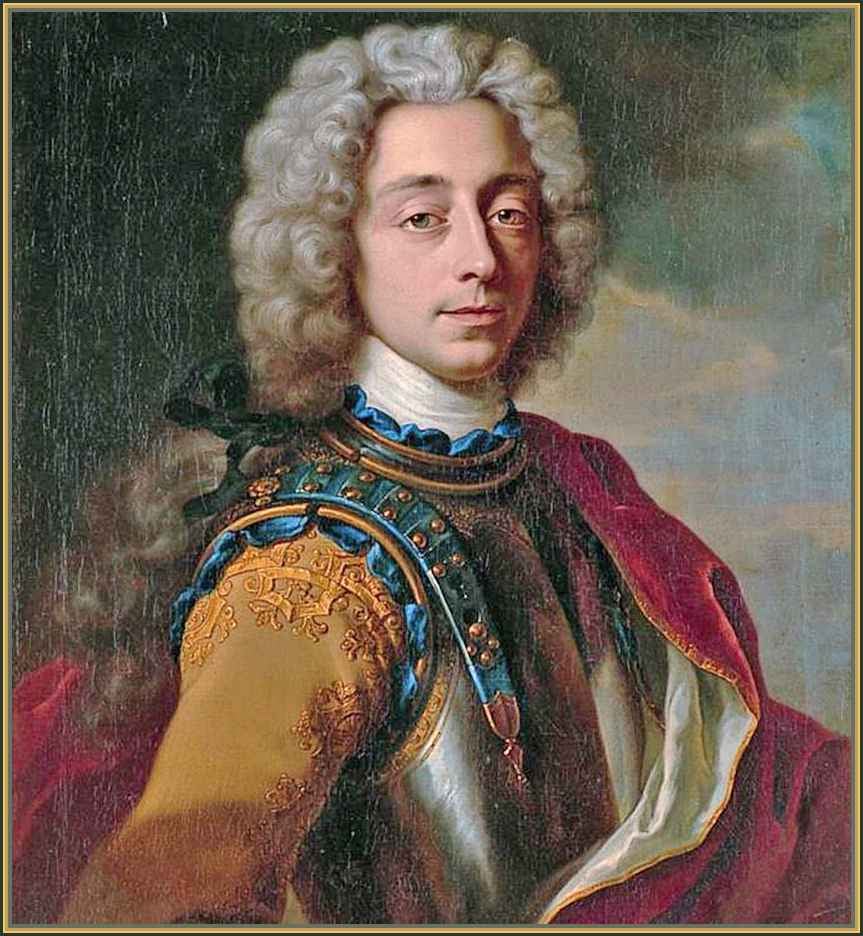
Wassenaer vs Dittersdorf Name Game
Today’s Birthday Challenge:
Whose name is more fun to say, Unico Wilhelm van Wassenaer or Carl Ditters von Dittersdorf?
Wassenaer (1692-1766), the Dutch nobleman who composed his six “Concerti Armonici” on a whim, refused to have them published, until a couple of his friends twisted his arm. Wassenaer would condone it, barely, but only if his name was in no way connected with the material. Instead, the concertos would be attributed to violinist Carlo Ricciotti, who played in their first private performance, and dedicated to Wassenaer’s friend, Count Willem Bentick. A rumor circulated that the collection was actually the work of Giovanni Pergolesi, which is why, in 1920, a movement of the Concerto Armonico No. 2 wound up being used in Stravinsky’s ballet “Pulcinella” (allegedly on Pergolesi themes).
Here’s how it sounds in the original:
“…[T]hese concertos were published against my wishes,” Wassenaer wrote. “Some of them are tolerable, some middling, others wretched. Had they not been published, I would perhaps have corrected the mistakes in them, but other business has left me no leisure to amuse myself with them, and I would have caused their editor offence.”
Dittersdorf (1739-1799) was one of the closest friends of Franz Joseph Haydn.
He played first violin in a superstar string quartet that also included Haydn (second violin), Mozart (viola) and Dittersdorf pupil Jan Křtitel Vaňhal – a.k.a. Johann Baptist Wanhal (cello). Imagine being a fly on a wall at those performances, or even rehearsals! (Though wet blanket Michael Kelly, the Irish tenor who created Don Basilio and Don Curzio in Mozart’s “The Marriage of Figaro,” claimed the ensemble played well enough, but was nothing exceptional.)
Among Dittersdorf’s enormous output, which includes some 120 numbered symphonies (it’s possible he may have composed 90 more), are twelve programmatic works inspired by Ovid’s “Metamorphoses.”
Personally, I find more enjoyment in his chamber music. Here is his String Quartet No. 3 in G major.
I’d never actually juxtaposed them before today, but of the two composers’ names, I’d have to say, it just tickles me to say “Carl Ditters von Dittersdorf.” How’s about you?
Happy birthday, boys!
PICTURED: Supercilious Wassenaer (left) and super-silly Dittersdorf
-
Haydn, Rochberg & Marlboro’s Musical Rebellion
On this week’s “Music from Marlboro,” you may be good at Haydn, but there’s no escaping the Roch. And I don’t mean Alcatraz.
George Rochberg’s big claim to fame – or, in some circles, notoriety – is that he was one of the first composers to emerge from the predominant serialism of the 1960s to embrace a new tonality, a shift brought on, it is said, by the untimely death of his son.
Rochberg found the brand of expressionism he had been exploring at mid-career inadequate to convey the strong emotional upheaval he felt. The reintroduction of tonal passages into his works acted as a kind of balm, even as it lit a slow fuse that would blow wide open the future for up-and-coming composers. At the time, this would have been viewed by some as a criminal offense.
Rochberg is often credited with having ushered in the Age of Pluralism. Now a composer can write any way he or she wants and still be taken seriously. It’s easy to forget that that was not always the case.
Rochberg’s desire to communicate must have been a latent one, since his Trio for Clarinet, Horn, and Piano, from 1947 (predating his “twelve tone” period), is direct and, in its second movement adagio, introspective and full of feeling. We’ll hear it performed at the 2007 Marlboro Music Festival by clarinetist Charles Neidich, hornist José Vicente Castelló, and pianist Igor Levit.
The trio will be bookended by two works associated with Franz Joseph Haydn – the String Quartet in B flat major, Op. 33, No. 4, by turns puckish and transporting, and Johannes Brahms’ “Variations on a Theme of Haydn.”
Who cares that the theme that inspired Brahms to write his variations isn’t by Haydn at all? The “Saint Anthony Chorale” that forms the basis of the slow movement of Haydn’s Divertimento No. 1 in B flat major, Hob. II: 46, is a preexisting melody. In fact, the composer of the divertimento itself has been disputed. A clear case of forgery?
A lenient judge would understand that none of that really matters in music this well-crafted, especially when performed at the 1976 Marlboro Music Festival by pianists Stephanie Brown and Cynthia Raim.
Haydn’s Op. 33, No. 4, will open the hour. We’ll hear it played by a band on the run, from 1990, made up of violinists Chee-Yun Kim and Felix Galimir, violist Caroline Levine, and cellist Jean-Guihen Queyras.
Haydn and Rochberg get busted on this week’s “Music from Marlboro,” Wednesday evening at 6:00 EDT, on WWFM – The Classical Network and wwfm.org.
Marlboro School of Music and Festival: Official Page
-
Haydn & Heiden at Marlboro
Stereophonic homophones dominate this week’s “Music from Marlboro.” Worlds collide through the juxtaposition of music by Haydn and Heiden.
Franz Joseph Haydn, of course, requires little introduction. For a quarter century, he was music director at the remote estate of Esterháza, where he essentially created the modern symphony and legitimized the string quartet. He established the piano trio as an accepted combination and standardized sonata form. His music was written for the delectation of Prince Nikolaus Esterházy and his associates. Even so, by the time of his death in 1809, at the age of 77, he had become one of the most celebrated composers in Europe.
Bernhard HEIDEN was a Hindemith pupil, who fled fascism in Germany to settle in the American Midwest. There, he conducted the Detroit Chamber Orchestra and taught at the Art Center Music School. Later, he joined the faculty of the Indiana University School of Music. To him, it was more important to reach performers than an audience, for the practical reason that audiences change and performers need to believe in the music in order to be able to sell it. He composed prolifically right up until his death in 2000 at the age of 89.
On this evening’s program, we’ll hear a serenade and two divertimentos (“divertimenti” for those who prefer the Italian). What’s the difference? There’s a lot of blurring of boundaries between these 18th century categories – divertimento, serenade, cassation, notturno. Basically it’s all entertainment music, at least as it was originally intended. No weighty arguments, profound introspection, or showy virtuosity of the type one might expect from a symphony, concerto, or string quartet.
The cassation was often a piece designed for outdoor performance, a loosey-goosey assemblage of undemanding, blissfully short movements one might listen to while eating cucumber sandwiches or admiring a sculpted hedge.
The interchangeability of the terms led Haydn to give his Divertmento in F the alternate title of “Cassation.” What’s in a name? We’ll hear it performed at the 1981 Marlboro Music Festival by violinists Lucy Chapman (Stoltzman) and Carmit Zori, violists Thomas Turner and Toby Hoffman, cellist Gary Hoffman, double bassist Carolyn Davis, oboists Elaine Douvas and John Ferrillo, hornists Robin Graham and Stewart Rose, and bassoonist Stefanie Przybylska.
A serenade, too, was originally a light, tuneful diversion, often intended as “occasional” music (that is to say, music written for a specific occasion) or in someone’s honor. I guess somebody forgot to tell Heiden. Though his style is generally identified as neoclassical, it is neoclassicism in the mold of Hindemith. The structure is there, but I can’t say that his serenade of 1955 is all that buoyant, and the tunes are secondary. It does score points, however, for its unusual instrumentation.
It was performed at the 1984 Marlboro Music Festival by bassoonist Nancy Goeres, violinist Saschko Gawriloff, violist Ah Ling Neu, and cellist Grace Bahng.
We’ll round out the hour with a refreshing after dinner mint in the form of the Divertimento in F Major (K. 213) by Wolfgang Amadeus Mozart. It was performed at Marlboro in 1990 by oboists Rudolf Vrbsky and Alex Klein, bassoonists Clelia Goldings and Matthew Carr, and hornists Christine Chapman and Chris Komer.
Forget your cares! Join me for an hour of diverting music on the next “Music from Marlboro,” this Wednesday evening at 6:00 EST, on WWFM – The Classical Network and wwfm.org.
Marlboro School of Music and Festival: Official Page
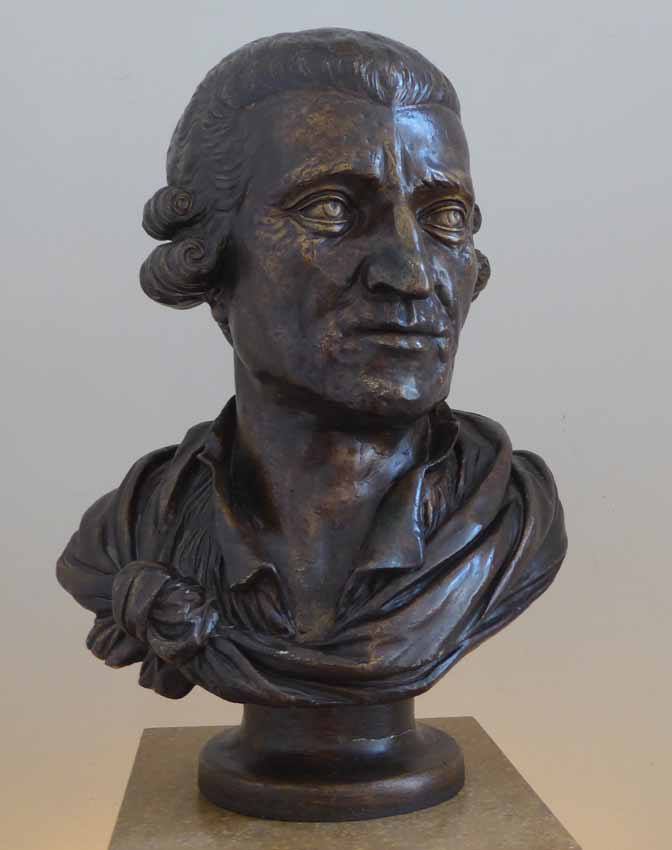
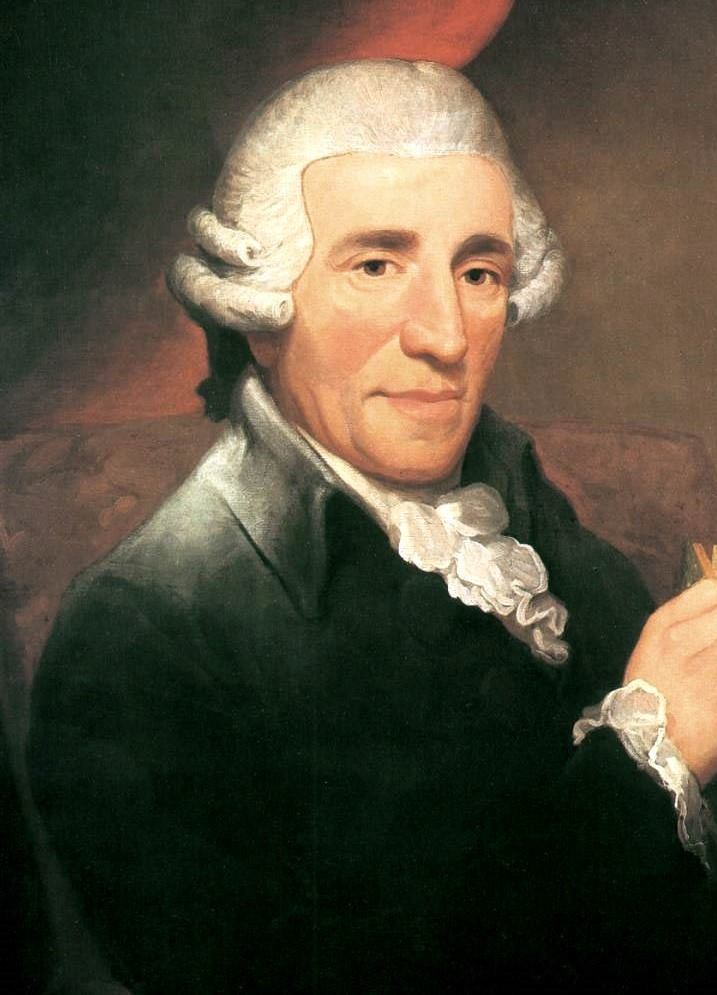
DUELING PORTRAITS: Haydn & Heiden
-
Happy Birthday Haydn Classical Music Legend
Happy birthday, Papa Haydn. Father of the Classical Symphony. Father of the String Quartet. You set the standards against which all subsequent composers have had to measure.
Two years ago, our colleagues across the pond, Classic FM, commissioned one of its hapless employees to rank Haydn’s 104 numbered symphonies. Of course, this involved actually having to listen to them. Here are the assessments of his overworked ears:
http://www.classicfm.com/composers/haydn/guides/definitive-ranking-haydn-symphonies/
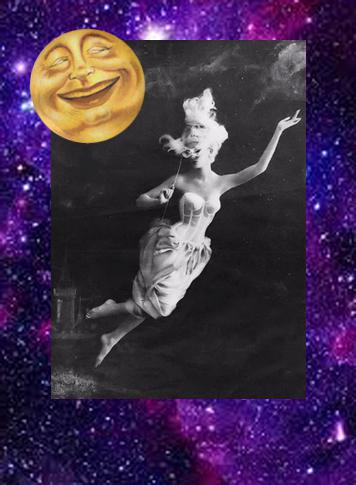
Closer to home, tomorrow afternoon on The Classical Network, as a convenient antidote to everyone’s anxiety about falling space junk, Michael Kownacky will present Haydn’s comic opera “Il mondo della luna” (“The World on the Moon”), on this week’s “Sunday Opera.” Based on the play by Carlo Goldoni, the scenario pits the clever Ecclitico against the foolish Buonafede. Ecclitico wins both love and fortune, the results of a ruse involving an alleged trip to the moon. (It will be April Fool’s Day, after all.)
The 1993 recording features Luigi Alva, Domenico Trimarchi, Edith Mathis, Arlene Auger, Frederica von Stade, and Anthony Rolfe Johnson. Listen in, this Sunday at 3 p.m. EDT, on WWFM – The Classical Network and wwfm.org.
Thank you, Haydn, for your unflagging invention and reliable good humor. Even during Holy Week, your music lifts my spirits.
Composite artwork to promote tomorrow’s broadcast of “Il mondo della luna” courtesy of Michael Kownacky
Tag Cloud
Aaron Copland (93) Beethoven (95) Composer (114) Film Music (145) Film Score (143) Film Scores (255) Halloween (94) John Williams (195) KWAX (229) Leonard Bernstein (104) Marlboro Music Festival (125) Movie Music (160) Mozart (91) Opera (213) Philadelphia Orchestra (89) Picture Perfect (174) Princeton Symphony Orchestra (109) Radio (88) Ross Amico (244) Roy's Tie-Dye Sci-Fi Corner (290) The Classical Network (101) The Lost Chord (269) Vaughan Williams (105) WPRB (397) WWFM (881)