Tag: Hollywood Golden Age

  • Korngold Errol Flynn and Hollywood’s Golden Age

    Korngold Errol Flynn and Hollywood’s Golden Age

    With the necessary emphasis on fundraising this week, I happened to miss the birthday anniversary of one of my favorite composers. Erich Wolfgang Korngold was born on May 29, 1897. Thanks to a steady diet of Errol Flynn films, his music will forever be a part of the soundtrack of my life.

    Korngold went from being one of Europe’s great musical prodigies, his works admired by Mahler, Strauss and Puccini – and championed by Schnabel, Weingartner and Klemperer – to becoming one of Hollywood’s transformative film composers. He is a link from Old World opulence to New World fantasy, his music gracing a number of Warner Brothers’ classic historical adventures.

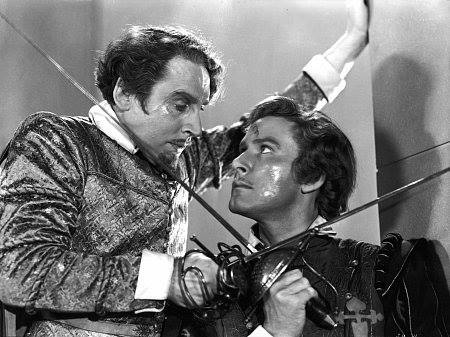
    The best ones starred Flynn, and we’ll hear music from “The Sea Hawk” (1940) and “The Adventures of Robin Hood” (1938), as well as the mostly forgotten “Another Dawn” (1937). Flynn stars alongside Kay Francis and Ian Hunter (who would go on to play Richard the Lionheart in “Robin Hood”) in this love triangle involving pilots in a British desert colony.

    The film may be an obscurity to all save classic movie buffs, but Korngold thought enough of his music that he salvaged the main title as the opening theme to his Violin Concerto, premiered by Heifetz in 1947.

    It was an invitation from theatrical impresario Max Reinhardt that brought Korngold to Hollywood in the first place, for a cinematic adaptation of “A Midsummer Night’s Dream” (1935). The film stars James Cagney, Dick Powell and Olivia de Havilland, in her big screen debut, with Mickey Rooney an irrepressible Puck.

    For the project, Korngold adapted the famous incidental music of Felix Mendelssohn, interweaving material from Mendelssohn’s symphonies and orchestrating some of the “Songs without Words.” Even so, the music bears the composer’s unmistakable stamp, as you’ll hear in the opening number, lifted from the “Scottish Symphony,” which is marked by plenty of Korngoldian swagger.

    Set sail with Erich Wolfgang Korngold this week, on “Picture Perfect,” music for the movies. Enjoy it this Friday evening at 6:00 EDT, immediately following today’s classical music countdown. Please sustain our programming on WWFM – The Classical Network by calling 1-888-232-1212 or making your contribution at wwfm.org. Thank you for your continued support!


    PHOTO: The music was actually on my “personal favorites” playlist – Henry Daniell and Errol Flynn in “The Sea Hawk”

  • Hollywood’s Golden Age Remembered on WPRB

    Hollywood’s Golden Age Remembered on WPRB

    What the hell happened to Hollywood? As those of us who remember “the way it used to be” brace ourselves for another year of insipid red carpet banter, I thought we’d take a look back, this Sunday morning on WPRB, and revisit a lost era of glamour and dreams by way of recordings of music from Hollywood’s Golden Age.

    Join me for highlights from a concert originally broadcast on CBS Television back in 1963. The program, “Music from Hollywood,” was made up of classic film scores mostly conducted by the composers themselves at the Hollywood Bowl. These included “How the West Was Won” (Alfred Newman), “Laura” (David Raksin), “Cleopatra” (Alex North), “Raintree County” (Johnny Green), “A Place in the Sun” (Franz Waxman), “North by Northwest” (Bernard Herrmann), “High Noon” (Dimitri Tiomkin), and “Ben-Hur” (Miklos Rozsa). You couldn’t find that much compositional talent in Hollywood now if you tried.

    We’ll also hear a rare 1938 recording of selections from Erich Wolfgang Korngold’s Academy Award winning music from “The Adventures of Robin Hood,” with Sir Guy of Gisborne himself, Basil Rathbone, the narrator, and Korngold conducting.

    And Sir Thomas Beecham will take the podium for award-winning music by Brian Easdale written for the unnerving Powell-Pressburger classic, “The Red Shoes.”

    Get ready to steel yourself for the Oscars with relics of bygone quality, this Sunday morning from 7 to 11 EST, on WPRB 103.3 FM and wprb.com. At what point did they call “class dismissed,” wonders Classic Ross Amico?

  • Bernard Herrmann Greatest Film Composer?

    Bernard Herrmann Greatest Film Composer?

    Is Bernard Herrmann the greatest film composer who ever lived?

    I can’t think of a single other composer who had a more assured sense of precisely what sound would perfectly complement a specific onscreen image. Most scores by film composers of Hollywood’s Golden Age were melody driven, and while Herrmann certainly could write a heart-rending melody with the best of them, he seemed to be more interested in timbre. What sounds could he create, no matter how outlandish, that would best convey the experience of fighting a giant crab?

    Only Herrmann would resolve to score a film like “The Day the Earth Stood Still” using two theremins, two Hammond organs, a large studio electric organ, three vibraphones, two glockenspiels, marimba, tam-tam, two bass drums, three sets of timpani, two pianos, celesta, two harps, electric strings and brass. On paper and in execution, it was the height of lunacy. Yet all at once, the theremin became shorthand for 1950s science fiction.

    Despite his stand-apart genius, Herrmann was honored with only a single Academy Award, in 1941 – the same year he followed Orson Welles to Hollywood to write the music for “Citizen Kane” – for “The Devil and Daniel Webster” (also known as “All That Money Can Buy”). He was nominated for his work on “Kane,” and then late in life for the music he wrote for Brian De Palma’s “Obsession” and Martin Scorsese’s “Taxi Driver” (both 1976). He died in his sleep only hours after completing the recording sessions for the latter.

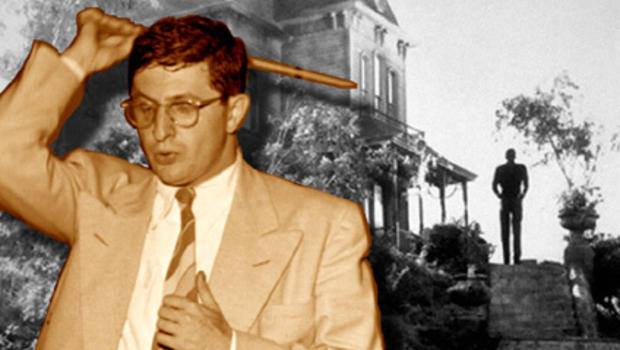
    Yet he left behind dozens of beloved and classic scores for films like “The Magnificent Ambersons,” “Jane Eyre,” “The Ghost and Mrs. Muir,” “The Day the Earth Stood Still,” “The Seventh Voyage of Sinbad,” and “Jason and the Argonauts,” to say nothing of those from his landmark association with Alfred Hitchcock, for films like “North by Northwest,” “Vertigo” and “Psycho.” How could “Psycho” not have received an Academy Award? It wasn’t even nominated!

    Almost certainly the reason for Herrmann’s neglect on the part of the establishment had less to do with his talent than with his prickly personality. He was a notorious crank. Many found him intimidating, but his acerbic behavior made for some great stories. Steven Spielberg, who had recently enjoyed his first great success with “Jaws,” met Herrmann at the recording session for “Taxi Driver.” When the young director expressed his admiration for the veteran composer’s work, the cantankerous Herrmann shot back, “Then why do you always hire John Williams?” He disagreed violently with studio executives and cab drivers alike – in fact seemed to go out of his way to do so – but many also attested to his kindness and warmth in private.

    Curiously, though his concert works have their moments, they don’t grip me from start to finish in a way that certain pieces by fellow film composers Erich Wolfgang Korngold, Miklós Rózsa, and Jerome Moross do. His was a peculiar kind of genius. He was perhaps the greatest film composer who ever lived.

    Happy birthday, Bernard Herrmann (1911-1975)!


    “The Day the Earth Stood Still” (1951):

    “The Ghost and Mrs. Muir” (1947):

    “Jason and the Argonauts” (1963):

    “Psycho” (1960):

Tag Cloud

Aaron Copland (92) Beethoven (95) Composer (114) Film Music (120) Film Score (143) Film Scores (255) Halloween (94) John Williams (185) KWAX (229) Leonard Bernstein (100) Marlboro Music Festival (125) Movie Music (135) Opera (198) Philadelphia Orchestra (88) Picture Perfect (174) Princeton Symphony Orchestra (106) Radio (87) Ralph Vaughan Williams (85) Ross Amico (244) Roy's Tie-Dye Sci-Fi Corner (290) The Classical Network (101) The Lost Chord (268) Vaughan Williams (103) WPRB (396) WWFM (881)

DON’T MISS A BEAT

Receive a weekly digest every Sunday at noon by signing up here


RECENT POSTS