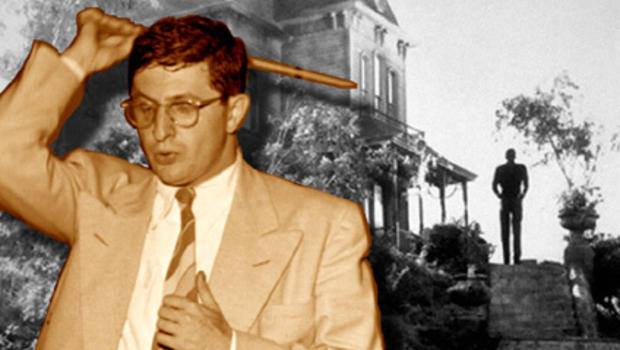
Is Bernard Herrmann the greatest film composer who ever lived?
I can’t think of a single other composer who had a more assured sense of precisely what sound would perfectly complement a specific onscreen image. Most scores by film composers of Hollywood’s Golden Age were melody driven, and while Herrmann certainly could write a heart-rending melody with the best of them, he seemed to be more interested in timbre. What sounds could he create, no matter how outlandish, that would best convey the experience of fighting a giant crab?
Only Herrmann would resolve to score a film like “The Day the Earth Stood Still” using two theremins, two Hammond organs, a large studio electric organ, three vibraphones, two glockenspiels, marimba, tam-tam, two bass drums, three sets of timpani, two pianos, celesta, two harps, electric strings and brass. On paper and in execution, it was the height of lunacy. Yet all at once, the theremin became shorthand for 1950s science fiction.
Despite his stand-apart genius, Herrmann was honored with only a single Academy Award, in 1941 – the same year he followed Orson Welles to Hollywood to write the music for “Citizen Kane” – for “The Devil and Daniel Webster” (also known as “All That Money Can Buy”). He was nominated for his work on “Kane,” and then late in life for the music he wrote for Brian De Palma’s “Obsession” and Martin Scorsese’s “Taxi Driver” (both 1976). He died in his sleep only hours after completing the recording sessions for the latter.
Yet he left behind dozens of beloved and classic scores for films like “The Magnificent Ambersons,” “Jane Eyre,” “The Ghost and Mrs. Muir,” “The Day the Earth Stood Still,” “The Seventh Voyage of Sinbad,” and “Jason and the Argonauts,” to say nothing of those from his landmark association with Alfred Hitchcock, for films like “North by Northwest,” “Vertigo” and “Psycho.” How could “Psycho” not have received an Academy Award? It wasn’t even nominated!
Almost certainly the reason for Herrmann’s neglect on the part of the establishment had less to do with his talent than with his prickly personality. He was a notorious crank. Many found him intimidating, but his acerbic behavior made for some great stories. Steven Spielberg, who had recently enjoyed his first great success with “Jaws,” met Herrmann at the recording session for “Taxi Driver.” When the young director expressed his admiration for the veteran composer’s work, the cantankerous Herrmann shot back, “Then why do you always hire John Williams?” He disagreed violently with studio executives and cab drivers alike – in fact seemed to go out of his way to do so – but many also attested to his kindness and warmth in private.
Curiously, though his concert works have their moments, they don’t grip me from start to finish in a way that certain pieces by fellow film composers Erich Wolfgang Korngold, Miklós Rózsa, and Jerome Moross do. His was a peculiar kind of genius. He was perhaps the greatest film composer who ever lived.
Happy birthday, Bernard Herrmann (1911-1975)!
“The Day the Earth Stood Still” (1951):
“The Ghost and Mrs. Muir” (1947):
“Jason and the Argonauts” (1963):
“Psycho” (1960):
Leave a Reply