Brian De Palma is an extraordinarily adept filmmaker, who has been criticized for his adherence to “genre trash.” He has always been attracted to suspense and crime thrillers, usually of an especially violent nature, many of them tinged with horror.
This week on “Picture Perfect,” with Hallowe’en right around the corner, we’ll hear music from four of De Palma’s films.
It’s hardly surprising that such an admirer of Alfred Hitchcock would also hire Hitch’s signature composer. Bernard Herrmann scored two films for De Palma – “Sisters,” in 1973, and “Obsession,” in 1976.
“Obsession” is a spin on Hitchcock’s “Vertigo.” A botched rescue attempt results in the death of a businessman’s kidnapped wife. Years later, he encounters someone who could be her doppelganger. The film stars Genevieve Bujold, John Lithgow, and a very tan Cliff Robertson.
“The Fury,” from 1978, is a supernatural thriller based on a novel by John Farris. Two teenagers, endowed with powers of telekinesis and extra-sensory perception, are targeted by researchers who plan to harness them for their own nefarious ends. For a time, Kirk Douglas has fun as a former CIA agent, and John Cassavetes is a particularly slimy villain. Cassavetes’ comeuppance makes for one of the most memorable movie endings of its era – and we’ll leave it at that!
Critic Pauline Kael praised the music, which is by none other than John Williams – hot off his third Academy Award, for “Star Wars” – characterizing it as “as elegant and delicately varied a score as any horror film has ever had.”
Of course, “The Fury” was not the first De Palma film to deal with telekinesis. His adaptation of Stephen King’s “Carrie,” from 1976, became one the decade’s landmark horror films. It broadened King’s popularity and propelled De Palma into the A-list of Hollywood directors. It also essentially launched the careers of Amy Irving, John Travolta, and Nancy Allen, among others. Sissy Spacek was nominated for an Academy Award for her performance in the title role, as was Piper Laurie as Carrie’s overbearing, fundamentalist mother.
The music was by Pino Donaggio. The director had wanted to continue his collaboration with Herrmann, but the composer died before the film could be completed. Donaggio, though classically trained, made his fortune writing popular songs. His biggest hit was “You Don’t Have to Say You Love Me,” which was recorded by Dusty Springfield and treated to a well-known cover by Elvis Presley. Donnagio went on to become a regular De Palma collaborator, providing the music for seven of his films.
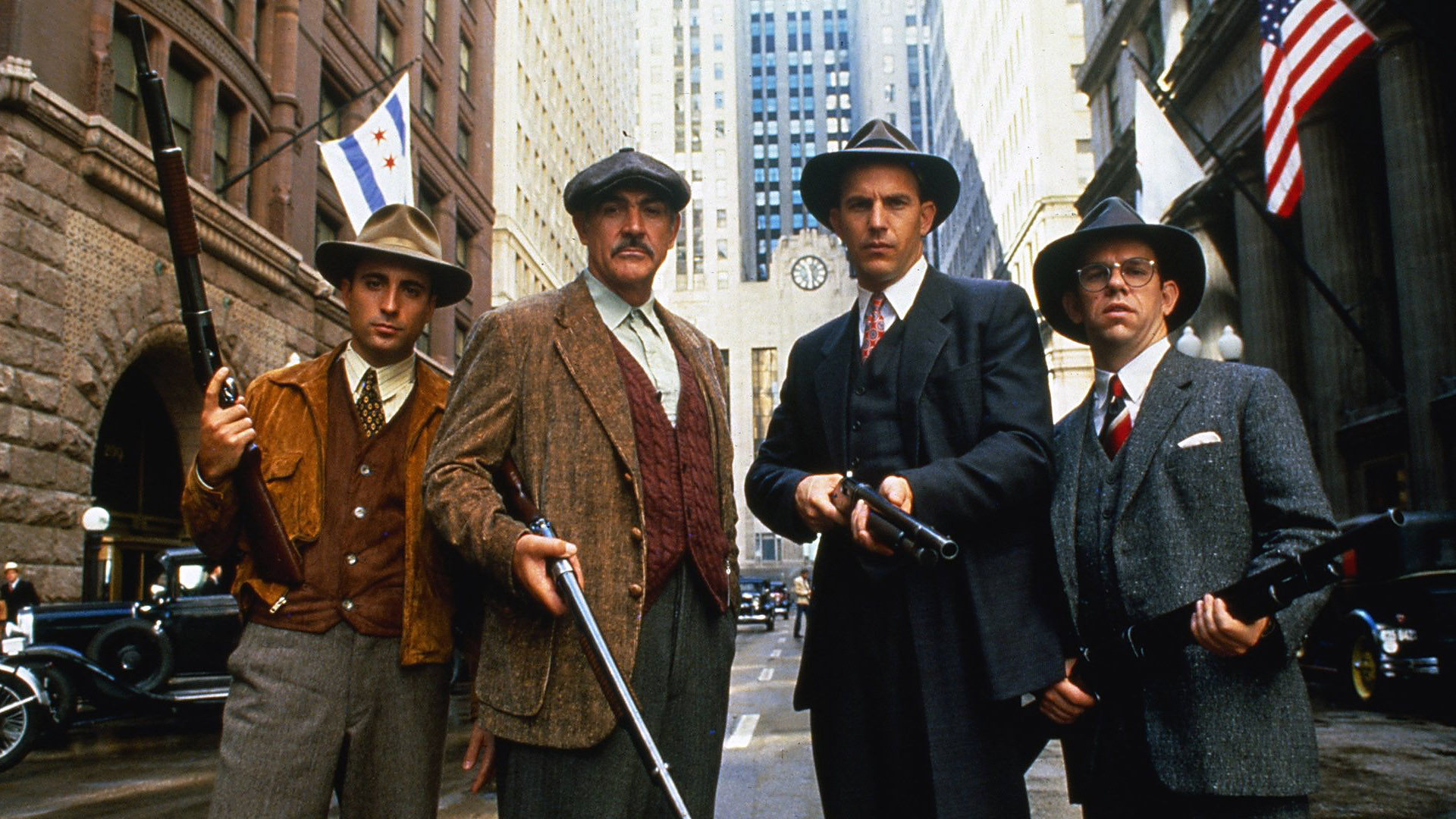
Finally, we’ll turn our back on horror, to listen to music from a successful period crime thriller, loosely based on the real-life exploits of Eliot Ness and his fellow prohibition agents – “The Untouchables,” from 1987. Kevin Costner plays the by-the-book federal agent who is given a valuable lesson in street smarts by an Irish beat cop played by an Academy Award winning Sean Connery. (“He pulls a knife, you pull a gun. He sends one of yours to the hospital, you send one of his to the morgue. That’s the Chicago way, and that’s how you get Capone.”) Capone is played, incidentally, by a baseball bat wielding Robert De Niro.
The score is by Ennio Morricone. Morricone, of course, was propelled to fame through his work on Sergio Leone’s spaghetti westerns. He applies some of that same mythmaking skill to this big screen adaptation, which had previously been published as a memoir and developed into a popular television series starring Robert Stack. The high point of the film must be the director’s nail-biting homage to Sergei Eisenstein, a slow motion shoot-out around a baby carriage as it teeters down the stairs of Chicago Union Station.
Start your weekend with a step in the right direction, with music from the films of Brian De Palma, on “Picture Perfect,” music for the movies, now in syndication on KWAX Classical Oregon!
———-
Clip and save the start times for all three of my recorded shows:
PICTURE PERFECT, the movie music show – Friday at 8:00 PM EDT/5:00 PM PDT
SWEETNESS AND LIGHT, the light music program – Saturday at 11:00 AM EDT/8:00 AM PDT (***now with a repeat Sunday at 9:00 PM EDT/6:00 PM PDT***)
THE LOST CHORD, unusual and neglected rep – Saturday at 7:00 PM EDT/4:00 PM PDT
Stream them, wherever you are, at the link!
https://kwax.uoregon.edu/
Tag: Bernard Herrmann
-
Novels of the Gilded Age on “Picture Perfect”
When I first assembled this week’s “Picture Perfect,” the Gilded Age was a period of American history most people would have been relieved to have receded into the distant past. Now everything old is new again.
“The Gilded Age” was a term coined by none other than Mark Twain to describe the era spanning, roughly, from the end of Reconstruction (after the Civil War) to the turn of the 20th century. He didn’t mean it as a compliment. A gilded age is one that conceals serious social problems beneath a veneer of gold. On this week’s program, we look past the dazzle to focus on music from films inspired by novels from, or about, the period.
“The Heiress” (1949) was adapted from a play by Ruth and Augustus Goetz, which in turn was based on the book “Washington Square,” by Henry James. Olivia De Havilland plays the “plain Jane” heiress of the title, Ralph Richardson her overbearing father, and Montgomery Clift, the adventurer who may or may not be out for her fortune. De Havilland won an Oscar for her portrayal, as did the music, by Aaron Copland.
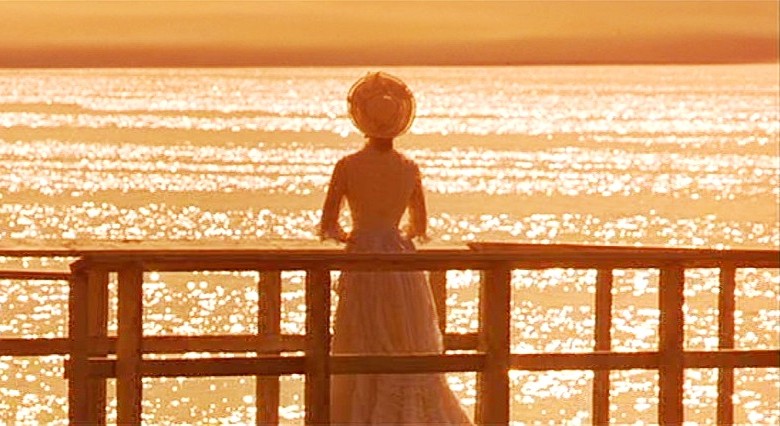
“The Age of Innocence” (1993) was written by one-time James correspondent, his close friend, Edith Wharton. The book was published in 1920, but looks back to the 1870s, its story dealing with the impending marriage of an upper class couple and the appearance of a disreputable interloper who threatens their happiness. The title is an ironic play on the contrast between the outward manners of New York society and its inward machinations. The novel earned Wharton a Pulitzer Prize, the first ever to be awarded to a woman. The film was something of a curve ball from director Martin Scorsese, who made his reputation on arguably meaner streets. Veteran composer Elmer Bernstein provided the lovely, Brahmsian score.
“The Magnificent Ambersons” (1942) is based on another Pulitzer Prize winner, this time by Booth Tarkington, from 1918. The novel is part of trilogy that traces the declining fortunes of three generations of an aristocratic Midwestern family. With industrialism on the rise, the Ambersons’ “old money” wealth and prestige wane.
“Ambersons” was only the second film directed by Orson Welles. Sadly, the financial failure of “Citizen Kane” and Welles’ uncompromising artistic vision caused the project to be removed from his control and re-cut by the studio, shaving a full hour off the original running time. It says something about the strength of Welles’ material that what survives yet remains a magnificent achievement.
The score was by Bernard Herrmann, CBS staff composer from Welles’ radio days. Herrmann had followed Welles to Hollywood to supply the music for “Kane.” With the trimming of “Ambersons,” his score was drastically edited and half the music removed. The famously irascible Herrmann, who had just written his Academy Award winning music for “The Devil and Daniel Webster,” was so angry that he threatened legal action if his name was not removed from the credits. (The studio complied.)
The action of “Mr. Skeffington” (1944), based on a 1940 novel by Elizabeth von Arnim, begins at a point some consider to be the twilight of the Gilded Age, the eve of World War I. Bette Davis stars as a woman so enamored with her own beauty, and the suitors it attracts, that she fails to value the affections of the man who eventually becomes her husband. Mr. Skeffington, played by Claude Rains, is a Jewish financier, riding high in the ‘teens, but his fortunes change when he’s caught in Europe during the rise of the Nazis.
Davis and Rains both earned Academy Award nominations for their work. The vivid score is by Franz Waxman. Davis was going through a period of emotional turmoil during the filming, so that she was allegedly insufferable to be around throughout the entire shoot. Someone finally poisoned her eyewash. When the police questioned the director, Vincent Sherman, he wished them good luck with their investigation. “If you asked everyone on the set who would have committed such a thing, everyone would raise their hand!”
Certainly all that glitters is not gold. We peel back the veneer of prosperity, this week, with “Novels of the Gilded Age,” on “Picture Perfect,” music for the movies, now in syndication on KWAX Classical Oregon!
———-
Clip and save the start times for all three of my recorded shows:
PICTURE PERFECT, the movie music show – Friday at 8:00 PM EDT/5:00 PM PDT
SWEETNESS AND LIGHT, the light music program – Saturday at 11:00 AM EDT/8:00 AM PDT (***now with a repeat Sunday at 9:00 PM EDT/6:00 PM PDT***)
THE LOST CHORD, unusual and neglected rep – Saturday at 7:00 PM EDT/4:00 PM PDT
Stream them, wherever you are, at the link
-
Indomitable New York on “Picture Perfect”
Every year on 9/11, I make it a point to try to post something of substance. (For confirmation, you can head over to my website, rossamico.com, and do a search.) This year, I haven’t had the time, because I was actually producing some 9/11 radio programs. So be sure to tune in to “The Lost Chord” on Saturday to hear music of remembrance and consolation, with my heavily edited commentary (so that I could make it all fit).
I also recorded a new “Picture Perfect,” resurrecting an old theme. What do you do when you have a film music show that actually airs on 9/11? How do you strike an appropriate tone? Of course, I could always take the easy way out and act like it’s any other day. But you know I can’t do that, especially for the 25th anniversary. So instead, I’ll be presenting a multifaceted portrait of indomitable New York.
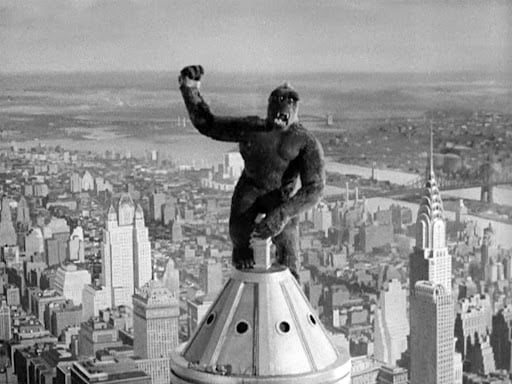
Tune in for selections from “All About Eve” and “Street Scene” (both by Alfred Newman),” “Taxi Driver” (Bernard Herrmann), “Breakfast at Tiffany’s” (Henry Mancini), and “King Kong” (Max Steiner). You’ll also hear George Gershwin’s “New York Rhapsody,” written for the 1931 film “Delicious,” which he soon developed into a concert work as his “Second Rhapsody” for piano and orchestra. We’ll listen to the world premiere recording, which employs Gershwin’s own orchestration.
It’s a collage of realism and romance, tragedy and comedy, seediness and sophistication. The Big Apple never falls! Join me for “Indomitable New York,” on “Picture Perfect,” music for the movies – and don’t forget “The Lost Chord” tomorrow – now in syndication on KWAX Classical Oregon!
Start times for all three of my recorded shows below:
PICTURE PERFECT, the movie music show – Friday at 8:00 PM EDT/5:00 PM PDT
SWEETNESS AND LIGHT, the light music program – Saturday at 11:00 AM EDT/8:00 AM PDT
THE LOST CHORD, unusual and neglected rep – Saturday at 7:00 PM EDT/4:00 PM PDT
Stream them, wherever you are, at the link!
https://kwax.uoregon.edu/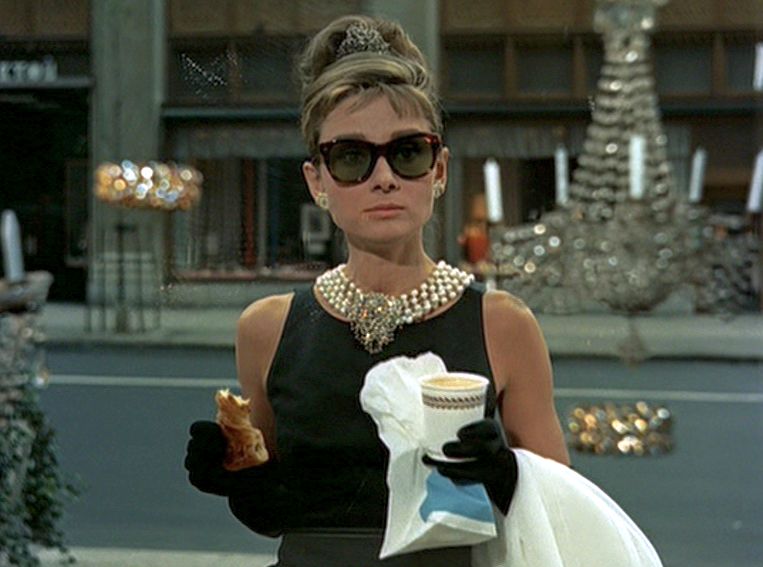
-
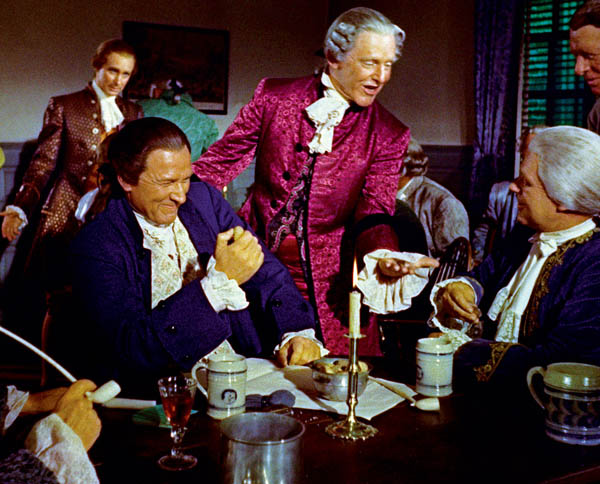
250 Years of Independence, and All I Got Was “Picture Perfect”
Tomorrow is Independence Day, so it seems appropriate this week on “Picture Perfect” to treat the subject of music from movies related to the birth of our nation.
We’ll hear selections from the 2000 Mel Gibson film, “The Patriot,” in which slow-burning pacifist Mel is pushed too far by ruthless British officer Jason Isaacs and reverts to his bloody French and Indian War ways. By the end of the film, he is literally waving the flag to John Williams’ triumphant score.
Then we’ll hear a suite from the 1942 Jack Benny-Ann Sheridan fixer-up comedy, “George Washington Slept Here,” based on the play by Moss Hart and George S. Kaufman – not really about the Revolution, beyond the fact that the ramshackle Pennsylvania farm house purchased by a transplanted New York couple is alleged to have been a resting place for the Continental Army’s most famous general. The music is by Adolph Deutsch.
The 1985 film, “Revolution,” seemed to have everything going for it. The director was Hugh Hudson, whose “Chariots of Fire” was the big winner at the 1981 Academy Awards; its star was Al Pacino; and its composer was John Corigliano, who went on to win the Pulitzer Prize for Music for his Symphony No. 2 and an Academy Award for “The Red Violin.” Yet “Revolution” bombed horribly – so horribly that Pacino gave up making movies for the next four years. James Galway plays the flute and pennywhistle on the film’s soundtrack.
Finally, we’ll hear music from the longest continuously-shown film in cinematic history, “Williamsburg: The Story of a Patriot,” created exclusively for the tourist attraction of Colonial Williamsburg. The film features future “Hawaii Five-O” star Jack Lord, and the score is by none other than Bernard Herrmann. Peppered with recognizable patriotic tunes from the Revolutionary era, the charming suite includes quotations from “Yankee Doodle” and the William Billings hymn “Chester.”
Stick a feather in your hat and call it macaroni. Then join me for “Picture Perfect,” music for the movies, now in syndication on KWAX!
——-
Clip and save the start times for all three of my recorded shows:
PICTURE PERFECT, the movie music show – Friday at 8:00 PM EDT/5:00 PM PDT
SWEETNESS AND LIGHT, the light music program – Saturday at 11:00 AM EDT/8:00 AM PDT
THE LOST CHORD, unusual and neglected rep – Saturday at 7:00 PM EDT/4:00 PM PDT
Stream them, wherever you are, at the link!
https://kwax.uoregon.edu
——-
PHOTO: George Washington wagers he can crack a walnut with his bare hand in “Williamsburg: The Story of a Patriot” -
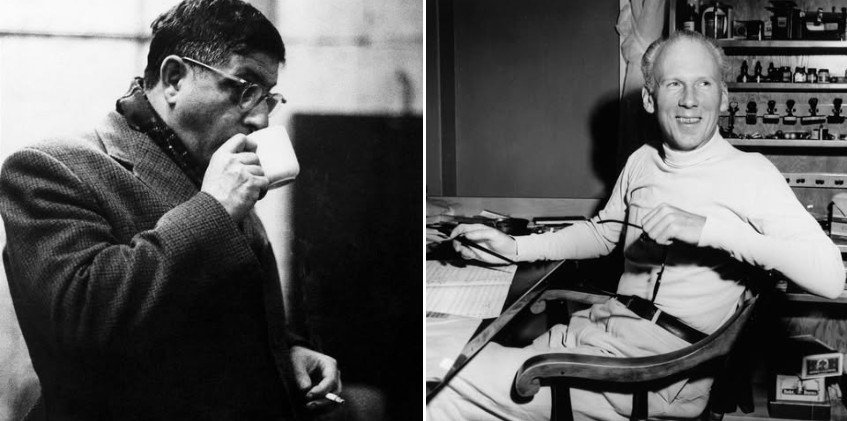
Leroy Anderson and Bernard Herrmann: American Masters
The composers Leroy Anderson and Bernard Herrmann rose to prominence, in their respective ways, through their invaluable contributions to American popular culture.
Anderson (1908-1975), whose fluency in foreign languages (especially those of Scandinavia) made him an asset to the U.S. Army during the Second World War, was more or less staff composer for the Boston Pops.
His early work for the Pops was as an arranger. It was Arthur Fiedler who recognized his talent and began requesting original work. Good call. Anderson turned out to be the Irving Berlin of American light orchestral music, producing hit after hit after hit: “Blue Tango,” “The Typewriter,” and “Plink! Plank! Plunk!” among them. Johnny Mathis scored a gargantuan success with his vocal rendition of “Sleigh-Ride,” for more than half a century a holiday staple. Anderson’s “The Syncopated Clock,” a favorite from the start, became further entrenched in the popular consciousness as the theme music for “The Late Show,” a showcase for the CBS late night movie.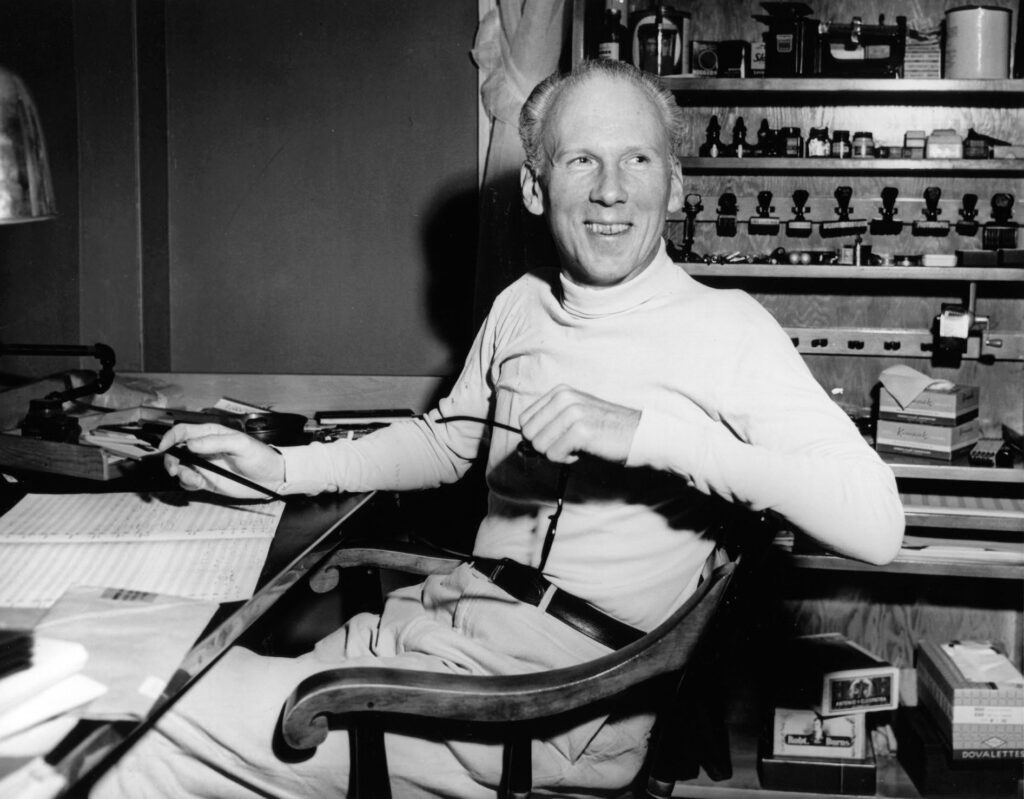
Herrmann (1911-1975) was staff conductor for CBS radio. In this role, he introduced American audiences to an impressive array of comparatively arcane music for the era, including works by Charles Ives, Nikolai Myaskovsky, Gian Francesco Malipiero, Edmund Rubbra, and Richard Arnell.
He fell in with Orson Welles, with whom he worked on radio shows such as “Mercury Theatre on the Air” (including Welles’ notorious adaptation of “War of the Worlds”). When Welles went to Hollywood, Herrmann went with him, to write the music for “Citizen Kane.” This would be the first of decades worth of finely-crafted film scores, always orchestrated by Herrmann himself (an unusual practice in Hollywood) and always perfectly suited to the images on screen, or their psychological underpinnings.
Of course, Herrmann is best-known for his collaborations with Alfred Hitchcock (including “Vertigo,” “North by Northwest,” and “Psycho”), but he also wrote top-notch, ear-opening scores for producer Charles Schneer and special effects artist Ray Harryhausen (most notably “Jason and the Argonauts”). Amazingly, he won only a single Oscar, for his work on “The Devil and Daniel Webster,” in 1941. Herrmann died of a heart attack shortly after completing the recording sessions for Martin Scorsese’s “Taxi Driver,” in 1975.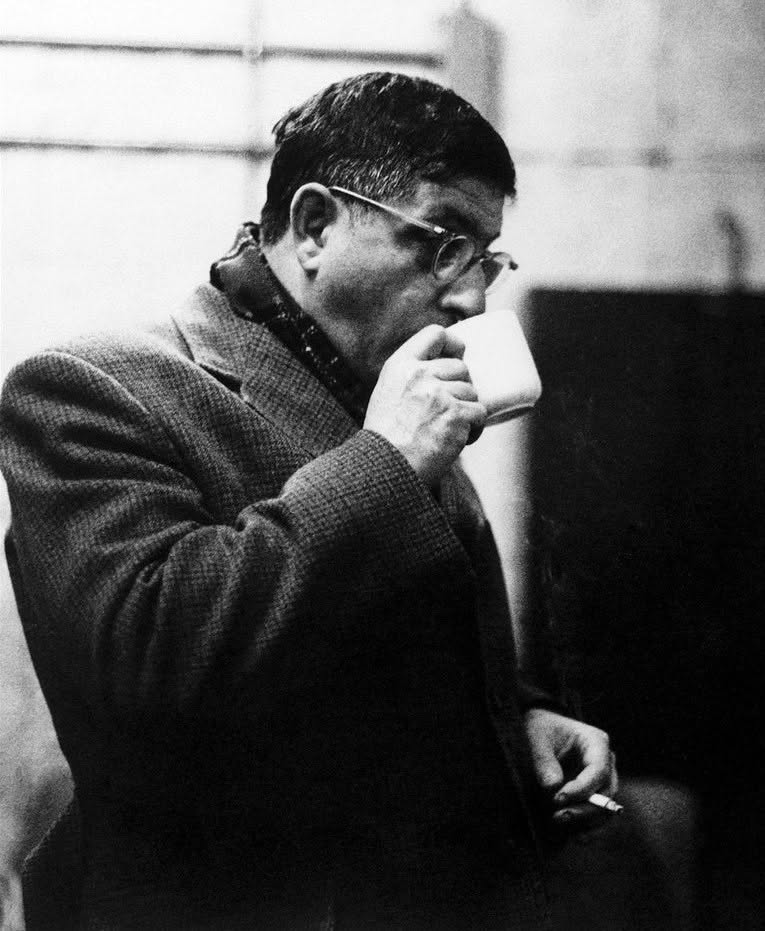
Happy birthday, gentlemen! Thanks for all the music.
————-
Staying up late with “The Syncopated Clock”
“North by Northwest”————-
PHOTOS: Cranky Herrmann needs caffeine; sunny Anderson remembers his royalty checks
Tag Cloud
Aaron Copland (94) Beethoven (95) Composer (114) Film Music (148) Film Score (143) Film Scores (255) Halloween (97) John Williams (196) KWAX (232) Leonard Bernstein (105) Marlboro Music Festival (125) Movie Music (163) Mozart (91) Opera (215) Philadelphia Orchestra (90) Picture Perfect (174) Princeton Symphony Orchestra (110) Radio (90) Ross Amico (244) Roy's Tie-Dye Sci-Fi Corner (290) The Classical Network (101) The Lost Chord (269) Vaughan Williams (107) WPRB (397) WWFM (881)