Tag: Bernard Herrmann

  • Toy Movie Music Picture Perfect

    Toy Movie Music Picture Perfect

    Eesh. Two posts already today, and I forgot to mention “Picture Perfect!” What day is it, anyway? Holidays…

    With everyone still reeling from Christmas, I thought I would present an hour of music from movies about toys, including selections from “Citizen Kane” (shhh, don’t give it away), with music by Bernard Herrmann; “Pee Wee’s Big Adventure” (it’s in the basement of the Alamo!), with music by Danny Elfman; “Toccata for Toy Trains” (Charles and Ray Eames love vintage toys), with music by Elmer Bernstein; and “Toy Story” (not much of a stretch there), with music by Randy Newman.

    That’s toys everywhere this week, on “Picture Perfect,” music for the movies. I hope you’ll join me tonight at 6 ET, or for the repeat, tomorrow morning at 6; or that you’ll catch it later as a webcast at http://www.wwfm.org.

  • Madness and Piano Movie Music

    Madness and Piano Movie Music

    This week on “Picture Perfect,” practice makes psychotic, as we listen to music from movies about madness and the piano.

    Laird Cregar plays an unhinged pianist-composer, who, whenever he hears a loud, discordant sound, is compelled to commit murder, in the 1945 film “Hangover Square.” Bernard Herrmann wrote the moody, romantic score, which includes a piano concerto, played by Cregar’s character during the film’s conflagration finale.

    Peter Lorre is an unstable musicologist who is haunted by the disembodied hand of a murdered pianist with a penchant for Brahms’ arrangement of Bach’s Chaconne, in “The Beast with Five Fingers,” from 1946. Max Steiner wrote the music. The piano is played on the film’s soundtrack by Victor Aller, the brother-in-law of Felix Slatkin, and therefore Leonard Slatkin’s uncle.

    Alan Alda plays a frustrated pianist who falls in with a ring of Satanists, in “The Mephisto Waltz” from 1971. This time, Jerry Goldsmith blends Franz Liszt with amplified instruments and electronics to memorably eerie effect. Five years later, Goldsmith would win his only Academy Award for his music to “The Omen.”

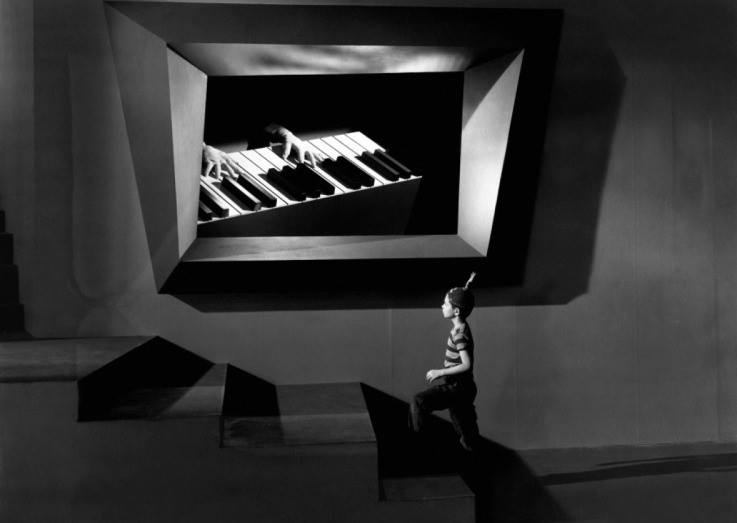
    Finally, Hans Conried plays a dictatorial pedagogue in “The 5000 Fingers of Dr. T,” released in 1953, which holds the distinction of being the only feature film written by Dr. Seuss. The film features outrageous production design (including a gargantuan keyboard for 500 enslaved boys) and whimsical songs.

    The composer was Frederick Hollander, born in London. Hollander came to fame in Germany as Friedrich Hollander. His best-known international success was with “The Blue Angel,” with Marlene Dietrich, who introduced his song, “Falling in Love Again. With the rise of the Nazis, Hollander fled to the United States, where he worked on over 100 films.

    Join me for madness and the piano this week, on “Picture Perfect,” music for the movies, this Friday evening at 6 ET. In case you haven’t heard, the show will now repeat Saturday mornings at 6. (It ought to be a real treat to hear “The Mephisto Waltz” at that hour!) If you’re still not able to listen, you can catch it later as a webcast at http://www.wwfm.org.

  • Herrmann’s Halloween Fantasy Film Scores

    Herrmann’s Halloween Fantasy Film Scores

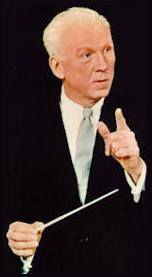
    Hallowe’en is fast approaching. This week on “Picture Perfect,” it’s high time we get the pumpkin rolling, with an hour of fantasy film scores of Bernard Herrmann.

    Just about everyone has some awareness of Herrmann’s fruitful run with Alfred Hitchcock, a collaborative relationship which yielded scores to “Vertigo,” “North by Northwest” and “Psycho,” among others. Concurrently, Herrmann worked with producer Charles H. Schneer to create a series of classic films on fantastic subjects, featuring special effects by stop-motion maestro Ray Harryhausen. We’ll be listening to selections from two of these.

    Jules Vernes’ novel, “Mysterious Island,” was a sequel of sorts to “20,000 Leagues under the Sea. “ During the American Civil War, a ragtag band of Union soldiers escape from a Confederate prison by hot air balloon. A storm sweeps them off to the titular island, where they encounter pirates, a castaway and an orangutan. Indeed Captain Nemo turns up late in the narrative, though no giant creatures, as in the film (made in 1961). Herrmann has a field day characterizing an enormous crab, bee and especially bird, for which he employs a fugue!

    Harryhausen’s skeleton fight from Schneer’s “Jason and the Argonauts” (1963) stands as one of the all-time classic fantasy sequences, a dream marriage of visuals and music. Herrmann, who always provided his own orchestrations, was well known for putting together unique combinations of instruments the better to illustrate the special character of a given film. In the case of “Jason,” he went in the opposite direction he had taken with “Psycho,” stripping away the strings and concentrating instead on winds, brass and percussion.

    On a somewhat gentler note, Herrmann scored the beautiful spectral romance, “The Ghost and Mrs. Muir” (1947), with Gene Tierney as a young widow who moves with her daughter to a seaside village, where she encounters the ghost of salty Captain Craigg (played by Rex Harrison). Of course, their banter leads to a hopeless attraction developing between them. Herrmann was a master at creating musical evocations of yearning, and his score for “The Ghost and Mrs. Muir” is full of romantic longing.

    Criminally, for a composer whose career spanned over four decades, from “Citizen Kane” to “Taxi Driver,” Herrmann received only a single Oscar, for “The Devil and Daniel Webster” (released in 1941 as “All That Money Can Buy”). Walter Huston makes a meal of his role as Mr. Scratch in Stephen Vincent Benet’s recasting of the Faust legend, transferred to the New England countryside. Director Wlliam Dieterle, who had his roots in German Expressionism, creates some truly eerie visuals, and Herrmann’s score barn-dances deftly back and forth between dread and whimsy.

    Join me for fantasy film scores of Bernard Herrmann this week on “Picture Perfect,” music for the movies, this Friday evening at 6; or catch it later as a webcast at http://www.wwfm.org.

  • Memorial Day Remembrance Herrmann’s Fallen

    Memorial Day Remembrance Herrmann’s Fallen

    It’s Memorial Day. Before you start in with the burgers and the quoits and the three legged-race and the gumboot toss and all that, remember how lucky we are, and those who laid down their lives believing they were doing something for the greater good.

    Bernard Herrmann is most celebrated for his film scores, in particular those he wrote for Alfred Hitchcock, though he did much brilliant besides. Here’s a concert piece he wrote in 1943, called “For the Fallen,” in a fascinating historical document with the composer conducting the New York Philharmonic:

    Here it is again in a modern performance, with more up-to-date sound:

    Listen to both if you can. Happy Memorial Day.

Tag Cloud

Aaron Copland (93) Beethoven (95) Composer (114) Film Music (129) Film Score (143) Film Scores (255) Halloween (94) John Williams (192) KWAX (229) Leonard Bernstein (103) Marlboro Music Festival (125) Movie Music (144) Mozart (88) Opera (206) Philadelphia Orchestra (89) Picture Perfect (174) Princeton Symphony Orchestra (108) Radio (88) Ross Amico (244) Roy's Tie-Dye Sci-Fi Corner (290) The Classical Network (101) The Lost Chord (268) Vaughan Williams (103) WPRB (396) WWFM (881)

DON’T MISS A BEAT

Receive a weekly digest every Sunday at noon by signing up here


RECENT POSTS