I’m one of those people who will dissolve into tears at the movies for no good reason. So when “E.T. The Extra-Terrestrial” opened on this date 40 years ago, I was a total mess. This simple story about the friendship between a boy and a stranded botanist from another world is elevated by John Williams’ most moving score. By turns tender, buoyant, and touching, Williams’ music provides the emotional underpinning of what may very well be Steven Spielberg’s best film. It earned its composer a much-deserved fourth Academy Award.
In terms of box office, “E.T” was the first film to surpass “Star Wars” to become the highest grossing of all time. The entire moviegoing world, and certainly the entire country, was unified by this emotionally honest bedtime story that tapped into eternal truths about childhood, love, and parting. Remarkably uncynical, full of hope, and just downright beautiful on every level, “E.T.” lit up the screens in 1982 like no other. It was a blockbuster with heart. I don’t know that, in the 21st century, a movie quite like it will ever land again.
This week on “Picture Perfect,” we recollect kinder, gentler times, with selections from films about benevolent visitors from other worlds. Friendly extraterrestrials have been out of fashion for quite a while now, as we seem to be mired in paranoia, conspiracy theories, and apocalyptic visions. But back in 1982, “E.T.” took the 1950s clichés of invaders from Mars and body snatchers from outer space and almost singlehandedly turned everything on its head.
Spielberg himself would take a crack at old school alien invasion, for sure, when he remade H.G. Wells’ “The War of the Worlds” in 2005. But during the Reagan Era, with the Cold War winding down, terrorism not yet so much in the news, and Americans not so openly contemptuous of their neighbors, cinematic E.T.’s were benevolent at best, or at worst, just trying to do their thing. They were there to be misunderstood and even imperiled by man until a warm, fuzzy, often poignant finale.
In Spielberg’s prior exploration of the concept of kindly visitors from another world, “Close Encounters of the Third Kind” (1977), there is an ambiguity for much of the film as to what exactly the aliens’ intentions are. In fact, there is at least one sequence that could very well give a child nightmares, and maybe parents too. Whatever tension is generated dissolves in the euphoric finale, centered around the communicative power of music. Like so many movies back then and so few now, “Close Encounters” doesn’t so much exhaust the viewer as leave him or her with a feeling of hope.
John Williams’ approach couldn’t be more different than that for “E.T.” For “Close Encounters,” the avant garde syntax of the early, eerier sequences dissolves into unabashed lyricism for the film’s transcendent finale.
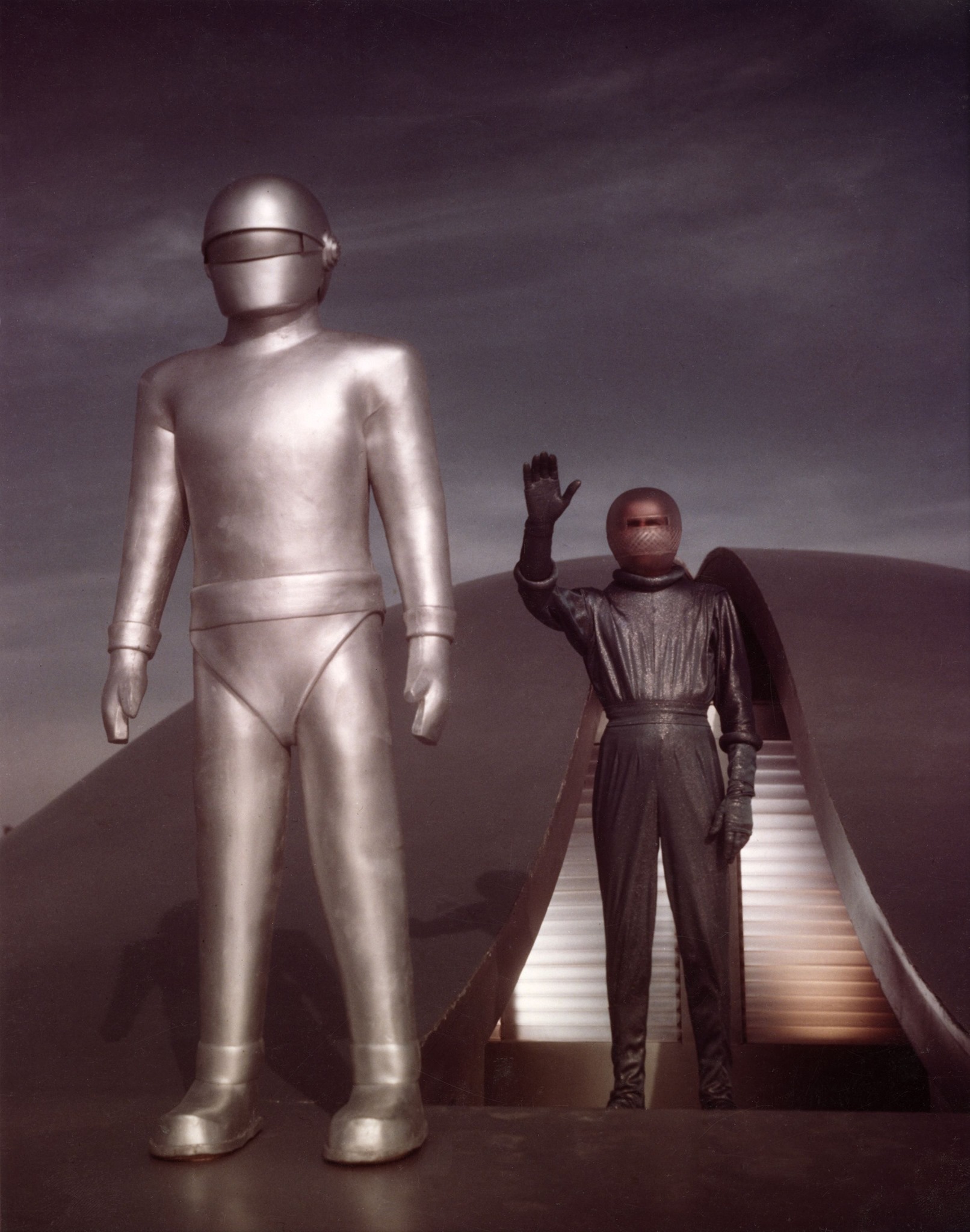
Looking back a quarter century, Klaatu, the “friendly” alien of “The Day the Earth Stood Still” (1951), may come in peace, but it is a message delivered with tough love. If mankind refuses to abide, his giant robot, Gort, will destroy the planet. At a time when Martians invariably meant trouble, this was actually progressive.
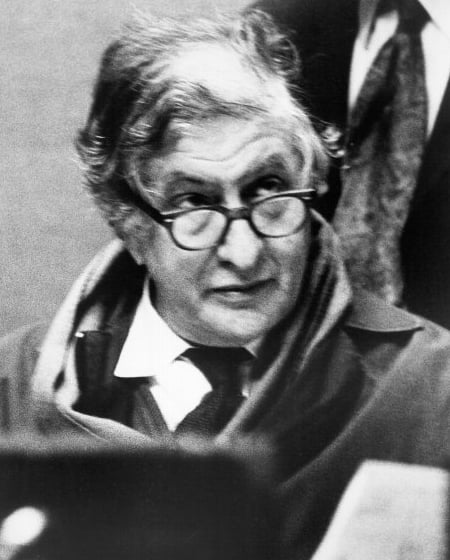
Bernard Herrmann’s score is one of his best, and certainly one of his most interesting. Always an eccentric orchestrator, Herrmann’s concept of extraterrestrial music incorporates violin, cello, electric bass, two theremins, two Hammond organs, a large studio electric organ, three vibraphones, two glockenspiels, two pianos, two harps, three trumpets, three trombones and four tubas. Overdubbing and tape-reversal techniques were also employed.
Finally, Ron Howard’s “Cocoon” (1985) is one of the more worthwhile of the seemingly endless procession of extraterrestrial films to be released in the wake of “E.T.” At least this one took a different approach by bringing aliens into contact with a Florida retirement community, with the unexpected result of rejuvenating its inhabitants. A modern take on the fabled Fountain of Youth, the film is a showcase for veteran actors Hume Cronyn, Jessica Tandy, Jack Gilford, and Don Ameche (who won an Academy Award). James Horner’s score is much sought after by collectors.
Klaatu barada nikto! Join me for the touchdown of benevolent extraterrestrials! We come in peace, so forget the tanks and bring a box of tissues, on “Picture Perfect,” music for the movies, this Saturday evening at 6:00 EDT, on WWFM – The Classical Network and wwfm.org.