VALENTINE’S DAY READING
2022: Charlotte Brontë, “Jane Eyre”
2023: Emily Brontë, “Wuthering Heights”
2024: Anne Brontë, “The Tenant of Wildfell Hall”
2025…
VALENTINE’S DAY READING
2022: Charlotte Brontë, “Jane Eyre”
2023: Emily Brontë, “Wuthering Heights”
2024: Anne Brontë, “The Tenant of Wildfell Hall”
2025…
I read Charlotte Brontë’s “Shirley” as part of a Victorian novel class in college, but it was only last year that I finally got around to picking up “Jane Eyre,” around Valentine’s Day. And I loved it! So I determined that this year I would do the same with her sister Emily’s “Wuthering Heights.”
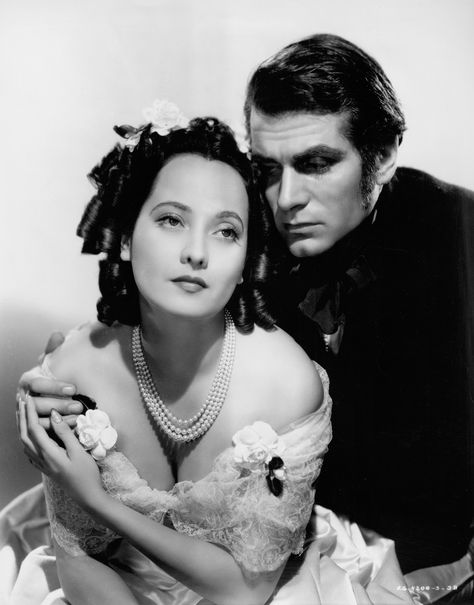
Unfortunately, the classic William Wyler film, with Merle Oberon and Laurence Olivier, is too deeply embedded in my brain. I’m about a third of the way through, and I find I’m not transported, as I was by Charlotte’s “Jane,” even having also seen multiple film versions of the latter. I understand that the Wyler adaptation only covers the first part of the novel, so perhaps I’ll find it more absorbing once I enter unfamiliar territory.
In any case, there’s no love like star-crossed love. February will be rather overheated this week on “Picture Perfect,” as we revisit music from movies inspired by the Brontës. As may be gleaned from my comments above, the Brontë sisters were responsible for some of the most tortured romances in English literature.
We’ll begin with one of the all-time classics, Wyler’s beloved adaptation of Emily Brontë’s “Wuthering Heights.” The 1939 film stars Oberon as Cathy, Olivier as Heathcliff, and David Niven as Edgar, “that milksop with buckles on his shoes.” Alfred Newman’s score is one of the most moving of his storied career.
Then we’ll turn to Charlotte Brontë’s “Jane Eyre.” The 1943 adaptation features Joan Fontaine as Jane and Orson Welles as Rochester. The music is by Bernard Herrmann, who had written scores for Welles as a director, both for “Citizen Kane” and “The Magnificent Andersons,” as well as for his Mercury Theatre radio shows. Welles involvement in “Jane Eyre,” however, was strictly as an actor.
A 1971 television movie of “Jane Eyre” stars Susannah York as Jane and George C. Scott as Rochester. The music, in this instance, is by an up-and-coming John Williams, still a few years away from becoming a household name, for his work on “Jaws,” “Star Wars,” “Raiders of the Lost Ark,” and “E.T. The Extra-Terrestrial.” Williams has said that his score for “Jane Eyre” is one of his personal favorites.
We’ll conclude with a piece of biographical fiction about the Brontë siblings, a 1943 Warner Brothers production called “Devotion.” The film stars Ida Lupino as Emily, Olivia de Havilland as Charlotte, Nancy Coleman as Anne, and Arthur Kennedy as their dissolute brother Branwell. It also features Sidney Greenstreet as William Makepeace Thackeray, Paul Henreid as an Irish priest, and – well, you get the idea. The casting, at times, strains credulity.
De Havilland had originally been slated to play Emily, and her real-life sister, Joan Fontaine, was to play Charlotte. When an offer came through for Fontaine to play Charlotte’s most famous creation, Jane Eyre – opposite Orson Welles’ Rochester, over at 20th Century Fox – De Havilland pivoted into the role vacated by her sister. In the end, “Jane Eyre” wound up being the better film.
By far the most attractive element of “Devotion” is the rich score provided by Erich Wolfgang Korngold. Korngold himself became so enamored with one of its themes that he resurrected it for use in the first movement of his Violin Concerto.
I hope you’ll join me for a Yorkshire pudding of passion, torment, and cruelty. Sigh along to tortured romances of the Brontës for Valentine’s Day, on “Picture Perfect,” music for the movies, this Saturday evening at 6:00 EST, on WWFM – The Classical Network and wwfm.org.

Over the years, I’ve seen at least two film adaptations of “Jane Eyre,” so I already had a pretty good idea of the trajectory of the plot. But when searching for suitable reading material for the month of February – a time when I thought I could still settle in to a comfortable brood under steely skies – I decided to finally take up the book. Too bad the Groundhog betrayed me, and it looks like an early spring! Anyway, it’s turned out to be a real page-turner. By coincidence, I stumbled across this comic this morning that pretty much sums up why I’ve always loved Gothic fiction.
Windswept moors. Destructive passions. Byronic guilt.
The term “Gothic romance” doesn’t necessarily connote a love story. In 19th century literary tradition, “romance” was often suggestive of the mysterious, the adventurous, the sensational – a kind of pleasing terror, often touched by elements of horror.
This week on “Picture Perfect, I strike my annual blow against Valentine’s Day with music from movies featuring creepy old houses, ghosts, malevolent housekeepers, and madwomen in the attic.
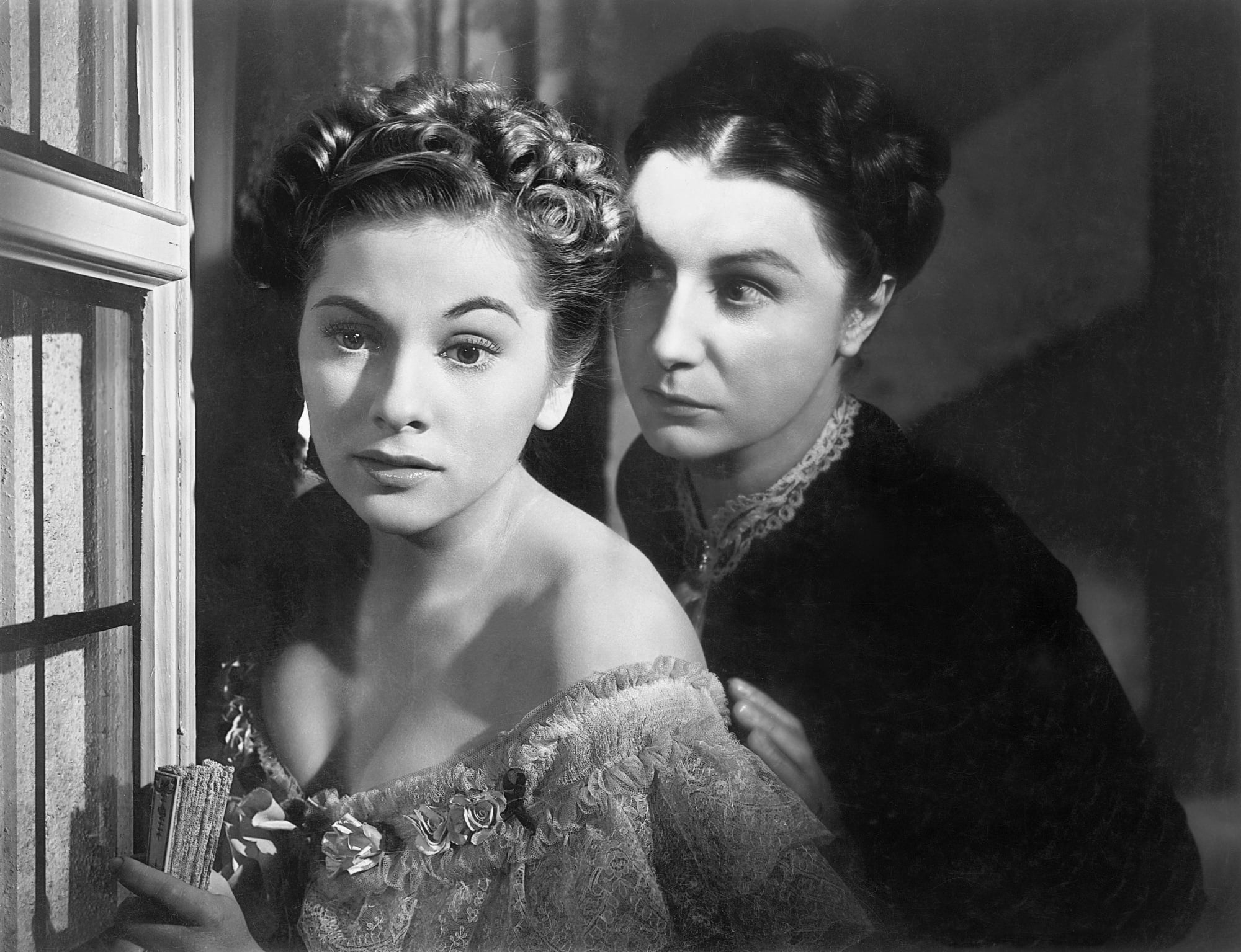
Alfred Hitchcock’s “Rebecca” (1940), based on the Gothic novel of Daphne du Maurier, is a clear throwback to the works of the Brontë sisters. Laurence Olivier and Joan Fontaine star, but Judith Anderson steals the show as the ice-cold Mrs. Danvers. The film was the recipient of an Academy Award for Best Picture, the only Hitchcock film to be so honored. Franz Waxman’s opulent and atmospheric score flares at its operatic climax.
Collectively, the Brontë sisters were responsible for some of the most tortured romances in English literature. Charlotte Brontë’s “Jane Eyre,” a work which clearly anticipates “Rebecca,” was adapted most famously in 1940, again with Joan Fontaine, and featuring Orson Welles as Rochester. Three decades later, a television version of “Jane Eyre” (1971) appeared, with Susannah York and George C. Scott. The music for the latter was by an up-and-coming composer, only a few years away from superstardom: John Williams.
“Uncle Silas” (1947) is a Gothic romance that sidesteps the love story altogether. Forced to live under the guardianship of a sinister uncle and a malevolent French governess, its heroine is thrust into an atmosphere of insinuating menace. Sheridan Le Fanu’s “old dark house” thriller was made into a film by Gainsborough Studios, and released in the United States as “The Inheritance.” A young Jean Simmons plays the imperiled heiress. The music was by Alan Rawsthorne, a distinguished concert composer, who nonetheless managed to compose 27 film scores. Bernard Herrmann considered the score for “Uncle Silas” to be one of the finest ever written.
Finally, we’ll hear music from a beloved adaptation of Emily Brontë’s tale of star-crossed love, “Wuthering Heights” (1939). Merle Oberon is Cathy and Laurence Olivier is Heathcliff. Alfred Newman’s music yearns and sobs right along with us.
It’s an hour of gloom and doom for Valentine’s Day. Join me for Gothic romances on “Picture Perfect,” music for the movies, this Saturday evening at 6:00 EST, on WWFM – The Classical Network and wwfm.org.
NOTE: In honor of John Williams’ 90th birthday on February 8, this is the first of several episodes that will incorporate at least one of his film scores. Next week, for Presidents Day Weekend, it’s hail to the chief, as John Williams does the presidents!
There’s no love like star-crossed love.
This week on “Picture Perfect,” February gets overheated with music from movies inspired by the Brontës. Collectively, the Brontë sisters were responsible for some of the most tortured romances in English literature.
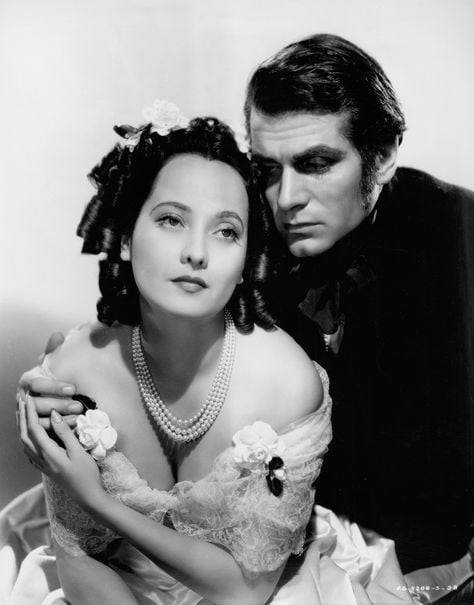
We’ll begin with one of the all-time classics, a beloved adaptation of Emily Brontë’s “Wuthering Heights.” The 1939 film features Merle Oberon as Cathy, Laurence Olivier as Heathcliff, and David Niven as Edgar, “that milksop with buckles on his shoes.” Alfred Newman’s score is one of the most moving of his storied career.
Then we’ll turn to Charlotte Brontë’s “Jane Eyre.” The 1943 adaptation stars Joan Fontaine as Jane and Orson Welles as Rochester. The music is by Bernard Herrmann, who had written scores for Welles as a director, both for “Citizen Kane” and “The Magnificent Andersons,” as well as for his Mercury Theatre radio shows. Welles involvement in “Jane Eyre,” however, was strictly as an actor.
A 1971 television movie of “Jane Eyre” stars Susannah York as Jane and George C. Scott as Rochester. The music, in this case, is by an up-and-coming John Williams, who was still a few years away from becoming a household name, for his work on “Jaws,” “Star Wars,” “Raiders of the Lost Ark,” and “E.T. The Extra-Terrestrial.” Williams has said that his score for “Jane Eyre” is one of his personal favorites.
We’ll conclude with a piece of biographical fiction about the Brontës, a 1943 Warner Brothers production called “Devotion.” The film stars Ida Lupino as Emily, Olivia de Havilland as Charlotte, Nancy Coleman as Anne, and Arthur Kennedy as their dissolute brother Branwell. It also features Sidney Greenstreet as William Makepeace Thackeray, Paul Henreid as an Irish priest, and – well, you get the idea. The casting, at times, strains credibility.
De Havilland had originally been slated to play Emily, and her real-life sister, Joan Fontaine, was to play Charlotte. When an offer came through for Fontaine to play Charlotte’s most famous creation, Jane Eyre – opposite Orson Welles’ Rochester, over at 20th Century Fox – De Havilland pivoted into the role vacated by her sister. In the end, “Jane Eyre” wound up being the better film.
By far the most attractive element of “Devotion” is the rich score provided by Erich Wolfgang Korngold. Korngold himself became so enamored with one of its themes that he resurrected it for use in the first movement of his Violin Concerto.
I hope you’ll join me for a Yorkshire pudding of passion, torment, and cruelty. Sigh along to tortured romances of the Brontës, for Valentine’s Day, on “Picture Perfect,” music for the movies, this Saturday evening at 6:00 EST, on WWFM – The Classical Network and wwfm.org.
Aaron Copland (93) Beethoven (95) Composer (114) Film Music (144) Film Score (143) Film Scores (255) Halloween (94) John Williams (195) KWAX (229) Leonard Bernstein (104) Marlboro Music Festival (125) Movie Music (159) Mozart (90) Opera (212) Philadelphia Orchestra (89) Picture Perfect (174) Princeton Symphony Orchestra (109) Radio (88) Ross Amico (244) Roy's Tie-Dye Sci-Fi Corner (290) The Classical Network (101) The Lost Chord (269) Vaughan Williams (105) WPRB (397) WWFM (881)