Tag: Jascha Heifetz

  • Sergei Prokofiev Offers Three Times Your Daily Allowance of Vitamin C

    Sergei Prokofiev Offers Three Times Your Daily Allowance of Vitamin C

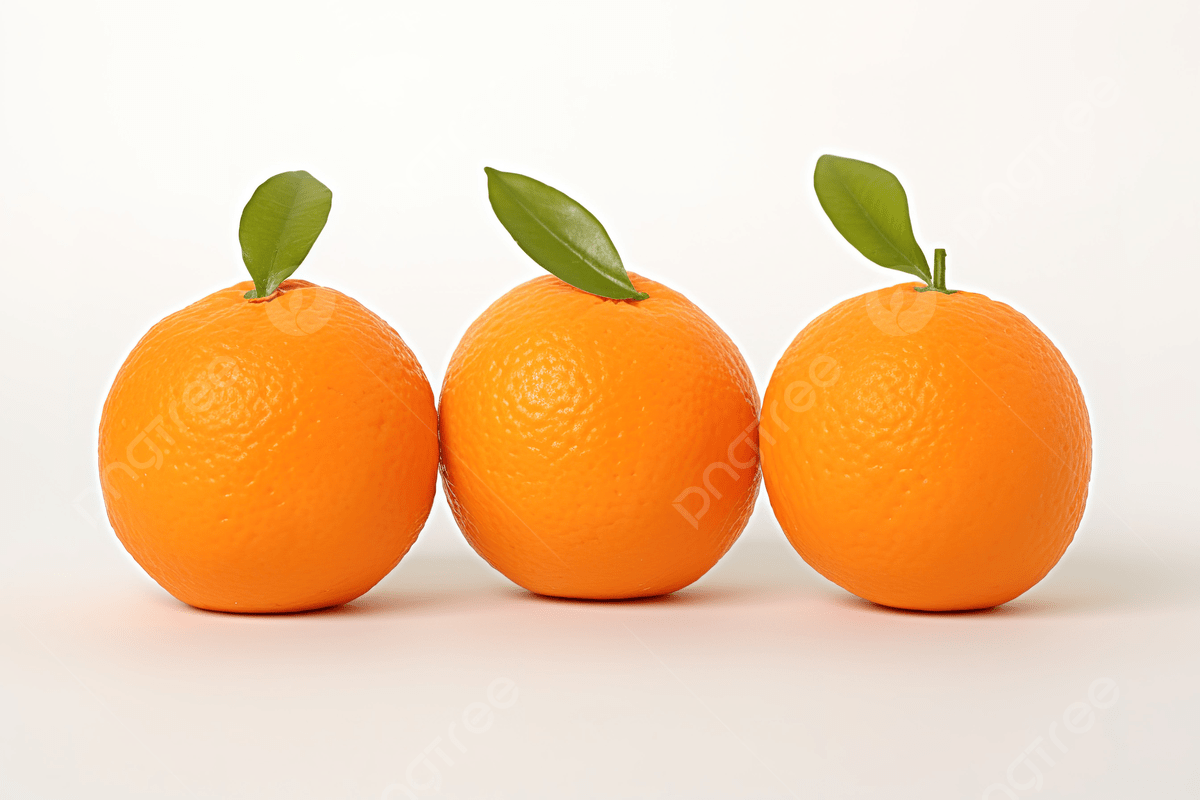
    On Sergei Prokofiev’s birthday, I’ve got a love for…


    I’ve also got a newspaper article due.

    Ever wonder about the rest of the opera? I thought the production at the link below was the same as the one I caught in Philadelphia. However, as I remember it, the Philly production was not quite so dark. Turns out, that one was conceived by Alessandro Talevi. The one at the link was designed by the Brothers Quay – who also have a Philadelphia connection, as graduates of the late, lamented University of the Arts. Both productions employ an English translation by David Lloyd-Jones, who conducts the performance here – but if you still can’t understand it, use the closed captioning.

    Prokofiev wrote his own libretto, in French, after a play by Carlo Gozzi. The work was given its first performance in Chicago, with the composer conducting, in 1921. None of the critics liked it, except Ben Hecht, a newspaper man who also wrote novels and was soon to became one of Hollywood’s most-valuable screenwriters. When he completed a last-minute, uncredited rewrite of “Gone with the Wind,” he was dubbed the “Shakespeare of Hollywood,” which the cynical Hecht dismissed as proof of just bad Hollywood movies really are.

    It didn’t stop him from accepting assignments, though. It’s true that Ben liked “Oranges,” but what he really loved was green.

    ——-

    Played in transcription by Jascha Heifetz


    And Emil Gilels


  • Waxman and Heifetz Toast the New Year

    Waxman and Heifetz Toast the New Year

    Franz Waxman, of course, was one of the great film composers. His music can be heard in “The Bride of Frankenstein,” “Rebecca,” “The Philadelphia Story,” “Sunset Boulevard,” “A Place in the Sun,” “Rear Window,” “Peyton Place,” “The Spirit of St. Louis,” and dozens of others.

    It was customary that Waxman and his family would get together with their neighbors, the Jascha Heifetzes, to welcome the new year with an evening of chamber music. Other guests on these occasions would include violist William Primrose and cellist Gregor Piatigorsky.

    Mainstream classical fare would dominate the festivities until the countdown to midnight. With the turn of the year, the musical selections would become a bit more frivolous.

    Waxman composed his “Auld Lang Syne Variations” in 1947, for one such gathering. This party piece sends up the traditional New Year’s anthem in the styles of several well-known composers.

    Feel free to play along and test your musical knowledge. You’ll find further clues in the work’s subtitles, listed below the video on YouTube. One can only imagine Heifetz stepping out in “Chaconne à Son Gout.”

    Happy New Year!

  • Fritz Kreisler Sesquicentennial: Violin Legend

    Fritz Kreisler Sesquicentennial: Violin Legend

    Somehow, as I was in the thrall of the groundhog yesterday, I failed to equate February 2 with the birthday of Fritz Kreisler. And I’d had my eye on it, too, because it happened to be an important one. Kreisler was born on February 2, 1875 – 150 years ago.

    In contrast to the cool intensity of his colleague, the great violinist Jascha Heifetz, who subjected himself to a punishing, though strictly secret, regimen of self-discipline in pursuit of superhuman perfection, Kreisler was warm, gregarious, and easygoing. As a sweet-toned confectioner and purveyor of violin bonbons, Kreisler ruffled feathers, not with his playing, but because he casually let slip that many of the 18th century “rediscoveries” he had used to charm audiences, critics, and musicologists were not in fact rediscoveries at all. Nor did they date from the 18th century. Rather they were composed by Kreisler himself. When the professionals complained, Kreisler shrugged.

    It would be futile to argue against his serious musical credentials. He gave the world premiere of the Elgar concerto and became a favorite recital partner of Sergei Rachmaninoff. A famous anecdote relates that Kreisler and Rachmaninoff were giving a concert in New York. In the middle of a performance, Kreisler suffered a memory lapse, and as he noodled around on his violin, trying to find his way back, he inched closer to his pianist. “Where are we?” Kreisler whispered. To which Rachmaninoff replied, “Carnegie Hall.”

    In 1941, Kreisler was crossing the street, when he was hit by a milk truck. The accident fractured his skull and put him in a coma. Like something out of an early Woody Allen comedy, when he awoke, he could communicate only in Latin and Greek. Thankfully, the effect was only temporary.

    Kreisler met Heifetz, with whom he shared a birthday (Heifetz was born in Vilnius on February 2, 1901), for the first time at a private press party in 1912. After listening to the boy play through the Mendelssohn concerto, Heifetz declared, “We can all just break our fiddles over our knees.”

    Happy belated birthday, and a joyous sesquicentennial, Fritz Kreisler. And since February 3 happens to be the anniversary of the birth of Felix Mendelssohn, here’s Kreisler performing Mendelssohn’s evergreen concerto.

    Kreisler plays the “Meditation” from Massenet’s “Thaïs”

    Kreisler, master of the miniature

    Kreisler and Rachmaninoff play Schubert

    Kreisler plays Rachmaninoff

    Rachmaninoff plays Kreisler

    Kreisler with John McCormack, in an aria from Benjamin Godard’s “Jocelyn”

    Two-part radio interview on the occasion of Kreisler’s 80th birthday, with spoken tributes from Elman, Menuhin, Milstein, Stern, Szigeti and others:

  • Miklós Rózsa Film Score Masterpieces

    Miklós Rózsa Film Score Masterpieces

    Happy birthday, Miklós Rózsa (1907-1995)!

    Can you spare ten minutes to soak up some Golden Age greatness? Check out this wonderful medley of some of his classic film scores.

    I had a blast picking out the films without looking at the images. I own recordings of all of them, of course. (What? No “Lust for Life???”)

    Rózsa conducts the Pittsburgh Symphony in a suite from “Ben-Hur”:

    Jascha Heifetz plays the Violin Concerto (subsequently adapted for use in “The Private Life of Sherlock Holmes”):

    They don’t make ‘em like Miklós anymore.

  • Castelnuovo-Tedesco A Composer for All Seasons

    Castelnuovo-Tedesco A Composer for All Seasons

    If ABC can blow-out its annual broadcast of “The Ten Commandments” 25 days before Passover, I can reflect on Mario Castelnuovo-Tedesco’s “The Prophets,” which was always a staple of my Passover playlist over the decades I enjoyed doing a live radio air shift. The second of Castelnuovo-Tedesco’s violin concertos was given its first performance at Carnegie Hall in 1933, with Jascha Heifetz the soloist and Arturo Toscanini on the podium. Its three movements are named for the Biblical figures Isaiah, Jeremiah, and Elijah.

    But nevermind the Passover association. Castelnuovo-Tedesco is a composer for all seasons. His music is well-crafted, ingratiatingly tuneful, and a joy to listen to.

    Furthermore, anyone who loves film music owes an incalculable debt to him. He wrote scores for some 200 movies (including “And Then There Were None,” with Barry Fitzgerald, and “The Loves of Carmen,” with Rita Hayworth), and as a teacher, his students included André Previn, Nelson Riddle, Herman Stein, Henry Mancini, Jerry Goldsmith, and John Williams.

    Castelnuovo-Tedesco was yet another refugee displaced by fascism in Europe who enriched the American cultural landscape. We can thank Toscanini for sponsoring his passage to the United States in 1939. He got out just in the nick of time. Already Italian Jewish citizens had been stripped of many basic human rights. Well before the imposition of Italian racial laws in 1938, Castelnuovo-Tedesco’s music had been banned from radio and public performances of his works had been cancelled.

    Internationally, his works were embraced by top-flight musicians such as Heifetz, Andrés Segovia, and Gregor Piatigorsky.

    The first piece of his I ever heard was the Guitar Concerto No. 1. I remember listening to it on the radio on my first drive to WWFM, the day before my job interview, in 1995, undertaken on a Sunday afternoon to be sure I knew the route from Philadelphia. There’s a lot for me wrapped up in this composer.

    Thank you, and happy birthday, Mario Castelnuovo-Tedesco!


    Violin Concerto No. 2 “The Prophets”

    Segovia masterclass on the Guitar Concerto No. 1

    Radio interview with Segovia and the composer

    Toscanini conducts an adventurous program, including Castelnuovo-Tedesco’s “Overture to a Fairy Tale” (later known as the “Midsummer Night’s Dream Overture”)

Tag Cloud

Aaron Copland (92) Beethoven (95) Composer (114) Film Music (120) Film Score (143) Film Scores (255) Halloween (94) John Williams (185) KWAX (229) Leonard Bernstein (100) Marlboro Music Festival (125) Movie Music (135) Opera (198) Philadelphia Orchestra (88) Picture Perfect (174) Princeton Symphony Orchestra (106) Radio (87) Ralph Vaughan Williams (85) Ross Amico (244) Roy's Tie-Dye Sci-Fi Corner (290) The Classical Network (101) The Lost Chord (268) Vaughan Williams (103) WPRB (396) WWFM (881)

DON’T MISS A BEAT

Receive a weekly digest every Sunday at noon by signing up here


RECENT POSTS