Tag: Jascha Heifetz

  • Miklós Rózsa A Golden Age Film Score Genius

    Miklós Rózsa A Golden Age Film Score Genius

    Happy birthday, Miklós Rózsa (1907-1995)!

    Can you spare ten minutes to soak up some Golden Age greatness? Check out this wonderful medley of some of his classic film scores.

    I had a blast picking out the films without looking at the images. I own recordings of all of them, of course. (What? No “Lust for Life???”)

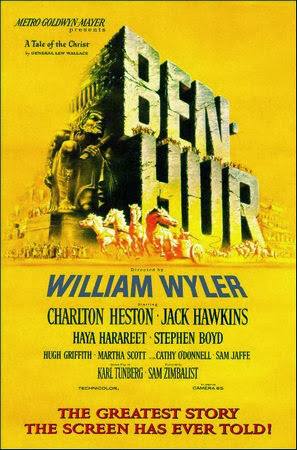
    Rózsa conducts the Pittsburgh Symphony in a suite from “Ben-Hur”:

    Jascha Heifetz plays the Violin Concerto (subsequently adapted for use in “The Private Life of Sherlock Holmes”):

    They don’t make ‘em like Miklós anymore.

  • Castelnuovo-Tedesco Passover Music

    Castelnuovo-Tedesco Passover Music

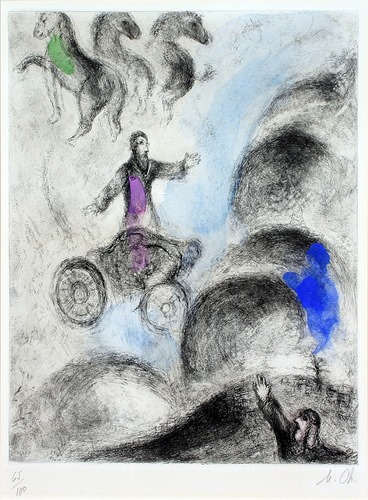
    Under normal circumstances, I surely would have worked Mario Castelnuovo-Tedesco into my playlist this afternoon. To my mind, Castelnuovo-Tedesco’s Violin Concerto No. 2, subtitled “The Prophets,” is perfect for Passover. Written for Jascha Heifetz in 1931, its three movements are named for the Old Testament prophets Isaiah, Jeremiah, and Elijah. It is for Elijah that an extra cup of wine is poured at the Passover Seder. I’m doing my part to set a place for the “The Prophets.” You can enjoy it here by following the ink. Chag Sameach!

  • Franz Waxman’s Hilarious New Year’s Party Piece

    Franz Waxman’s Hilarious New Year’s Party Piece

    Franz Waxman, of course, was one of the great film composers. His music can be heard in “The Bride of Frankenstein,” “Rebecca,” “The Philadelphia Story,” “Sunset Boulevard,” “A Place in the Sun,” “Rear Window,” “Peyton Place,” “The Spirit of St. Louis,” and dozens of others.

    It was customary that Waxman and his family would get together with their neighbors, the Jascha Heifetzes, to welcome the new year with an evening of chamber music. Other guests on these occasions would include violist William Primrose and cellist Gregor Piatigorsky.

    Mainstream classical fare would dominate the festivities until the countdown to midnight. With the turn of the year, the musical selections would become a bit more frivolous.

    Waxman composed his “Auld Lang Syne Variations” in 1947, for one such gathering. This party piece sends up the traditional New Year’s anthem in the styles of several well-known composers.

    Feel free to play along and test your musical knowledge. You’ll find further clues in the work’s subtitles, listed below the video. One can only imagine Heifetz stepping out in “Chaconne a Son Gout.”

    Happy New Year!

  • Jack Benny Violinist Comedian or Virtuoso?

    Jack Benny Violinist Comedian or Virtuoso?

    How good a violinist was Jack Benny? Allegedly a competent one, the owner of a Stradivarius, who mined the comedic potential of “bad playing.”

    Benny in duet with 12 year-old Talia Marcus:

    Later, he repeats the gag with a young Dylana Jenson, who went on to make that classic record of the Sibelius concerto with Ormandy and the Philadelphia Orchestra.

    https://www.youtube.com/watch?v=DdQa-TaQvPs

    Benny with Jascha Heifetz (radio):

    Benny episode (television) featuring Isaac Stern and “Man of 1000 Voices” Mel Blanc as Benny’s music teacher. Note how Blanc’s characterization morphs into Yosemite Sam in moments of pique.

    Benny and Stern play Bach at Carnegie Hall to raise money for American symphony orchestras:

    Jack Benny Fiddles with the Classics:

    Dylana Jenson plays the Sibelius concerto at the old Academy of Music in Philadelphia. Norman Carol is the concertmaster. Ormandy conducts. The RCA recording, made under studio conditions, was issued shortly after.

    https://www.youtube.com/watch?v=o7zwIFLY-vw

  • Howard Ferguson Composer’s Lost Chord Rediscovered

    Howard Ferguson Composer’s Lost Chord Rediscovered

    Howard Ferguson is an interesting figure. Born in Belfast in 1908, he had ambitions to become a composer. To this end, he traveled to London, where he studied at the Royal College of Music with, among others, Ralph Vaughan Williams. He also met and befriended a fellow student, Gerald Finzi. He achieved early success with works like the Octet of 1933, and no less a personage than Jascha Heifetz recorded his Violin Sonata No. 1.

    Even so, over the decades his music has slipped from consciousness, no doubt helped by the fact that by mid-life, he felt he had said everything he had to say as a composer. He devoted his last four decades to musicological pursuits, editing and promoting works of Purcell, Schubert and Finzi. In the 1990s, he also wrote a cookbook, “Cooking Solo.” Ferguson died in 1999, not long after his 91st birthday.

    Thankfully, he lived long enough to hear some fine recordings as part of a modest revival of his music in the 1980s and ‘90s. A number of his chamber works were released on the Hyperion label by fine musicians like Thea King and members of the Nash Ensemble; his Piano Concerto was recorded for EMI by Howard Shelley; and Richard Hickox conducted a disc of his orchestral works for Chandos.

    Also on the latter album is what turned out to be Ferguson’s last completed work, for chorus and orchestra, “The Dream of the Rood,” composed in 1958. After that, the composer embarked on a string quartet, but became frustrated by the lack of a fresh perspective and tore the thing up.

    “The Dream of the Rood” is based on an 8th century Anglo-Saxon poem which marries the Passion story with characteristics of the secular heroic tradition. The poem is framed by a narrator’s vision of a magnificent bejeweled tree. Upon closer inspection, however, he finds its jewels bespattered with blood. It becomes apparent that this tree was the very same upon which Christ was crucified.

    The middle portion of the poem is told from the tree’s perspective, with the tree being cut down and carried away for the purpose of the crucifixion. The nails pierce the tree, yet man and tree endure, refusing to fall, bearing unimaginable pain for the sake of mankind. Just as Christ is resurrected, so is the Cross resurrected, now adorned with gold and silver. It is honored above all trees, just as Christ is honored above all men. The narrator gives praise to God, filled with hope at the prospect of eternal life and a desire to be nearer the glorious Cross.

    “The Dream of the Rood” will be the featured work on the “The Lost Chord” this Easter Sunday. I hope you’ll join me for “Rood Awakening,” tomorrow night at 10 ET, with a repeat Wednesday evening at 6; or that you’ll listen to it later as a webcast at http://www.wwfm.org.

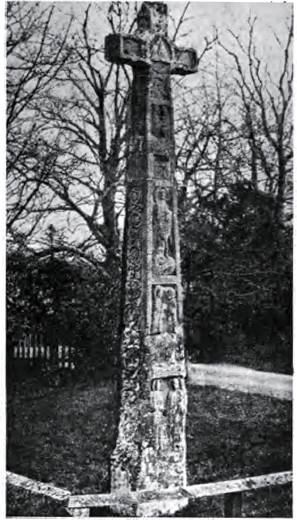
    PHOTO: Portions of the poem are engraved on the 8th century Ruthwell Cross (left, as it appeared between 1823 and 1887; and right, at its current location at Ruthwell Church, Dumfriesshire, Scotland)
Tag Cloud

Aaron Copland (92) Beethoven (95) Composer (114) Film Music (120) Film Score (143) Film Scores (255) Halloween (94) John Williams (185) KWAX (229) Leonard Bernstein (100) Marlboro Music Festival (125) Movie Music (135) Opera (198) Philadelphia Orchestra (88) Picture Perfect (174) Princeton Symphony Orchestra (106) Radio (87) Ralph Vaughan Williams (85) Ross Amico (244) Roy's Tie-Dye Sci-Fi Corner (290) The Classical Network (101) The Lost Chord (268) Vaughan Williams (103) WPRB (396) WWFM (881)

DON’T MISS A BEAT

Receive a weekly digest every Sunday at noon by signing up here


RECENT POSTS