Can you spare ten minutes to soak up some Golden Age greatness? Check out this wonderful medley of some of his classic film scores.
I had a blast picking out the films without looking at the images. I own recordings of all of them, of course.
One of my personal favorites, not in the medley, is “Lust for Life” (1956), in which Kirk Douglas plays Vincent Van Gogh. The composer softens up the edges of his brawny Hungarian sound by dipping into the hazy palette of the French Impressionists.
In a similar mold is this concert work, “The Vintner’s Daughter,” twelve variations inspired by a poem by Juste Olivier, in which a maiden drifts off to sleep in the sun at harvest time and dreams of the arrival of three Hungarian knights. Originally composed for piano in 1953, it was orchestrated two years later at the request of Eugene Ormandy.
The original piano version
For orchestra
Rózsa conducts the Pittsburgh Symphony in his most celebrated music, for “Ben-Hur” (1959)
Jascha Heifetz plays the Violin Concerto (1953; subsequently adapted for use in the 1970 film “The Private Life of Sherlock Holmes”)
They just don’t make ‘em like Miklós anymore.
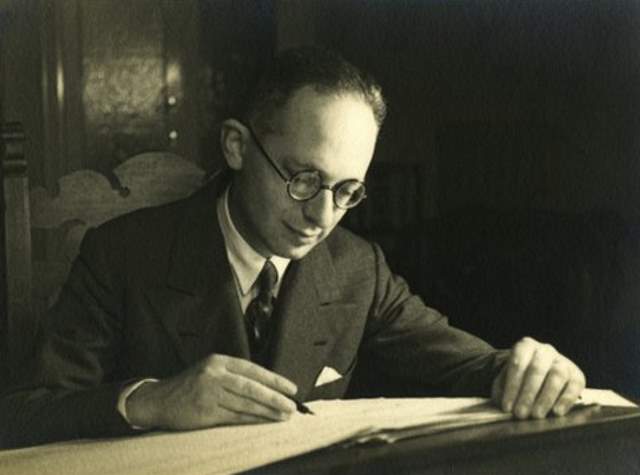
PHOTOS: Rózsa and (top to bottom) “Ben-Hur,” “Lust for Life,” and preparing the Violin Concerto with Jascha Heifetz and Walter Hendl
Things had already been heating up for Mario Castelnuovo-Tedesco for some time. His music was banned from radio and performances of his works were cancelled, well before the passage of Italian racial laws in 1938. Castelnuovo-Tedesco was a Jew living in Mussolini’s Italy. He finally emigrated in 1939, when Arturo Toscanini, who loathed fascism, sponsored the composer’s passage to the United States.
Castelnuovo-Tedesco’s music was embraced by Jascha Heifetz and Andrés Segovia, among others. His Violin Concerto No. 2, “The Prophets,” was given its first performance at Carnegie Hall, with Heifetz the soloist and Toscanini on the podium, in 1933. Its three movements are named for the Biblical figures Isaiah, Jeremiah, and Elijah.
I always make it a point to listen to this piece every year around Passover (which this year begins on Wednesday at sunset), but Castelnuovo-Tedesco is a composer whose music is unfailingly enjoyable in all seasons.
Furthermore, anyone who loves film music owes an incalculable debt to him. He wrote music for some 200 movies (including “And Then There Were None,” with Barry Fitzgerald, and “The Loves of Carmen,” with Rita Hayworth), and as a teacher, his students included André Previn, Nelson Riddle, Herman Stein, Henry Mancini, Jerry Goldsmith, and John Williams.
So thank you, and happy birthday, Mario C-T!
Violin Concerto No. 2 “The Prophets”
Segovia masterclass on the Guitar Concerto No. 1
Radio interview with Segovia and the composer
Toscanini conducts an adventurous program, including Castelnuovo-Tedesco’s “Overture to a Fairy Tale” (which, if I’m not mistaken, is the same as his “Midsummer Night’s Dream Overture”)
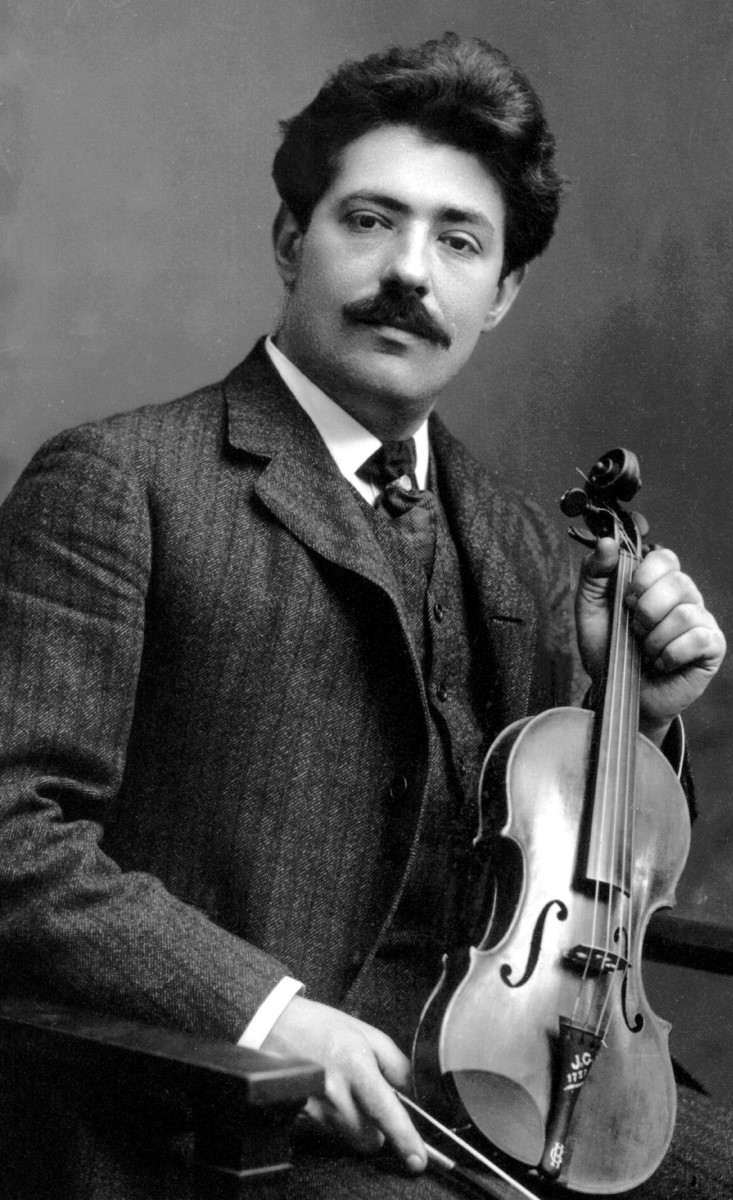
February 2 is not just a day for groundhogs. It also marks the anniversaries of the births of two of the world’s greatest fiddlers.
Fritz Kreisler, the sweet-toned confectioner and purveyor of violin bonbons, was born in Vienna on this date in 1875. Jascha Heifetz, the superhuman technician, who imbued perfection with tonal beauty, was born in Vilnius in 1901. Kreisler was warm, gregarious and easygoing. Heifetz acquired a reputation for a certain cool intensity.
At a point, Kreisler ruffled feathers, not with his playing, but because he casually let slip that many of the 18th century “rediscoveries” he had used to charm audiences, critics, and musicologists were not in fact rediscoveries at all. Nor did they date from the 18th century. Rather they were composed by Kreisler himself. When the professionals complained, Kreisler shrugged.
It would be futile to argue against his serious musical credentials. He gave the world premiere of the Elgar concerto and became a favorite recital partner of Sergei Rachmaninoff. A famous anecdote relates that Kreisler and Rachmaninoff were giving a concert in New York. In the middle of a performance, Kreisler suffered a memory lapse, and as he noodled around on his violin, trying to find his way back, he inched closer to his pianist. “Where are we?” Kreisler whispered. To which Rachmaninoff replied, “Carnegie Hall.”
In 1941, Kreisler was crossing the street, when he was hit by a milk truck. The accident fractured his skull and put him in a coma. Like something out of an early Woody Allen comedy, when he awoke, he could communicate only in Latin and Greek. Thankfully, the effect was only temporary.
Kreisler met Heifetz for the first time at a private press party in 1912. After listening to the boy play through the Mendelssohn concerto, he declared, “We can all just break our fiddles over our knees.” Arthur Nikisch, conductor of the Berlin Philharmonic, said he had never heard such an excellent violinist. The year before, Heifetz had played before a crowd of 25,000, and police had to be summoned to prevent the young virtuoso from being mobbed.
A little more collected was Groucho Marx. When Heifetz met Groucho, he mentioned that he had been earning his living as a violinist since the age of seven. Groucho responded, “Before that, I suppose, you were just a bum.”
Aside from his astounding accomplishments on the concert stage, Heifetz appeared as a mess hall jazz musician in Allied camps across Europe during the Second World War. Under a pseudonym, he wrote “When You Make Love to Me (Don’t Make Believe)” for Bing Crosby. In addition, Heifetz and Bing recorded the “Lullaby” from Benjamin Godard’s opera “Jocelyn.”
Heifetz was an advocate for certain socio-political and environmental causes. Decades before it was a thing, he had his Renault converted into an electric vehicle, and he lobbied for the acceptance of 911 as an emergency number.
Once, after a performance in Israel, he was attacked by a man wielding a crowbar for programming a violin sonata by Richard Strauss. Strauss had remained in Germany during World War II and maintained a fraught relationship with the Nazis. Heifetz, by the way, was Jewish.
Composers who wrote music for him, or whose music he premiered, include Mario Castelnuovo-Tedesco, Erich Wolfgang Korngold, and Sir William Walton. Heifetz commissioned Arnold Schoenberg’s Violin Concerto, but he never played it.
His standard of performance was stratospheric, and he subjected himself to a punishing, though strictly secret, regimen of self-discipline. He delivered until he felt he no longer could, retiring from the concert stage in 1972.
Itzhak Perlman reflected, “The goals he set still remain, and for violinists today, it’s rather depressing that they may never really be attained again.”
Here’s a French film about Heifetz. Interestingly, it opens with him playing one of Kreisler’s forgeries, the “Praeludium and Allegro in the Style of Pugnani”
Kreisler plays the “Meditation” from Massenet’s “Thaïs”
Kreisler plays the Mendelssohn concerto
Kreisler, master of the miniature
Two-part radio interview on the occasion of Kreisler’s 80th birthday, with spoken tributes from Elman, Menuhin, Milstein, Stern, Szigeti and others:
Footage of Heifetz performing Grigoras Dinicu’s “Hora Staccato.” The conductor is Donald Vorhees, longtime music director of the Allentown Symphony Orchestra in Allentown, PA.
Heifetz plays the first movement of the Tchaikovsky Violin Concerto in the 1947 film “Carnegie Hall.” That’s Fritz Reiner on the podium.
From back in the day when classical music was still popular entertainment, Heifetz playing Schubert and Mendelssohn in a short film, with Piatigorsky and Rubinstein. The three of them actually get to act (albeit badly).
Heifetz and Jack Benny
Heifetz and Bing Crosby with the “Lullaby” from Godard’s “Jocelyn”
Heifetz’s popular hit (as Jim Hoyle), sung by Bing
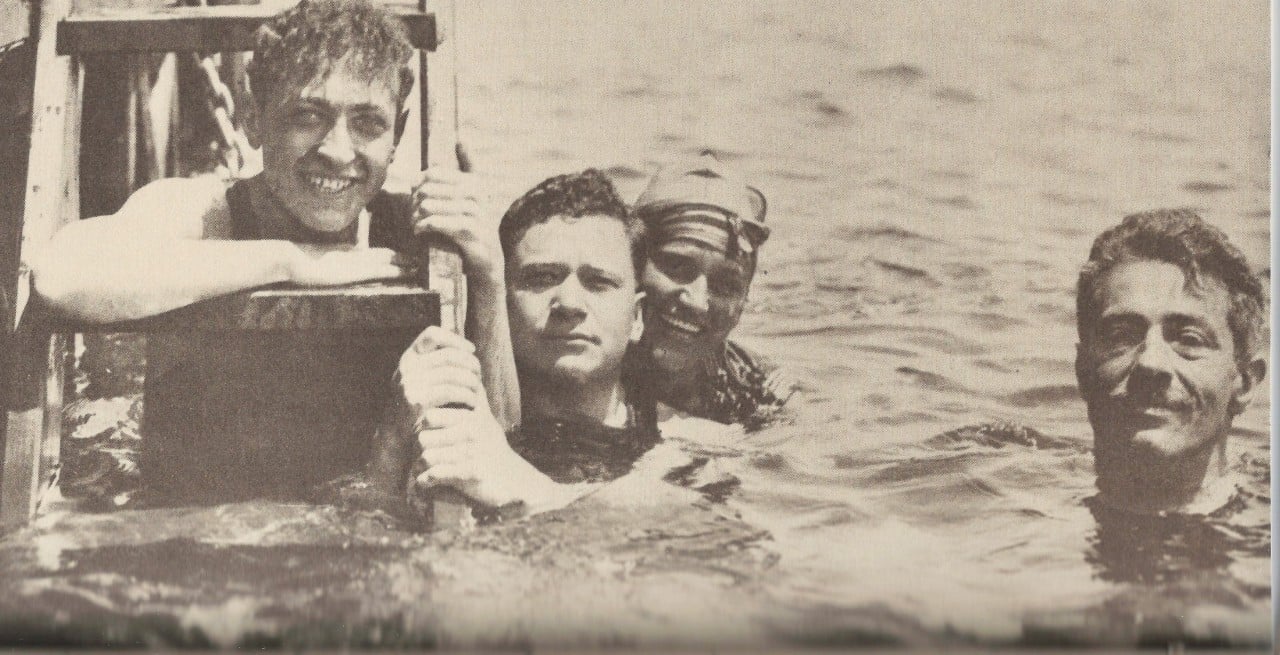
For those of you who are still reeling at the Groundhog’s forecast of six more weeks of winter, here’s a glimpse of two of the greatest violinists of their day – perhaps ever – fiddling around in their bathing suits: Jascha Heifetz, left, and Fritz Kreisler, right, convene at the old swimming hole with their colleague, Efrem Zimbalist, and his wife, soprano Alma Gluck.
It wasn’t just a refreshing summertime dip that the two shared. Kreisler and Heifetz were both born on February 2.
Kreisler, the sweet-toned confectioner and purveyor of violin bonbons, was born in Vienna on this date in 1875. Heifetz, the superhuman technician, who imbued perfection with tonal beauty, was born in Vilnius in 1901. Kreisler was warm, gregarious and easygoing. Heifetz acquired a reputation for a certain cool intensity.
At a point, Kreisler ruffled feathers, not with his playing, but because he casually let slip that many of the 18th century “rediscoveries” he had used to charm audiences, critics, and musicologists were in fact not rediscoveries at all. Nor did they date from the 18th century. Rather they were composed by Kreisler himself. When the professionals complained, Kreisler shrugged.
It would be futile to argue against his serious musical credentials. He gave the world premiere of the Elgar concerto and became a favorite recital partner of Sergei Rachmaninoff. A famous anecdote relates that Kreisler and Rachmaninoff were giving a concert in New York. In the middle of a performance, Kreisler suffered a memory lapse, and as he noodled around on his violin, trying to find his way back, he inched closer to his pianist. “Where are we?” Kreisler whispered. To which Rachmaninoff replied, dryly, “Carnegie Hall.”
In 1941, Kreisler was crossing the street, when he was hit by a milk truck. The accident fractured his skull and put him in a coma. Like something out of an early Woody Allen comedy, when he awoke, he could communicate only in Latin and Greek. Thankfully, the effect was only temporary.
Kreisler met Heifetz for the first time at a private press party in 1912. After listening to the boy play through the Mendelssohn concerto, he declared, “We can all just break our fiddles over our knees.” Arthur Nikisch, conductor of the Berlin Philharmonic, said he had never heard such an excellent violinist. The year before, Heifetz had played before a crowd of 25,000, and police had to be summoned to prevent the young virtuoso from being mobbed.
A little more collected was Groucho Marx. When Heifetz met Groucho, he mentioned that he had been earning his living as a violinist since the age of seven. Groucho responded, “Before that, I suppose, you were just a bum.”
Aside from his astounding accomplishments on the concert stage, Heifetz appeared as a mess hall jazz musician in Allied camps across Europe during the Second World War. Under a pseudonym, he wrote “When You Make Love to Me (Don’t Make Believe)” for Bing Crosby. In addition, Heifetz and Bing recorded the “Lullaby” from Benjamin Godard’s opera “Jocelyn.”
Heifetz was an advocate for certain socio-political and environmental causes. Decades before it was a thing, he had his Renault converted into an electric vehicle, and he lobbied for the acceptance of 911 as an emergency number.
Once, after a performance in Israel, he was attacked by a man wielding a crowbar for programming a violin sonata by Richard Strauss. Strauss had remained in Germany during World War II and maintained a fraught relationship with the Nazis. Heifetz, by the way, was Jewish.
Composers who wrote music for him, or whose music he premiered, include Mario Castelnuovo-Tedesco, Erich Wolfgang Korngold, and Sir William Walton. Heifetz commissioned Arnold Schoenberg’s Violin Concerto, but he never played it.
His standard of performance was stratospheric, and he subjected himself to a punishing, though strictly secret, regimen of self-discipline. He delivered until he felt he no longer could, retiring from the concert stage in 1972.
Itzhak Perlman reflected, “The goals he set still remain, and for violinists today, it’s rather depressing that they may never really be attained again.”
Here’s a French film about Heifetz. Interestingly, it opens with him playing one of Kreisler’s forgeries, the “Praeludium and Allegro in the Style of Pugnani”
Kreisler plays the “Meditation” from Massenet’s “Thaïs”
Kreisler plays the Mendelssohn concerto
Kreisler, master of the miniature
Two-part radio interview on the occasion of Kreisler’s 80th birthday, with spoken tributes from Elman, Menuhin, Milstein, Stern, Szigeti and others:
Footage of Heifetz performing Grigoras Dinicu’s “Hora Staccato.” The conductor is Donald Vorhees, longtime music director of the Allentown Symphony Orchestra in Allentown, PA.
Heifetz plays the first movement of the Tchaikovsky Violin Concerto in the 1947 film “Carnegie Hall.” That’s Fritz Reiner on the podium.
From back in the day when classical music was still popular entertainment, Heifetz playing Schubert and Mendelssohn in a short film, with Piatigorsky and Rubinstein. The three of them actually get to act (albeit badly).
Heifetz and Jack Benny
Heifetz and Bing Crosby with the “Lullaby” from Godard’s “Jocelyn”
Heifetz’s popular hit (as Jim Hoyle), sung by Bing
Heifetz plays it – on the piano!
If any of this seems oddly familiar, it’s because I used much of it in a post last year. But when I went back and reread it, I realized the Ross of 2022 couldn’t do it any better! At least I modified the opening to tie it in with the new photo.
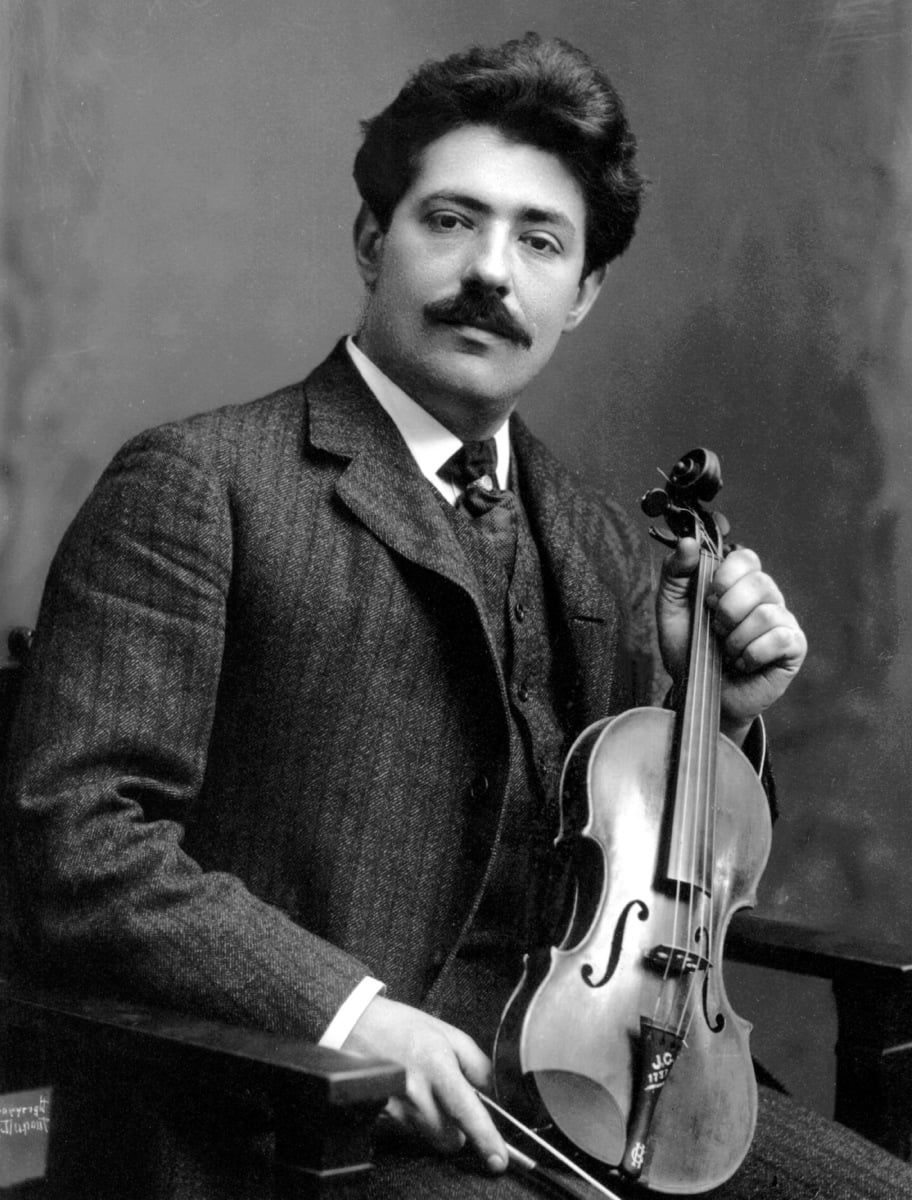
Today encompasses the anniversaries of the births of two of the greatest fiddlers who ever lived.
Fritz Kreisler, the sweet-toned confectioner and purveyor of violin bonbons, was born in Vienna on this date in 1875. Jascha Heifetz, the superhuman technician, who imbued perfection with tonal beauty, was born in Vilnius in 1901. Kreisler was warm, gregarious and easygoing. Heifetz acquired a reputation for a certain cool intensity.
At a point, Kreisler ruffled feathers, not with his playing, but because he casually let slip that many of the 18th century “rediscoveries” he had used to charm audiences, critics, and musicologists were not in fact rediscoveries at all. Nor did they date from the 18th century. Rather they were composed by Kreisler himself. When the professionals complained, Kreisler shrugged.
It would be futile to argue against his serious musical credentials. He gave the world premiere of the Elgar concerto and became a favorite recital partner of Sergei Rachmaninoff. A famous anecdote relates that Kreisler and Rachmaninoff were giving a concert in New York. In the middle of a performance, Kreisler suffered a memory lapse, and as he noodled around on his violin, trying to find his way back, he inched closer to his pianist. “Where are we?” Kreisler whispered. To which Rachmaninoff replied, “Carnegie Hall.”
In 1941, Kreisler was crossing the street, when he was hit by a milk truck. The accident fractured his skull and put him in a coma. Like something out of an early Woody Allen comedy, when he awoke, he could communicate only in Latin and Greek. Thankfully, the effect was only temporary.
Kreisler met Heifetz for the first time at a private press party in 1912. After listening to the boy play through the Mendelssohn concerto, he declared, “We can all just break our fiddles over our knees.” Arthur Nikisch, conductor of the Berlin Philharmonic, said he had never heard such an excellent violinist. The year before, Heifetz had played before a crowd of 25,000, and police had to be summoned to prevent the young virtuoso from being mobbed.
A little more collected was Groucho Marx. When Heifetz met Groucho, he mentioned that he had been earning his living as a violinist since the age of seven. Groucho responded, “Before that, I suppose, you were just a bum.”
Aside from his astounding accomplishments on the concert stage, Heifetz appeared as a mess hall jazz musician in Allied camps across Europe during the Second World War. Under a pseudonym, he wrote “When You Make Love to Me (Don’t Make Believe)” for Bing Crosby. In addition, Heifetz and Bing recorded the “Lullaby” from Benjamin Godard’s opera “Jocelyn.”
Heifetz was an advocate for certain socio-political and environmental causes. Decades before it was a thing, he had his Renault converted into an electric vehicle, and he lobbied for the acceptance of 911 as an emergency number.
Once, after a performance in Israel, he was attacked by a man wielding a crowbar for programming a violin sonata by Richard Strauss. Strauss had remained in Germany during World War II and maintained a fraught relationship with the Nazis. Heifetz, by the way, was Jewish.
Composers who wrote music for him, or whose music he premiered, include Mario Castelnuovo-Tedesco, Erich Wolfgang Korngold, and Sir William Walton. Heifetz commissioned Arnold Schoenberg’s Violin Concerto, but he never played it.
His standard of performance was stratospheric, and he subjected himself to a punishing, though strictly secret, regimen of self-discipline. He delivered until he felt he no longer could, retiring from the concert stage in 1972.
Itzhak Perlman reflected, “The goals he set still remain, and for violinists today, it’s rather depressing that they may never really be attained again.”
Here’s a French film about Heifetz. Interestingly, it opens with him playing one of Kreisler’s forgeries, the “Praeludium and Allegro in the Style of Pugnani”
Kreisler plays the “Meditation” from Massenet’s “Thaïs”
Kreisler plays the Mendelssohn concerto
Kreisler, master of the miniature
Two-part radio interview on the occasion of Kreisler’s 80th birthday, with spoken tributes from Elman, Menuhin, Milstein, Stern, Szigeti and others:
Footage of Heifetz performing Grigoras Dinicu’s “Hora Staccato.” The conductor is Donald Vorhees, longtime music director of the Allentown Symphony Orchestra in Allentown, PA.
Heifetz plays the first movement of the Tchaikovsky Violin Concerto in the 1947 film “Carnegie Hall.” That’s Fritz Reiner on the podium.
From back in the day when classical music was still popular entertainment, Heifetz playing Schubert and Mendelssohn in a short film, with Piatigorsky and Rubinstein. The three of them actually get to act (albeit badly).
Heifetz and Jack Benny
Heifetz and Bing Crosby with the “Lullaby” from Godard’s “Jocelyn”
Heifetz’s popular hit (as Jim Hoyle), sung by Bing