Tag: Jennifer Higdon

  • Atlanta Symphony Premieres on KWAX

    Atlanta Symphony Premieres on KWAX

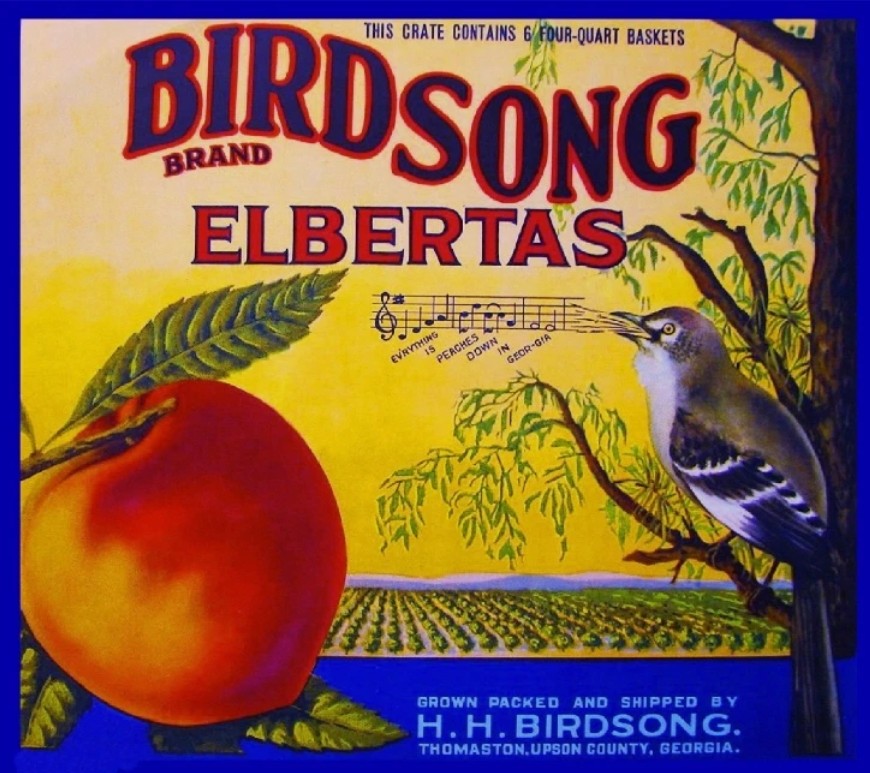
    This Labor Day weekend, on “The Lost Chord,” enjoy an hour of Georgia peaches – a couple of American premieres courtesy of the Atlanta Symphony Orchestra.

    Longtime Philadelphia-based Pultizer Prize winner Jennifer Higdon composed “On a Wire” for the new music sextet Eighth Blackbird. A concerto grosso of sorts for six soloists, the piece begins with the musicians gathered around an open-lidded piano, most of them bowing the strings. The composer asks the listener to imagine six blackbirds sitting on a wire.

    We’ll follow that with “Q.E.D.: Engaging Richard Feynman,” by Michael Gandolfi. Feynman, the noted physicist and Nobel laureate, was as renowned for his wit as for his inquisitive mind.

    Gandolfi’s piece does not focus on scientific inquiry. Rather it takes as its starting point two anecdotes shared by the physicist in interviews with the BBC, which the composer discovered on YouTube. In performance, the video clips were shown to the audience preceding the work’s two sections. Understandably, these have been omitted from the recording.

    The sections themselves are settings of texts by various poets illustrating a specific theme. The first concerns a challenge put by an artist friend of Feynman suggesting that as a scientist he cannot truly appreciate the beauty of a flower. Feynman counters that scientific knowledge, a greater understanding of the flower, only adds to its beauty, rather than detracts.

    The second grows out of an anecdote concerning Feynman’s boyhood ignorance of the name of a certain kind of bird, a brown-throated thrush, and his realization that a name tells one nothing about the bird, but rather something about the people of various cultures who named the bird. He concludes, “Now, let’s look at the bird.”

    Part One is titled “On Waking,” and includes settings of Gertrude Stein, Emily Dickinson, and the Irish Republican poet Joseph Campbell. Part II, “Song of the Universal,” includes settings of Walt Whitman, Ralph Waldo Emerson, and Siegfried Sassoon.

    The sung texts are mostly incomprehensible. However, it sure is nice to listen to.

    That’s a double-helping of “Georgia Peaches” with the Atlanta Symphony Orchestra on “The Lost Chord,” now in syndication on KWAX the radio station of the University of Oregon!


    Clip and save the start times for all three of my recorded shows:

    PICTURE PERFECT, the movie music show – Friday at 8:00 PM EDT/5:00 PM PDT

    SWEETNESS AND LIGHT, the light music program – Saturday at 11:00 AM EDT/8:00 AM PDT

    THE LOST CHORD, unusual and neglected rep – Saturday at 7:00 PM EDT/4:00 PM PDT

    Stream them, wherever you are, at the link!

    https://kwax.uoregon.edu/

  • Easter Sunday Cathedral Soundscapes

    Easter Sunday Cathedral Soundscapes

    Happy Easter, everyone! I’ve been all wrapped up with Easter activities for most of the day, so I’m only just getting around to extending the invitation for you to cap off your Sunday by joining me on “The Lost Chord” for an hour of pieces inspired or influenced by cathedrals.

    We’ll hear Jennifer Higdon’s “blue cathedral” (all lower-case), from 1999, commissioned by the Curtis Institute of Music in honor of its 75th anniversary. The work is dedicated to the memory of Higdon’s younger brother, Andrew Blue. In the writing of the piece, she imagined a journey through a glass cathedral in the sky, with transparent walls and crystal pillars, through which clouds and endless expanses of blue are visible.

    Guitarist-composer Agustin Barrios wrote “La Catedral” (“The Cathedral”) in 1921, after having heard music of Johann Sebastian Bach performed on the organ of the cathedral of San Juan Bautista de las Misiones in his native Paraguay.

    Englishman Joby Talbot composed “Path of Miracles” in 2005. The work – dedicated to the memory of his father, Vincent – was written on a commission from the vocal chamber group Tenebrae. Its four movements reflect stops along the medieval pilgrimage route to Santiago. The third of these, an evocation of León Cathedral, is imagined as a kind of “Lux Aeterna,” the interior of the space bathed in light.

    Finally, American composer Adolphus Hailstork recollected his experiences as a child chorister at the Cathedral of All Saints in Albany, New York, when he came to write his “Sonata da Chiesa” (“Church Sonata”) in 1992. Hailstork, composer-in-residence at Old Dominion University in Norfolk, Virginia, conceived the work’s seven vibrant sections – “Exaltation,” “O Great Mystery,” “Adoration,” “Jubilation,” “O Lamb of God,” “Grant Us Thy Peace,” and “Exaltation” – for string orchestra, providing a joyous conclusion to the hour.

    I hope you’ll join me for “Master Builders” – architects of cathedrals in sound – this Sunday night at 10:00 EDT, on WWFM – The Classical Network and wwfm.org.


    PHOTO: The vaulted ceiling of León Cathedral

  • Music Greats Zhou Tian Hailstork Higdon Hayes

    The next time I get an attack of the “contemporary music blues,” I need only think of this amazing concert. Left to right: Zhou Tian, Adolphus Hailstork, David Hayes, and Jennifer Higdon. So wonderful to finally meet Adolphus Hailstork, whose music I have admired since the 1980s, to reconnect with Jennifer Higdon, who is one of the nicest people (and who used to live two blocks from me in Philadelphia), and to catch up with Zhou Tian, a former radio guest and now something of a friendly acquaintance. David Hayes I remember from when he was still a student at Curtis, the kid who went on to conduct the Philadelphia Singers. Of course his career has only continued to blossom. A truly memorable evening, and a concert chock-full of good and even great things!

  • Birds in Music From Mozart to Eighth Blackbird

    Birds in Music From Mozart to Eighth Blackbird

    This one goes out to all the red-winged blackbirds, grackles, starlings, and cowbirds that have been swarming my feeders for the past week.

    Jennifer Higdon’s “On a Wire,” named for the familiar sight of birds, well, hanging out on a wire, was composed for the contemporary music sextet eighth blackbird (which markets itself all in the lower-case). Interestingly the piano part includes passages that have adjacent musicians bow the strings inside the instrument. The technique is called (wait for it) “bowed piano.” You can identify the members of eighth blackbird by their instruments: flute, clarinet, piano, percussion, violin, and cello.

    eighth blackbird is named for Wallace Stevens’ “Thirteen Ways of Looking at a Blackbird,” a poem that’s been set by many composers. Lukas Foss’ response is one of the more frequently encountered.

    Starlings aren’t always an annoyance. Wolfgang Amadeus Mozart was so charmed by one during a visit to a Viennese pet shop that he brought him home to his family. From the evidence of one of the composer’s diary entries, we know that a theme used in his Piano Concerto No. 17 was inspired by a song that his fine feathered friend had sung to him. Admittedly, Mozart tidied it up a bit first. (Originally, there had been an out-of-place G-sharp.)

    I understand that everyone needs to eat, and I don’t begrudge a handful of any of these birds, but when it becomes a winged mob in leather jackets with chains, then I’m compelled to throw up the sash and trumpet through an old wrapping-paper tube.

    Gentle birds, be reasonable! Eat well, but then, please – go in peace!

    More about Mozart’s starling here

    https://interlude.hk/mozart-inspired-pet-starling/

    BONUS: From “Where’s Charley?” “My darling, my darling, I’ve fluttered and fled like a starling…”

  • Philly Women Composers Revisited

    Philly Women Composers Revisited

    I’m happy to note that in the past several years the idea of month-long celebrations devoted to “Women’s history” or “Black history” has started to seem almost old-fashioned, as the programming of concerts and radio broadcasts has become more and more diverse, so that it’s no longer unusual to encounter music by “minority” composers, with increasing regularity, year-round.

    I feel the historic shift most keenly as I reach back into the “Lost Chord” archive to 2010, when I believe the show that will air this evening was probably already a repeat. (I began the series in 2003.) Time was when one really had to scratch around in order to find enough material to fill out an hour’s theme. Looking back now, over a decade later, recordings have yielded an embarrassment of riches.

    I hope you’ll join me tonight as we revisit some of the selections available in the early years of the 21st century, for a program of music by women composers of Philadelphia.

    Andrea Clearfield (born 1960) was raised in Bala Cynwyd. She studied at Muhlenberg College in Allentown, PA (where, by the way, this particular broadcaster got his start in community radio in 1986). At Muhlenberg, she was mentored by Margaret Garwood. She then studied at Philadelphia College of the Performing Arts (now the University of the Arts) and at Temple University, where among her teachers was Maurice Wright.

    Clearfield herself taught at the University of the Arts from 1986 to 2011 (after this show was recorded, so some of the info may be a little out of date). She is well-known in Center City for a long-running, monthly, multidisciplinary salon held at her studio, located not far from the Kimmel Center for the Performing Arts. Since the pandemic, this has been a virtual event, but the salon has run, more or less uninterrupted, since its inception in 1986.

    Clearfield’s recorded discography has expanded considerably since 2010, but for tonight we’ll sample her work for oboe and piano, “Unremembered Wings,” written in 2001.

    Then we’ll turn to Jennifer Higdon (born in 1962), whose career by this time had already taken off like a rocket. She would be awarded the Pulitzer Prize for Music for her Violin Concerto in 2010. Again, assuming the show was recorded before February of that year, it would have been at least a few months before the honor was bestowed in May.

    Higdon, born in Brooklyn to an artistic family, grew up in Atlanta and Seymour, TN. She studied flute at Bowling Green State University, where she was encouraged to pursue composition. This led her to the Curtis Institute of Music in Philadelphia, where her teachers included David Loeb and Ned Rorem. She also received a Master of Arts and PhD in composition from the University of Pennsylvania, where she studied with George Crumb.

    Parenthetically, we were practically neighbors during my final decade in Philadelphia. Even so, it was only through the station that I finally met her, and I interviewed her for the paper a few years ago.

    Tonight, we’ll hear her “Concerto for Orchestra,” written for the hometown band – the Philadelphia Orchestra – but recorded by the Atlanta Symphony, under the direction of her old friend from Bowling Green, Robert Spano.

    Finally, we’ll turn to Evelyn Simpson-Curenton (born in 1953). Now based in Washington DC, she is music director of the Washington Performing Arts Men and Women of the Gospel and an associate of the Smithsonian Institute. After graduating from Germantown High School, she earned a BM in Music Education and Voice from Temple University. She’s received commissions from George Shirley and Duke Ellington, among others, and provided arrangements of spirituals for Jessye Norman and Kathleen Battle.

    We’ll listen to Simpson-Curenton’s setting of Psalm 91, “My Soul Hath Found Refuge in Thee,” in a performance by the ensemble VocalEssence under the direction of Philip Brunelle.

    Philadelphia is our sister city tonight, on “Sisters of Brotherly Love” – selections for hopefully soon-to-be-outmoded Women’s History Month – this Sunday night at 10:00 EST, on WWFM – The Classical Network and wwfm.org.


    PHOTOS (clockwise from left): Higdon, Clearfield, and Simpson-Curenton

Tag Cloud

Aaron Copland (92) Beethoven (95) Composer (114) Film Music (120) Film Score (143) Film Scores (255) Halloween (94) John Williams (185) KWAX (229) Leonard Bernstein (100) Marlboro Music Festival (125) Movie Music (135) Opera (198) Philadelphia Orchestra (88) Picture Perfect (174) Princeton Symphony Orchestra (106) Radio (87) Ralph Vaughan Williams (85) Ross Amico (244) Roy's Tie-Dye Sci-Fi Corner (290) The Classical Network (101) The Lost Chord (268) Vaughan Williams (103) WPRB (396) WWFM (881)

DON’T MISS A BEAT

Receive a weekly digest every Sunday at noon by signing up here


RECENT POSTS