Tag: Jennifer Higdon

  • Atlanta Symphony Celebrates Labor Day

    Atlanta Symphony Celebrates Labor Day

    On this eve of Labor Day, it’s an hour of American music courtesy of the Atlanta Symphony Orchestra.

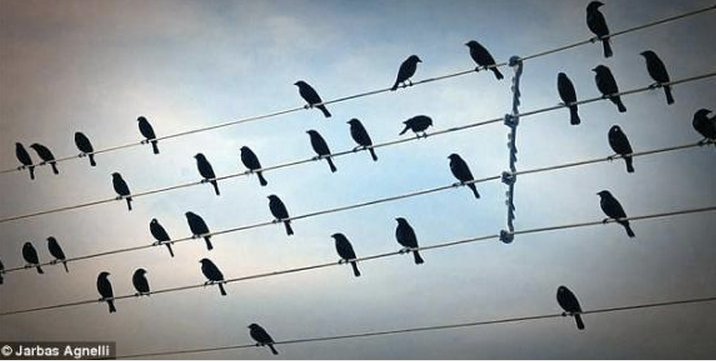
    The Philadelphia-based Pultizer Prize winner Jennifer Higdon composed “On a Wire” for the new music sextet known as Eighth Blackbird. A concerto grosso of sorts for six soloists, the piece begins with the musicians gathered around an open-lidded piano, most of them bowing the strings. The composer asks the listener to imagine six blackbirds sitting on a wire.

    We’ll follow that with “Q.E.D.: Engaging Richard Feynman,” by Michael Gandolfi. Feynman, the noted physicist and Nobel laureate, was as renowned for his wit as for his inquisitive mind. Gandolfi’s piece does not focus on scientific inquiry. Rather it takes as its starting point two anecdotes shared by the physicist in interviews with the BBC, which the composer discovered on YouTube. In performance, the video clips were shown to the audience preceding the work’s two sections. Understandably, these have been omitted from the recording.

    The sections themselves are settings of texts by various poets illustrating a specific theme. The first concerns a challenge put by an artist friend of Feynman suggesting that as a scientist he cannot truly appreciate the beauty of a flower. Feynman counters that scientific knowledge, a greater understanding of the flower, only adds to its beauty, rather than detracts.

    The second grows out of an anecdote concerning Feynman’s boyhood ignorance of the name of a certain kind of bird, a brown-throated thrush, and his realization that a name tells one nothing about the bird, but rather something about the people of various cultures who named the bird. He concludes, “Now, let’s look at the bird.”

    Part One is titled “On Waking,” and includes settings of Gertrude Stein, Emily Dickinson and the Irish Republican poet Joseph Campbell. Part II, “Song of the Universal,” includes settings of Walt Whitman, Ralph Waldo Emerson and Siegfried Sassoon.

    The sung texts are mostly incomprehensible. However, it sure is nice to listen to.

    Join me for an hour of Georgia peaches, with the Atlanta Symphony Orchestra, this Sunday night at 10:00 EDT, on WWFM – The Classical Network and wwfm.org.
  • Easter Music: Cathedrals in Sound

    Easter Music: Cathedrals in Sound

    Happy Easter, everyone! I’ve been all tied up with Easter activities for most of the day, so I’m only just getting around to extending the invitation for you to cap off your Sunday by joining me on “The Lost Chord” for an hour of pieces inspired or influenced by cathedrals.

    We’ll hear Jennifer Higdon’s “blue cathedral” (all lower-case), from 1999, commissioned by the Curtis Institute of Music in honor of its 75th anniversary. The work is dedicated to the memory of Higdon’s younger brother, Andrew Blue. In the writing of the piece, she imagined a journey through a glass cathedral in the sky, with transparent walls and crystal pillars, through which clouds and endless expanses of blue would be visible.

    Guitarist-composer Agustin Barrios wrote “La Catedral” (“The Cathedral”) in 1921, after having heard music of Johann Sebastian Bach performed on the organ of the cathedral of San Juan Bautista de las Misiones in his native Paraguay.

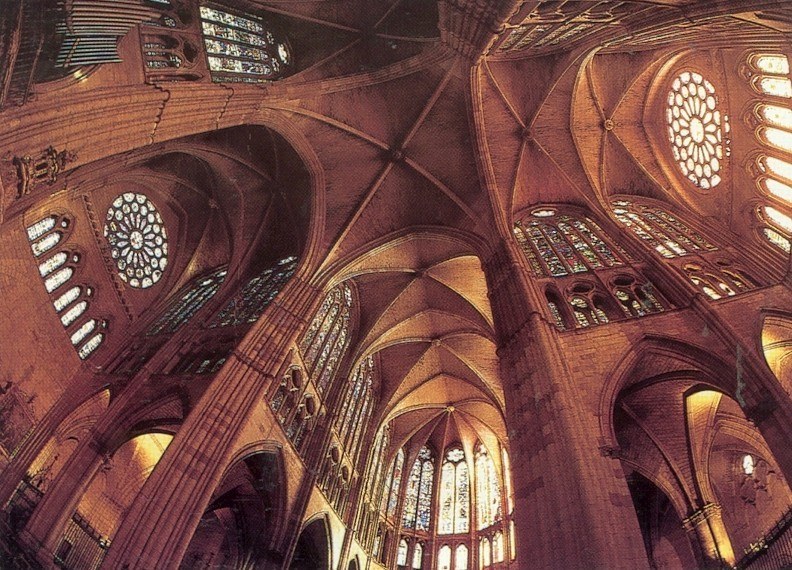
    Englishman Joby Talbot composed “Path of Miracles” in 2005. The work – dedicated to the memory of his father, Vincent – was written on a commission from the vocal chamber group Tenebrae. Its four movements reflect stops along the medieval pilgrimage route to Santiago. The third of these, an evocation of León Cathedral, is imagined as a kind of “Lux Aeterna,” the interior of the space bathed in light.

    Finally, American composer Adolphus Hailstork recollected his experiences as a child chorister at the Cathedral of All Saints in Albany, New York, when he came to write his “Sonata da Chiesa” (“Church Sonata”) in 1992. Hailstork, composer-in-residence at Old Dominion University in Norfolk, Virginia, conceived the work’s seven vibrant sections – “Exaltation,” “O Great Mystery,” “Adoration,” “Jubilation,” “O Lamb of God,” “Grant Us Thy Peace,” and “Exaltation” – for string orchestra, providing a joyous conclusion to the hour.

    I hope you’ll join me for “Master Builders: Architects of Cathedrals in Sound,” tonight at 10 EDT, with a repeat Wednesday evening at 6; or that you’ll listen to it later as a webcast at wwfm.org.


    PHOTO: The vaulted ceiling of León Cathedral

  • Atlanta Symphony’s Thanksgiving: American Music

    Atlanta Symphony’s Thanksgiving: American Music

    Thanksgiving is always a good excuse to play American music, and this year, in light of all the organization has been through recently, I thought I’d devote an hour to recordings of the Atlanta Symphony Orchestra.

    The musicians and management recently reached an agreement, with the help of outside federal mediators, after ten months of contract negotiations that culminated in a two-month player lockout. The two sides arrived at a four-year deal, and the orchestra is back to work. As the major symphonic organization in the Southeastern United States, this is indeed a cause for thanksgiving.

    This Sunday night on “The Lost Chord,” we’ll hear two works co-commissioned by the symphony from representatives of the so-called “Atlanta School,” composers frequently championed and recorded by the orchestra and its music director, Robert Spano.

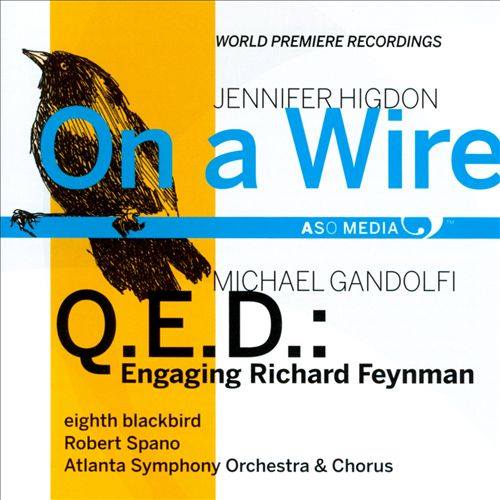
    Jennifer Higdon, now one of the most successful of American composers, a Pulitzer Prize winner who teaches at the Curtis Institute of Music, studied conducting with Spano at Bowling Green. She wrote a concerto grosso of sorts for the New Music sextet eighth blackbird (which identifies itself, modestly, in the lower case). The group performs with the symphony in “On a Wire.” The composer asks the listener to imagine six blackbirds, sitting on a wire.

    Birds also play a role in Michael Gandolfi’s “Q.E.D.: Engaging Richard Feynman,” inspired by the Nobel Prize-winning physicist.

    Gandolfi’s piece doesn’t focus on scientific inquiry. Rather it takes as its starting point two anecdotes shared by Feynman in interviews with the BBC, which the composer discovered on YouTube.

    The first concerns a challenge put by an artist friend of Feynman suggesting that as a scientist he cannot truly appreciate the beauty of a flower. Feynman counters that scientific knowledge, a greater understanding of the flower, only adds to its beauty, rather than detracts.

    The second grows out of an anecdote concerning Feynman’s boyhood ignorance of the name of a certain kind of bird, a brown-throated thrush, and his realization that a name tells nothing about the bird, but rather something about the people who named the bird. He concludes, “Now, let’s look at the bird.”

    The piece, scored for chorus and orchestra, is organized into two sections made up of settings of texts by various poets illustrating their respective themes, including those of Gertrude Stein, Emily Dickinson, Walt Whitman, Ralph Waldo Emerson, Siegfried Sassoon, and the Irish Republican Joseph Campbell (not to be confused with the mythologist).

    Both works appear on an album issued on the orchestra’s ASO Media label.

    I hope you’ll join me for “Georgia Peaches,” American music performed by the Atlanta Symphony Orchestra, this Sunday night at 10 ET, with a repeat Wednesday evening at 6 – or that you’ll listen to it later as a webcast at http://www.wwfm.org.

  • Higdon Weds Alsop Officiates

    Higdon Weds Alsop Officiates

    I just learned of the marriage of composer Jennifer Higdon, and I was wondering if conductors are like ship captains, if Marin Alsop can officiate at a wedding? It turns out, in California, a person can become a Deputy Commissioner of Civil Marriages for 24 hours with the right paperwork.

    Alsop married Higdon and her high school sweetheart Cheryl Lawson early last month. Lawson is the manager of Higdon’s publishing company. Higdon, who is on the faculty of the Curtis Institute of Music, and whose works are frequently programmed by the Philadelphia Orchestra, received a Pulitzer Prize in 2010 for her Violin Concerto.

    Alsop previously officiated at the wedding of composers John Corigliano and Mark Adamo. Corigliano was recipient of a Pulitzer Prize for his Symphony No. 2 in 2001 and an Academy Award for his score to “The Red Violin” in 1999.

    Alsop, a former protégée of Leonard Bernstein, has been music director of the Baltimore Symphony Orchestra since 2007.

    I’m just hurt I’m only just now learning about the wedding, since I only live a block away from the happy couple.

    PHOTO: With that CD collection, I’d marry her, too. (Actually this looks a lot like my apartment, minus the piano.)

Tag Cloud

Aaron Copland (92) Beethoven (95) Composer (114) Film Music (120) Film Score (143) Film Scores (255) Halloween (94) John Williams (185) KWAX (229) Leonard Bernstein (100) Marlboro Music Festival (125) Movie Music (135) Opera (198) Philadelphia Orchestra (88) Picture Perfect (174) Princeton Symphony Orchestra (106) Radio (87) Ralph Vaughan Williams (85) Ross Amico (244) Roy's Tie-Dye Sci-Fi Corner (290) The Classical Network (101) The Lost Chord (268) Vaughan Williams (103) WPRB (396) WWFM (881)

DON’T MISS A BEAT

Receive a weekly digest every Sunday at noon by signing up here


RECENT POSTS