Tag: Jerome Moross

  • Film Composers Beyond the Screen

    Film Composers Beyond the Screen

    Played out on the Oscars?

    This Sunday night on “The Lost Chord,” enjoy a triple-feature of concert works by composers better recognized for their work in film.

    First, Jerome Moross was ensured a kind of immortality in the hearts of moviegoers for his Academy Award nominated score for “The Big Country.” He composed music for 16 films in all – comparatively few, actually, on account of a bicoastal career. (He was based in New York City.)

    Off-screen, he wrote music for five ballets, a symphony, a flute concerto, various works for orchestra and chamber ensemble, and a one-act opera, “Sorry, Wrong Number.” His best-known musical theatre piece is “The Golden Apple,” which spawned the ever-green “Lazy Afternoon.”

    Tonight, we’ll hear his delightful “Sonatina for Clarinet Choir” of 1966.

    Very little need be said of John Williams. The most successful film composer of all time, Williams has been a household name since the 1970s, thanks to the one-two punch of “Jaws” and “Star Wars.” But by then, he was already two decades into a career that’s now spanned 65 years. With 52 Academy Award nominations and five wins, he is the second most nominated figure in the history of the Academy, behind only Walt Disney.

    For the concert hall, Williams has written music for just about every instrument, including an impressive body of concertos. Tonight, we’ll hear his “Essay for Strings,” composed in 1965, when he was 33 years-old.

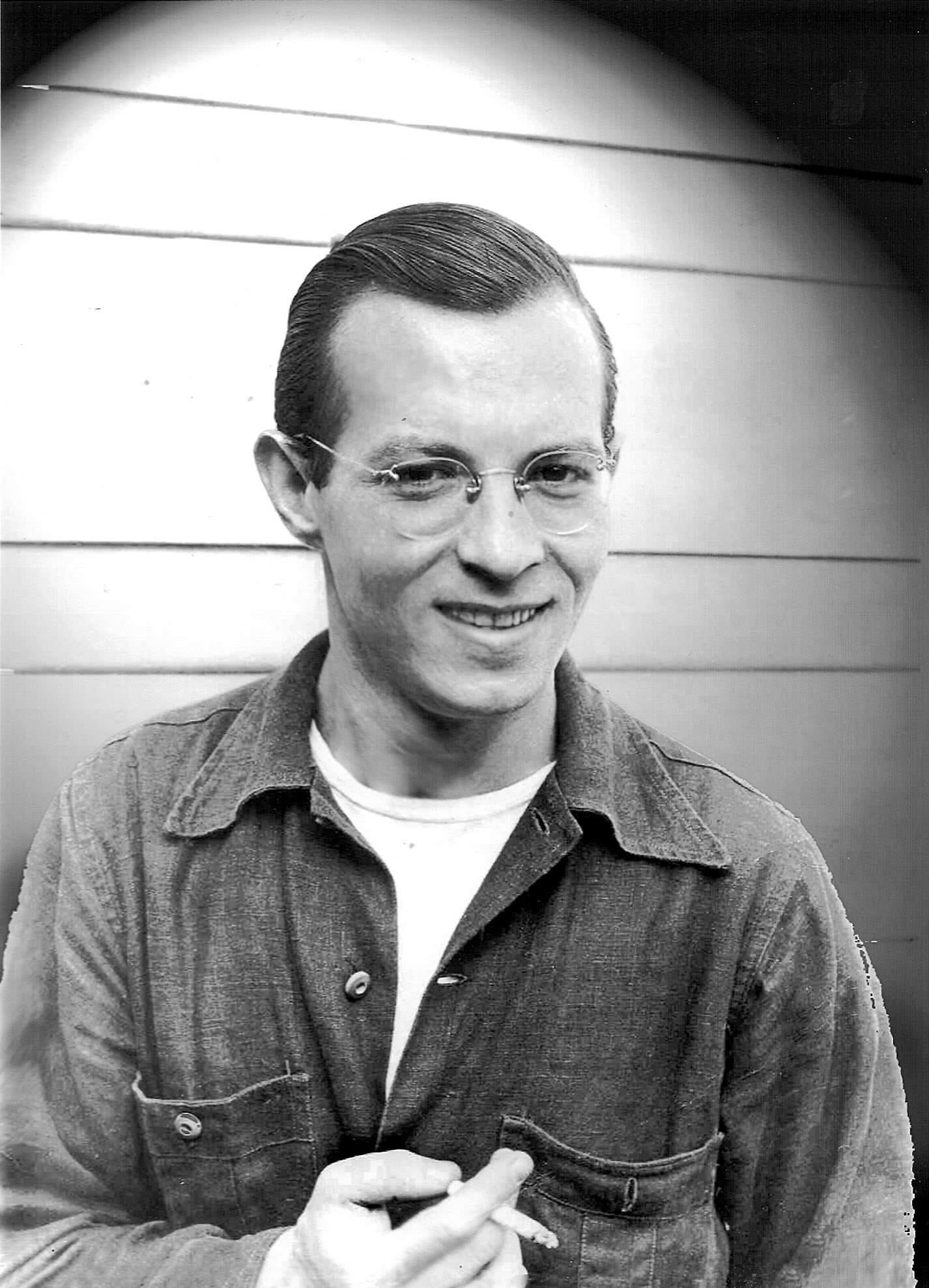
    Finally, English composer Laurie Johnson (pictured) – still with us at 94 – is appreciated for his contributions to, among others, Stanley Kubrick’s “Dr. Strangelove,” the Hammer cult favorite “Captain Kronos – Vampire Hunter,” and the classic TV series “The Avengers.”

    Gramophone Magazine described his “Symphony: Synthesis,” composed in 1971, as a masterpiece. “The work becomes increasingly fascinating with each listening,” writes the critic. “This is perhaps the first truly successful combination of the Jazz and European music traditions.”

    The recording we’ll hear, made under the composer’s direction, features a number of prominent jazz artists, including Tubby Hayes, Don Lusher, Joe Harriott, Kenny Wheeler and Stan Tracey.

    It’s not always about images. Film composers cast themselves against type, on “Typecast IV: The Curse of Typecast.” It will be there for you when the Oscars sputter, this Sunday night at 10:00 EDT; or enjoy it later, as a webcast, on WWFM – The Classical Network and at wwfm.org.

  • Classic Film & UFOs On Air Friday

    Classic Film & UFOs On Air Friday

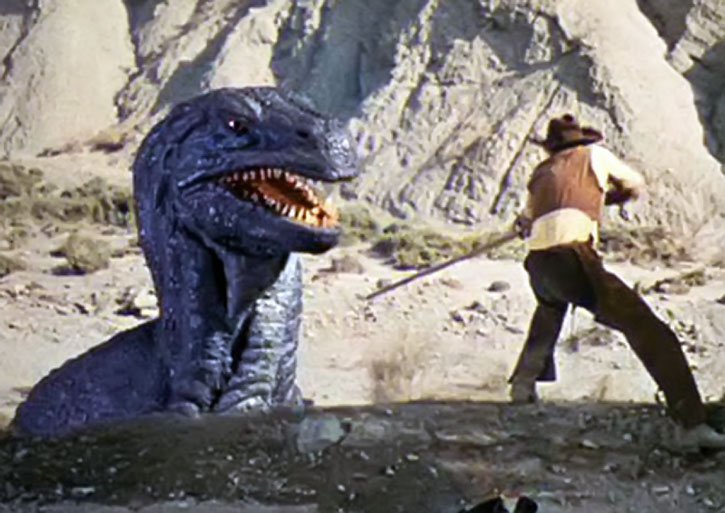
    You’re right. The idea of cowboys lassoing an Allosaurus so that they can show it off in their Wild West show is totally preposterous. But not to worry, we’ll rinse the taste out of our mouths with a three-way bull session devoted to a movie about extraterrestrials who fly around in ice cream cones.

    That’s right, it’s another Classic Ross Amico double feature!

    Join me this Friday evening at 6:00 EDT, for an hour of music from the western scores of Jerome Moross on “Picture Perfect” – including selections from “The Big Country,” “The Proud Rebel,” “The Jayhawkers,” and “The Valley of Gwangi” – on WWFM – The Classical Network and wwfm.org.
    Then at 7:00 EDT, Roy Bjellquist and I will be joined by Joe Metz (my cousin, whom I have not seen in about 35 years) for an in-depth discussion about a movie that influenced us all, Steven Spielberg’s UFO blockbuster “Close Encounters of the Third Kind.”

    You can bet your mashed potatoes that the hour will not pass without some discussion of music, which permeates the film on multiple levels.

    Catch the Facebook live-stream, and by all means, participate in the running commentary. We look forward to reading your thoughts and reactions.

    Roy’s Tie-Dye Sci-Fi Corner

    Watch us. Watch the skies. When we see you there, we’ll know, truly… we are not alone!

  • Moross’s Wild West Film Music

    Moross’s Wild West Film Music

    “[A]s we hit the Plains I got so excited,” recollected composer and pianist Jerome Moross. It was 1936 and, at George Gershwin’s invitation, he was en route to Los Angeles to participate in the West Coast premiere of “Porgy Bess.” When he stepped off the bus in Albuquerque, it changed him forever. “…I got to the edge of town and then walked out onto the flat land with a marvelous feeling of being alone in the vastness, with the mountains cutting off the horizon. The whole thing was just too much for me… it was marvelous, and I just fell in love with it.”

    He would recall this powerful communion with the American West decades later when he came to write his best-known music, the Academy Award-nominated score for “The Big Country” (1958). Indeed, the “western” sound would color many of his future film and concert works, with the energetic syncopations of his native New York City supporting an easy lyrical gift that could easily pass for genuine American folk music.

    This week on “Picture Perfect,” we’ll saddle up for selections from four of Moross’ big screen westerns. The success of “The Big Country” put Moross much in demand as Hollywood’s troubadour of the great outdoors. The trail was still fresh when he was enlisted for “The Proud Rebel” (1958). The film starred Alan Ladd, as a Civil War veteran with a troubled past, and the late Olivia De Havilland, as the ranch owner who takes responsibility for him. Tensions mount as a corrupt landowner and his sons attempt to drive the woman off her ranch.

    While “The Proud Rebel” tapped into predictable western archetypes, “The Valley of Gwangi” (1969) exploded all expectations. A cross-genre western that might best be described as “Annie Get Your Gun” meets “King Kong,” the film’s premise hinges on the discovery by an enterprising band of cowboys of an Allosaurus in a lost valley in Mexico, which of course they press into service at their Wild West show. What could possibly go wrong? In a time before starships and superheroes dominated the cinematic landscape, “Gwangi” must have been very heady stuff for six-year old boys everywhere.

    The project was conceived decades earlier by Willis O’Brien, the special effects legend who created Kong. But it was left to his protégé, the great Ray Harryhausen, to bring the film to fruition. The result, while never scaling the operatic heights of “Kong,” is a fascinating mélange, a movie that is part cowboy, part creature-runs-amok.

    For those of a certain age, one of Moross’ most recognizable melodies must surely be the theme to the television series “Wagon Train.” Unfortunately, that music was soon discovered to bear a striking resemblance to a secondary theme in “The Jayhawkers” (1959). Fortunately for Moross, competing studios were willing to look the other way. “The Jayhawkers,” which starred Jeff Chandler and Fess Parker, is set in the days of Bleeding Kansas.

    We are borne west on music of great vitality. Breathe the open air with Jerome Moross, on “Picture Perfect,” music for the movies, this Friday evening at 6:00 EDT, on WWFM – The Classical Network and wwfm.org.

  • Black Friday Escape Classical Music for the Wild

    Black Friday Escape Classical Music for the Wild

    This week on “Picture Perfect,” for Black Friday, we flee “civilization” for the relative safety of the wilderness.

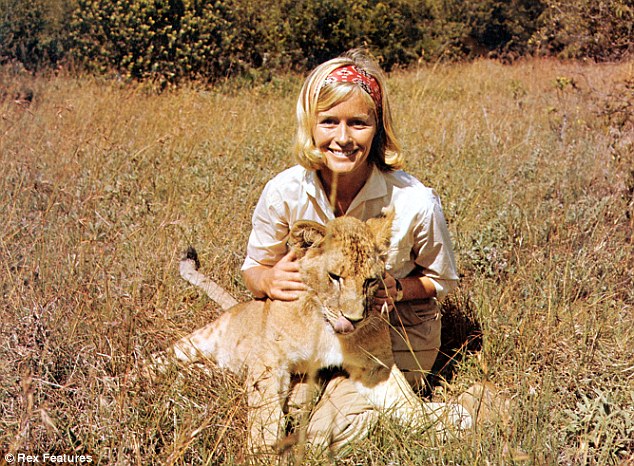
    We’ll hear music from “Born Free” by John Barry, “Hatari!” by Henry Mancini, National Geographic’s “Grizzly!” by Jerome Moross, and “The Jungle Book,” by Miklós Rózsa.

    I’d rather face Shere Khan than mall traffic. Join me for “The Call of the Wild,” this Friday evening at 6:00 EST, on WWFM – The Classical Network and wwfm.org.

  • Jerome Moross Big Country and Beyond

    Jerome Moross Big Country and Beyond

    It’s a big country.

    When “Porgy and Bess” concluded its New York run in 1935, George Gershwin invited Jerome Moross to join the show, on tour, as a pianist. It was while on a bus trip to Los Angeles to participate in “Porgy’s” west coast premiere that the 23 year-old made a stop in Albuquerque.

    “[A]s we hit the Plains I got so excited,” Moross recollected. “. . .[T]he next day I got to the edge of town and then walked out onto the flat land with a marvelous feeling of being alone in the vastness, with the mountains cutting off the horizon. The whole thing was just too much for me . . . it was marvelous, and I just fell in love with it.”

    The experience served him well, as some of his most famous music, the Academy Award-nominated score for “The Big Country,” enshrines that sense of wide-open excitement in the face of sweeping vistas. Western high-spirits and American jazz color most of Moross’ output, whether for the silver screen, musical theater, or concert hall.

    At home in all forms, Moross composed concert music (including a symphony for Beecham), ballet (“Frankie and Johnny,” with female vocal trio), musical theater (the cult classic “The Golden Apple,” including the evergreen “Lazy Afternoon”), opera (“Sorry, Wrong Number”), and of course classic film scores (his magnum opus, “The Big Country”).

    Happy birthday, Jerome Moross. You tackled everything with exuberance and vitality.


    “The Big Country” (with a young John Williams in the orchestra, on piano):

    “Lazy Afternoon,” sung by Kaye Ballard from the 1954 original cast recording:

    The Sonata in G major for Piano Duet and String Quartet:

Tag Cloud

Aaron Copland (92) Beethoven (95) Composer (114) Film Music (120) Film Score (143) Film Scores (255) Halloween (94) John Williams (185) KWAX (229) Leonard Bernstein (100) Marlboro Music Festival (125) Movie Music (135) Opera (198) Philadelphia Orchestra (88) Picture Perfect (174) Princeton Symphony Orchestra (106) Radio (87) Ralph Vaughan Williams (85) Ross Amico (244) Roy's Tie-Dye Sci-Fi Corner (290) The Classical Network (101) The Lost Chord (268) Vaughan Williams (103) WPRB (396) WWFM (881)

DON’T MISS A BEAT

Receive a weekly digest every Sunday at noon by signing up here


RECENT POSTS