Tag: John Williams

  • Black Panther Score Wins plus a Superman Memory

    Black Panther Score Wins plus a Superman Memory

    No Jerry Goldsmith. No John Williams. No Max Steiner. Alexandre Desplat already won twice in the past five years.

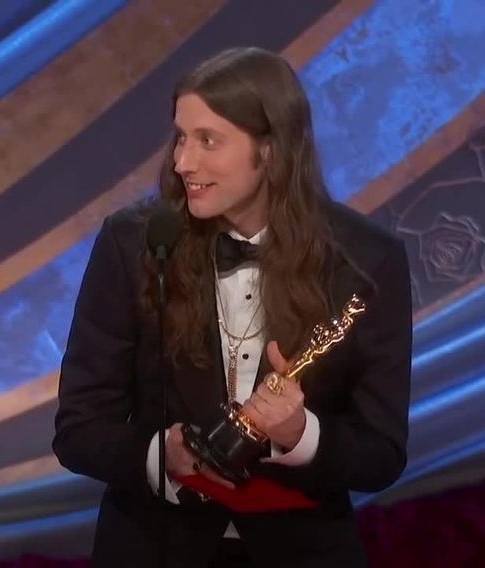
    So the Academy Award for Best Original Score went to Swedish composer Ludwig Görannson for his work on “Black Panther.”

    Actually, there was some John Williams, during the “In Memoriam” segment, for which Gustavo Dudamel conducted the wheat field music from “Superman.” Here’s how it was heard in the movie.

    Which reminds me, why did no one tell me that Albert Finney died???


    Music from “Black Panther,” who by the way was one of my favorite comic book characters when I was a kid, so don’t think I’m hating on T’challa!

  • John Williams Presidential Movie Scores

    John Williams Presidential Movie Scores

    Presidents Day is on the way.

    Over the course of his 60-year career, John Williams has had opportunities to score just about every kind of film. Not surprisingly, this would include several fictionalized accounts of American presidents. This week on “Picture Perfect,” we’ll sample music from four of them.

    “JFK” (1991) is one of three collaborations between Williams and director Oliver Stone. The film has more to do with conspiracy theories surrounding Kennedy’s assassination than anything to do with his presidency. A controversial feature, no doubt – still, a compelling piece of cinema. It certainly inspired an effective score.

    Kevin Costner plays New Orleans district attorney Jim Garrison, Sissy Spacek, his wife, and Gary Oldman, Lee Harvey Oswald. Tommy Lee Jones and Joe Pesci are unforgettable as a pair of outlandish conspirators, and Donald Sutherland is a government whistleblower who identifies himself only as “X.”

    Williams and Stone had previously worked together on “Born on the Fourth of July.” Later, they would team on a second presidential collaboration, a character study of Richard Milhous Nixon – called, well, “Nixon” (1995). Anthony Hopkins plays the president, heading an impressive cast, which includes Joan Allen, Powers Boothe, Ed Harris, Bob Hoskins, E.G. Marshall, David Hyde Pierce, Paul Sorvino, Mary Steenburgen, and James Woods.

    Williams also wrote the music for Steven Spielberg’s “Amistad” (1997). The film, about a mutiny on board a slave ship in 1839 and the resulting courtroom drama, features two American presidents: Nigel Hawthorne plays Martin van Buren, the sitting president; and again, Anthony Hopkins appears, in a memorable supporting turn, as aging former president John Quincy Adams. Adams argues the defense of the Africans who took part in the mutiny.

    Daniel Day-Lewis plays the nation’s 16th president, in Spielberg’s “Lincoln” (2012). He’s lent able support by Sally Field as Mary Todd Lincoln, David Strathairn as Secretary of State William Steward, and Tommy Lee Jones as Thaddeus Stevens.

    It’s a bold assessment, but Day-Lewis elevates “Lincoln,” the film, to greatness, with arguably one of the most amazing performances in cinematic history. Day-Lewis’ gentle but shrewd Man of Destiny would go to any lengths to hold the country together. Williams taps into America’s proud musical heritage, clearly influenced by Copland and the folksier side of Ives, to create a score of stirring nobility.

    I hope you’ll join me as John Williams does the presidents on “Picture Perfect,” music for the movies, this Friday evening at 6:00 EST, on WWFM – The Classical Network and wwfm.org.


    PHOTOS: (clockwise from left) Day-Lewis as Lincoln; Hopkins as Nixon; poster for “JFK;” Hopkins as John Quincy Adams

  • Happy 87th Birthday John Williams Tune In!

    Happy 87th Birthday John Williams Tune In!

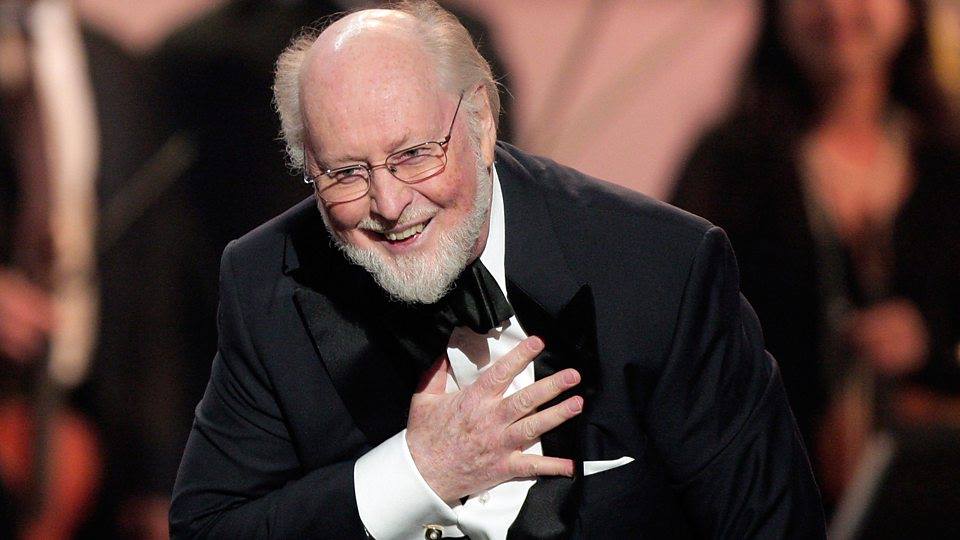
    Happy birthday, John Williams!

    Williams is 87 today. We’ll hear a suite from his lovely and rarely-heard score to “Jane Eyre” on “Picture Perfect” tonight at 6:00 EST, part of an anti-Valentine’s program devoted to doomed love and Gothic romances.

    But tune in a little earlier – between 4 and 6 – to enjoy a few additional Williams surprises. I’ll have something for you in each of my three hours on the air, from 4 to 7 p.m. EST, on WWFM – The Classical Network and wwfm.org.

  • Gothic Romance Movie Music for Valentine’s Day

    Gothic Romance Movie Music for Valentine’s Day

    Windswept moors. Destructive passions. Byronic guilt.

    The term “Gothic romance” doesn’t necessarily denote a love story. In 19th century literary tradition, “romance” was often suggestive of the mysterious, the adventurous, the sensational – a kind of pleasing terror, often touched by elements of horror.

    This week on “Picture Perfect, I strike my annual blow against Valentine’s Day with music from movies featuring creepy old houses, ghosts, malevolent housekeepers, and madwomen in the attic.

    Alfred Hitchcock’s “Rebecca” (1940), based on the Gothic novel of Daphne DuMaurier, is a clear throwback to the works of the Brontë sisters. Laurence Olivier and Joan Fontaine star, but Judith Anderson steals the show as the ice-cold Mrs. Danvers. The film was the recipient of an Academy Award for Best Picture, the only Hitchcock film to be so honored. Franz Waxman’s opulent and atmospheric score flares at its operatic climax.

    Collectively, the Brontë sisters were responsible for some of the most tortured romances in English literature. Charlotte Brontë’s “Jane Eyre,” a work which clearly anticipates “Rebecca,” was adapted most famously in 1940, again with Joan Fontaine, and featuring Orson Welles as Rochester. Three decades later, a television version of “Jane Eyre” (1971) appeared, with Susannah York and George C. Scott. The music for the latter was by an up-and-coming composer, only a few years away from superstardom: John Williams.

    “Uncle Silas” (1947) is a Gothic that sidesteps the love story altogether. Forced to live under the guardianship of a sinister uncle and a malevolent French governess, its heroine is thrust into an atmosphere of insinuating menace. Sheridan LeFanu’s “old dark house” thriller was made into a film by Gainsborough Studios, released in the United States as “The Inheritance.” A young Jean Simmons plays the imperiled heiress. The music was by Alan Rawsthorne, a distinguished concert composer, who nonetheless managed to compose 27 film scores. Bernard Herrmann considered the score for “Uncle Silas” to be one of the finest ever written.

    Finally, we’ll hear music from a beloved adaptation of Emily Brontë’s tale of star-crossed love, “Wuthering Heights” (1939). Merle Oberon is Cathy and Laurence Olivier is Heathcliff. Alfred Newman’s music yearns and sobs right along with us.

    I hope you’ll join me for an hour of gloom and doom for Valentine’s Day – Gothic romances on “Picture Perfect,” this Friday evening at 6:00 EST, on WWFM – The Classical Network and wwfm.org.


    BONUS: Today is “Jane Eyre” composer John Williams’ 87th birthday! Tune in early to enjoy some of his other film and concert works between 4 and 6 p.m.

  • John Williams’ War Movie Scores

    John Williams’ War Movie Scores

    It may seem like odd timing to drop a program about war right into the middle of the holidays, but I can’t change the timing of Pearl Harbor.

    On the morning December 7, 1941, a Japanese strike force of 353 aircraft strafed and bombed the United States naval base in Hawaii, killing thousands of American servicemen and civilians, and precipitating the country’s entry into World War II.

    It seems almost crass that such violence and massive loss of life would inspire so much popular entertainment, but such is the imprint of war, and especially a surprise attack on a nation at peace, on the American psyche.

    This week on “Picture Perfect,” we’ll revisit some of John Williams’ music for films set during the war. While none of them take place during the actual attack, two of them are set in the Pacific theater, and one of them is a comedy (!) about mass hysteria gripping the people of Los Angeles and its environs in the days following. We’ll also hear a solemn hymn to those who sacrificed everything for a greater good.

    Only six months after Pearl Harbor, America struck back, devastating the Japanese fleet in a battle that is regarded as one of the turning points of the war. “Midway” (1976) was a belated big-screen dramatization of the event, featuring an all-star cast of war movie standbys, including Charlton Heston, Henry Fonda, James Coburn, Glenn Ford, Hal Holbrook, Toshiro Mifune, Robert Mitchum, and Cliff Robertson.

    Unfortunately, the cast of old-timers, combined with abundant stock footage from “Tora! Tora! Tora!” and actual period newsreels, may have saddled the film with an all-too-palpable sense of “been there, done that.” Williams does his best to freshen things up with a rousing, patriotic score and a crackerjack victory march. (Fun fact: “Midway” was one of only four films ever to be presented in theater-rumbling Sensurround.)

    Days in advance of the birthday of Frank Sinatra (born December 12, 1915), we’ll also hear music written for the Chairman’s only project as a director. “None But the Brave” (1965) – in which he also starred – presents Japanese and American units forced to coexist, and even cooperate, after they are stranded on a Pacific island. The film is also notable for being the first Japanese-American co-production and bears a somewhat forward-looking anti-war message. The music is a fascinating glimpse of Williams’ work from ten years before his mega-success with “Jaws.”

    “1941” (1979) is just plain weird. Steven Spielberg’s too-big-to-fail to gamble stumbles pretty badly, following his back-to-back blockbusters, “Jaws” and “Close Encounters of the Third Kind.” The premise – a Japanese u-boat sighting off the coast of California triggering an overabundance of slapstick panic – posits, just because you’re paranoid doesn’t mean they’re not out to get you. It’s a mad, mad, mad, mad war.

    “1941” employs an incredible amount of talent, from its behind-the-scenes effects artists, to screenwriters Robert Zemeckis and Bob Gale, to its dream cast pushing as hard as it possibly can. It also features a once-in-a-lifetime opportunity to see Toshiro Mifune and Slim Pickens in the same scene. But for the most part, perhaps unsurprisingly, it fails to deliver the laughs. What it does deliver is the most rousing of John Williams’ neglected scores.

    Spielberg actually approached John Wayne about appearing in the film. Wayne was too ill to participate, but offered the following advice: “You know, that was an important war, and you’re making fun of a war that cost thousands of lives at Pearl Harbor. Don’t joke about World War II.” Whether or not audiences agreed, they didn’t exactly queue up as they did for Spielberg’s previous successes.

    We’ll strike a more reverent tone with “Hymn to the Fallen” from “Saving Private Ryan” (1998) – not set in the Pacific, granted, but the U.S. may never have gotten to Normandy had it not been for the inexorable events set in motion by December 7, 1941.

    Unfortunately, this is not “Star Wars,” but a real war that killed tens of millions and destroyed the lives of countless others. John Williams covers the subject from four different angles this week, on “Picture Perfect” – music for the movies – this Friday evening at 6:00 EST, on WWFM – The Classical Network and wwfm.org.


    IMAGE: The Pearl Harbor comedy that will live in infamy

Tag Cloud

Aaron Copland (93) Beethoven (95) Composer (114) Film Music (141) Film Score (143) Film Scores (255) Halloween (94) John Williams (195) KWAX (229) Leonard Bernstein (103) Marlboro Music Festival (125) Movie Music (156) Mozart (89) Opera (212) Philadelphia Orchestra (89) Picture Perfect (174) Princeton Symphony Orchestra (108) Radio (88) Ross Amico (244) Roy's Tie-Dye Sci-Fi Corner (290) The Classical Network (101) The Lost Chord (269) Vaughan Williams (103) WPRB (397) WWFM (881)

DON’T MISS A BEAT

Receive a weekly digest every Sunday at noon by signing up here


RECENT POSTS