Tag: John Williams

  • Gothic Romance Movie Music for Valentine’s Day

    Gothic Romance Movie Music for Valentine’s Day

    Windswept moors. Destructive passions. Byronic guilt.

    The term “Gothic romance” doesn’t necessarily denote a love story. In 19th century literary tradition, “romance” was often suggestive of the mysterious, the adventurous, the sensational – a kind of pleasing terror, often touched by elements of horror.

    This week on “Picture Perfect, I strike my annual blow against Valentine’s Day with music from movies featuring creepy old houses, ghosts, malevolent housekeepers, and madwomen in the attic.

    Alfred Hitchcock’s “Rebecca” (1940), based on the Gothic novel of Daphne DuMaurier, is a clear throwback to the works of the Brontë sisters. Laurence Olivier and Joan Fontaine star, but Judith Anderson steals the show as the ice-cold Mrs. Danvers. The film was the recipient of an Academy Award for Best Picture, the only Hitchcock film to be so honored. Franz Waxman’s opulent and atmospheric score flares at its operatic climax.

    Collectively, the Brontë sisters were responsible for some of the most tortured romances in English literature. Charlotte Brontë’s “Jane Eyre,” a work which clearly anticipates “Rebecca,” was adapted most famously in 1940, again with Joan Fontaine, and featuring Orson Welles as Rochester. Three decades later, a television version of “Jane Eyre” (1971) appeared, with Susannah York and George C. Scott. The music for the latter was by an up-and-coming composer, only a few years away from superstardom: John Williams.

    “Uncle Silas” (1947) is a Gothic that sidesteps the love story altogether. Forced to live under the guardianship of a sinister uncle and a malevolent French governess, its heroine is thrust into an atmosphere of insinuating menace. Sheridan LeFanu’s “old dark house” thriller was made into a film by Gainsborough Studios, released in the United States as “The Inheritance.” A young Jean Simmons plays the imperiled heiress. The music was by Alan Rawsthorne, a distinguished concert composer, who nonetheless managed to compose 27 film scores. Bernard Herrmann considered the score for “Uncle Silas” to be one of the finest ever written.

    Finally, we’ll hear music from a beloved adaptation of Emily Brontë’s tale of star-crossed love, “Wuthering Heights” (1939). Merle Oberon is Cathy and Laurence Olivier is Heathcliff. Alfred Newman’s music yearns and sobs right along with us.

    I hope you’ll join me for an hour of gloom and doom for Valentine’s Day – Gothic romances on “Picture Perfect,” this Friday evening at 6:00 EST, on WWFM – The Classical Network and wwfm.org.
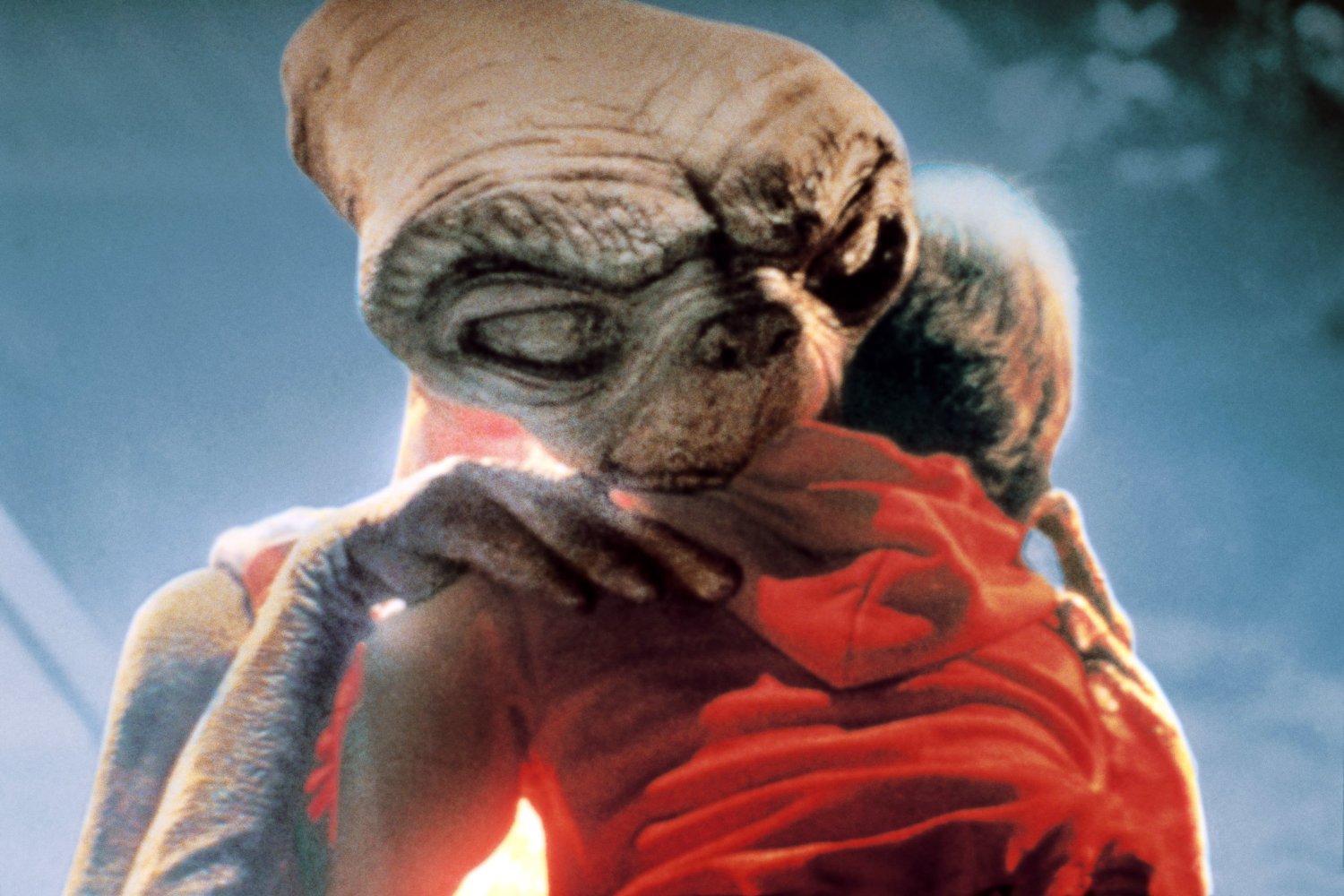

    BONUS: Today is “Jane Eyre” composer John Williams’ 87th birthday! Tune in early to enjoy some of his other film and concert works between 4 and 6 p.m.

  • John Williams’ War Movie Scores

    John Williams’ War Movie Scores

    It may seem like odd timing to drop a program about war right into the middle of the holidays, but I can’t change the timing of Pearl Harbor.

    On the morning December 7, 1941, a Japanese strike force of 353 aircraft strafed and bombed the United States naval base in Hawaii, killing thousands of American servicemen and civilians, and precipitating the country’s entry into World War II.

    It seems almost crass that such violence and massive loss of life would inspire so much popular entertainment, but such is the imprint of war, and especially a surprise attack on a nation at peace, on the American psyche.

    This week on “Picture Perfect,” we’ll revisit some of John Williams’ music for films set during the war. While none of them take place during the actual attack, two of them are set in the Pacific theater, and one of them is a comedy (!) about mass hysteria gripping the people of Los Angeles and its environs in the days following. We’ll also hear a solemn hymn to those who sacrificed everything for a greater good.

    Only six months after Pearl Harbor, America struck back, devastating the Japanese fleet in a battle that is regarded as one of the turning points of the war. “Midway” (1976) was a belated big-screen dramatization of the event, featuring an all-star cast of war movie standbys, including Charlton Heston, Henry Fonda, James Coburn, Glenn Ford, Hal Holbrook, Toshiro Mifune, Robert Mitchum, and Cliff Robertson.

    Unfortunately, the cast of old-timers, combined with abundant stock footage from “Tora! Tora! Tora!” and actual period newsreels, may have saddled the film with an all-too-palpable sense of “been there, done that.” Williams does his best to freshen things up with a rousing, patriotic score and a crackerjack victory march. (Fun fact: “Midway” was one of only four films ever to be presented in theater-rumbling Sensurround.)

    Days in advance of the birthday of Frank Sinatra (born December 12, 1915), we’ll also hear music written for the Chairman’s only project as a director. “None But the Brave” (1965) – in which he also starred – presents Japanese and American units forced to coexist, and even cooperate, after they are stranded on a Pacific island. The film is also notable for being the first Japanese-American co-production and bears a somewhat forward-looking anti-war message. The music is a fascinating glimpse of Williams’ work from ten years before his mega-success with “Jaws.”

    “1941” (1979) is just plain weird. Steven Spielberg’s too-big-to-fail to gamble stumbles pretty badly, following his back-to-back blockbusters, “Jaws” and “Close Encounters of the Third Kind.” The premise – a Japanese u-boat sighting off the coast of California triggering an overabundance of slapstick panic – posits, just because you’re paranoid doesn’t mean they’re not out to get you. It’s a mad, mad, mad, mad war.

    “1941” employs an incredible amount of talent, from its behind-the-scenes effects artists, to screenwriters Robert Zemeckis and Bob Gale, to its dream cast pushing as hard as it possibly can. It also features a once-in-a-lifetime opportunity to see Toshiro Mifune and Slim Pickens in the same scene. But for the most part, perhaps unsurprisingly, it fails to deliver the laughs. What it does deliver is the most rousing of John Williams’ neglected scores.

    Spielberg actually approached John Wayne about appearing in the film. Wayne was too ill to participate, but offered the following advice: “You know, that was an important war, and you’re making fun of a war that cost thousands of lives at Pearl Harbor. Don’t joke about World War II.” Whether or not audiences agreed, they didn’t exactly queue up as they did for Spielberg’s previous successes.

    We’ll strike a more reverent tone with “Hymn to the Fallen” from “Saving Private Ryan” (1998) – not set in the Pacific, granted, but the U.S. may never have gotten to Normandy had it not been for the inexorable events set in motion by December 7, 1941.

    Unfortunately, this is not “Star Wars,” but a real war that killed tens of millions and destroyed the lives of countless others. John Williams covers the subject from four different angles this week, on “Picture Perfect” – music for the movies – this Friday evening at 6:00 EST, on WWFM – The Classical Network and wwfm.org.
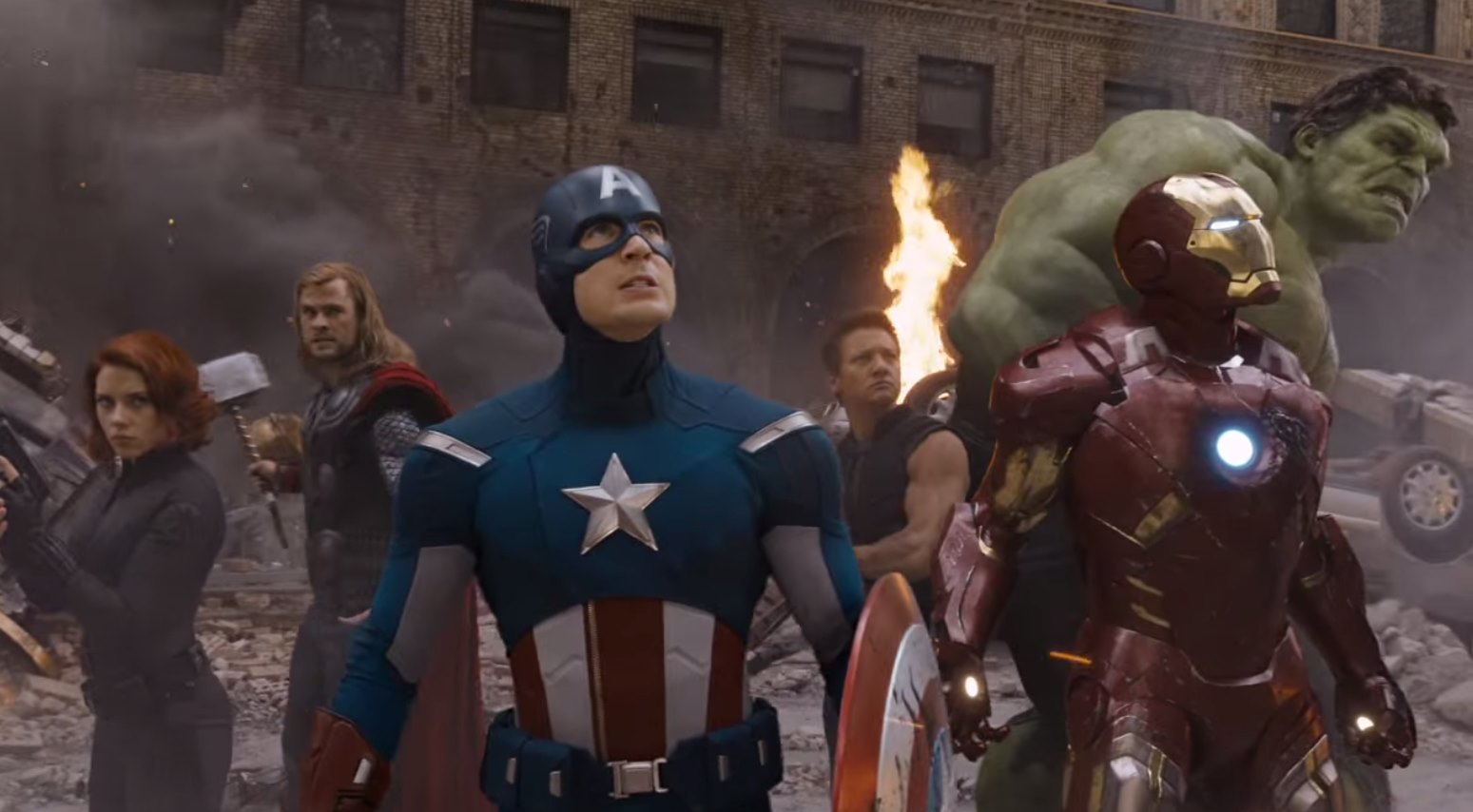

    IMAGE: The Pearl Harbor comedy that will live in infamy

  • Incredibles & Animated Film Scores on Picture Perfect

    Incredibles & Animated Film Scores on Picture Perfect

    With Elastigirl and family heading back to theaters next week, I thought now would be as good a time as any to get back into the “swing.”

    On the next “Picture Perfect,” we’ll sample from music from “The Incredibles” (2004), alongside that for three other computer-animated features.

    Pixar’s sly superhero satire was composer Michael Giacchino’s first major feature and his break-out success. The now much-in-demand Jersey native has gone on to write music for the “Jurassic Park,” “Mission: Impossible,” “Planet of the Apes,” “Star Trek,” and “Star Wars” series. But arguably his most charming and lyrical work has been for the Disney-owned animation studio.

    For “The Incredibles,” director Brad Bird had originally hoped to enlist John Barry, who popularized the swinging espionage “sound” through his work on the James Bond films. When the veteran composer demurred, insisting he had moved on and had no interest in looking back, Giacchino was hired to out-Barry Barry.

    As a nice counterbalance, we’ll also hear selections from Giacchino’s Academy Award-winning score to Pixar’s poignant adventure “Up” (2009). “Up” was nominated for Best Picture at the 82nd Academy Awards, only the second animated feature ever to be included in that category.

    We’ll continue in the realm of computer animation with music from “Ice Age” (2002). The score was composed by David Newman, son of Golden Age heavy-hitter Alfred Newman, brother of Thomas Newman, and cousin of Randy Newman.

    We’ll also hear some of John Williams’ music for “The Adventures of Tintin” (2011), after the comic book adventurer created by the Belgian artist and writer Hergé. Tintin’s popularity in Europe failed to translate into big domestic box office, comparatively speaking, but the score is Williams’ best of its kind – an exciting adventure piece full of leitmotifs and great action cues – since the first Harry Potter film.

    In a day when so many films sport scores made up of droning electronics, punctuated by colorless action cues, the computer-generated feature seems to attract composers who still understand how to write music.

    I hope you’ll join me for an hour of “animated” scores this week, on “Picture Perfect,” music for the movies, this Friday evening at 6:00 EDT, on WWFM – The Classical Network and wwfm.org.
  • John Williams Bequests Scores to Juilliard

    John Williams Bequests Scores to Juilliard

    At 86 years-old and with one more “Star Wars” score to finish, John Williams is thinking about getting his affairs in order. It’s just been announced that Williams has bequeathed his complete library of film scores and concert music to Juilliard. At least now we won’t have to worry about them being consumed by the Pacific once California is hit by “The Big One.”


    NEW YORK –– The Juilliard School announced today that it has received a bequest from Academy Award-winning composer and conductor John Williams of his complete library of concert music and film music scores as well as his sketchbooks. Mr. Williams, who studied piano with longtime Juilliard faculty member Rosina Lhévinne, announced the gift at a special alumni event held in Los Angeles at the Four Seasons Beverly Hills, where Mr. Williams was also presented with a President’s Medal by Juilliard President Joseph W. Polisi.

    Acknowledging this gift, Juilliard President Joseph W. Polisi said, “We are deeply grateful to John for his extraordinary generosity in bequeathing Juilliard his extensive library of both concert and film scores. John has been a wonderful friend and colleague for many years. His artistry, creativity, and endless imagination make him one of the most admired and respected musicians of our time. His gift will be a unique resource for all of our musicians at the school, particularly composition students who can study first-hand John’s breadth and versatility as a composer.”

    “Since my earliest days as a fledgling piano student, I have looked up to the Juilliard School as the Mecca for the study of music in our country and beyond,” Mr. Williams said. “It’s therefore a privilege for me to donate my sketches, papers, and scores to Juilliard, to be made available to those students particularly interested in the intimate processes of film scoring.“


    PHOTO: Williams receives an honorary doctorate from Harvard University. Sorry, guys, it’s all going to Juilliard…

  • Film Composers’ Concert Music

    Film Composers’ Concert Music

    What’s that you say? You could care less about the Oscars? Perhaps then you’d be interested in a little counterprogramming. This Sunday night on “The Lost Chord,” we’ll both deny and complement the ceremony by listening to concert works by composers better known for their work in film.

    Franz Waxman was a two-time Academy Award winner, honored with back-to-back Oscars, in 1950 and 1951, for his work on “Sunset Boulevard” and “A Place in the Sun.” Some of his other classic scores include those for “The Bride of Frankenstein,” “Rebecca,” “Rear Window,” “Peyton Place” and “The Nun’s Story.”

    In 1955, he was traveling from California to Zurich to conduct a new piece commissioned by Rolf Liebermann. When Waxman reached New York he was met with a request from Lieberman’s office for program notes for the impending premiere. Waxman was forced to admit he hadn’t yet begun work on the piece, which he had planned to write during the ocean voyage. Fortunately, he was accustomed from his experience in Hollywood to write very quickly. The result was his “Sinfonietta for String Orchestra and Timpani.”

    Five-time Academy Award winner John Williams – whose 51st nominated score, for “Star Wars: The Last Jedi,” is in contention tonight – is of course very well-known for his collaborations with George Lucas and Steven Spielberg. Over the years, he’s also accrued an impressive quantity of concertos. One of the more immediately attractive of these is his Tuba Concerto of 1985, written for the 100th anniversary of the Boston Pops.

    Finally, we’ll turn to three-time Academy Award winner Miklós Rózsa, honored for his work on Alfred Hitchcock’s “Spellbound” in 1945, the Ronald Colman thriller “A Double Life” in 1947, and “Ben-Hur” in 1959. He also composed quite a bit of concert music, including concertos for Jascha Heifetz, Gregor Piatigorsky, Janos Starker, Leonard Pennario and Pinchas Zukerman.

    Rózsa, Hungarian by birth, turned to film after a period of struggle as a young artist in Paris, where he learned from Arthur Honegger that he was able to pay the rent by supplementing his concert music with cinematic efforts. Rózsa’s “Theme, Variations and Finale,” Op. 13, of 1933, preceded the start of his film career by a few years. He revised the piece in 1943, by which time he had already completed his classic fantasy scores for Alexander Korda’s “The Thief of Bagdad” and “Jungle Book,” and was on the verge of becoming a leading composer of film noir.

    “Theme, Variations and Finale” received performances by Charles Munch, Karl Böhm, Georg Solti, and Eugene Ormandy. It was also one of the works that featured on the legendary concert that launched Leonard Bernstein with the New York Philharmonic, on November 14, 1943, when the young assistant conductor substituted at the last minute for an ailing Bruno Walter.

    I hope you’ll join me for an hour of concert music by composers better known for their work in film – “Against Type” on “The Lost Chord” – this Sunday night at 10:00 EST, on WWFM – The Classical Network and wwfm.org.

    PHOTOS: Has anyone here seen Kelly? (Clockwise from left) John Williams wins the Oscar for “Star Wars;” Franz Waxman and Miklós Rózsa receive their awards from the hands of Gene Kelly

Tag Cloud

Aaron Copland (92) Beethoven (95) Composer (114) Film Music (123) Film Score (143) Film Scores (255) Halloween (94) John Williams (187) KWAX (229) Leonard Bernstein (101) Marlboro Music Festival (125) Movie Music (138) Opera (202) Philadelphia Orchestra (89) Picture Perfect (174) Princeton Symphony Orchestra (106) Radio (87) Ralph Vaughan Williams (85) Ross Amico (244) Roy's Tie-Dye Sci-Fi Corner (290) The Classical Network (101) The Lost Chord (268) Vaughan Williams (103) WPRB (396) WWFM (881)

DON’T MISS A BEAT

Receive a weekly digest every Sunday at noon by signing up here


RECENT POSTS