Tag: John Williams

  • Save Earth Donate to Classical Music WWFM

    Save Earth Donate to Classical Music WWFM

    Every time you support The Classical Network, you make a kindly extra-terrestrial’s heart glow. Every time you don’t contribute – you risk activating the destructive power of Gort!

    It’s the final day of our end-of-the-fiscal-year membership campaign. Please do your part to ensure universal harmony by calling 1-888-232-1212, or by donating online at wwfm.org.

    Then enjoy music from “Cocoon” (James Horner), “The Day the Earth Stood Still” (Bernard Herrmann), and “Close Encounters of the Third Kind” and “E.T. The Extra-Terrestrial” (both by John Williams).

    We come in peace, this Friday evening at 6:00 EDT, on WWFM – The Classical Network and wwfm.org.

    BERNARD HERRMANN BONUS!

    Tune in tonight at 8:00 for a rebroadcast of Herrmann’s music for the radio play “Whitman.” The concert was given at Washington’s National Cathedral on June 1. William Sharp will be heard in the title role, reciting Whitman’s poetry, with the PostClassical Ensemble conducted by Angel Gil-Ordóñez. Also on the program will be Herrmann’s Clarinet Quintet, “Souvenirs de Voyage,” and “Psycho: A Narrative for String Orchestra.”

  • Superhero Movie Music Picture Perfect

    Superhero Movie Music Picture Perfect

    Look! Up in the sky! This week on “Picture Perfect,” the focus is on superheroes!

    We’ll begin with music from Tim Burton’s “Batman” (1989). It’s true, I wasn’t all that crazy about the film. In fact, I’m still waiting for someone to make the Batman movie I’ve got in my head. But that probably isn’t going to happen – we’re too far down the computer generated road at this point.

    At least Danny Elfman actually made the effort to write a decent score. I admit I was underappreciative of it at the time. To me, he was still “that guy from Oingo Boingo.” But it sounds better and better in light of all that has followed. Elfman’s love for Bernard Herrmann is evident. And don’t worry, I will spare you the Prince songs.

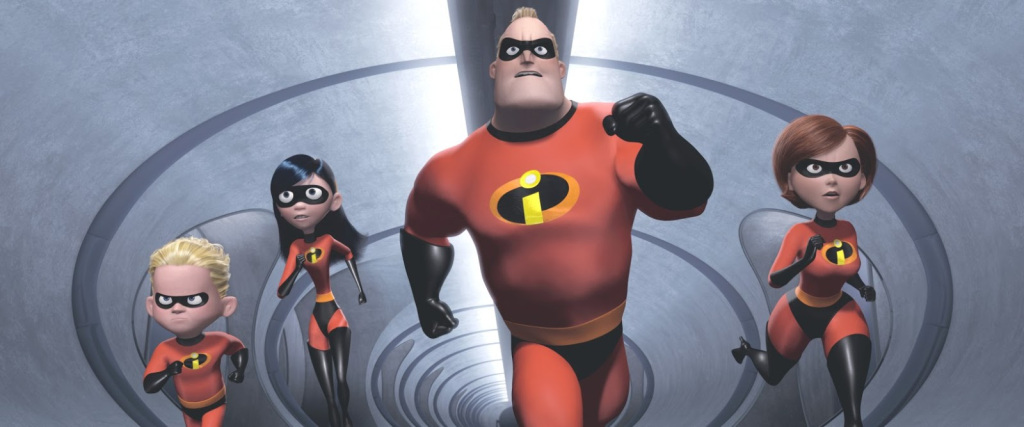
    “The Avengers” may have provided the satisfaction of seeing Iron Man, Captain America, Thor, and the Hulk on the screen all at the same time, but arguably “The Incredibles” (2004) was more fun. Pixar’s clever satire/adventure featured the vocal talents of Craig T. Nelson, Holly Hunter, and Samuel L. Jackson.

    The score is a smart throwback to the swinging espionage films of the 1960s. Originally the producers approached John Barry to write the music, hoping for something very much in the style of his work on the James Bond films. But Barry declined, not wanting to return to his earlier style. In the event, composer Michael Giacchino was only too happy to step into Barry’s well-polished shoes.

    “The Avengers” (2012), of course, is the 800-pound gorilla of superhero franchises, but in these days when each hyper spectacle seems to surpass the last, not only in terms of din and seizure-inducing effects, but in the epic scope of its box office, that could very well change at any time. With the latest sequel, “Avengers: Endgame,” now in theaters, I thought it would be as good a time as any to play music from the first film, by Alan Silvestri.

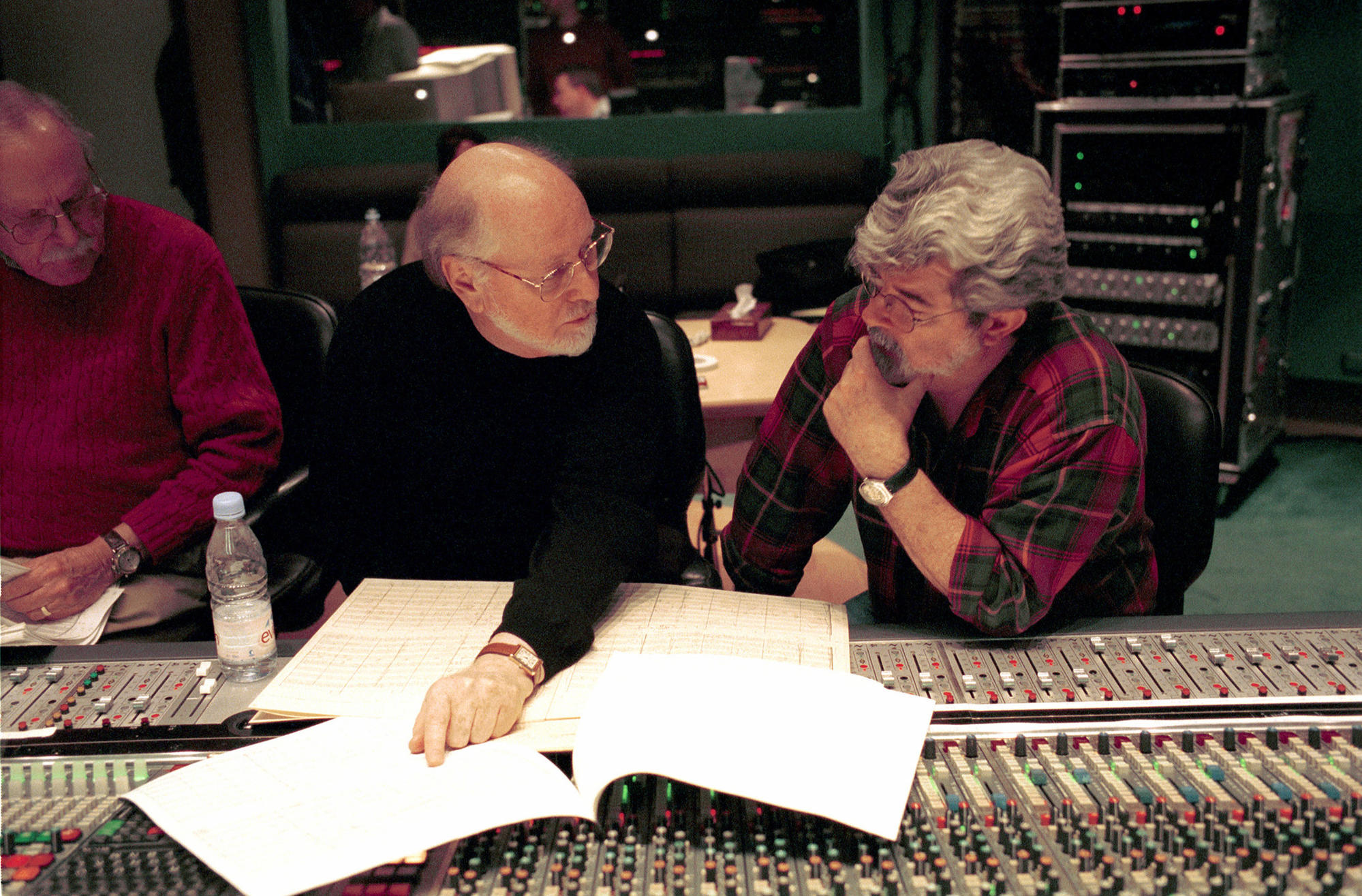
    To truly understand what is missing from superhero music these days, one need only refer to the gold standard of the genre, “Superman” (1978). John Williams’ score was from smack-dab in the middle of his heroic period, falling as it did, between “Star Wars” and “Raiders of the Lost Ark.” Its star-spangled fanfare and march beautifully conjure memories of Superman music past – for the George Reeves TV series and, before that, the Fleischer Brothers cartoons – yet effortlessly surpass them like leaping a tall building in a single bound.

    I know, I know, not every film can be, nor should be, the same, and Williams’ primary colors wouldn’t sit as well, perhaps, with the dark streets of Gotham. But why does everything have to be so grim these days? I read comic books when I was a kid, and I don’t remember everything being so hopeless.

    I don’t want to hear about how the real world is a gritty place right now. “Superman” was made in the wake of Watergate and Vietnam, for crying out loud. Entertainment molds the world, every bit as much as the world shapes our entertainment. Is it too much to ask for a little fun and inspiration from our superhero movies? Can we leave the theatres feeling exhilarated, for a change, as opposed to simply exhausted?

    All kryptonite will be encased in lead for “Everything’s Super,” this Friday evening at 6:00 EDT, on WWFM – The Classical Network and wwfm.org.

  • Horse Racing Movie Music on Picture Perfect

    Horse Racing Movie Music on Picture Perfect

    It’s a rare horse race where everyone comes out a winner. This week on “Picture Perfect,” we beat the odds. On the eve of the 145th running of the Kentucky Derby, we’ll have beautiful and rousing music from films about horses and horse racing.

    “The Black Stallion” (1979), based on the classic novel by Walter Farley, depicts the bonding of a shipwrecked boy and an Arabian stallion, whose shared destiny takes them to the race track. Mickey Rooney’s uncharacteristically subdued performance as the former trainer who finds a new lease on life earned him an Academy Award nomination for Best Supporting Actor.

    Francis Ford Coppola executive produced the film, and his father, Carmine Coppola, wrote the music. Reportedly the unsung Shirley Walker, who had been hired as an orchestrator, wound up contributing a fair amount to it, when the composer was put off by requests from director Carroll Ballard that portions of the music be rewritten.

    “The Reivers” (1969), after William Faulkner’s Pulitzer Prize winning novel, is a coming-of-age story about a boy swept into automobile theft and illicit horse racing in the American south. Mark Rydell directed, and Steve McQueen stars as the rakish Boon Hogganbeck. The narration was by Burgess Meredith, who reprises his role in the recording we’ll hear, with John Williams conducting his own music.

    For the film, Williams provided an alternately wistful and carefree Americana score. It’s said that his work on “The Reivers” is what moved Steven Spielberg to hire him to write the music for his first theatrical feature, “The Sugarland Express.” The Spielberg association brought Williams to “Jaws,” the first of his truly iconic film scores. He would worked with Rydell again on “The Cowboys” (1972), “Cinderella Liberty” (1973), and “The River” (1984).

    It was inevitable that the nonfiction bestseller “Seabiscuit: An American Legend” would be given the Hollywood treatment. The miraculous ascent of the real-life dark horse who became a symbol of hope during the Great Depression seemed tailor-made for dramatization.

    Though it presses all the right buttons, “Seabiscuit” (2003) is not to be confused with a superior documentary that was shown on PBS around the same time. Nonetheless, the feature film, which starred Tobey McGuire, Jeff Bridges, and Chris Cooper, was nominated for seven Academy Awards, including Best Picture. Randy Newman wrote the music.

    Finally, we’ll turn to “Hidalgo” (2004), also allegedly based on a true story, though the source material – the memoir of distance rider Frank T. Hopkins – has also inspired a fair degree of skepticism. In 1890, Hopkins became the first American invited to compete in a centuries-old 3000-mile survival race across the Arabian Desert.

    Viggo Mortensen plays Hopkins, and Omar Sharif is the sheik who asks him to put up or shut up, over the claim made by Buffalo Bill’s Wild West Show that he and his horse are the greatest distance runners in the world. The music is by James Newton Howard.

    It’s a sure thing, so place your bets on “Picture Perfect” and music from movies about horse racing, this Friday evening at 6:00 EDT, on WWFM – The Classical Network and wwfm.org.

  • No, Giorgio!

    No, Giorgio!

    How could it miss?

    In the run-up to Ron Howard’s documentary about Luciano Pavarotti (release date: June 7), I got to thinking about “Yes, Giorgio” (1982). The most charismatic tenor of his day made his non-operatic, big-screen debut in this Franklin J. Schaffner-directed film. You know, the same Franklin J. Schaffner who directed “Patton?”

    Franklin, you magnificent bastard, I saw your movie…

    Here’s the premise: Operatic superstar Giorgo Fini (Pavarotti) is on tour in the U.S., when the unthinkable happens – he loses his voice! Naturally his manager engages a throat specialist, played by Kathryn Harrold (Giorgio thinks she is a nurse, ha ha), leading to much risible “repartee.” Not at all believably, the two fall in love. But of course there are complications. Giorgi IS Italian, after all.

    Okay, so the premise is creaky. Is there any opera? Oh yes there is, including Luciano, as Calaf, belting out “Nessun dorma” at the peak of his powers. But to get there you have to slog through countless scenes of Pavarotti, with a face as open and as ingratiating as that of a golden retriever, trying to compensate for a horrible script by charming the socks off everyone in the room. Let’s face it: he may have had a voice from the heavens, but Pavarotti is no dramatic actor. Fortunately, there is also comic relief, courtesy of “Green Acres’” Eddie Albert (just to keep it real). And not to worry, there is a pie fight.

    I guess there was no room in the $21 million budget – or his schedule – for John Williams to provide a complete music score (Michael J. Lewis does the dishonor), but Williams does contribute an Oscar-nominated song, “If We Were in Love,” with lyrics by the legendary Alan & Marilyn Bergman. Williams is in his element, and turns in a buoyant set-piece. In theory, this should have been a real showstopper.

    Alas, for all his lyrical gift, Williams is not a song composer, and even with (or perhaps because it is) Pavarotti singing, it turns out to be kind of embarrassing. It would be perfectly fine if it weren’t a song, but let’s face it, the balloon ride over Napa Valley ranks up there – or down there, as it were – with Margot Kidder reciting poetry to Superman.

    This was the same year as “E.T.,” by the way.

    Ironically, the original soundtrack is now a collector’s item. The belated domestic CD reissue was shorn of the Oscar-nominated song. Williams, the Bergmans, and the Pavarotti estate must want this one buried deep.

    “Yes, Giorgio” sank like a stone. Taking into account promotional and distribution costs, it lost MGM an estimated $45 million. Siskel and Ebert selected it as one of the worst movies of the year, and the film was nominated for multiple Razzies. Ebert claimed that Pavarotti utters the line, “I will sing this aria just for you!” a dozen times. The film opens with the following dedication: “This story is dedicated to lovers everywhere.” Oy vey.

    There’s so much talent squandered on this movie that I could easily be fooled into thinking I would like to watch it again. This is the most dangerous kind of bad.

    No, Giorgio!

    I am, however, very much looking forward to seeing Ron Howard’s documentary.

  • Remembering André Previn: A Hollywood & Classical Music Giant

    Remembering André Previn: A Hollywood & Classical Music Giant

    The outpouring of love and grief precipitated by the death of André Previn on February 28 seems to have brought the music world to state of catharsis. So I wonder how many will pause to remember him today, on what would have been his 90th birthday. Clearly any musical tributes will take place as scheduled over the coming season.

    For now, I offer a few reminiscences of “Previn & The Pittsburgh,” a television series featuring performances by the Pittsburgh Symphony Orchestra, introduced by Previn, then the orchestra’s music director. Of particular interest was an episode subtitled “The Music that Made the Movies,” devoted to outstanding film scores, with special guests John Williams and Miklós Rózsa. To hear Rózsa talk and to see him conduct his music for “Ben-Hur” is priceless.

    It is to be remembered that before he became recognized as a world-class conductor of symphonies, Previn enjoyed an active and successful career in the film industry, where he rubbed shoulders with many Hollywood legends, musical and otherwise.

    Thank you, André Previn, for all the beauty, inspiration, solace, and refinement you brought to the world.


    Previn conducts Jerry Goldsmith, from “The Blue Max.”

    Miklós Rózsa talks about Old Hollywood and Bernard Herrmann.

    Previn conducts Bernard Herrmann’s music for “Psycho.”

    Rózsa, bringing it Old School, as he conducts “Ben-Hur.”

    Previn invites John Williams to conduct “Star Wars.”

    Williams conducts “Superman.”


    Three Magi of movie music (left to right): Williams, Previn, and Rózsa

Tag Cloud

Aaron Copland (92) Beethoven (95) Composer (114) Film Music (123) Film Score (143) Film Scores (255) Halloween (94) John Williams (187) KWAX (229) Leonard Bernstein (101) Marlboro Music Festival (125) Movie Music (138) Opera (202) Philadelphia Orchestra (89) Picture Perfect (174) Princeton Symphony Orchestra (106) Radio (87) Ralph Vaughan Williams (85) Ross Amico (244) Roy's Tie-Dye Sci-Fi Corner (290) The Classical Network (101) The Lost Chord (268) Vaughan Williams (103) WPRB (396) WWFM (881)

DON’T MISS A BEAT

Receive a weekly digest every Sunday at noon by signing up here


RECENT POSTS