
Tag: John Williams

  • John Williams’ Lost Western Film Scores

    John Williams’ Lost Western Film Scores

    Looking back on the cinematic western, by the mid-1970s it was definitely time to water the horses. For much of the preceding decade, most of the important statements in the genre had gone elegiac, revisionist, spaghetti, or some combination of the three.

    With the release of “Star Wars” in 1977, elements of the western survived, but beyond a handful of exceptions, the western, like the swashbuckler, had moved to outer space.

    Though John Williams became inextricably linked with the intergalactic spectacle, it is little known that he, like most of his contemporaries, scored a number of actual, old school westerns. This week on “Picture Perfect,” we’ll listen to music from four of them.

    Westerns don’t get much more primal than where revenge is concerned. Mark Rydell’s “The Cowboys” (1972), one of the better of John Wayne’s later films, draws blood when Bruce Dern commits an unspeakable crime against the American West. If you’re a collector of Boston Pops records, you may be familiar with the rousing overture Williams assembled from his score.

    Before his career devolved into an excuse to bring together his celebrity friends to goof off in front of the camera and then cash the paycheck, Burt Reynolds made a number of effective dramatic films. In “The Man Who Loved Cat Dancing” (1973), Reynolds plays a laconic train robber haunted by something in his past, who finds a second chance with Sarah Miles, the wife of one of his pursuers, who rides along with his gang. Williams provided a really groovy opening number for this one.

    Despite the how-could-it-possibly-miss teaming of Marlon Brando and Jack Nicholson – with “Bonnie and Clyde” director Arthur Penn at the helm – “The Missouri Breaks” (1976) bombed with both critics and audiences. (If you ever wanted to see Brando in drag, then this is the film for you.) Williams took a different approach with this one, providing a more intimate, if off-kilter score, tinged with jazz and pop elements, and featuring guitar, banjo, harmonica, honky tonk piano, electric harpsichord, etc.

    “The Rare Breed” (1966), on the other hand, is straight-down-the-middle, with James Stewart and Maureen O’Hara introducing Hereford cattle to the American west. Brian Keith, as Stewart’s rival, sports a red beard and a Scottish burr, for some reason. Williams, however, is wholly himself, providing an uplifting, wide-open main theme. Would that film composers still wrote like this…

    Join me for an hour of Williams Westerns this week, on “Picture Perfect,” this Friday evening at 6 EDT, on WWFM – The Classical Network and wwfm.org.

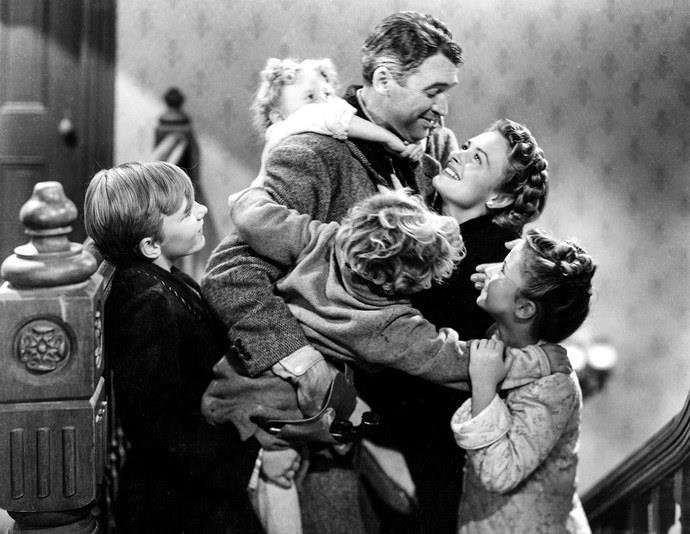
    PHOTOS: (clockwise from left) Reynolds loves Cat Dancing; Brando in touch with his feminine side; the Duke; and an unrecognizable Brian Keith

  • Adam West Batman Superhero Music on WWFM

    Adam West Batman Superhero Music on WWFM

    To the Batmobile!

    With the death of Adam West – star of television’s “Batman” – on June 9, and “Wonder Woman” burning up the box office, we’ll revisit the superhero genre, with music from both, alongside selections from John Williams’ classic score for “Superman.” In addition, West will introduce a medley of classic superhero themes for television with the Cincinnati Pops.

    Look, up in the sky! It’s “Picture Perfect” – music for the movies – this Friday evening at 6:00 EDT, on WWFM – The Classical Network and wwfm.org.

  • Star Wars 40th Anniversary Music Magic

    Star Wars 40th Anniversary Music Magic

    Happy 40th anniversary, “Star Wars.” I do miss the giddy enjoyment of the original.

    What would the film be like without John Williams’ immortal music? Watch here:

    Then the way it should be:

    https://www.youtube.com/watch?v=iH6a1iYQ0GA

    Finally, Williams’ overblown concert version, which really makes sure we don’t miss the William Walton allusion:

  • Star Wars Soundtrack 40th Anniversary

    Star Wars Soundtrack 40th Anniversary

    “Star Wars” – the original, as opposed to “Star Wars Episode IV: A New Hope,” as it has been known since its 1981 reissue – was released for the first time, in theaters, on May 25, 1977. Needless to say, the film became a pop cultural phenomenon that went on to assume mythological proportions.

    This week on “Picture Perfect,” we revisit a long time ago (40 years, to be exact) in a galaxy far, far away, as we listen to selections from John Williams’ classic score. In an era when pop music was threatening to swamp the movies, Williams’ paradoxically fresh-yet-retro heroic take was credited with singlehandedly reviving the fortunes of the orchestral film score. “Star Wars” went on to become the best-selling orchestral soundtrack of all-time.

    The fashion these days is to present a score note-complete and sequentially, as it appeared in the film. But there was an art to how the composer and supervising music editor (in this case, Kenneth Wannberg) used to arrange these soundtrack albums to create a special kind of listening experience.

    Buck the trend of digital complexity and note-complete soundtrack recordings by kicking back and listening to the music as you first enjoyed it at home in 1977, with selections from the original 2-record set. The exact contents of the double-LP album have been unavailable for years, until a quite recent vinyl reissue of the complete “Star Wars” soundtracks.

    The Force is strong with this one. Join me for 40 years of “Star Wars” on “Picture Perfect,” this Friday evening at 6 EDT, on WWFM – The Classical Network and wwfm.org.
  • Horse Racing Movie Music Kentucky Derby Special

    Horse Racing Movie Music Kentucky Derby Special

    And they’re off! On the eve of the 143rd running of the Kentucky Derby, “Picture Perfect” will focus on music from movies about horse racing.

    “The Black Stallion” (1979), based on the classic novel by Walter Farley, depicts the bonding of a shipwrecked boy and an Arabian stallion, whose shared destiny takes them to the race track. Mickey Rooney’s uncharacteristically subdued performance as the former trainer who finds a new lease on life earned him an Academy Award nomination for Best Supporting Actor.

    Francis Ford Coppola executive produced the film, and his father, Carmine Coppola, wrote the music. Reportedly the unsung Shirley Walker, who had been hired as an orchestrator, wound up contributing a fair amount to it, when the composer was put off by requests from director Carroll Ballard that portions of the music be rewritten.

    “The Reivers” (1969), after William Faulkner’s Pulitzer Prize winning novel, is a coming-of-age story about a boy swept into automobile theft and illicit horse racing in the American south. Mark Rydell directed, and Steve McQueen starred as the rakish Boon Hogganbeck. The narration was by Burgess Meredith, who reprises his role in the recording we’ll hear, with John Williams conducting his own music.

    For the film, Williams provided an alternately wistful and carefree Americana score. It’s said that the music for “The Reivers” is what moved Steven Spielberg to hire him to write the music for his first theatrical feature, “The Sugarland Express.” The Spielberg association brought Williams to “Jaws,” and the first of his truly iconic film scores. He also worked with Mark Rydell again, on “The Cowboys” (1972), “Cinderella Liberty” (1973), and “The River” (1984).

    It was inevitable that the nonfiction bestseller “Seabiscuit: An American Legend” would be given the big Hollywood treatment. The miraculous ascent of the real-life dark horse who became a symbol of hope during the Great Depression seemed tailor-made for dramatization.

    Though it presses all the right buttons, “Seabiscuit” (2003) is not to be confused with a superior documentary that was shown on PBS around the same time. Nonetheless, the film, which starred Tobey McGuire, Jeff Bridges and Chris Cooper, was nominated for seven Academy Awards, including Best Picture. Randy Newman wrote the music.

    Finally, we turn to “Hidalgo” (2004), also allegedly based on a true story, though the source material – the memoir of distance rider Frank T. Hopkins – has also inspired a fair degree of skepticism. In 1890, Hopkins became the first American invited to compete in a centuries-old 3000-mile survival race across the Arabian Desert.

    Viggo Mortensen plays Hopkins, and Omar Sharif is the sheik who asks him to put up or shut up, over the claim made by Buffalo Bill’s Wild West Show that he and his horse are the greatest distance runners in the world. The music is by James Newton Howard.

    It’s a rare horse race in which everyone comes out a winner. Start your weekend with a mint julep on “Picture Perfect,” music for the movies, this Friday evening at 6:00 EDT, on WWFM – The Classical Network and wwfm.org.
Tag Cloud

Aaron Copland (92) Beethoven (95) Composer (114) Film Music (123) Film Score (143) Film Scores (255) Halloween (94) John Williams (187) KWAX (229) Leonard Bernstein (101) Marlboro Music Festival (125) Movie Music (138) Opera (202) Philadelphia Orchestra (89) Picture Perfect (174) Princeton Symphony Orchestra (106) Radio (87) Ralph Vaughan Williams (85) Ross Amico (244) Roy's Tie-Dye Sci-Fi Corner (290) The Classical Network (101) The Lost Chord (268) Vaughan Williams (103) WPRB (396) WWFM (881)

DON’T MISS A BEAT

Receive a weekly digest every Sunday at noon by signing up here


RECENT POSTS