Tag: John Williams

  • Friendly Aliens in Film Scores Close Encounters ET

    Friendly Aliens in Film Scores Close Encounters ET

    People of Earth! We come in peace!

    This week on “Picture Perfect,” in honor of the 40th anniversary of the release of “Close Encounters of the Third Kind” (November 16, 1977) and the 35th anniversary of “E.T. The Extra-Terrestrial” (June 11, 1982), we listen to music from films about benevolent visitors from other worlds.

    Friendly E.T.’s have been out of fashion now for quite some time. We seem to be mired in some neo-‘50s zeitgeist, as far as paranoia and invaders are concerned. But that certainly wasn’t the case back in 1982, when Steven Spielberg’s “E.T. The Extra-Terrestrial” almost singlehandedly turned everything on its head.

    No more invaders from Mars. Spielberg would get to that a couple of decades later, when he remade H.G. Wells’ “The War of the Worlds.” No, during the Reagan Era, with the Cold War winding down and terrorism not yet so much in the news, cinematic E.T.’s were benevolent at best, or at worst, just trying to do their thing. They were there to be misunderstood and even imperiled by man until the warm, fuzzy, often poignant finale.

    Spielberg had already explored the concept of the benevolent visitor from space, of course, with 1977’s “Close Encounters of the Third Kind.” But there was an ambiguity for much of the film as to what exactly the aliens’ intentions were. In fact, there is at least one sequence that would have given a child nightmares. Whatever tension is generated dissolves in the euphoric finale, centered on the communicative power of music. Like so many films back then and so few now, “Close Encounters” doesn’t so much exhaust the viewer as leave him or her with a feeling of hope.

    John Williams wrote the music for both “Close Encounters” and “E.T.,” and the two scores couldn’t be more different. For “CE3K,” the avant garde syntax of the early, eerier sequences dissolves into unabashed lyricism for the transcendent finale. “E.T” takes a much more intimate approach. The moving story of a friendship between a boy and a stranded space botanist is rendered in music that is by turns tender, buoyant, and touching. The score earned Williams a much-deserved fourth Academy Award. “E.T.” may very well be Williams’ masterpiece, and Spielberg’s too.

    The “friendly” alien of “The Day the Earth Stood Still” (1951), Klaatu, may come in peace, but it is a message delivered with tough love. If mankind refuses to abide, his giant robot, Gort, will destroy the planet. At a time when Martians invariably meant trouble, this was actually progressive. Bernard Herrmann’s score is one of his best, and certainly one of his most interesting. Always an eccentric orchestrator, Herrmann’s concept of extra-terrestrial music incorporates violin, cello, electric bass, two theremins, two Hammond organs, a large studio electric organ, three vibraphones, two glockenspiels, two pianos, two harps, three trumpets, three trombones and four tubas. Overdubbing and tape-reversal techniques were also employed.

    Finally, Ron Howard’s “Cocoon” (1985) is one of the more worthwhile of the seemingly endless procession of extra-terrestrial films to be released in the wake of “E.T.” At least this one took a different approach by bringing alien forces into contact with a Florida retirement community with the unexpected result of rejuvenating its inhabitants. A modern take on the fabled Fountain of Youth, the film is a showcase for veteran actors Hume Cronyn, Jessica Tandy, Jack Gilford and Don Ameche (who won an Academy Award). James Horner’s score is much sought after by collectors.

    Klaatu barada nikto! Join me for the touchdown of friendly alien films, on “Picture Perfect” – music for the movies – this Friday evening at 6:00 EDT, on WWFM – The Classical Network and wwfm.org.
  • War of the Worlds & Martian Movie Music

    War of the Worlds & Martian Movie Music

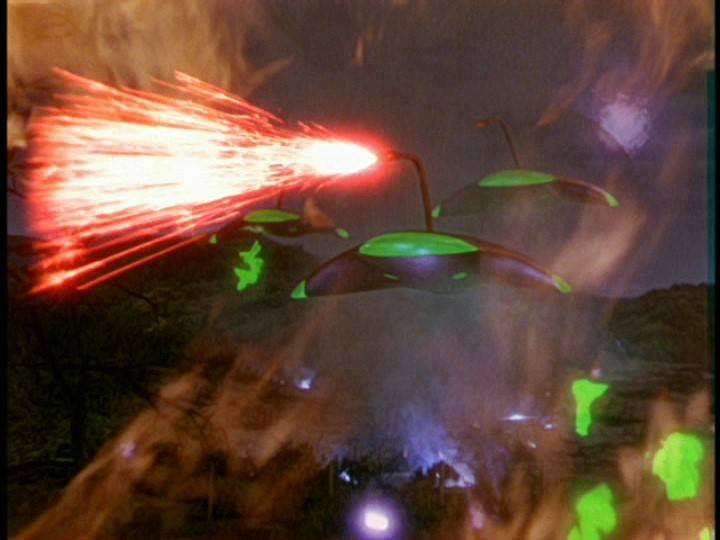
    This week on “Picture Perfect,” with Halloween only days away, my thoughts turn to Grover’s Mill, the community located not far outside of Princeton, NJ, that became the focal point of Orson Welles’ notorious radio adaptation of H.G. Wells’ “The War of the Worlds.”

    On October 30, 1938, Welles’ Mercury Theatre presented the classic’s dramatization after the manner of “breaking news,” with simulated live reports interrupting a program of regularly scheduled dance music. What the alleged reports described was chilling – a Martian invasion of rural America by hostile aliens bearing fiery weapons and poisonous gas. The whole story was authenticated, in real time, by a “Professor Richard Pierson of Princeton Observatory.”

    Those who tuned in late or were only half-listening completely freaked out, and reacted in a manner unimaginable in an era of social media. Panicked mobs choked the streets, phone lines were jammed, and police flooded CBS Studios. Welles had dropped the biggest firecracker right in the middle of a United States already on edge, thanks to widespread access to radio reports of mounting tensions in Europe.

    You might say Welles’ (and Wells’) fame skyrocketed. Orson Welles would match his early notoriety a few years later with his Hollywood debut, as producer, director, co-writer, and star of “Citizen Kane,” which inflamed William Randolph Hearst, while H.G. Wells’ novel has remained his most popular, the work having been adapted to film several times.

    We’ll hear music from the classic 1953 version, produced by George Pal, with music by Leith Stevens; then the Steven Spielberg blockbuster, from 2005 (titled, simply, “War of the Worlds”), with music by John Williams.

    After that, we’ll take it to the Red Planet, when an American astronaut is stranded with his test monkey, in 1964’s “Robinson Crusoe on Mars,” with music by Van Cleave.

    Finally, we’ll turn to Edgar Rice Burroughs’ John Carter. Why Disney dropped “of Mars” from the title – something that would have actually said something about the subject matter – is anybody’s guess. The belated 2012 adaptation came 100 years after the character was introduced. Unfortunately, the intervening decades robbed Burroughs’ creation of much of its freshness, with dozens, if not hundreds, of science fiction novels and movies having plundered the author’s pulp treasure trove. “John Carter” was less striking than it might have been, but the film was certainly not the train wreck the press made it out to be. Michael Giacchino’s score ends the hour on a romantic note, a welcome relief after dodging so many Martian heat rays.

    I hope you’ll join me for an interplanetary exchange program (though, granted, not always a peaceful one), with music from movies about visitors to and from Mars, on “Picture Perfect,” this Friday evening at 6 EDT, on WWFM – The Classical Network and wwfm.org.


    WWFM is the classical music station located closest to the site of Welles’ projected Martian invasion. In the interest of galactic harmony, please support us online or at 1-888-232-1212.

  • Close Encounters Returns to Theaters

    Close Encounters Returns to Theaters

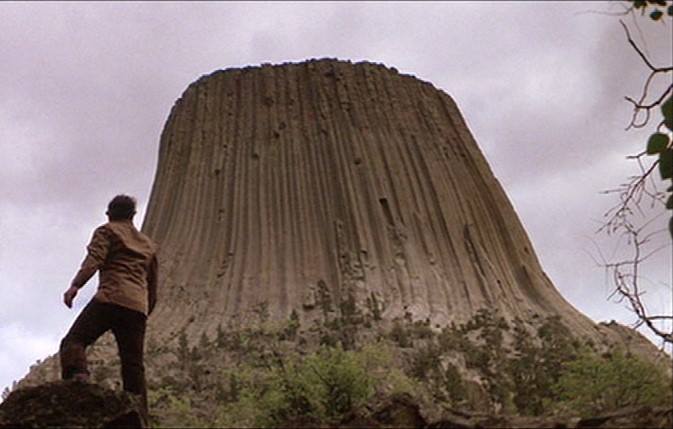
    “Close Encounters of the Third Kind” is back in theaters this weekend in a new, digital restoration. In anticipation of the 40th anniversary of the film’s release on November 16th, a unique screening will take place tonight at the base of Devils Tower, the national monument that plays such an important part in the Steven Spielberg classic. Watching “Close Encounters” for the first time was a watershed moment in my movie-going experience. If you’ve only seen it on TV, you have not really seen it. This is a film that definitely deserves to be experienced in a theater. Say what you will about Richard Dreyfuss’ sideburns, for me this will always be one of Spielberg’s best films, with a transcendent score by John Williams. Do yourself a favor, and check your local listings.

  • John Williams’ Lost Western Film Scores

    John Williams’ Lost Western Film Scores

    Looking back on the cinematic western, by the mid-1970s it was definitely time to water the horses. For much of the preceding decade, most of the important statements in the genre had gone elegiac, revisionist, spaghetti, or some combination of the three.

    With the release of “Star Wars” in 1977, elements of the western survived, but beyond a handful of exceptions, the western, like the swashbuckler, had moved to outer space.

    Though John Williams became inextricably linked with the intergalactic spectacle, it is little known that he, like most of his contemporaries, scored a number of actual, old school westerns. This week on “Picture Perfect,” we’ll listen to music from four of them.

    Westerns don’t get much more primal than where revenge is concerned. Mark Rydell’s “The Cowboys” (1972), one of the better of John Wayne’s later films, draws blood when Bruce Dern commits an unspeakable crime against the American West. If you’re a collector of Boston Pops records, you may be familiar with the rousing overture Williams assembled from his score.

    Before his career devolved into an excuse to bring together his celebrity friends to goof off in front of the camera and then cash the paycheck, Burt Reynolds made a number of effective dramatic films. In “The Man Who Loved Cat Dancing” (1973), Reynolds plays a laconic train robber haunted by something in his past, who finds a second chance with Sarah Miles, the wife of one of his pursuers, who rides along with his gang. Williams provided a really groovy opening number for this one.

    Despite the how-could-it-possibly-miss teaming of Marlon Brando and Jack Nicholson – with “Bonnie and Clyde” director Arthur Penn at the helm – “The Missouri Breaks” (1976) bombed with both critics and audiences. (If you ever wanted to see Brando in drag, then this is the film for you.) Williams took a different approach with this one, providing a more intimate, if off-kilter score, tinged with jazz and pop elements, and featuring guitar, banjo, harmonica, honky tonk piano, electric harpsichord, etc.

    “The Rare Breed” (1966), on the other hand, is straight-down-the-middle, with James Stewart and Maureen O’Hara introducing Hereford cattle to the American west. Brian Keith, as Stewart’s rival, sports a red beard and a Scottish burr, for some reason. Williams, however, is wholly himself, providing an uplifting, wide-open main theme. Would that film composers still wrote like this…

    Join me for an hour of Williams Westerns this week, on “Picture Perfect,” this Friday evening at 6 EDT, on WWFM – The Classical Network and wwfm.org.


    PHOTOS: (clockwise from left) Reynolds loves Cat Dancing; Brando in touch with his feminine side; the Duke; and an unrecognizable Brian Keith

  • Adam West Batman Superhero Music on WWFM

    Adam West Batman Superhero Music on WWFM

    To the Batmobile!

    With the death of Adam West – star of television’s “Batman” – on June 9, and “Wonder Woman” burning up the box office, we’ll revisit the superhero genre, with music from both, alongside selections from John Williams’ classic score for “Superman.” In addition, West will introduce a medley of classic superhero themes for television with the Cincinnati Pops.

    Look, up in the sky! It’s “Picture Perfect” – music for the movies – this Friday evening at 6:00 EDT, on WWFM – The Classical Network and wwfm.org.

Tag Cloud

Aaron Copland (93) Beethoven (95) Composer (114) Film Music (141) Film Score (143) Film Scores (255) Halloween (94) John Williams (195) KWAX (229) Leonard Bernstein (103) Marlboro Music Festival (125) Movie Music (156) Mozart (89) Opera (212) Philadelphia Orchestra (89) Picture Perfect (174) Princeton Symphony Orchestra (108) Radio (88) Ross Amico (244) Roy's Tie-Dye Sci-Fi Corner (290) The Classical Network (101) The Lost Chord (269) Vaughan Williams (103) WPRB (397) WWFM (881)

DON’T MISS A BEAT

Receive a weekly digest every Sunday at noon by signing up here


RECENT POSTS